One Indian seafarer was missing after a second attack forced the 25-member crew of the LPG tanker Tara Gas to abandon ship, Shipping Minister Sarbananda Sonowal said on 17 November 2026, revising an earlier account that everyone aboard was safe.
The Tara Gas attack involved a Panama-flagged vessel carrying 24 Indian nationals. Sonowal’s later statement said 24 crew members had been accounted for, with regional rescue authorities and the ship management company working to locate the missing Indian.
The distinction matters: 24 people accounted for out of a crew of 25 does not mean all 24 Indian nationals have been rescued. The ship’s overall crew and its Indian contingent are different totals.
In his updated statement, Sonowal said the entire crew had left the vessel after a subsequent attack. His earlier assurance concerned the first reported strike in the Strait of Hormuz on 16 November.
What changed after the Tara Gas attack was first reported?
The reported condition of the crew changed after another strike, according to Sonowal’s two successive statements.
The first account identified Tara Gas as the vessel targeted on 16 November and said the entire crew was uninjured. The later account described an abandonment and a missing seafarer. An article or message repeating only the first assurance would therefore give families an incomplete account of the situation.
Sonowal said officials were coordinating rescue efforts and support for the people who had escaped. His statement did not announce that the missing seafarer had been found, and being missing does not establish a death.
The later ministerial update also did not identify who carried out the attack. Responsibility should not be assigned from the vessel’s location, its flag or the nationality of its crew.
Where was the vessel attacked?
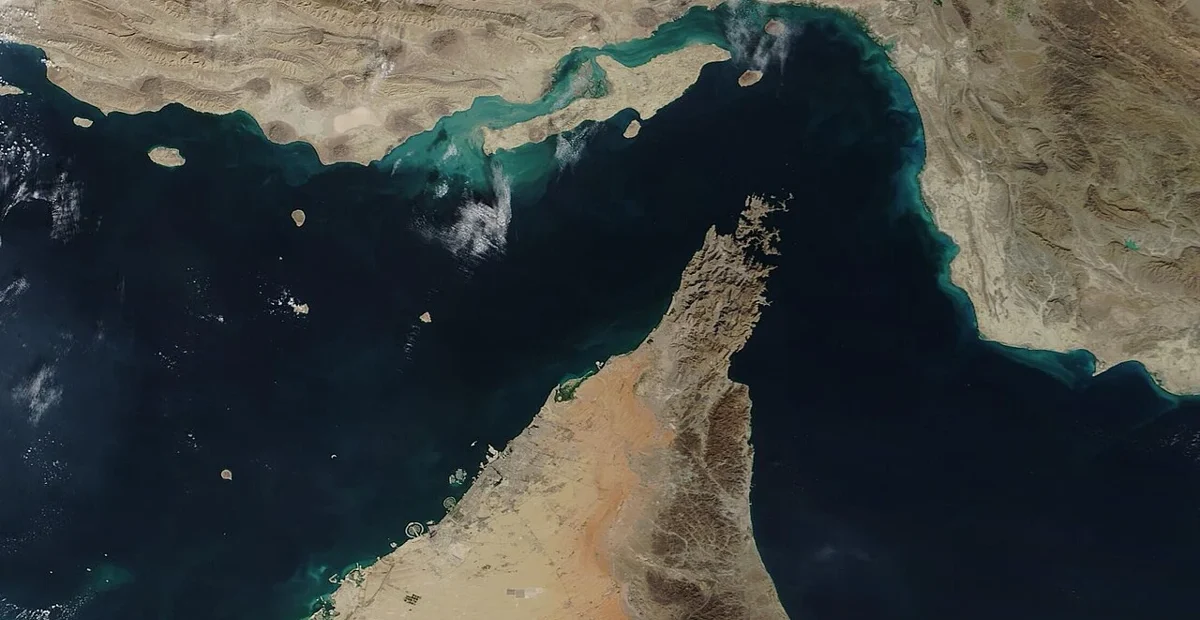
A United Kingdom Maritime Trade Operations warning placed a tanker incident seven nautical miles north of Khasab, Oman, in the Strait of Hormuz.
The UKMTO warning numbered 208-26 recorded the incident at 1900 UTC on 16 November. It said a third-party report described a disabled tanker and an engine-room fire. The crew was initially reported safe.
That warning did not name the vessel. Sonowal subsequently identified Tara Gas in his public statements. The warning’s early crew assessment must be read in that sequence, rather than as evidence contradicting the minister’s later account.
UKMTO advised vessels to exercise caution and report suspicious activity while authorities investigated. Its initial notice said the damage assessment and environmental consequences were unknown. It did not provide a completed investigation or an attribution of responsibility.
Why are the crew numbers different in the two updates?
The figures describe different groups at different points in the emergency: the entire crew, the Indian nationals aboard and those later accounted for.
| Figure | What it describes | What it does not establish |
|---|---|---|
| 25 | Total crew reported aboard Tara Gas | The number of Indian nationals aboard |
| 24 | Indian seafarers in the initial ministerial account | A final rescue total for Indian nationals |
| 24 | Crew members accounted for in the later update | That every Indian aboard had been located |
| One | Indian seafarer reported missing in the later update | A confirmed fatality |
Families following the emergency need the date and sequence attached to each number. A search update, a hospital admission and a repatriation announcement answer different questions. None should be substituted for another.
The latest verified ministerial account used here is the 17 November update. A subsequent rescue announcement would change that account; an old screenshot of the first statement would not.
What does a ship’s flag tell you?
A flag identifies the country in which a vessel is registered. It does not identify the nationality of everyone employed aboard. Tara Gas was described as Panama-flagged while 24 of its 25 crew members were Indian.
What help is available to Indian seafarers and their families?
India’s maritime administration operates emergency and grievance channels for seafarers, alongside contact with employers, recruitment companies and Indian diplomatic missions.
An official Ministry of Ports, Shipping and Waterways account of its seafarer support arrangements, dated 4 August 2026, describes a round-the-clock control room, vessel monitoring and crisis reporting through the eNavik system.
The ministry listed the domestic toll-free number 1800-889-7768 and WhatsApp support at +91 8655856830. It also identified the eNavik grievance portal as a route for assistance. These are the published support arrangements, rather than a separate telephone line announced specifically for Tara Gas.
For a family trying to establish the position of an individual seafarer, the vessel’s name, the employer and the recruitment company are more useful identifiers than a forwarded photograph. Personal documents should be supplied through verified official or company channels, rather than posted in public social media replies.
What responsibilities do shipping and recruitment companies have?
Official maritime security guidance places duties on ship operators and recruitment companies to assess risk, maintain contact and report emergencies affecting Indian personnel.
The Directorate General of Shipping’s March 2026 security circular called for heightened vigilance in the Persian Gulf, Strait of Hormuz, Gulf of Oman and neighbouring waters. It required companies with personnel or vessels in the region to establish continuous emergency contact arrangements.
The ministry’s August account also described voyage-specific assessments, security drills and reporting of suspicious approaches, electronic interference and navigation disruption. Those provisions concern preparation and communication. They do not, by themselves, establish whether a particular company complied with its obligations in this incident.
The published framework changed at different points during 2026 as conditions changed. An older circular should therefore not be used alone to determine whether a particular deployment was permitted on the date of a voyage. The applicable instructions and the employer’s documented decisions require separate examination.
What does the International Maritime Organization say about support?
The International Maritime Organization maintains a dedicated page for seafarers affected in the Strait of Hormuz and surrounding region, bringing together assistance and official guidance.
For crew members, an emergency at sea can also affect travel documents, wages, medical care and the ability to return home. A report that people have reached safety is an essential first development, but it is not an announcement that those practical arrangements have all been completed.
The IMO’s material includes guidance concerning training and certification affected by the regional situation. Such assistance addresses the disruption to seafarers’ working lives as well as the immediate security emergency.
Support information should be taken from the official page as it stands when help is needed. A rescue operation is directed by the relevant authorities; families should not treat public commentary as operational instructions to a ship or search team.
What does this mean for Indian families following shipping news?
The immediate task is to distinguish a verified update about a named crew member from a general statement about a vessel.
In this case, the earlier all-safe statement was followed by an abandonment and a missing-person report. Both statements belong in the chronology, but only the later one describes the subsequent emergency. The nationality of the missing person makes this a direct Indian seafarer story, rather than an inferred diaspora connection.
Readers can also follow reporting on maritime cooperation involving Indian personnel and the wider news section. A training partnership or diplomatic statement is separate from the rescue response to an individual ship.
Images require similar care. A photograph of a different tanker, an archive view of the strait or an unverified video cannot establish what happened aboard Tara Gas. The vessel’s name and the source of each update remain the basis for identifying the incident.
What happens next?
The next substantive development is an official update on the missing Indian seafarer and the condition and onward arrangements of the rescued crew.
Sonowal said coordination with the ship management company and regional rescue authorities was continuing. A verified announcement from those authorities can establish whether the search has located the missing person, whether further medical assistance is required and when survivors can return home.
Separate investigation findings would be needed to establish responsibility, the full damage to the vessel and any environmental consequences. None of those questions is settled by the first assurance that the crew was safe.