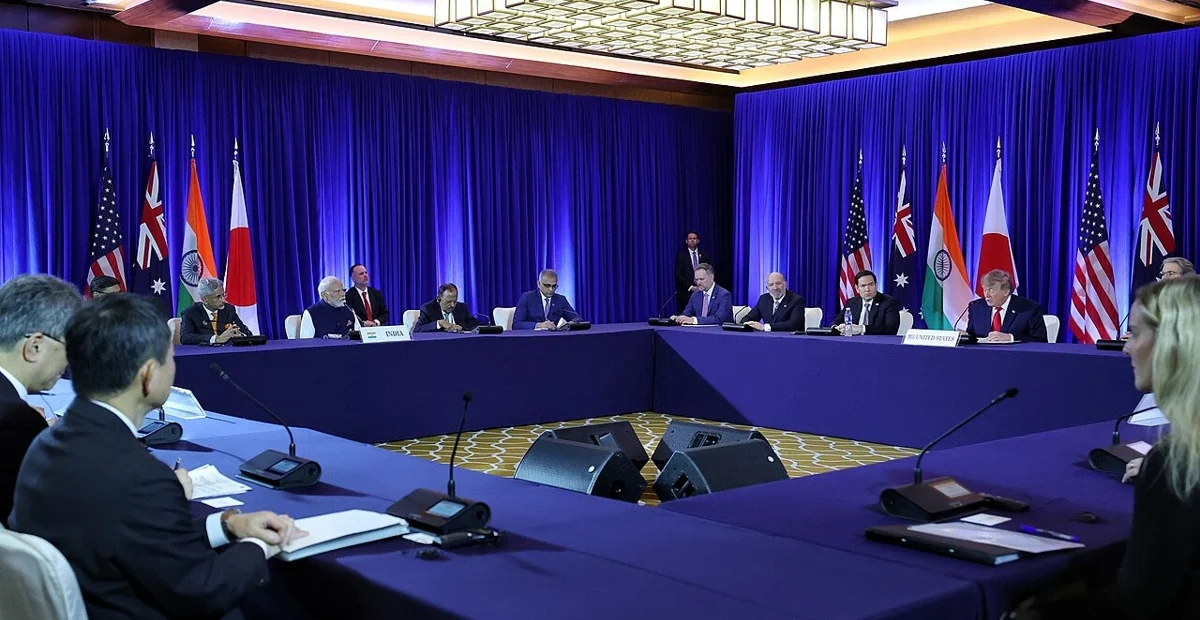
Patrol aircraft from Australia, India, Japan and the United States are scheduled to take part in their first maritime exercise in a Quad setting in 2027, following a leaders’ meeting in Manila that linked sea security with commercial and technology cooperation. The Quad Manila summit on 17 November 2026 brought together Anthony Albanese, Narendra Modi, Sanae Takaichi and Donald Trump. Their joint statement opposed the use of force or coercion to change the regional status quo and announced initiatives involving businesses, electricity cables and cybersecurity.
For the Australia-India relationship, the announcements extend an existing maritime partnership into a wider programme with Japan and the United States. They do not create a new visa route, a recruitment programme or an automatic commercial entitlement for businesses in any of the four countries.
The joint statement published by Australia’s prime minister is the common record of those commitments. Japan’s separate account of the summit adds that leaders discussed the Middle East, including Iran, alongside the East and South China seas.
What did the Quad Manila summit announce?
The meeting announced a new business forum and maritime surveillance collaboration, alongside expanded cooperation on cables and cyber security.
The inaugural Quad Business Leaders’ Forum is scheduled for early 2027. Its participants are intended to include business executives, government officials and policy specialists from the four countries. The stated purpose is to develop private-sector relationships and commercial partnerships across the Indo-Pacific.
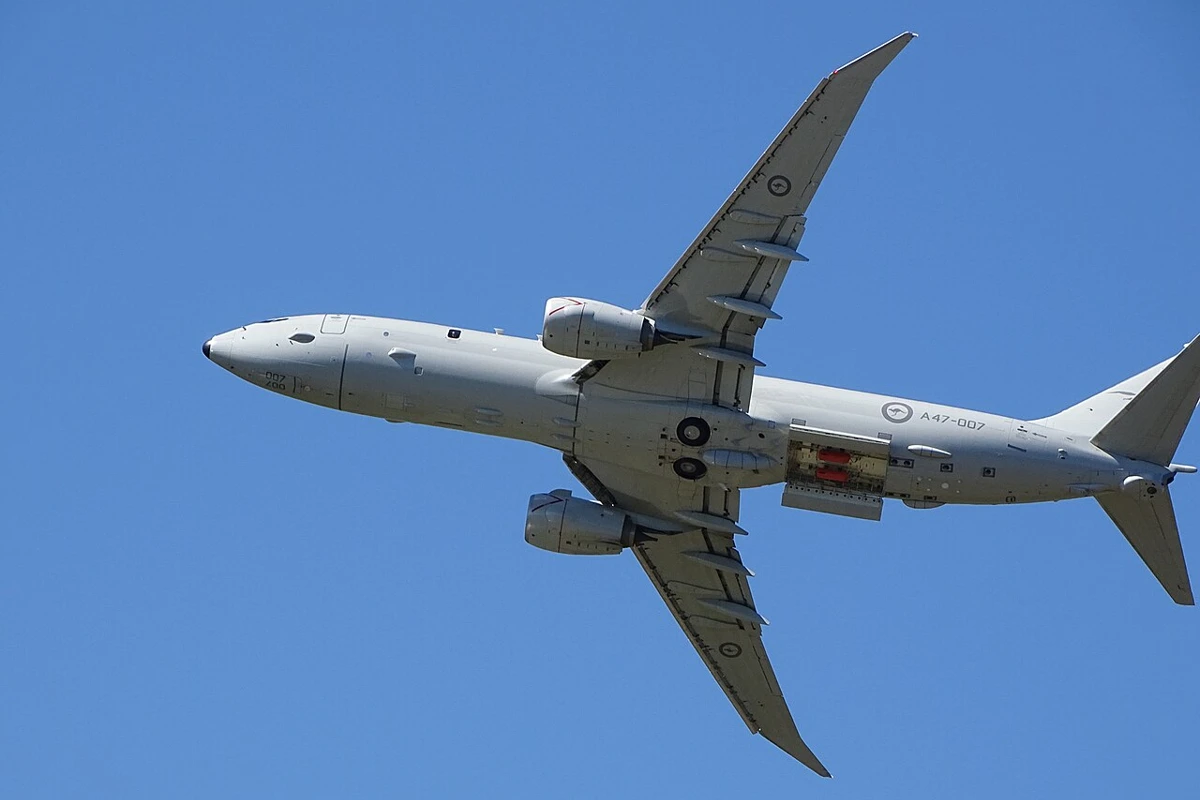
The maritime initiative is intended to improve the sharing of information about activity at sea. The statement connects that work to a planned exercise involving P-8 and P-3C patrol aircraft in 2027. A date, location and detailed participation arrangements were not set out in the joint release.
Australia’s contribution to the Quad cable partnership will expand to electricity cables. That broadens work previously associated with trusted communications infrastructure into energy connectivity. The leaders also welcomed forthcoming Indian Ocean undersea cable projects, without presenting the statement as a completed construction contract.
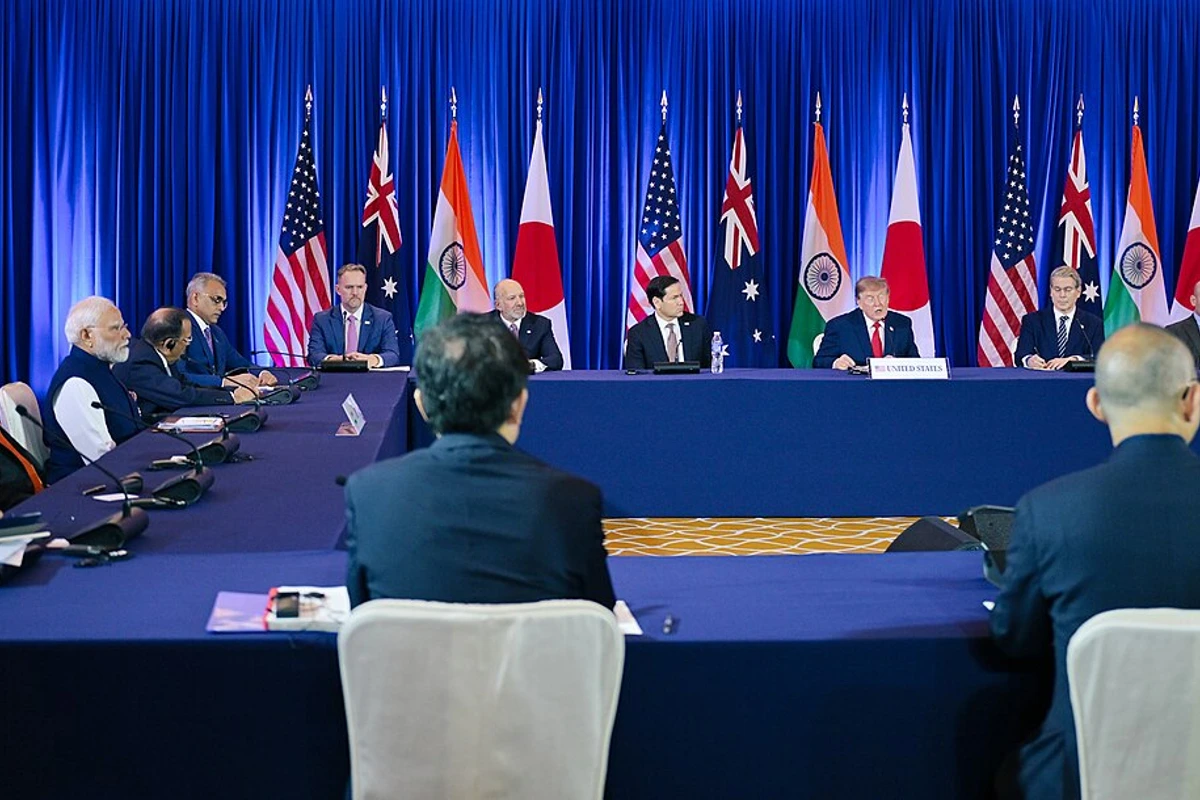
What does the warning against coercion mean?
The leaders opposed attempts to impose changes through force or pressure and expressed concern about arbitrary export restrictions.
The joint release places those concerns alongside freedom of navigation and overflight, resilient shipping corridors and the security of important supply chains. It does not name a particular country in the paragraph opposing changes to the status quo.
Japan’s account is more geographically specific. It says the leaders aligned their positions on developments in the East China Sea and South China Sea, as well as discussing energy security and safe navigation in relation to Iran and the Middle East.
Those are diplomatic positions agreed by the participating governments. They should not be read as a finding in an individual maritime incident or as an announcement that the Quad has taken operational command of shipping movements.
What is the Quad?
The Quad is a partnership between Australia, India, Japan and the United States. Its work combines regional security cooperation with practical initiatives, including maritime awareness, connectivity and technology. The Manila statement sets out joint commitments by those four governments, rather than legislation for their residents.
What will the maritime collaboration do?
The announced collaboration is designed to help the participating countries share information and improve awareness of activity at sea.
That is distinct from the physical exercise planned for 2027. Information sharing is an ongoing capability; an exercise tests how participating personnel and equipment work together. The statement presents both as contributions to safer seas.
For India and Australia, there is already a practical connection. Indian and Australian personnel have taken part in maritime cooperation, including the Quad ship observer voyage between Chennai and Fremantle. The new summit programme builds on that broader engagement rather than starting bilateral maritime contact from nothing.
The announcement does not provide an individual application process for seafarers or a public booking mechanism for the exercise. Participation in official defence and security activities is determined by the governments and agencies involved.
How do the announcements differ in timing and purpose?
Some commitments have a stated 2027 target, while others describe expanded cooperation without a public delivery date.
| Initiative | Stated timing | Main purpose |
|---|---|---|
| Business Leaders’ Forum | Early 2027 | Private-sector links and commercial partnerships |
| Patrol-aircraft exercise | 2027 | First P-8 and P-3C exercise in a Quad setting |
| Maritime Surveillance Collaboration | Announced at the summit | Information sharing and awareness at sea |
| Australia’s expanded cable contribution | No completion date in the release | Electricity connectivity and regional energy security |
| Enhanced cyber cooperation | Announced at the summit | Cooperation in response to growing cyber incidents |
The table reflects announced intentions, not completed projects. A forum being scheduled does not mean that participating businesses have already been selected. An exercise being planned does not establish its detailed operating arrangements.
What did the leaders say about artificial intelligence?
They endorsed an accelerator intended to coordinate support for access to and deployment of trusted artificial intelligence across the region.
The joint release uses the term “Super Intelligence” and includes a footnote explaining that Australia, India and Japan use it to refer to artificial intelligence. The wording should therefore not be treated as a technical announcement that a system with capabilities beyond human intelligence has been developed.
The accelerator was previously announced by the countries’ foreign ministers in Atlanta. The Manila meeting reaffirmed its importance and its intended role in coordinating funding and technical assistance.
The release does not set out a public grant round, eligibility criteria for companies or an application deadline. Researchers and businesses should wait for the responsible agencies’ programme documentation before assuming that the political commitment provides access to funding.
The separate Pax Silica cooperation on supply chains concerns related questions about technology and economic security. It is a different framework and should not be substituted for the specific Quad arrangements announced in Manila.
What is Australia’s role in the cable work?
Australia is expanding its contribution to the existing Quad Partnership for Cable Connectivity and Resilience to include electricity cables.
The distinction between communications cables and power cables matters. Both are physical connections between places, but they provide different services and require different technical, regulatory and commercial arrangements.
The summit statement links the expanded Australian contribution to regional energy security. It also refers to upcoming Indian Ocean undersea cable projects intended to improve regional connectivity. It does not publish a list of routes, contractors or contracts signed at the meeting.
For businesses serving Indian Ocean markets, those details will determine whether a project offers an actual procurement opportunity. The declaration supplies the policy direction; a tender, financing agreement or implementing agency announcement would supply the commercial conditions.
What does this mean for Indian Australians and businesses?
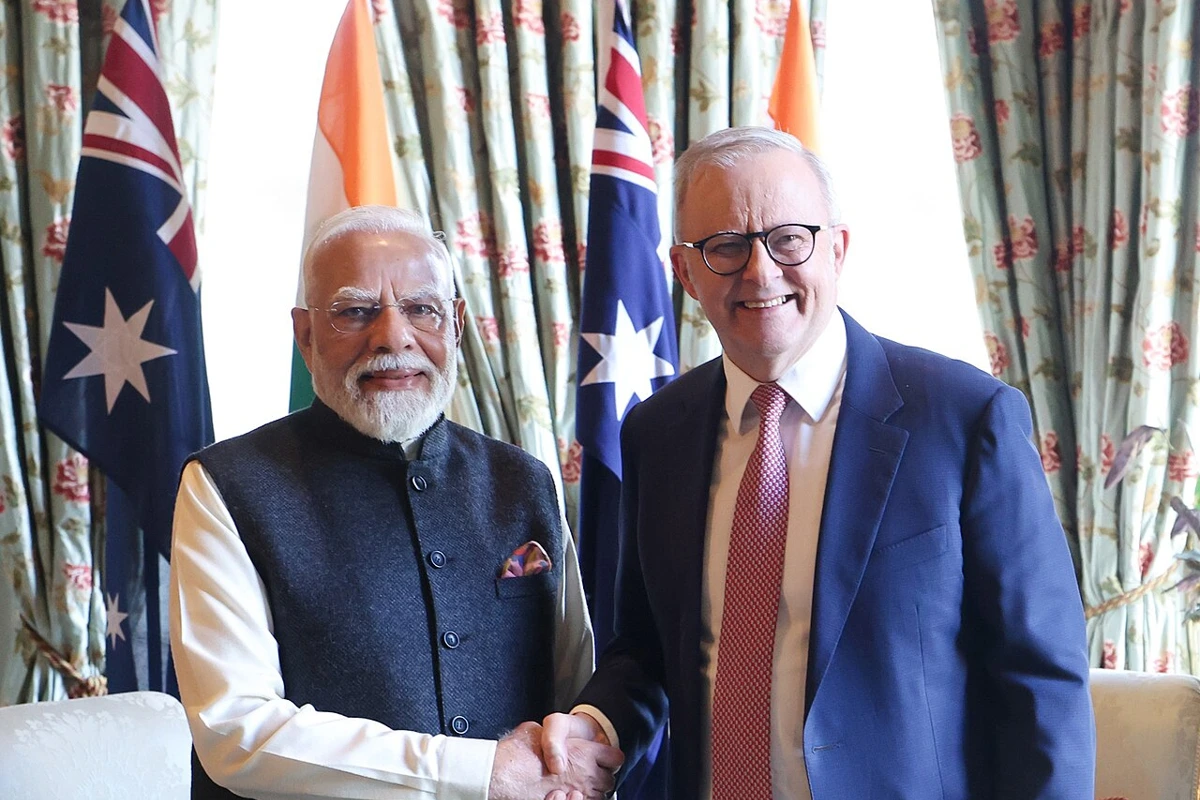
The immediate significance is a shared government programme involving two countries with which Indian Australians maintain professional, commercial and family connections.
The practical opportunities, if they follow, will depend on the individual programmes. A business interested in the 2027 forum needs its participation rules. A technology organisation needs funding and procurement documentation. A shipping operator needs the relevant maritime agencies’ operating advice.
The joint statement offers no change to immigration status, work rights or residence eligibility. Those matters continue to be governed by national law and the responsible immigration authorities, rather than a summit communiqué.
The leaders also reaffirmed support for the central role of the Association of Southeast Asian Nations. Their meeting took place alongside ASEAN-related gatherings in Manila, placing the four-country partnership within a wider regional diplomatic setting.
How does Manila fit into the Quad’s longer programme?
The summit adds to an established programme that includes disaster response, infrastructure expertise and maritime information, rather than creating a partnership limited to military exercises.
Australia’s Department of Foreign Affairs and Trade account of the Quad traces its origins to cooperation after the December 2004 Indian Ocean tsunami. It describes the partnership as diplomatic and says its formal name is the Quad.
The department lists existing work on cable resilience, critical minerals, energy security, infrastructure fellowships and health security. It also identifies the Indo-Pacific Partnership for Maritime Domain Awareness, including satellite information supporting maritime surveillance in Pacific island countries.
Those initiatives explain why the Manila announcements combine security, technology and civilian infrastructure. They also provide precedents against which delivery can be judged: programmes require participating agencies, technical work and cooperation with regional partners after leaders announce them.
What emphasis did Albanese place on the meeting?
Albanese linked maritime security to the four countries’ economic futures and the role of private enterprise.
In his opening remarks in Manila on 17 November, he identified critical minerals, rare earths and artificial intelligence among the discussion’s economic subjects. He described the planned business leaders’ meeting as a way for the private sector to help carry out decisions taken by governments.
He also recalled attending a Quad meeting immediately after becoming prime minister and said the four countries’ combined cooperation could achieve more than their individual contributions. Those remarks explain Australia’s stated rationale for maintaining the forum across different leaders and governments.
The distinction between a government commitment and commercial implementation is therefore part of the leaders’ own account of the programme. The announced forum is intended to connect them, with its practical arrangements still to follow.
What happens next?
The next tests are the arrangements for the early-2027 business forum and the patrol-aircraft exercise later in that year.
Implementing agencies will need to translate the commitments into schedules, participating organisations and practical procedures. Cable projects require their own announcements on delivery and financing. The cyber and technology initiatives will likewise need programme-level detail before businesses can judge their scope.
For readers following Australia-India cooperation, those subsequent documents will show what the summit delivers beyond its statement of shared priorities.