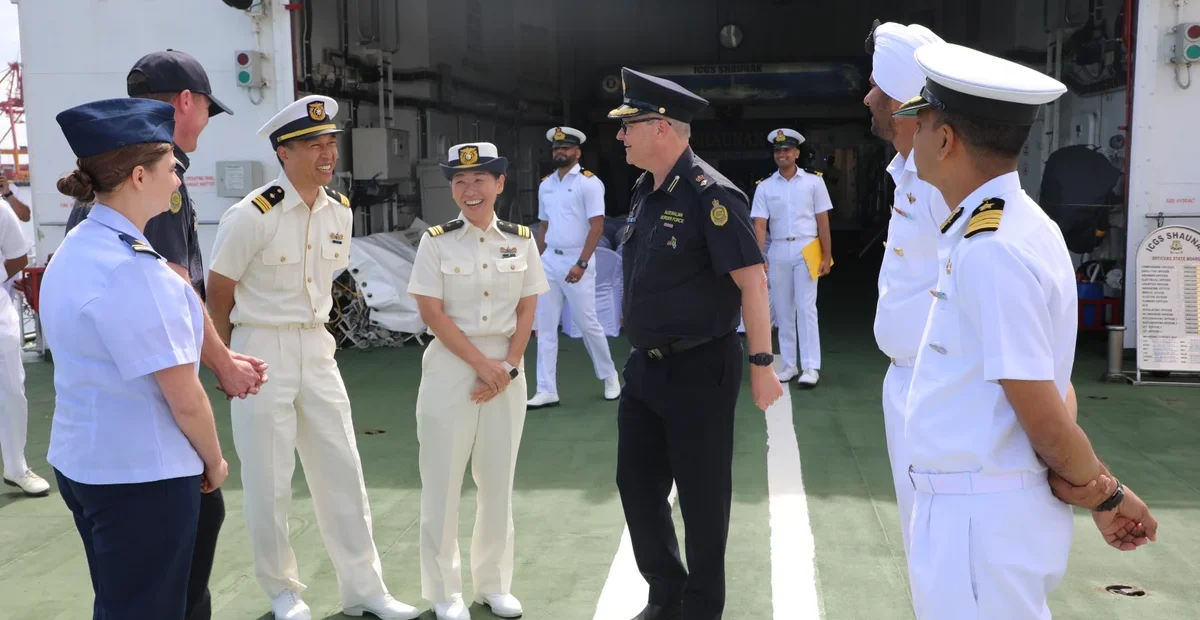
Six officers from four countries travelled aboard an Indian Coast Guard ship from Chennai to Fremantle in a mission combining rescue, pollution-response and law-enforcement training. The Quad voyage departed India on 25 September 2026 and reached Western Australia on 7 October.
The Australian Border Force described the operation in an update dated 28 October. The statement concerns a completed passage, not a deployment beginning this week. It calls the exercise the 2026 Quad-at-Sea Ship Observer Mission.
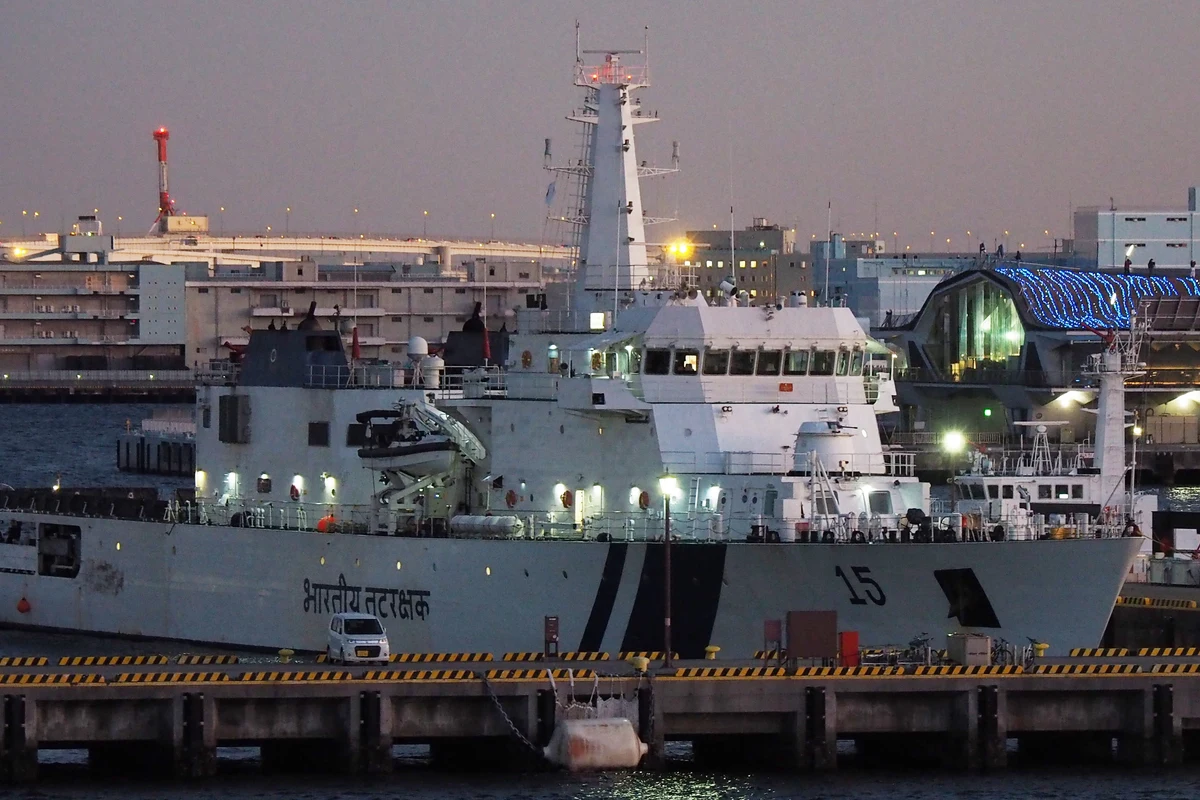
India’s Ministry of Defence had announced the departure on 25 September, identifying the vessel as ICGS Shaunak. Its account names two officers each from India and Japan, and one each from Australia and the United States. They joined the vessel for professional exchanges and shipboard activities.
What did officers do during the Quad voyage?
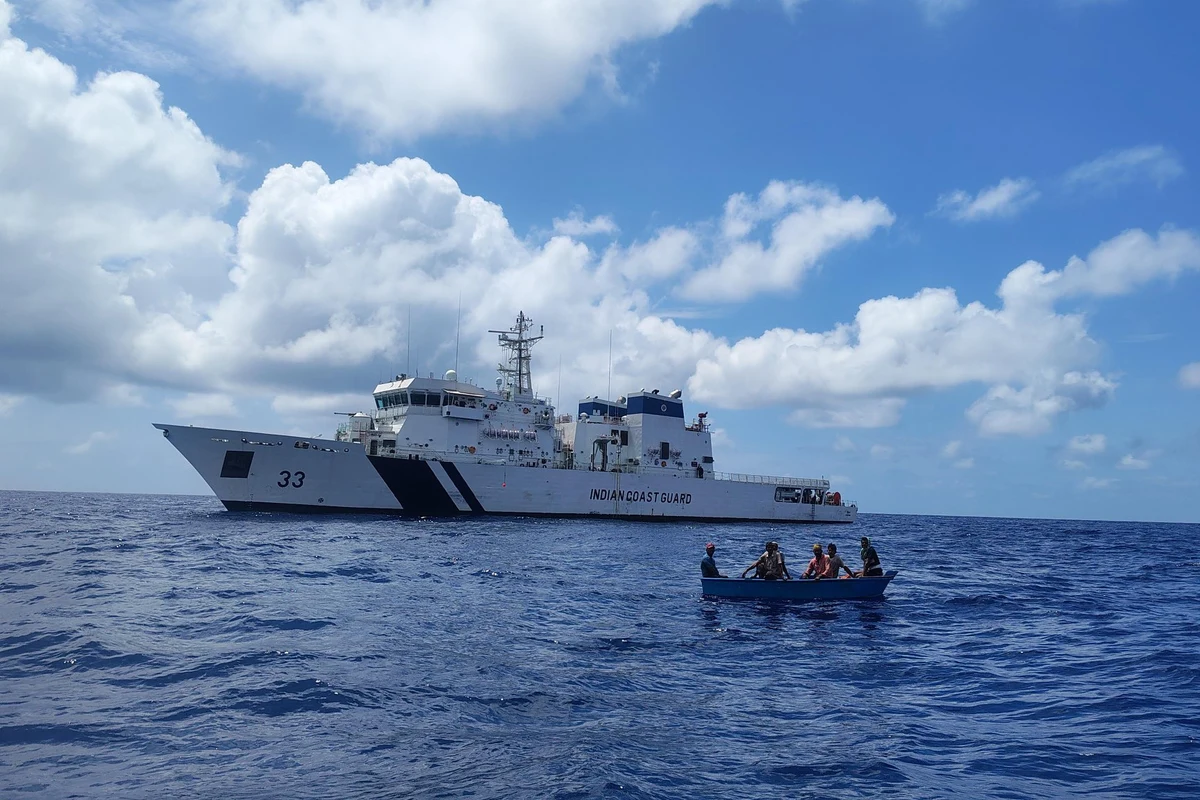
They worked together on maritime search and rescue, marine pollution response, maritime law enforcement and boarding operations.
The ABF statement describes knowledge-sharing exercises across those four areas. It says officers trained side by side to improve coordination and mutual understanding. These are descriptions of activities and their intended purpose, rather than published measures of how much response times or operational performance changed.
The Indian departure announcement similarly describes the officers as sea riders participating in shipboard exchanges. That distinguishes the observer mission from an announcement that four national fleets were conducting a joint combat operation. The vessel was Indian; the participating officers came from all four Quad countries.
Search and rescue and pollution response also show that the mission’s scope extended beyond enforcement. A maritime incident can require agencies to coordinate people, equipment and information across jurisdictions. The exercises were designed to strengthen those working relationships, according to the participating agencies.
No interception, arrest or rescue of a named vessel is announced in the ABF update. The training programme should not be illustrated in prose as though it were an operation against a specific ship or country.
Which dates and places are confirmed?
The confirmed departure was Chennai on 25 September and the arrival was Fremantle on 7 October, with the ABF describing a 13-day voyage.
The Indian departure release calls the destination Perth. The Australian arrival account specifies Fremantle, the port in Western Australia. Referring to the port as Fremantle preserves the more precise location without treating the two official descriptions as competing journeys.
The timing is material to the news. Today’s publication supplies an Australian account of a voyage completed three weeks earlier. Readers should not be left with the impression that the officers are still crossing the Indian Ocean or that the ship has just departed Chennai.
| Date | Confirmed development | Primary account |
|---|---|---|
| 25 September 2026 | ICGS Shaunak sailed from Chennai with six sea riders | India’s Ministry of Defence |
| 7 October 2026 | The vessel reached Fremantle | Australian Border Force |
| 28 October 2026 | ABF published its account of the mission and training | Australian Border Force |
The table separates the event from the release describing it. It also avoids assigning a new date to an older activity simply because photographs and a statement have appeared in a fresh report.
What is a ship observer mission?
In this mission, officers from partner countries joined an Indian Coast Guard vessel for shipboard activities and professional exchanges. The Indian announcement calls them sea riders. Participation aboard one vessel is different from a deployment of four countries’ fleets under a joint command.
Why are Australia and India working together at sea?
The mission forms part of their existing civil maritime-security cooperation and the wider Quad partnership.
The ABF says the voyage builds on a memorandum of understanding signed in July 2026 between its Maritime Border Command and the Indian Coast Guard. The stated purpose was stronger practical cooperation between the agencies.
Australia’s Department of Foreign Affairs and Trade also identifies a joint maritime-security roadmap and the agency memorandum in its account of the bilateral relationship. The roadmap concerns operational coordination, information sharing and capability development. These are institutional arrangements that predate today’s release.
The continuity matters more than describing every exercise as a new alliance. The observer mission gives a concrete example of officials working within an already announced relationship. It does not, by itself, establish a new treaty obligation or a change in domestic law.
The India–Australia relations guide distinguishes the bilateral agreements affecting different parts of the relationship. Maritime coordination belongs alongside those other arrangements, while retaining its own agencies, responsibilities and purpose.
What is the Quad’s role?
The Quad is a diplomatic partnership between Australia, India, Japan and the United States, with maritime cooperation among its areas of work.
DFAT’s description of the partnership includes maritime and transnational security, economic cooperation, technology and responses to regional emergencies. The ship observer programme is one practical activity within that broader set of priorities.
India’s departure statement links the mission to the Quad foreign ministers’ joint statement of 26 May 2026. A later sherpas’ meeting in New Delhi on 3 September reviewed progress across ongoing initiatives and preparation for further ministerial consultations.
Those meetings provide the diplomatic setting. The shipboard work provides the operational example. Keeping the two levels distinct helps explain why a programme involving only six participating officers can still form part of a four-country initiative.
The official accounts describe support for a free, open and secure Indo-Pacific. They do not identify this voyage as a response to a particular incident involving China or any other country. No such explanation should be added without supporting evidence.
Has there been an earlier Quad observer mission?
Yes, the US Coast Guard documented a multinational observer sail aboard its cutter Stratton in 2025.
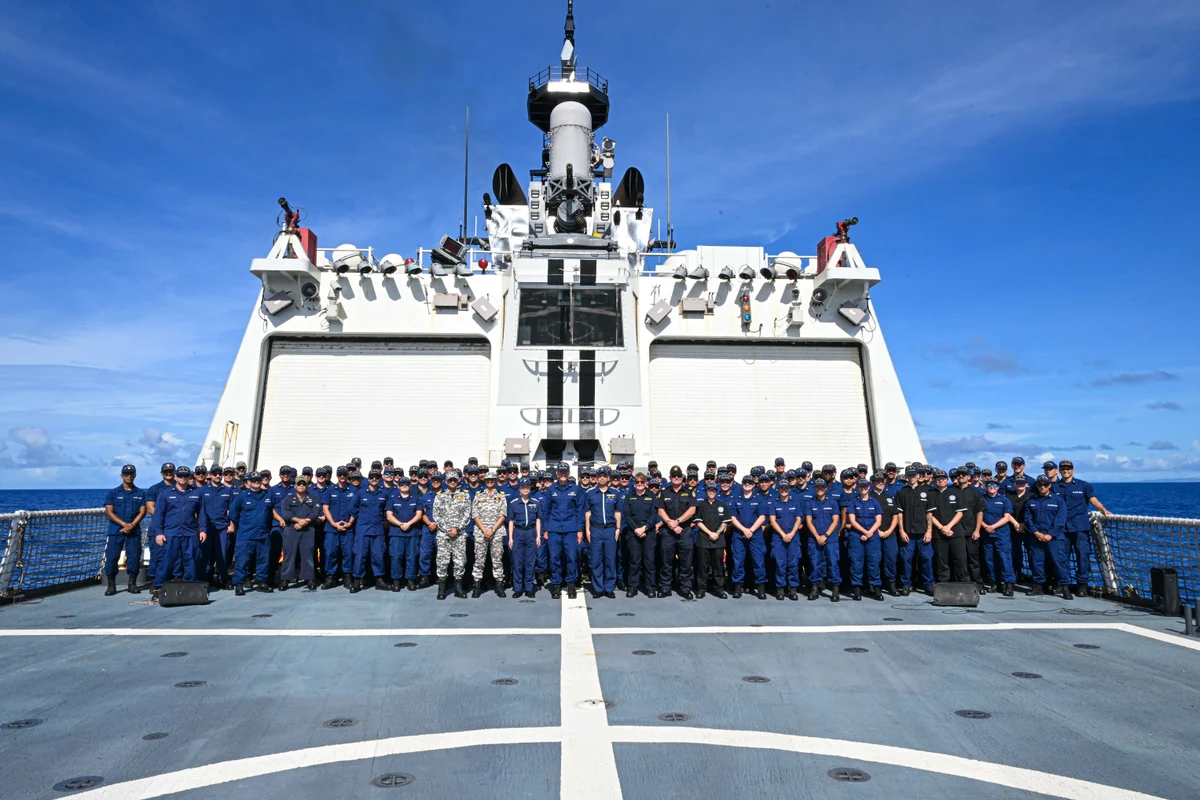
A US Coast Guard release dated 17 July 2025 records the cutter’s arrival in Guam on 3 July with representatives from Australia, India and Japan aboard. Official photographs show the participants on the flight deck on 1 July 2025. These are dated records of an earlier Pacific mission, not images of Shaunak crossing the Indian Ocean this year.
The comparison identifies a real precedent for the 2026 programme: different vessels hosted officers from the same four partners on separate voyages. It does not establish a permanent joint command, a standard crew size for every mission or a fixed annual sailing schedule. The current Indian departure notice and Australian update remain the sources for Shaunak’s participants, route and dates.
For readers comparing announcements, the host vessel and year are therefore part of the evidence. A photograph from Stratton’s Pacific mission can provide context, but its caption must preserve the 2025 date and cannot stand in for the current operation.
What did Australia’s maritime commander say?
Rear Admiral Brett Sonter presented the observer mission as a way to strengthen professional relationships and the ability to cooperate during maritime incidents.
Sonter, the Commander Maritime Border Command, said the exercise demonstrated the Australia–India relationship and the participating countries’ shared commitment to a secure Indo-Pacific. His statement also emphasised sharing operational experience and building trust among officers.
This is an account of the programme’s intended value from the official responsible for the Australian command. It is not an independent evaluation of the exercise. The release provides no published assessment of performance against a baseline, no before-and-after response figures and no detailed schedule of every drill.
Those limits do not negate the reported training. They define what can be stated: the countries put officers aboard Shaunak, covered specified operational subjects and described the relationships they intended to strengthen. Claims about proven deterrence or measurable improvements would require further evidence.
What does this mean for readers in Australia and India?
It is evidence of agency cooperation, rather than a new travel rule, migration scheme or change to the rights of Indian residents in Australia.
Neither the ABF update nor India’s departure release announces changes to visas, passenger processing or the documents a traveller must carry. People planning a journey should continue to use the relevant immigration and border guidance for their own circumstances, rather than infer a new requirement from a maritime exercise.
The direct Indian connection is the vessel, its crew and officers, the departure from Chennai and the Indian Coast Guard’s role. The Australian connection is the participating ABF officer, Maritime Border Command and the arrival in Fremantle. That is sufficient to explain the bilateral interest without inventing a separate benefit for every member of the diaspora.
Readers following the larger relationship can compare this mission with the existing coverage of defence-policy talks. The institutions involved and the activity announced should remain clear in each case; a civil maritime mission and a defence-policy discussion are related but distinct events.
For anyone assessing future announcements, three questions are useful: which agency is participating, what operation or training is actually described, and when did it take place? They prevent a completed voyage from becoming a supposedly imminent deployment, or professional exchanges from being mistaken for a change in law.
What happens next?
Further official announcements will be needed to establish the date, vessel and scope of any subsequent observer mission.
The October update does not announce a next sailing or promise a fixed frequency for the programme. Future evidence could include another departure notice, an agreed schedule or a published assessment of the exchanges. Until then, the confirmed outcome is the completed Chennai–Fremantle passage and the operational subjects the four countries practised together.