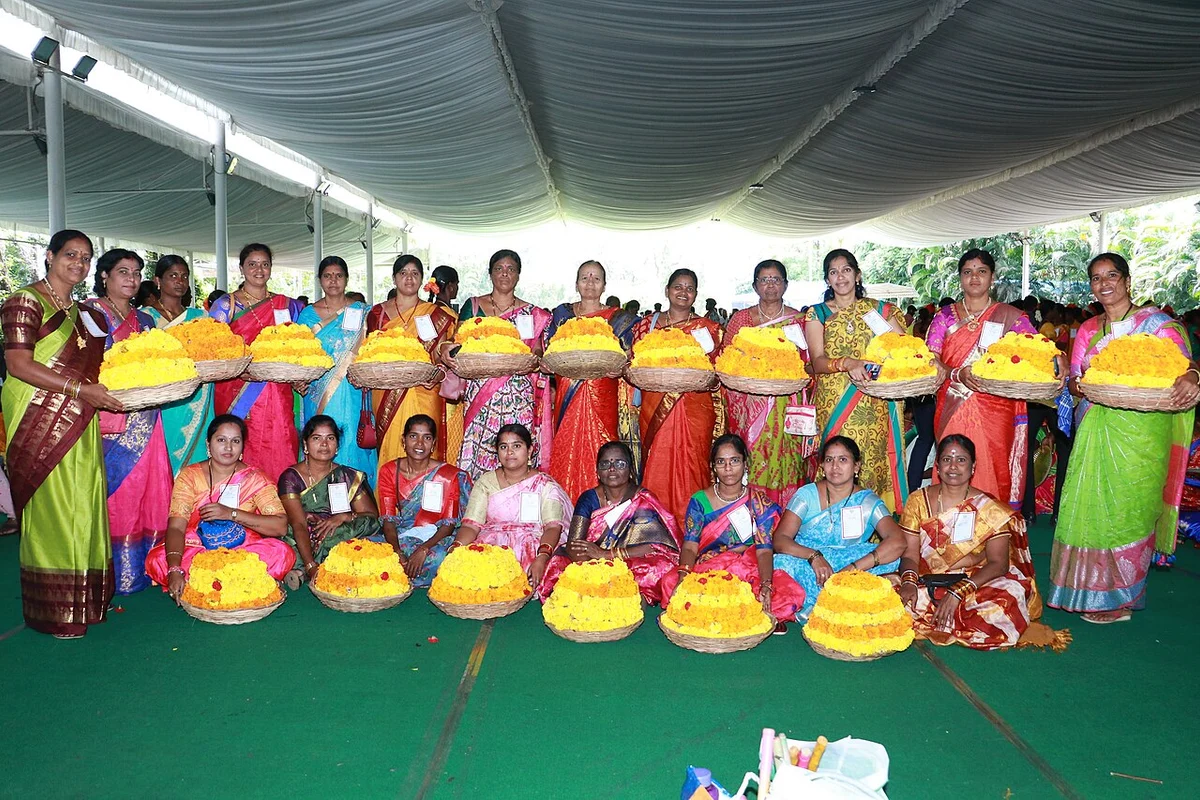
Tiered flowers, songs and shared food brought Telugu families together in Townsville on 17 October 2026 for a Bathukamma festival organised by the Telugu Association of North Queensland, known as TANQ. The gathering connected a specific Telangana tradition with family and community life in North Queensland.
Children, parents and grandparents took part alongside members of the wider Townsville community. Janelle Poole, the Queensland state member for Mundingburra, attended and joined participants in dancing.
This was a community celebration held earlier in October, rather than a festival taking place on 29 October. Its significance lies in the practice itself: arranging flowers, remembering songs and making room for people of different generations to participate.
What happened at the Townsville gathering?
TANQ brought people together around floral arrangements, Bathukamma songs, folk dancing and Telangana food.
The programme gave a local setting to a festival associated with women and the seasonal flowers of Telangana. Poole met community members and took part in the dancing. Those details describe participation at the gathering; they do not establish how every attendee understood the occasion or what lasting effect it had on their sense of belonging.
The event also offered a meeting point for families whose relationship with Telugu language and tradition may differ across generations. A child joining a dance, an adult preparing food and a grandparent remembering a song can participate in different ways. None has to stand for the experience of the whole community.
What is the Bathukamma festival?
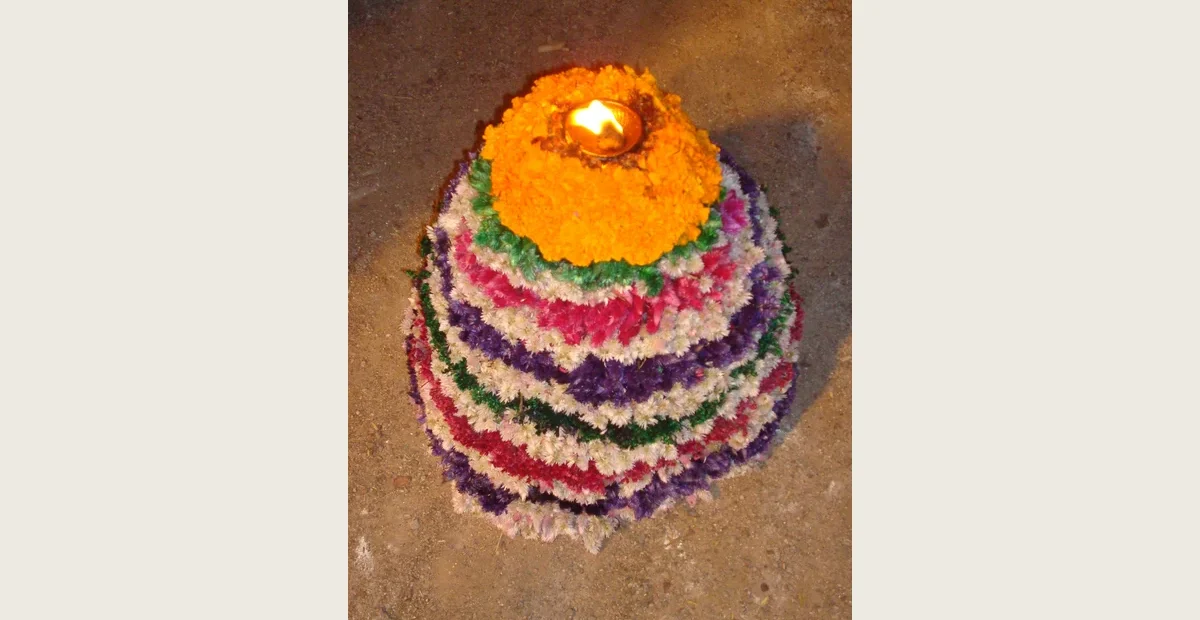
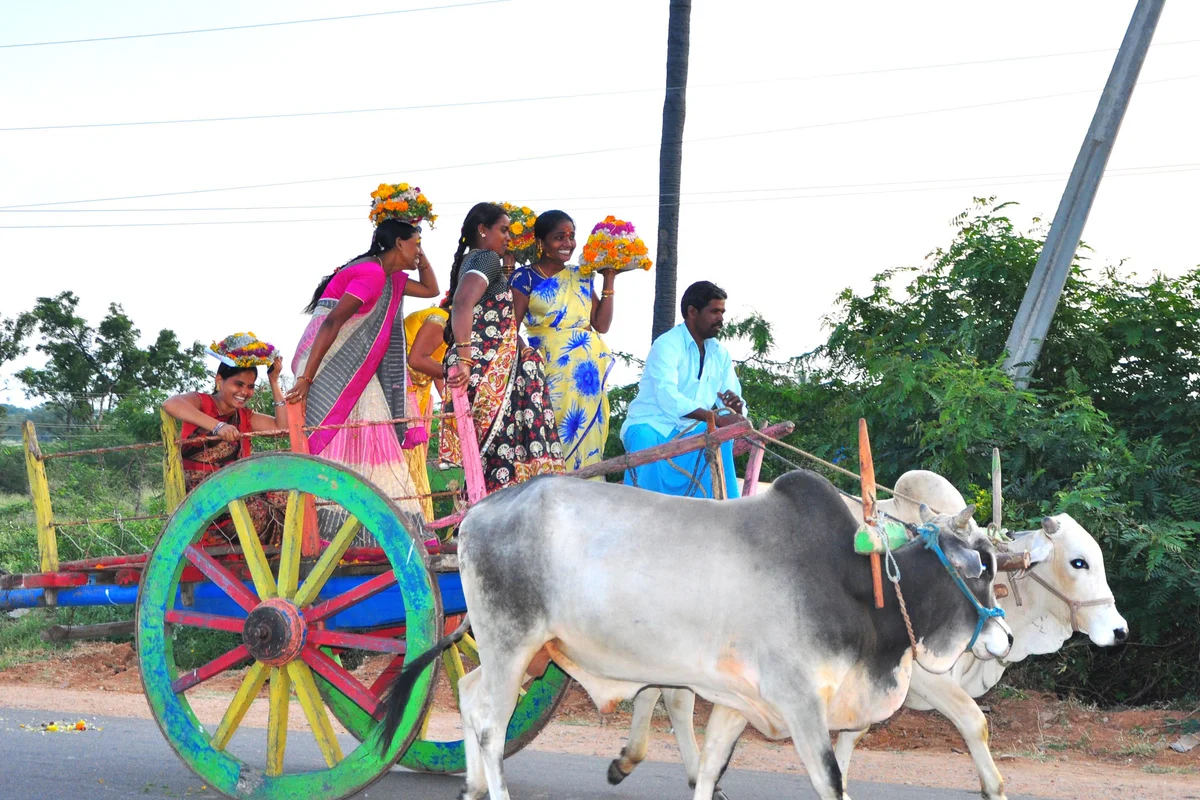
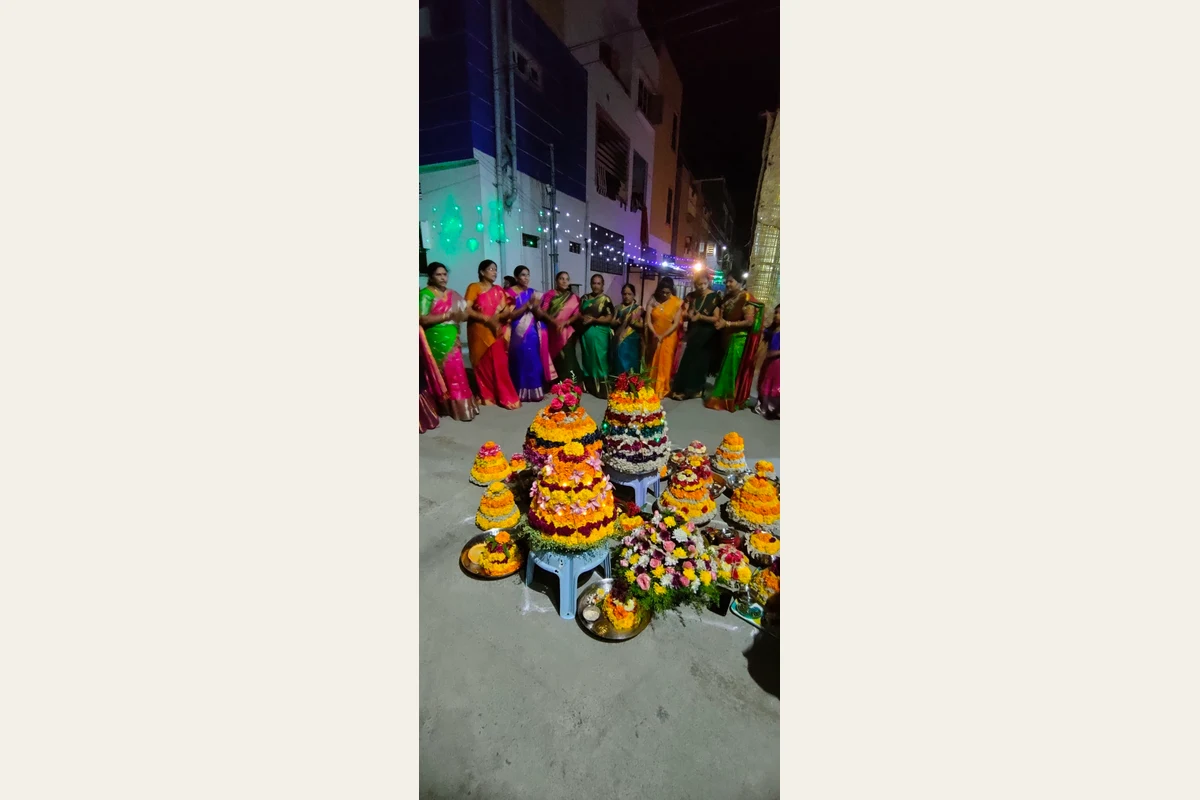
Bathukamma is a Telangana floral festival in which women arrange flowers in layered stacks and gather around them to sing and move in circles.
Telangana Tourism’s account of the festival describes flowers arranged in circular rows, often on a brass plate called a taambalam. Its account places neighbourhood gatherings, songs and women’s participation at the centre of the observance.
The festival is associated with the Dasara season. The concluding Saddula Bathukamma is part of a longer cycle, rather than the name of every community gathering held overseas. A one-day event in Australia should therefore not be taken as evidence that participants reproduced the complete calendar or every ritual described in Telangana.
What does a Bathukamma flower stack represent?
The stack is the central floral arrangement around which participants gather. Government cultural accounts connect it with nature and Goddess Gauramma, also called Gowramma. It is part of a living religious and cultural practice, rather than simply a decorative display.
The Indian Ministry of Tourism’s festival listing describes a nine-day observance with flower preparation, food offerings and a concluding procession and immersion. That is background on the tradition in India, not an account of activities verified at the Townsville gathering.
Why do the flowers matter?
The flowers give Bathukamma its form and connect the observance with Telangana’s seasonal environment.
Tangedu, gunugu, marigold and chrysanthemum appear in official descriptions of the festival. The precise mix can differ according to place and availability. Naming flowers associated with the tradition does not mean that each species was used in Townsville, where the published event accounts did not provide a botanical inventory.
The Telangana government’s state-symbols page identifies tangedu, or Tanner’s cassia, as the state flower and explicitly connects its use with Bathukamma. That gives the floral arrangement a regional specificity which is lost if it is described merely as a general Indian flower festival.
Preparation also involves decisions about layers, colours and the overall shape. An arrangement can make the festival recognisable before any explanation is offered. For someone encountering it for the first time, asking the maker about their choices is more informative than assuming that every stack has an identical recipe or meaning.
There is no need to attach unverified medical claims to the flowers to explain their cultural importance. A plant’s place in a traditional practice is not evidence that immersing it disinfects water or produces a health benefit.
How do songs and circles shape the celebration?
Collective singing and circular movement make participation central to the practice.
The Rajanna Sircilla district administration’s cultural account describes women gathering around the flower stacks and singing together. It notes that the repertoire can draw on religious stories, history and social developments. The songs are therefore more than a soundtrack added to an otherwise visual event.
That account helps explain why the form can carry memories across distance. A flower arrangement is visible, but a remembered verse depends on someone knowing it and someone else hearing or learning it. The Townsville programme included traditional songs; the available reporting did not identify the performers or list the repertoire.
Singing together creates an opportunity to hear Telugu in a shared setting. It is one way to take part, alongside arranging flowers, joining the dancing or preparing food.
For families considering how to keep a home language present, the practical family-language guide sets out activities based on everyday conversation and relationships. A festival can provide an occasion to talk, but it is not a test of a child’s cultural authenticity.
What can be said about the Australian setting?
The Townsville event placed a Telangana observance in a regional Queensland community setting.
Its organiser was TANQ, not a statewide body speaking for every Telugu resident. The published accounts describe families and Australian friends joining in. They do not provide an attendance count, a complete list of volunteers or evidence that the gathering represented all Telugu or Indian residents in North Queensland.
The occasion also brought a local elected representative into contact with participants through dance, food and conversation. That is evidence of an encounter, not a basis for assigning political views to the families who attended or treating the celebration as an endorsement of a party.
What can families take from the gathering?
Families can use cultural occasions to ask about practices, record their own memories and decide what they want to pass on.
A useful starting point is a specific question: who taught a song, how a flower arrangement was made, or how a celebration differed from one remembered in Telangana? Answers may vary within a family. Recording that variation preserves more than replacing it with a single polished account.
The family oral-history guide explains why consent, the original recording and a clear decision about sharing matter. Public attendance is not blanket permission to publish a close-up photograph, a child’s name or someone’s personal recollection.
People attending a future community event should check the organiser’s current notice for its date, venue, participation arrangements and photography expectations. The 17 October gathering has already taken place. The reports available for this article do not establish a further TANQ date or a booking route.
What happens next for this community story?
Any account of a future TANQ celebration will need a fresh programme and the participants’ own voices.
The October gathering establishes a dated example of Bathukamma in North Queensland. What families choose to retain, change or teach next is a question for those families and organisers, rather than a conclusion to infer from a colourful photograph.