An October migration poll puts the share of respondents who thought Australia’s current intake was too high at 55 per cent. The result does not, by itself, measure hostility towards Indian Australians, establish the causes of housing shortages or change anyone’s visa rights.
The figures are attributed to the Growth Intelligence Centre, part of The Growth Distillery. A public account published on 29 October 2026 gives the headline result and some age and state breakdowns, but does not identify the sample size, fieldwork dates, recruitment method or weighting.
That missing information limits what can be concluded. It is reasonable to report the result as a finding attributed to the research organisation. It is not reasonable to present it as a precise, independently tested measure of every Australian’s view, or to calculate a margin of error without knowing how the sample was assembled.
What does the migration poll actually say?
The reported headline is that 55 per cent of respondents considered the current migrant intake too high, while six per cent favoured accepting more migrants.
The account also describes a generational difference, with older respondents more likely to consider the intake too high. It gives selected state results. These are reported survey responses, not counts of visa applications, migrant arrivals or incidents of discrimination.
The public description does not provide enough information to assess the reliability of individual subgroups. A state or age-group percentage can be based on a much smaller number of people than the overall sample. Without those numbers, a small difference between groups cannot confidently be called meaningful.
Nor does the account establish a trend merely by describing concern as increasing. A valid comparison needs an earlier result collected with a sufficiently comparable question, population and method. No such matched comparison is set out in the public account examined for this article.
Which survey details are missing?
The public report omits the information needed to assess how the responses were collected and how far they can be generalised.
Four questions matter. How many people answered? When were they interviewed? How were they recruited? What question and response options did they see? Weighting and subgroup sizes are also relevant, especially when results are presented by generation or state.
The difference between a randomly recruited sample, an established online panel and an open website poll is substantial. They do not automatically justify the same claims about the population. The missing methodology should not be replaced by an assumption about which method was used.
The Growth Distillery’s public website describes its research work, but the material examined did not supply a technical document for this particular migration result. That is a limitation of the evidence available, not proof that no technical documentation exists.
What is the difference between a poll and a population statistic?
A poll records answers from a sample of people. A population statistic estimates a count or change using defined administrative and statistical methods. Public opinion about the intake and the measured number of migrants answer different questions, even when both appear in the same debate.
What do the latest official migration figures show?
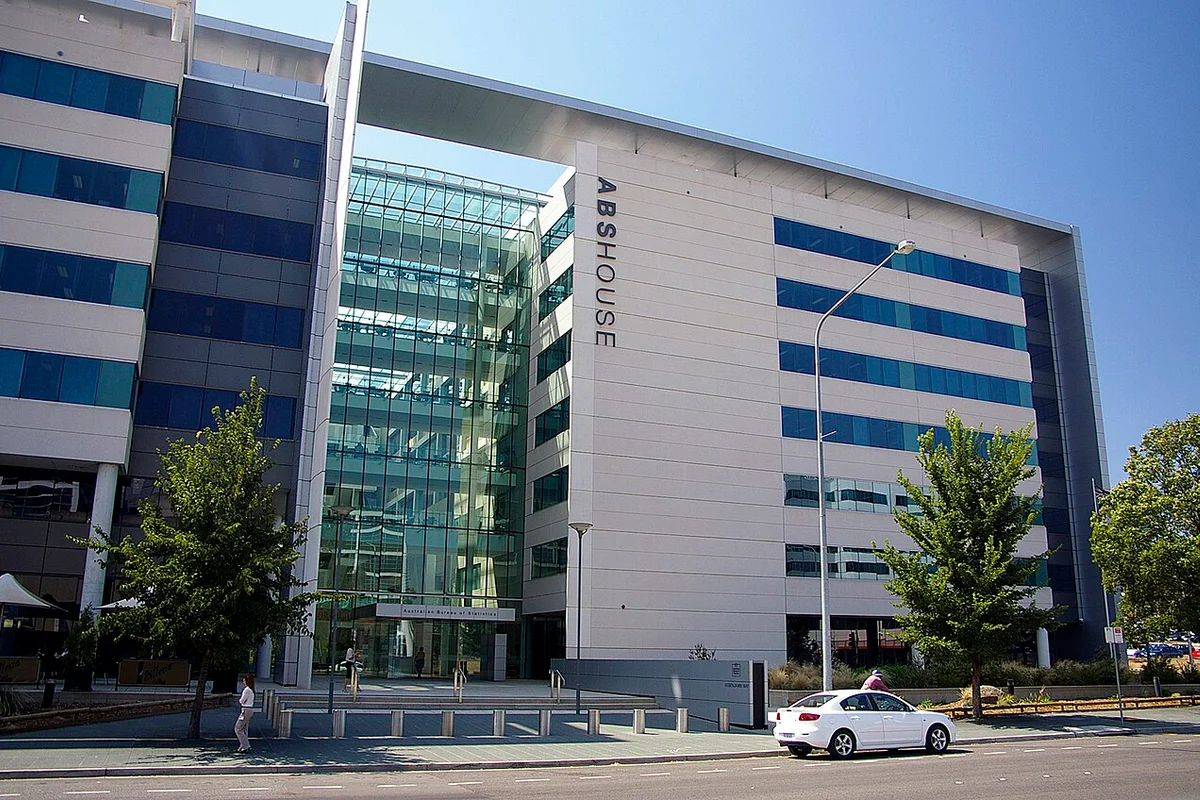
The Australian Bureau of Statistics estimated net overseas migration at 292,100 in the year ending 31 March 2026.
Its March 2026 population release records 557,500 migrant arrivals and 265,400 migrant departures over that period. The difference is the net contribution of overseas migration to the population.
The bureau reports a fall of 17,400, or 5.6 per cent, from the preceding year in that release. Those are the figures for that publication and reference period. Preliminary population estimates can be revised, so figures from an earlier release should not be combined with a later one without checking the series.
| Measure | Reference period | Published figure | What it measures |
|---|---|---|---|
| Respondents saying intake was too high | October poll reported 29 October 2026 | 55% | An attributed opinion result; methodology not provided in the public account |
| Migrant arrivals | Year to 31 March 2026 | 557,500 | People counted as migrating into Australia |
| Migrant departures | Year to 31 March 2026 | 265,400 | People counted as migrating out of Australia |
| Net overseas migration | Year to 31 March 2026 | 292,100 | Arrivals minus departures on the bureau’s migration measure |
The first row must not be read as a percentage of the people counted in the other rows. The poll concerns respondents’ views; the statistical series concerns population change.
Is the permanent Migration Program the same number?
No. Permanent visa planning levels and net overseas migration are different measures.
The 2026–27 Budget’s receipt measures set the permanent Migration Program planning level at 185,000 places, with 132,240 allocated to the Skill stream. The budget also prioritises people already living in Australia across the Skill and Family streams.
A person granted a permanent visa while already resident in Australia is not necessarily a new arrival at that moment. Conversely, temporary residents can contribute to population change when they meet the statistical residence criteria. Subtracting a permanent visa cap from a net migration estimate would therefore not reveal an unexplained extra intake.
The Centre for Population’s 2025 statement explains the distinction between permanent visa grants and the population effect of arrivals and departures. Its date matters: it is a planning document, not an October 2026 count of border movements.
Does concern about numbers mean rejection of multiculturalism?
Not necessarily. Views about the scale of migration and views about cultural diversity are related but distinct subjects.
The Scanlon Foundation Research Institute’s Mapping Social Cohesion 2025 report examines social connections, belonging, immigration and multiculturalism. Its account describes continuing support for multiculturalism alongside pressures associated with the economy and housing.
That is separate research conducted for a different purpose. It should not be merged with the October poll as though both were answers from the same respondents. Nor should one result be used to explain the motives of people in the other survey.
The institute also identifies persistent prejudice and discrimination affecting some migrant and faith groups. Acknowledging that evidence is compatible with recognising that an opinion about aggregate numbers is not automatically a judgement about a particular neighbour, student or colleague.
For Indian Australians, the honest angle is the environment in which a migration debate is being conducted. The October account does not identify an Indian-Australian subsample or establish the views of Indian migrants themselves.
What arguments are being made about migration policy?
The government argues that migration should supply needed skills while settings are tightened to manage numbers and integrity.
The Department of Home Affairs’ policy-change outline sets out measures on compliance, skills priorities, students, visitors and migration agents. It describes intended net migration forecasts of 245,000 in 2026–27 and 225,000 in 2027–28.
Those figures are forecasts, not outcomes already achieved. The government’s stated objectives are also not evidence that every announced measure has commenced in the same form or on the same date. An applicant needs the instrument and guidance for their own visa category.
Concern about housing capacity and pressure on services is part of the policy debate. The poll does not establish how much of a particular housing problem is attributable to migration, construction capacity, household formation or another cause. A causal claim needs evidence beyond a response about whether intake feels too high.
What does this mean for readers?
Check the actual policy affecting you, and distinguish political debate from unlawful treatment.
The Australia character-direction report concerns a specified legal framework. The India–Australia relations guide covers a different set of bilateral issues. Neither should be replaced by a conclusion drawn from a general poll percentage.
If a reader experiences racial discrimination, the Australian Human Rights Commission’s complaints guidance explains the types of matters it can handle and the information to gather. It describes a free complaints process. Keeping the date, location and details of an incident is more useful than treating a national opinion figure as proof of an individual case.
A visa planning level is also not a quota for a particular nationality. Nothing in the reported poll establishes an allocation for Indian applicants, a change to a pending case or a new test for citizenship. Each of those would require its own official policy or legal basis.
What happens next?
Publication of the poll’s technical details would allow a firmer assessment of the headline and subgroup results.
Until then, the finding should remain attributed and qualified. Future official population releases, visa decisions and social-cohesion surveys will each add evidence on their own terms. They will not turn this one percentage into a complete account of Australia’s migration debate.