A city founded in 1727 has a dated reason to attract fresh attention in the year ahead. Jaipur travel 2027 is part of National Geographic’s Best of the World selection as Rajasthan’s capital approaches its 300th anniversary, with its built heritage and living craft traditions at the centre of the case for visiting.
The list, published on 20 October 2026, contains 25 destinations across six continents. Norway’s Vestland region is also included. It is an editorial selection of places, not evidence of a numbered international league table in which all of Norway has defeated every other country.
For Indians abroad planning a return visit, Jaipur is the direct connection to home in this story. The opportunity is to build a trip around actual places and confirmed events, rather than assume that a magazine selection creates an official citywide programme or guarantees access to every attraction.
Why is Jaipur travel 2027 receiving attention?
The city’s 300th anniversary supplies a specific milestone alongside its established architecture, crafts and cultural calendar. UNESCO’s Jaipur City entry dates the walled city’s foundation by Sawai Jai Singh II to 1727. That independent historical record supports the anniversary arithmetic.
The Best of the World selection brings Jaipur into a wider set of recommendations. Its inclusion should be understood as editorial judgement about reasons to visit, rather than a government quality guarantee or a ranking of residents’ daily experience.
The anniversary does not make the city a newly discovered destination. It gives travellers a reason to reconsider what they want from a visit: a short monument itinerary, time with craftspeople, a literary event or a longer stay incorporating family visits elsewhere in India.
What does a Best of the World selection mean?
It is the publication’s annual editorial choice of destinations with reasons to visit in the coming year. Inclusion is not a visa entitlement, an official travel clearance or proof that the list is ordered from best to worst.
What distinguishes the historic city from an ordinary sightseeing stop?
Jaipur’s value is not confined to one palace façade. The UNESCO inscription describes an urban plan, bazaars, streets, gates and buildings whose relationship helps define the historic city. It was inscribed on the World Heritage List in 2019, a date that should not be mistaken for the year of its founding.
That distinction changes how a visitor might organise a day. Moving between individual attractions can show spectacular buildings, but walking through the relevant streets and market areas reveals the city as a planned and inhabited place. The heritage is a setting for ordinary work and commerce as well as tourism.
The Ministry of Culture’s account also connects the city’s grid layout with Indian planning traditions and wider influences. These records offer firmer context than describing every pink building as the same period or treating every landmark as part of one identical history.
Which places should a first visit distinguish?
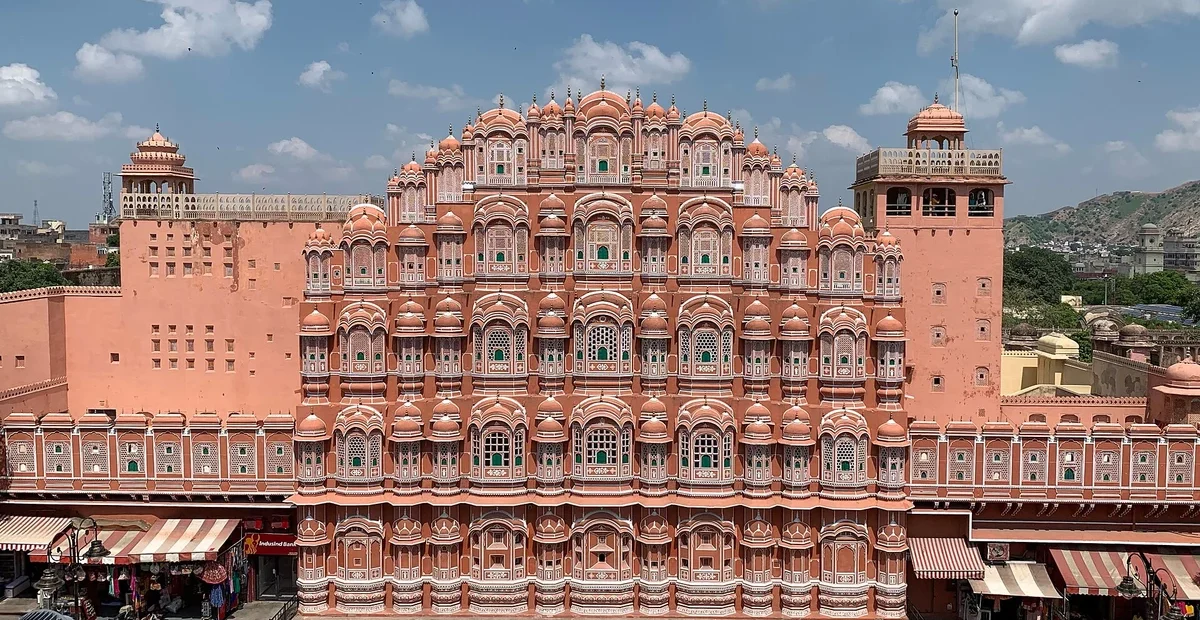
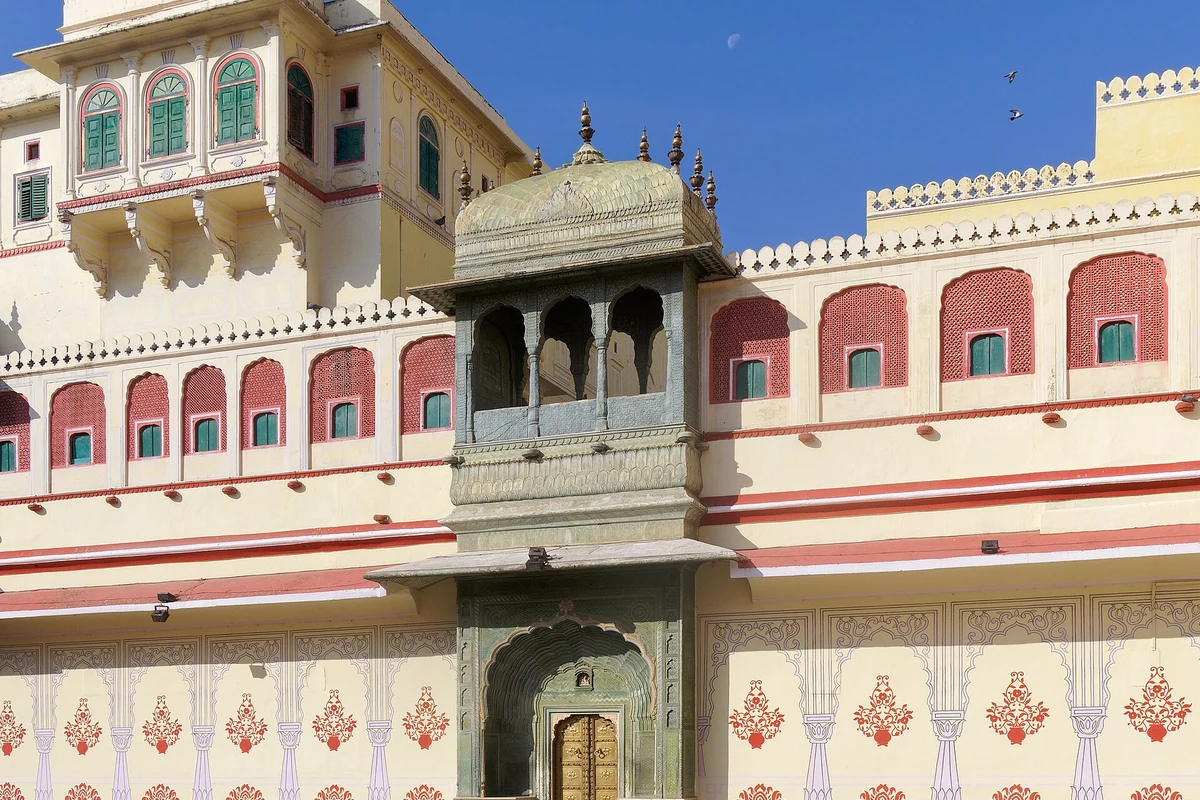
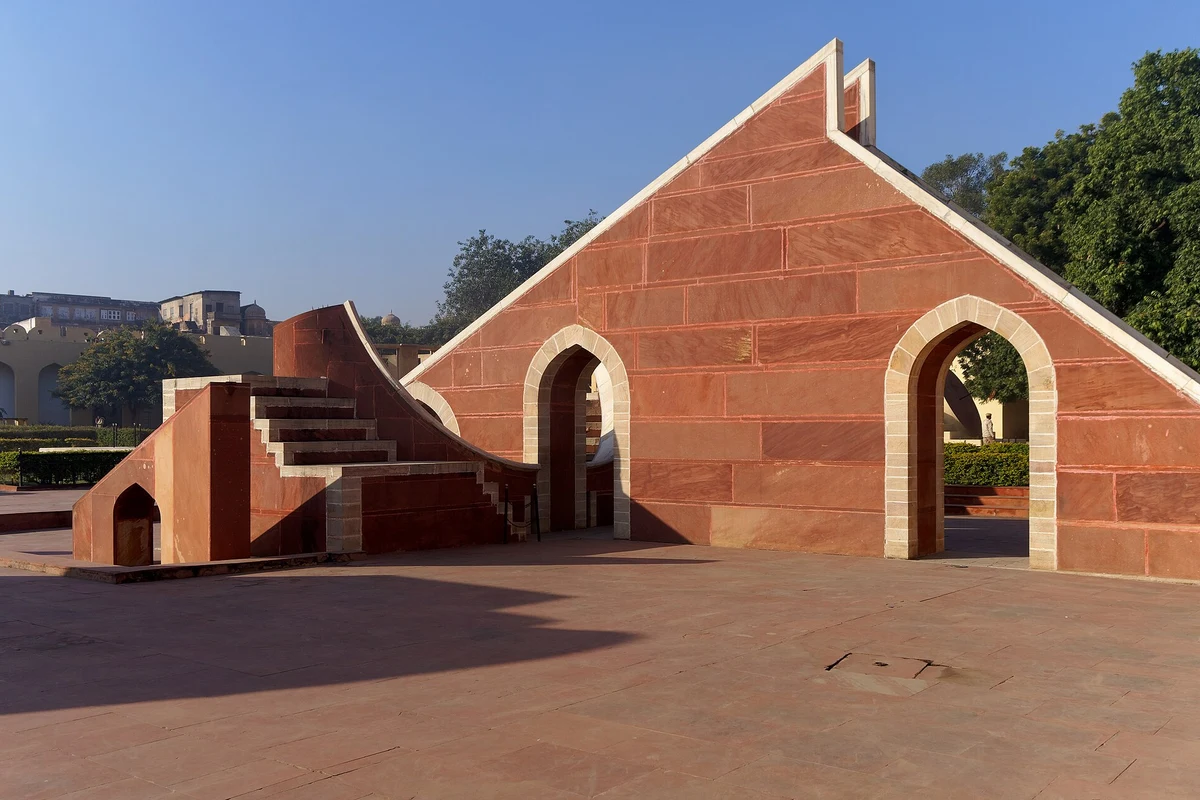
Rajasthan Tourism identifies the City Palace complex, Hawa Mahal and Jantar Mantar among Jaipur’s principal sites. They answer different questions: royal residence and courtly space, an architectural façade associated with the palace environment, and astronomical instruments. They should not be reduced to interchangeable photo stops.
The official Jaipur tourism page is a starting point for the places themselves. Check each attraction’s current operator information for admission, opening times and access arrangements before fixing a detailed itinerary. Those practical terms are not established by inclusion in an international travel list.
| Place or event | Main reason to consider it | What to confirm before travelling |
|---|---|---|
| Historic walled city | Urban plan, markets and built heritage | Route, local conditions and access |
| City Palace and Hawa Mahal | Distinct parts of Jaipur’s architectural history | Current tickets and opening arrangements |
| Jantar Mantar | Astronomical instruments and scientific history | Official visitor information |
| Jaipur Literature Festival | Scheduled public literary programme | Registration, venue and session programme |
When is the 2027 Jaipur Literature Festival?
The organiser lists 14 to 18 January 2027 at Hotel Clarks Amer, Jaipur, for the festival’s 20th edition. The official festival website supplies the dates and venue. A traveller should use that current location rather than an old guide naming a previous site.
Dates and registration are different checks. A festival can have separate arrangements for general entry, students, music events and specialist programmes. Confirm what the chosen registration includes rather than assuming that a reference to a ticket covers every activity across the five days.
A published date also is not a finished session schedule. Anyone building a journey around a particular writer should wait for the relevant programme and confirm the session details. The anniversary and festival offer a practical anchor for a trip without requiring an invented line-up or attendance forecast.
How does Vestland fit into the same list?
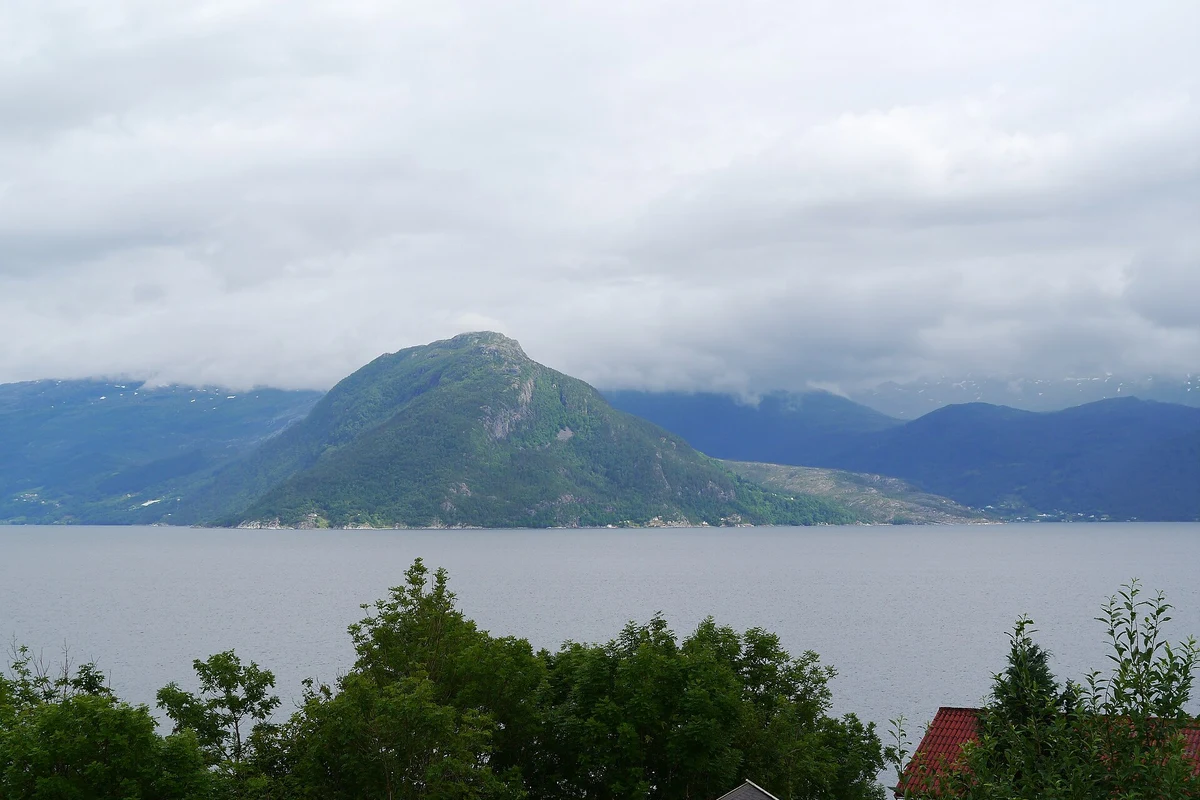
Vestland is a region in southwestern Norway, rather than a synonym for the entire country. Its fjords, Bergen and outdoor activities give it a different travel proposition from Jaipur’s urban heritage and January literary programme. Inclusion on the same list does not make the two destinations substitutes for the same season or budget.
The relevant comparison is the kind of visit being planned. A heritage and festival itinerary in Rajasthan involves different distances, weather considerations and access arrangements from a fjord-based trip in Norway. An attractive list can suggest options, but it cannot settle those practical differences for a family.
There is no verified basis here for calling Norway the single number-one destination in the world for 2027. The accurate wording is that Vestland and Jaipur are among the selected places. That retains the interest of both destinations without manufacturing a contest the original list does not establish.
What should overseas Indian families check before booking?
Build the plan from the purpose of the trip. Someone combining family commitments with the literature festival needs a different amount of time from a first-time visitor trying to see Jaipur’s principal monuments. Check the confirmed event dates, accommodation terms and realistic travel connections before buying a tightly linked package.
Travellers should also check entry requirements for their own passport and status. Indian citizenship, an OCI card and a foreign passport are different documents and can lead to different checks. A cultural connection to India is not, by itself, an entry document.
For broader ideas, the existing heritage-destination guide places Jaipur within a wider return-to-India itinerary. The travel section provides additional context. Neither replaces current operator information for a specific booking.
Why is Jantar Mantar more than a palace attraction?
Jantar Mantar is an observatory, and its instruments were built for measuring astronomical positions with the naked eye. UNESCO’s separate World Heritage record for the observatory describes approximately 20 principal fixed instruments dating from the early 18th century. Their scale and masonry construction are part of their scientific function, rather than simply an architectural style applied to a garden.
That scientific history offers a useful route through the visit. Instead of trying to photograph every structure, a visitor can seek an explanation of what one instrument measures, where the observer stands and how a reading is made. The questions connect the physical site with the astronomical knowledge developed at the court of Sawai Jai Singh II. They also give children a more concrete introduction than a list of monument names.
The observatory and the walled city have separate UNESCO records. A World Heritage entry establishes the basis for recognition; it is not a ticket covering every monument in Jaipur. Families should check admissions with the relevant operator, including any arrangements for guides, photography or access, rather than assume that heritage status creates a common booking system.
How do Hawa Mahal and the city’s founding fit together?
Hawa Mahal was built in 1799, decades after Jaipur’s 1727 foundation. Rajasthan Tourism attributes it to Sawai Pratap Singh. Distinguishing those dates prevents a 300th-anniversary story from incorrectly suggesting that every well-known building is itself 300 years old. A city’s anniversary marks its foundation, while individual monuments can belong to later periods.
The Airports Authority of India’s Jaipur visitor information describes the five-storey palace in the city centre. That gives visitors a specific architectural subject to look for, alongside the astronomical instruments and the wider street plan. These different layers of history can be linked in an itinerary without being flattened into one date or one royal commission.
For a family returning to Rajasthan after years abroad, that distinction also helps allocate time. An exterior view, a museum visit and an observatory explanation are different activities. Check which are actually included in a proposed tour, rather than treating the number of landmarks printed on its advertisement as the amount of time spent understanding them.
What is confirmed about the anniversary itself?
The 300-year milestone follows from the documented foundation date; a complete anniversary programme has not been verified. A travel agent’s reference to the anniversary should therefore be separated from a named event with an organiser, venue and date. The literature festival has its own published dates, but it should not automatically be labelled the official anniversary celebration.
A useful booking record distinguishes confirmed arrangements from hopes: a hotel reservation, a festival registration and a monument ticket are concrete commitments, while an anticipated special programme may change. Ask what happens if an advertised event is postponed or is not included in the package. That question matters before paying, particularly when a family’s India visit depends on school holidays or fixed leave from work.
What happens next?
The next useful details are confirmed anniversary programming, the festival’s session announcements and current visitor arrangements from the relevant sites. Until those are published, the reliable planning anchors are the 1727 foundation, the 2027 anniversary and the organiser’s 14 to 18 January festival dates. Treat further attractions as proposals until their organisers confirm them.