The India New Zealand FTA came into force on Tuesday 20 October 2026, and for the first time every Indian export to New Zealand enters free of customs duty. A day earlier, Commerce and Industry Minister Piyush Goyal flagged off what he called the first-ever JCB machine exported from India to New Zealand, built in Pune.
The agreement is about more than goods. It opens up to 5,000 temporary work places for Indian professionals at any one time, writes post-study work rights for Indian graduates into a treaty, and carries a New Zealand commitment to facilitate US$20 billion of investment into India over 15 years.
What came into force on 20 October?
The India New Zealand FTA took legal effect on 20 October, which fell on Vijayadashami this year. It was signed in New Delhi on 27 April 2026, and New Zealand’s Parliament passed the implementing legislation on 16 September.
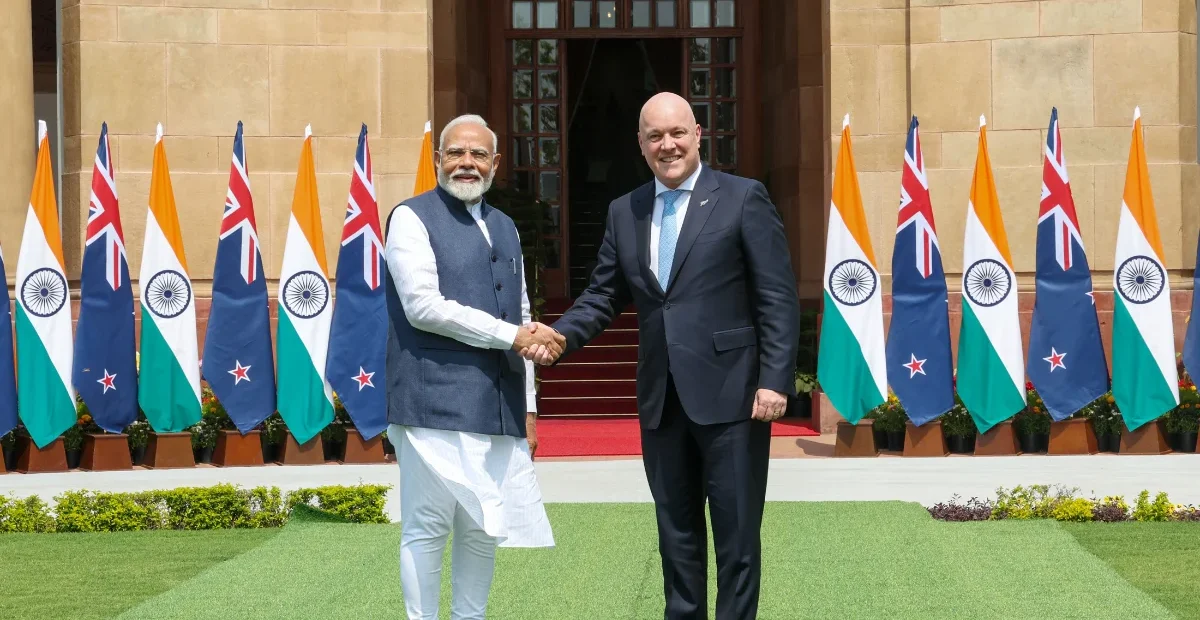
The deal moved quickly by Indian standards. Prime Minister Narendra Modi and New Zealand Prime Minister Christopher Luxon met at Hyderabad House in New Delhi on 17 March 2025, the visit at which negotiations were launched, and both governments announced the conclusion of talks on 22 December 2025. India’s Ministry of Commerce and Industry describes the result as an agreement covering goods, services, investment, mobility and agricultural cooperation.
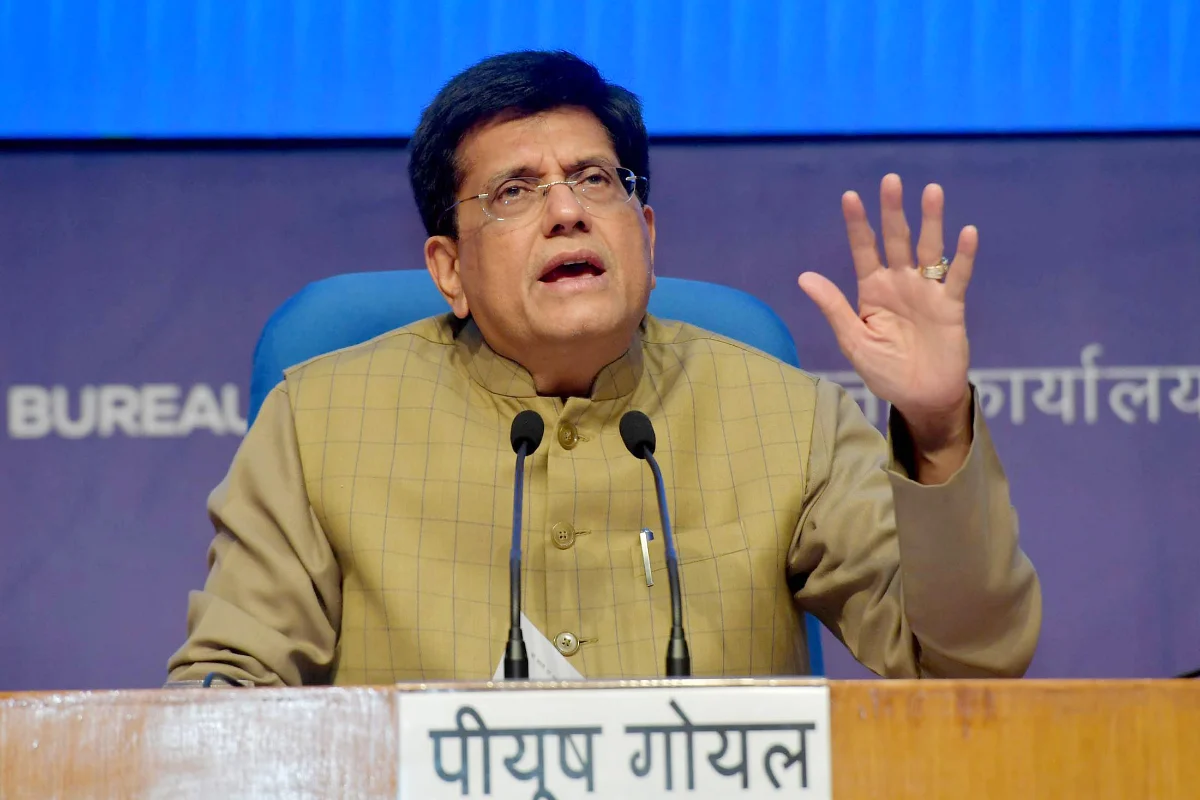
At the conclusion of talks, Mr Goyal said: “Today this Free Trade Agreement is about building trade around people and launching opportunities.” Commerce Secretary Rajesh Agrawal called it “a new generation trade agreement built on tariffs, agricultural productivity, Investment and Talent”.
Why did a JCB machine mark the start?
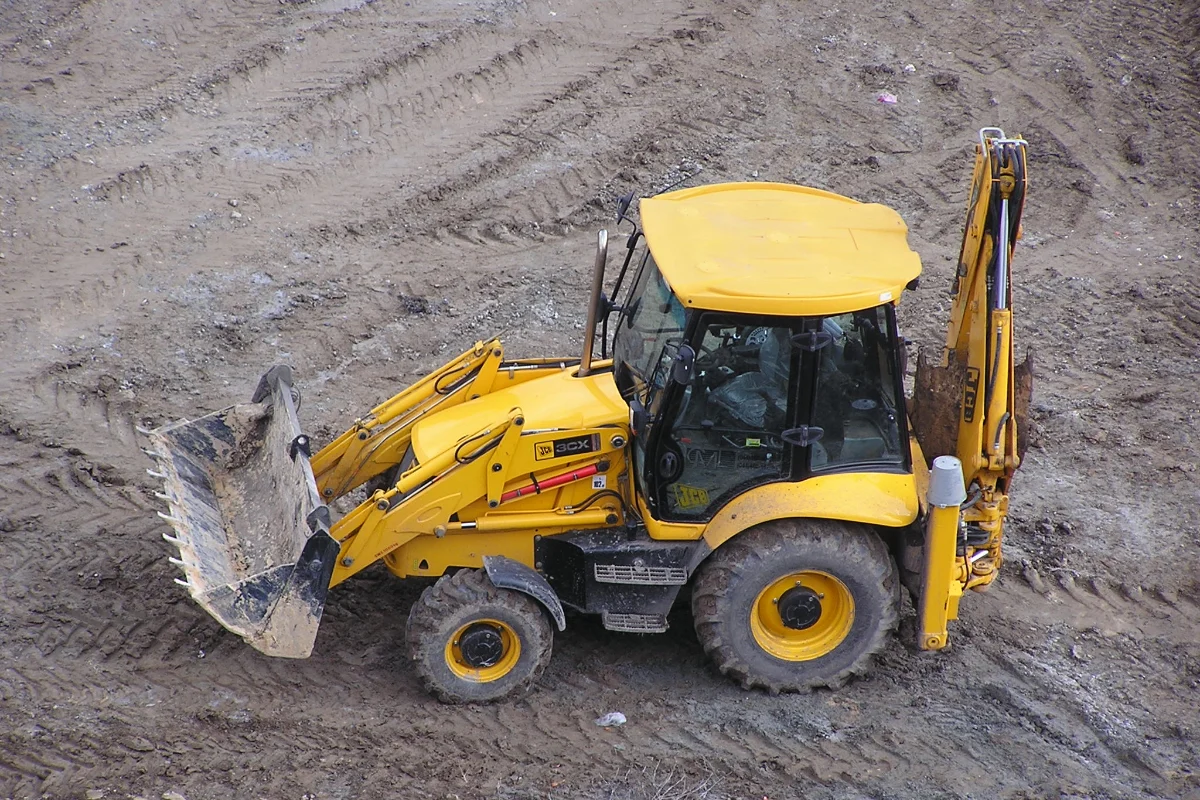
The JCB shipment was a symbolic first export under the new terms. On Monday 19 October, Mr Goyal announced on X that the first-ever JCB machine exported from India to New Zealand had been flagged off, and that it was engineered, designed and manufactured in Maharashtra. “New Zealand will now build with a ‘Made in India’ JCB machine!” he wrote.
The machine was made in Pune. Neither the minister nor the reports of the flag-off named the model or the buyer. Goods expected to ship to New Zealand under the agreement include engineering goods, farm products, gems and jewellery, sports goods, footwear and leather products.
What does the India New Zealand FTA change for trade?
New Zealand has removed customs duty on all of its tariff lines for Indian goods, so every Indian export now enters duty-free. India, in turn, has liberalised tariffs on 70 per cent of its tariff lines, which the Indian government says covers 95 per cent of current bilateral trade.
India kept its most sensitive sectors out. Dairy, sugar, spices, edible oils and rubber are excluded from market access. Apples, kiwifruit and honey from New Zealand get only restricted access, through quotas and minimum import prices, according to India’s official summary of the deal.
| Measure | What the agreement provides | Source |
|---|---|---|
| Indian exports to New Zealand | Duty-free on 100 per cent of tariff lines | Ministry of Commerce and Industry |
| New Zealand exports to India | Tariffs liberalised on 70 per cent of lines, covering 95 per cent of trade | Ministry of Commerce and Industry |
| Excluded from India’s offer | Dairy, sugar, spices, edible oils, rubber and other sensitive products | Ministry of Commerce and Industry |
| Investment | New Zealand to facilitate US$20 billion into India over 15 years | Ministry of Commerce and Industry |
| Bilateral trade | About US$2.4 billion in goods and services in 2024 | Ministry of Commerce and Industry |
The base is still small. India’s commerce ministry put merchandise trade at US$1.3 billion in 2024-25 and services trade at US$1.24 billion, with total trade in goods and services at about US$2.4 billion in 2024.
What is the US$20 billion investment target?
New Zealand has committed to facilitate US$20 billion of investment into India over 15 years. Mr Goyal has said the money could strengthen manufacturing, infrastructure, services and innovation.
The wording matters. “Facilitate” is a commitment by a government to encourage and support investment by others, mainly private and institutional investors. It is not a sum the New Zealand government has promised to spend, and progress will depend on commercial decisions over a decade and a half.
EXPLAINER
What is a temporary employment entry visa?
A temporary employment entry visa lets a skilled worker from one country take a job in the other for a fixed period, under rules set in the trade agreement rather than in ordinary immigration policy alone. Under this agreement, the visa is tied to a genuine job offer from an accredited New Zealand employer and lasts up to three years.
The places are set in the treaty’s annex rather than in New Zealand’s ordinary visa rules alone. The visa does not lead to residence on its own, and holders must leave New Zealand for at least three years before using the same pathway again.
Which Indian professionals can now get New Zealand work visas?
Two new temporary employment entry pathways opened on 20 October. The governments describe them as allowing up to 5,000 Indian professionals in New Zealand at any one time, for stays of up to three years.
The treaty annex published by New Zealand’s Ministry of Foreign Affairs and Trade sets the caps by occupation. Up to 600 places are for occupations “iconic” to India: 100 yoga instructors, 250 Indian chefs, 50 music teachers and 200 Ayush practitioners, covering fields such as Ayurveda, Unani, Siddha and homeopathy. The rest are for skilled professions, with caps of 1,000 in IT, 1,000 in engineering, 700 in construction, 500 in education and 900 in health, the last covering registered nurses and physiotherapists. Together, the published occupation caps total 4,700, below the 5,000 headline figure used by both governments.
Applicants need a genuine job offer from an accredited New Zealand employer, the qualifications and experience set for their occupation, an English-language score, and any professional registration New Zealand requires. A yoga instructor needs a bachelor’s degree in yoga from an institution recognised by the Indian government, for example, while an IT professional needs a relevant degree and at least five years’ experience.
These visas are not a route to residence. The annex says a stay cannot be extended beyond three years, after which the holder must spend at least three years outside New Zealand before getting another visa under the same pathway.
What changes for Indian students in New Zealand?
The agreement locks in post-study work rights for Indian graduates who complete their full programme in New Zealand. Under the students annex, graduates can stay for up to two years after a bachelor’s degree, up to three years after a master’s degree and up to four years after a doctorate. Graduates of STEM or ICT bachelor’s degrees with first-class honours get up to three years rather than two.
The four-year visa for Indian doctoral graduates applies from 16 November 2026. The annex also commits New Zealand to let Indian students work at least 20 hours a week during study, in line with national policy, and bars numerical limits on Indian student admissions.
A working holiday scheme will follow. New Zealand has agreed to introduce one for Indian citizens aged 18 to 30 within two years of the agreement coming into force, with up to 1,000 places a year and stays of up to 12 months.
What does it mean for the Indian community in New Zealand?
New Zealand’s 2023 Census counted 255,261 people who identified as Indian, one of the country’s largest Asian communities. For many of them, the most immediate effects will be on family, business and careers rather than tariffs.
Indian-owned importers, grocers and restaurants could see lower landed costs on goods from India as duties fall away. Families with relatives in professions such as nursing, engineering or teaching now have a defined, if capped, visa route to point them towards. Students already in New Zealand now have post-study work rights written into a treaty.

What is not covered by the India New Zealand FTA?
The most commercially sensitive sector for New Zealand, dairy, is outside the deal. India also excluded sugar, spices, edible oils and rubber, and limited access for apples, kiwifruit and honey. New Zealand’s agricultural exporters gain on other products, but not on milk powder or butter.
The visa pathways are also tightly drawn. They require accredited employers and specific qualifications, and the iconic occupations are capped at a few hundred places in total. They do not replace New Zealand’s existing visa categories, which remain open to Indian applicants on their usual terms.
What happens next?
Exporters and importers can claim duty rates under the India New Zealand FTA from 20 October, provided their goods meet the agreement’s rules of origin. Businesses should check the tariff schedules and certificate requirements with the official sources before shipping.
The four-year post-study visa for doctoral graduates starts on 16 November 2026, and the working holiday scheme must be introduced by October 2028.
The agreement’s passage through New Zealand’s Parliament was covered in the report on the parliamentary vote. For new arrivals, the guide to using an Indian driving licence in New Zealand covers one practical step, and more trade coverage is in the Business section.
What Indians in New Zealand and at home are asking
Can I apply for the new India Skilled or Iconic work visa myself?
Not without a job offer. Both pathways require a genuine offer from an accredited New Zealand employer, plus the qualifications, experience, English-language score and registration set for your occupation in the treaty annex. Check Immigration New Zealand’s official pages before paying any agent, and treat offers that skip the employer requirement with suspicion.
How many visas are available for Indian chefs and yoga instructors?
The annex allows up to 250 Indian chefs and 100 yoga instructors in New Zealand at any one time, within an overall 600 places for iconic occupations. Music teachers have 50 places and Ayush practitioners 200. These are caps on visa holders present at the same time, not annual quotas, so places free up as visa holders leave.
Do the new work visas lead to permanent residence?
No. The treaty visas allow stays of up to three years and cannot be extended beyond that under the same pathway. Holders must then spend at least three years outside New Zealand before getting another visa under the annex. Other New Zealand visa categories, which may lead to residence, remain open on their usual terms.
When do the new student work rights apply?
The India New Zealand FTA is in force from 20 October 2026. The four-year post-study work visa for Indian doctoral graduates applies from 16 November 2026. Students must complete their full programme in New Zealand to qualify, and should confirm current settings with Immigration New Zealand, since visa conditions are set in national policy.
Official sources: the full treaty text is on New Zealand’s Ministry of Foreign Affairs and Trade website, and India’s summary is in the Ministry of Commerce and Industry release.