
Authority to collect rent is different from authority to sell a home. Before signing an India power of attorney abroad, decide exactly which decisions someone else should be allowed to make and which decisions should remain with you.
The familiar labels “general” and “special” are only a starting point. The operative clauses, the property or transaction identified and the formalities required by the receiving authority determine whether the document does the intended job.
Official legislation and consular guidance checked on 16 October 2026 show why the process has separate stages. A signature authenticated overseas does not by itself settle Indian stamp duty, registration or a bank’s requirements for acting on the authority.
What should an India power of attorney authorise?
It should authorise the acts genuinely needed for the specified task, with the principal, agent and subject matter clearly identified. Begin with a transaction list before choosing a template.
For a rental property, that might mean collecting rent, communicating with the tenant and arranging repairs within a stated budget. A proposed sale raises different questions about negotiating, signing, receiving money and presenting documents for registration.
The Indian Contract Act’s agency provisions distinguish the principal, who grants authority, from the agent acting for them. They address the scope of authority, delegation, accounts and conflicts of interest.
Give the drafter a list of intended acts and explicit exclusions. Ask whether borrowing, mortgaging, gifting, selling to the agent or appointing another person should be prohibited. Do not assume a broad document excludes a sensitive power because you never discussed it informally.
Does an attorney under a power of attorney have to be a lawyer?
The word describes a person authorised to act for the principal in the document’s specified matters. It does not itself mean that person is a legal practitioner. Choosing the agent and obtaining legal drafting assistance are separate decisions.
How do limited and general powers differ?
A limited or special power is directed at specified acts, while a general power may cover a wider range of affairs. The actual wording remains more informative than the heading.
Use a task-based comparison. If the purpose is one registration appointment, ask why a clause permits management of every property or operation of every account. If several recurring tasks are intended, make sure each needed power is expressed without handing over unrelated decisions.
| Decision | Narrower approach | Question before signing |
|---|---|---|
| Purpose | Identify a property or transaction | Does the wording reach unrelated assets? |
| Money | Specify accounts and payment route | Can the agent receive cash or redirect proceeds? |
| Delegation | Expressly address substitute agents | Can authority pass to someone you have not chosen? |
| Duration | Use a clear endpoint where appropriate | What happens after the task is complete? |
| Reporting | Require copies, receipts and accounts | How will you verify what has been done? |
These are drafting questions, rather than a ready-made legal instrument. A clause that looks restrictive in isolation may be widened by another clause elsewhere in the document.
Who should approve the format before you sign overseas?
Ask the authority that will receive or rely on the document to confirm its requirements before arranging execution. For a property transaction, that includes checking with the relevant Indian registration office through your adviser.
A bank, court and property registrar may need different wording or supporting documents. Obtain the applicable checklist and confirm whether an original, photographs, identification copies, witnesses or a particular authentication route are required.
Check the Indian mission responsible for your place of residence, rather than copying the procedure from another country. The Consulate General of India in Houston, for example, lists general power of attorney within its miscellaneous consular services and explains its service arrangements.
That example establishes an official starting point, not a worldwide checklist. Fees, appointments, outsourcing arrangements and jurisdiction can change. Save the instructions you are using and resolve differences with the receiving authority before signing.
Is notarisation the same as an apostille?
No. Notarisation and an apostille perform different authentication functions, and neither establishes that the powers granted are appropriate for your transaction.
India’s Ministry of External Affairs states in its apostille guidance that documents apostilled by a member country of the Hague Apostille Convention should not require further attestation or legalisation for use in India.
The ministry’s clarification on acceptance addresses that authentication issue. It does not say that an apostille replaces applicable Indian stamp duty or registration requirements.
Before booking appointments, ask which route applies to your particular document, country and receiving authority. Avoid paying for successive attestations merely because several intermediaries offer them. Equally, do not omit a required step on the assumption that a local witness signature is enough.

What does Indian registration law recognise from abroad?
Section 33 of the Registration Act recognises specified forms of authenticated authority for the purpose of presenting documents under section 32. Its overseas provision includes execution before and authentication by a notary public or specified judicial or Indian consular authorities.
The Registration Act should therefore be read in relation to the role the agent will perform. Recognition for presenting a document is a different question from whether the power of attorney itself requires registration under applicable law.
Ask the registration office to address both questions. Explain the property location, transaction, place of execution and whether the agent will sign, present or admit execution of another document.
Keep the response in writing with the draft. A generic assurance that a document is “valid in India” does not answer which steps the local registrar expects for the planned transaction.
Which deadlines start after the document reaches India?
Stamping and registration can involve different clocks, and state law matters. Do not rely on a single instruction to register everything within “90 days of signing”.
Section 18 of the central Indian Stamp Act provides for a qualifying instrument executed wholly abroad to be stamped within three months after first receipt in India. The official text of that section also addresses presentation to the Collector where the required stamp cannot be applied privately.
Separately, section 26 of the Registration Act addresses documents executed abroad that are presented after the ordinary period. It permits acceptance in the specified circumstances where presentation is within four months after arrival in India and the registering officer is satisfied about overseas execution.
Those provisions are not a universal statement of the duty payable in every state. Confirm the current state statute, amendments, document classification, exemptions and local process with the registration and stamp authorities.
Keep courier tracking and evidence of first receipt alongside the execution date. Ask your adviser to identify each applicable deadline, its legal basis and the event that starts it. Do this before sending the original, rather than after a payment or property appointment has already been booked.
Can a power of attorney transfer ownership of a property?
A power of attorney alone does not convey ownership of immovable property. It can authorise an agent to execute the appropriate transaction, but that is different from the instrument transferring title.
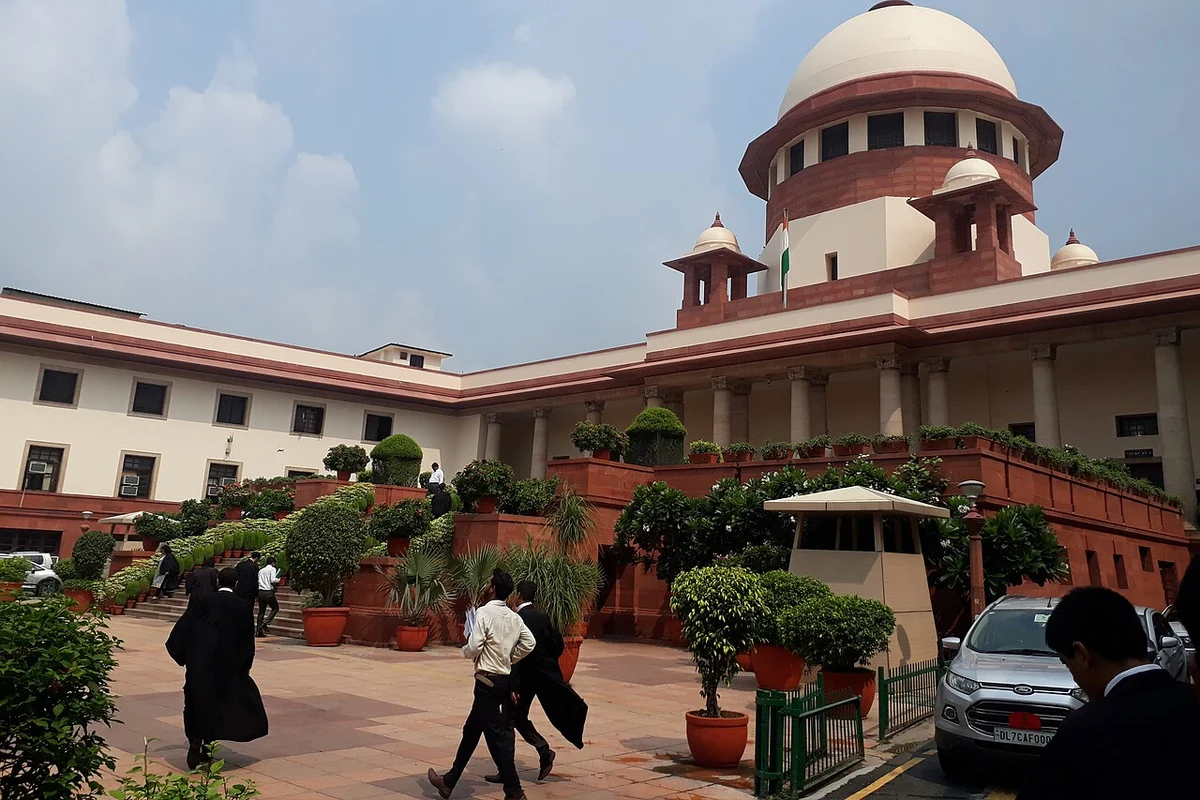
In Ghanshyam v. Yogendra Rathi, decided on 2 June 2023, the Supreme Court explained that an agreement to sell or a power of attorney is not itself a document of transfer. The judgment distinguished questions of possession from ownership.
That distinction matters when a buyer proposes completing a property deal through a general power instead of a proper registered conveyance. Ask which document will transfer title and how its execution and registration will be completed.
The guide to NRI property-sale tax deduction concerns a further, separate part of a sale. Giving an agent authority does not remove the seller’s tax obligations.

How can you reduce the risk of misuse?
Combine a narrow document with independent records of what the agent does. Specify the task, identify the asset accurately, require copies of documents and state how money must be handled.
For a sale, discuss whether proceeds should go directly to the principal’s identified account and whether the agent can agree to a price without separate approval. For repairs, discuss a spending limit and when fresh approval is required.
Never sign blank sheets or incomplete schedules. Read attachments as carefully as the main document. Keep a signed copy and an inventory of originals sent, and confirm that the final signed version matches the one approved for the transaction.
Choose an agent who can keep records and respond promptly, as well as someone you trust. The practical safeguards are useful precisely because distance makes it harder to inspect a property or attend an office yourself.
What should you check about revocation?
Ask how the particular authority can be ended and who must be notified. The Contract Act addresses notice to the agent and third parties, while recognising special cases where the agent has an interest in the subject matter.
Consequently, neither “irrevocable” in a heading nor destroying your own copy is a sufficient explanation of the legal position. Obtain advice on the document and any transaction already completed, and notify relevant institutions through the required route.
Also check what should happen on completion, expiry, death or incapacity. Do not assume that an overseas enduring-power form automatically supplies the intended authority for assets in India.
What does this mean before you send the original?
Complete seven checks: scope, agent, receiving authority, overseas execution, authentication, state formalities and ongoing oversight. Confirm the original’s destination and retain a secure copy of every page.
If the document concerns inherited property, establish ownership and the relevant succession documents separately. The UK inheritance-tax guide for Indian property explains another question that a power of attorney does not decide.
What happens once the agent begins acting?
Obtain the stamped or registered record where required, then check the first transaction against the authority granted. Keep receipts, statements and signed instruments in a file you control.
When the task is complete, review whether any authority should remain active. Deal with expiry or revocation through the applicable formalities and notices, rather than leaving a broad document in circulation because the immediate transaction has finished.