A group of 69 former civil servants has asked the Union government and Arunachal Pradesh to abandon the Demwe Lower project, a 1,750 MW hydroelectric dam proposed on the Lohit river, warning that it would destroy evergreen rainforest, harm endangered wildlife and override the objections of local communities.
In an open letter made public this week, the Constitutional Conduct Group wrote to the Union Minister for Environment, Forest and Climate Change, Arunachal Pradesh Chief Minister Pema Khandu and the Standing Committee of the National Board for Wildlife. The signatories, retired members of the All India, Central and state services, asked that the project be “abandoned forthwith” and that the wildlife committee be reconstituted with a majority of independent, non-government experts.
The Arunachal Pradesh government signed an agreement with the developer, Greenko Demwe Power Limited, in May and has said the project will bring jobs, infrastructure and better connectivity. No response to the letter from the Union environment ministry, the state government or the company had been reported at the time of writing.
What is the Demwe Lower project?
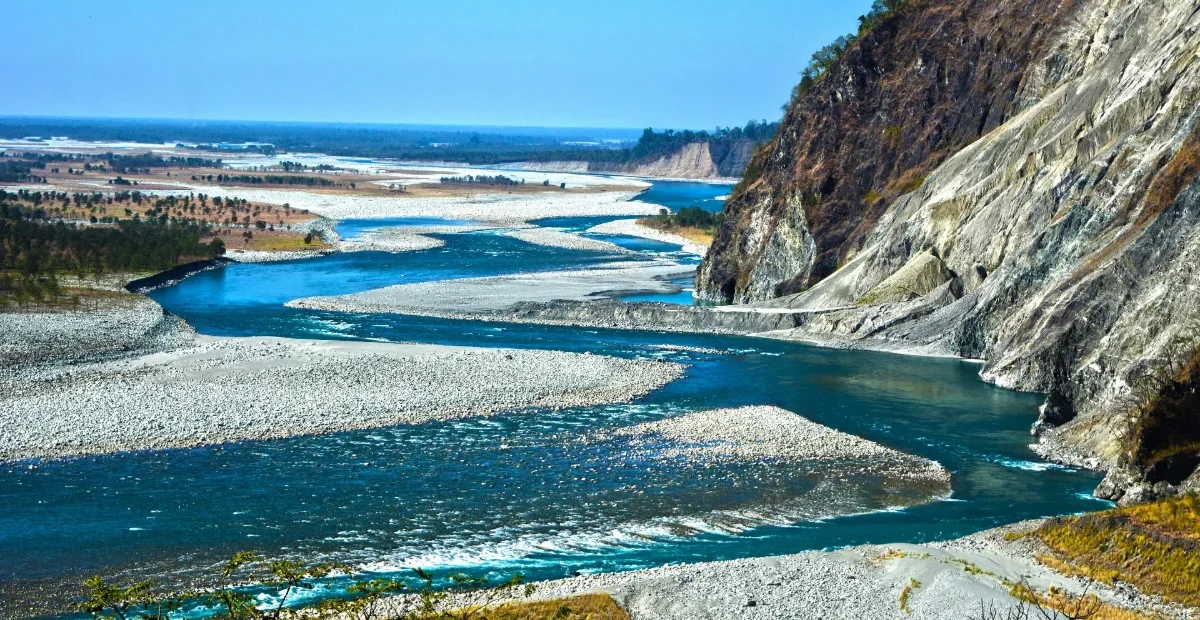
The Demwe Lower Hydroelectric Project is a proposed 1,750 MW concrete gravity dam across the Lohit river, a tributary of the Brahmaputra, in Lohit district of eastern Arunachal Pradesh. It would be built near Parshuram Kund and Brahma Kund, sites of religious significance on the river.
According to the letter, the project would divert about 1,416 hectares of forest land, submerge about 1,590 hectares and require the felling of about 43,000 trees in evergreen rainforest. The signatories say the dam site and submergence zone would come within 50 metres of the Kamlang Tiger Reserve and extend into its eco-sensitive zone. The reserve’s notified area comprises a core of 696 square kilometres and a buffer of 87 square kilometres.
The Demwe Lower project was first taken up by a developer called Athena. The letter says Greenko acquired it in 2026. On 27 May, Arunachal Pradesh’s Deputy Chief Minister announced the memorandum of agreement between the state government and Greenko Demwe Power Limited to implement it.
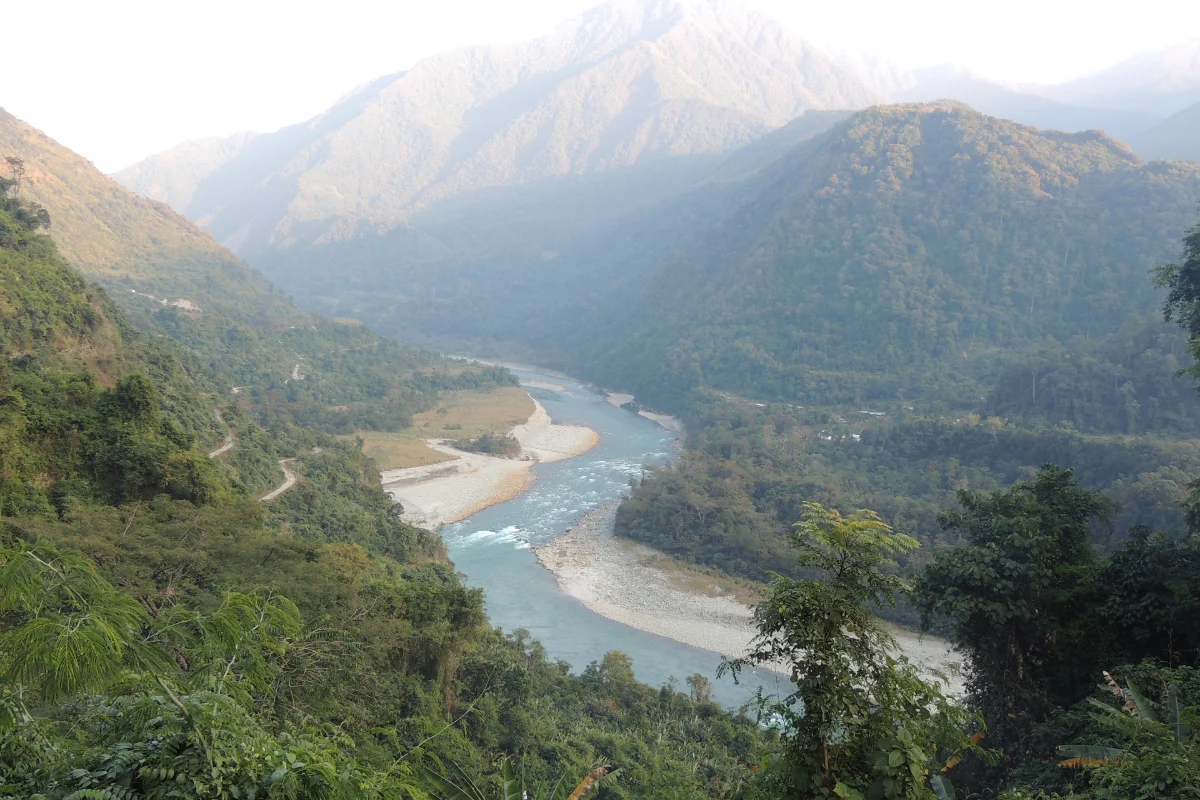
What is the Kamlang Tiger Reserve?
It is a protected forest in Lohit district, covering 783 square kilometres, which the Arunachal Pradesh government notified as a tiger reserve, on the boundaries of the Kamlang Wildlife Sanctuary, established in 1989. The Centre declared an eco-sensitive zone around it in 2024. The letter’s central objection is that the dam would sit at the reserve’s edge.
Why do the former civil servants oppose the Demwe Lower project?
Their first concern is wildlife. The letter says the Lohit basin is a habitat of the white-bellied heron, a critically endangered bird that it estimates at about 60 mature individuals worldwide, and that the dam would destroy its gravel-bed feeding areas and nesting trees. It cites baseline surveys recording 61 mammal and 105 bird species in the area, including the Mishmi takin, red panda, eastern hoolock gibbon and four species of big cat, and warns of breaks in tiger corridors linking Kamlang, Namdapha and the proposed Dibang tiger reserve.
Kamlang’s wildlife has been documented by the state’s own foresters. In 2021, the reserve’s divisional forest officer and a Wildlife Institute of India researcher published the first photographic record of the Mishmi takin and the red goral in the reserve, two of the mountain species the letter says the dam would affect.
Their second concern is the river below the dam. Because the plant would be operated to meet peak demand, the group says, it would store water for about 20 hours a day and then release up to 1,729 cubic metres a second. It argues that the resulting daily surges and low flows would erode banks and disrupt aquatic life downstream, including in Assam’s Dibru-Saikhowa National Park, where grasslands and sandbars support the Bengal florican and the endangered Gangetic dolphin.
Their third concern is consent. The letter says Mishmi tribal groups, indigenous coalitions and environmentalists have opposed the dam since 2010, that tribal organisations and student unions led protests in 2026, and that authorities have cracked down on peaceful protesters. It also says the state chose not to implement the Forest Rights Act, 2006, on the ground that customary community ownership of land made it unnecessary.
What is a peaking power plant?
It is a hydroelectric plant run to supply electricity when demand is highest. Rather than passing the river’s flow through steadily, it holds water behind the dam for most of the day and releases it through the turbines during peak hours. Critics say this creates sharp daily rises and falls in river levels downstream.
How did the project get its clearances?
The letter sets out a contested approval history. It says the project received environmental clearance in 2010, and that in October 2011 the non-official expert members of the wildlife board’s standing committee opposed it while the environment minister went on to grant wildlife clearance. It argues that a minister should not be able to override expert objections in this way.
| Year | Stage | What the letter says |
|---|---|---|
| 2010 | Environmental clearance | Local opposition began immediately |
| 2011 | Wildlife clearance | Granted by the minister despite expert members’ objections |
| 2012–13 | Project stalls | Developer’s finances and protests over Parshuram Kund |
| 2017 | National Green Tribunal order | Approvals suspended; fresh wildlife review and downstream study ordered |
| 2018 | Fresh wildlife clearance | Granted without the multi-season assessment the tribunal sought |
| 2026 | New agreement and review | State signs agreement with Greenko in May; wildlife committee considers change of developer in July |
The group says the 2017 tribunal order required a full reconsideration and an assessment of cumulative downstream impacts, and that the later reviews relied on outdated 2018 data. These are the signatories’ characterisations; the approving authorities have not published a response to them. The letter does not raise seismic risk, and it refers to no court proceedings other than the tribunal’s 2017 order.
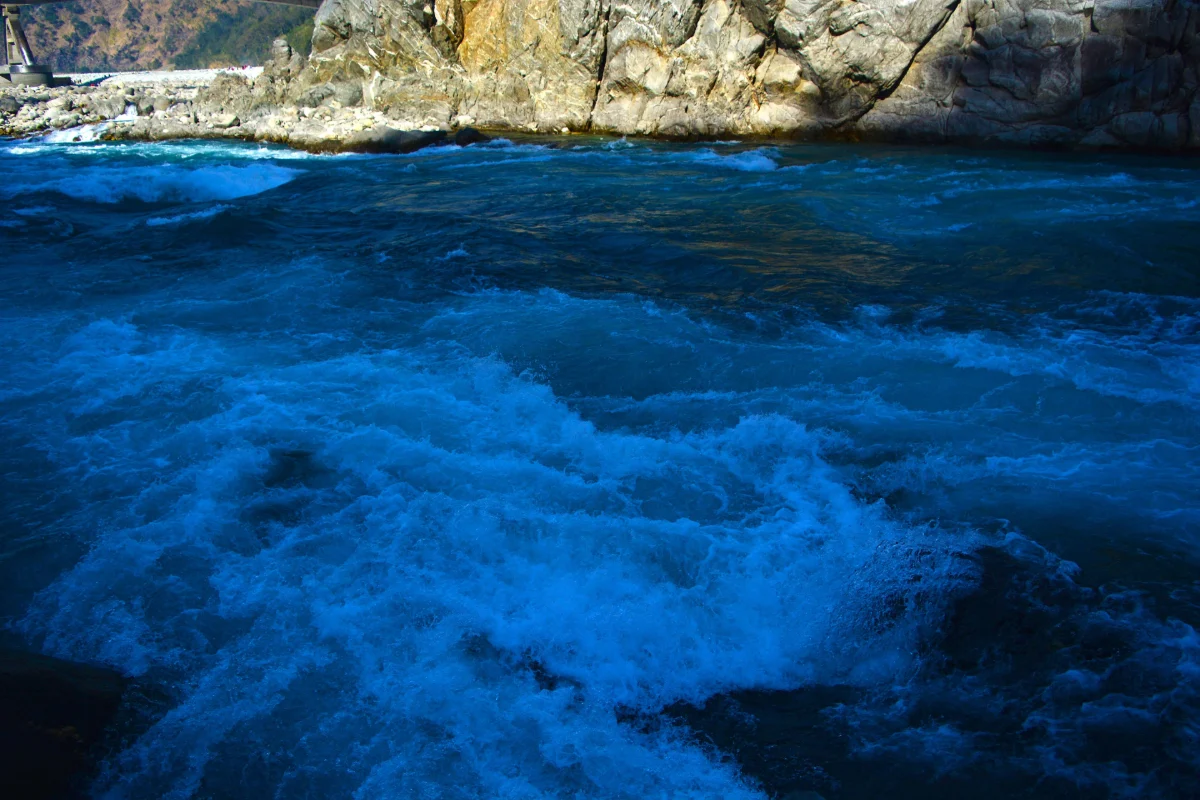
Why does Arunachal Pradesh want large dams?
The state has long been presented as India’s largest untapped source of hydropower. In 2003, the Centre announced plans to harness some 50,000 MW of potential in Arunachal Pradesh, and between 2005 and 2012 the state government is reported to have collected about Rs 1,333 crore in upfront premiums and processing fees for 199 projects, according to research by the Centre of Excellence for Himalayan Studies at Shiv Nadar University.
Many of those projects stalled. Opposition to the 2,000 MW Lower Subansiri dam on the Assam border began in the mid-2000s, and the Idu Mishmi community in Dibang Valley has resisted proposals there, including a plan to notify a tiger reserve that residents said would limit their access to forests. The Demwe dispute is the latest in that history of contested river projects.
What does the government say about hydropower in Arunachal?
The state government has presented hydropower as central to its development plans. When it signed the agreement with Greenko in May, it said the Demwe Lower project was expected to generate employment, accelerate infrastructure development, improve connectivity and stimulate wider economic activity. Deputy Chief Minister Chowna Mein has reviewed progress on major schemes including Demwe Lower, and the government has said it wants to restart projects that had stalled.
At the national level, the government has presented the separate Siang Upper Multipurpose Project as a strategic response to China’s planned hydropower development upstream on the Yarlung Tsangpo. The letter disputes that reasoning for large dams in the state. It argues that a downstream dam cannot by itself prevent upstream diversion without a bilateral water agreement, and says most of the Brahmaputra’s water in India originates in Arunachal Pradesh and Assam.
How does this connect to the Siang protests?
The letter comes as opposition to large dams in Arunachal Pradesh has sharpened. Protests against the proposed Siang dam in East Siang district turned violent on 23 October, prompting a heavy security deployment in Pasighat and restrictions on public gatherings, and arrests and a hunger strike followed. Chief Minister Pema Khandu visited Boleng and Yingkiong in September, stressing the need for dialogue as the government moved ahead with the Siang project. The background to that dispute, and the role of community consent, is set out in our profile of the activist Katon Moyong.
What happens next?
The letter asks the Union environment ministry to withdraw the Demwe Lower project and to rebuild the wildlife board’s standing committee before it considers further proposals. The ministry, the state government and the developer had not publicly responded.
The next decisions to watch are whether the standing committee reopens the questions raised by the 2017 tribunal order, and whether the state’s agreement with Greenko on the Demwe Lower project moves to construction. For communities along the Lohit, and downstream in Assam, those decisions will determine whether the concerns in the letter are examined before work begins.