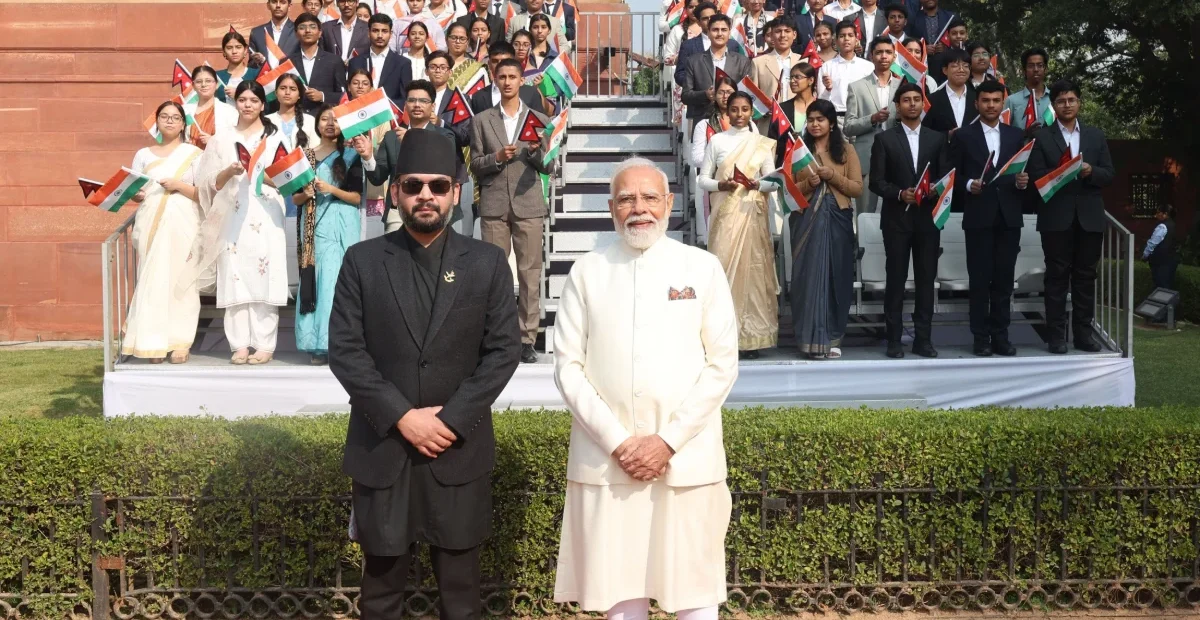
India has announced a development cooperation package worth NPR 24,000 crore, or Rs 15,000 crore, about $1.6 billion, for Nepal during Prime Minister Balendra Shah’s state visit to New Delhi on 22–23 November. The Balen Shah India visit was his first bilateral trip abroad since he took office in March.
Prime Minister Narendra Modi said the package would support Nepal’s reconstruction after the floods in August and give fresh momentum to its long-term development. The two leaders also launched the Sarayu-Kamala Express between Ayodhya and Janakpur, laid foundation stones for energy and border projects, and exchanged eight memorandums of understanding.
For travellers and pilgrims who move between the two countries, the most immediate change is the new train. A commitment on air routes, long sought by Kathmandu, still depends on technical consultations, and Nepal had asked for a larger financial package than the one announced.
Who is Balendra Shah?
Shah, 36, became prime minister in March after elections held earlier this year, which followed the Gen Z-led uprising of 2025. Widely known as Balen, he was previously the mayor of Kathmandu. In September he addressed the 81st session of the UN General Assembly in New York, but New Delhi was his first bilateral destination since taking office.
At the joint press statement, Shah said he hoped trust between the two countries would stand “as tall as the Himalayas”. Modi acknowledged the political changes in Nepal and described the two countries as partners that support each other in difficult times.
The visit followed months of preparation. Nepal’s Foreign Minister, Shisir Khanal, made an official visit to India in June, the first at that level since the new government took office, and Foreign Secretary Vikram Misri travelled to Kathmandu on 4–5 November to prepare for Shah’s trip.
What did the Balen Shah India visit produce?
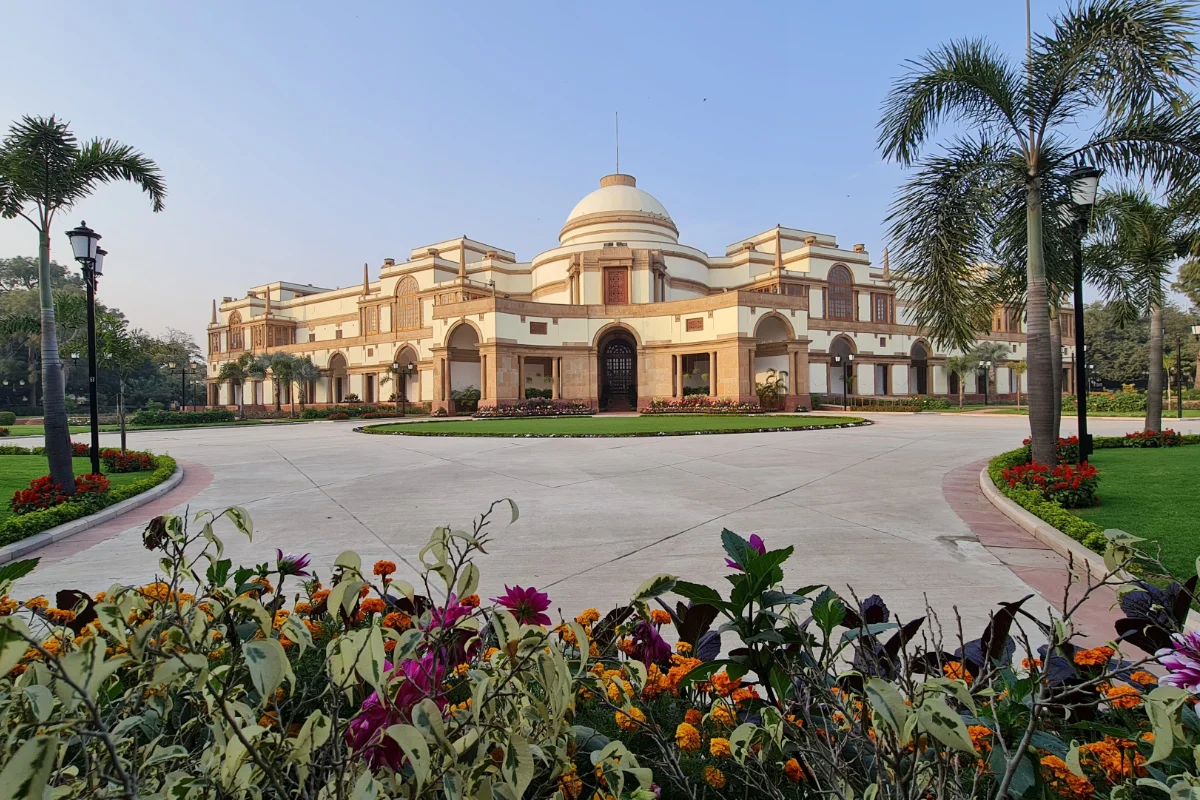
Shah received a ceremonial welcome at Rashtrapati Bhavan and called on President Droupadi Murmu. External Affairs Minister S. Jaishankar called on him, and Modi held talks with him at Hyderabad House and hosted a lunch in his honour. The government’s official list of outcomes sets out the following.
| Area | Outcome |
|---|---|
| Finance | Development cooperation package of Rs 15,000 crore (NPR 24,000 crore) |
| Rail | Sarayu-Kamala Express launched between Ayodhya and Janakpur; final location survey completed for a Raxaul-Kathmandu broad-gauge line |
| Trade and transit | Access for Nepal’s transit cargo through Deendayal port (Kandla, Gujarat) and Paradip port (Odisha) |
| Energy | Foundation stone for the 669 MW Lower Arun hydroelectric project; second phase of the Motihari-Amlekhgunj oil pipeline dedicated; foundation stone for a Jhapa petroleum terminal on the planned Siliguri-Jhapa pipeline |
| Border crossings | Foundation stone for an integrated check post at Banbasa; new motorable bridge between Dharchula and Darchula inaugurated |
| Education and other | An off-shore IIT campus and an agro-industrial park in Chitwan; eight MoUs covering forensics, police training, civil service training, satellite communications, urban development, health, livestock and fisheries, and Ayurveda |
The two governments also adopted a joint vision document, “Viksit Bharat and Samunnat Nepal: Re-imagining the Partnership”, which the Ministry of External Affairs published before the visit. A 24-point joint statement issued at the end of the visit set out the commitments in more detail.
What does the Ayodhya-Janakpur train mean for pilgrims?
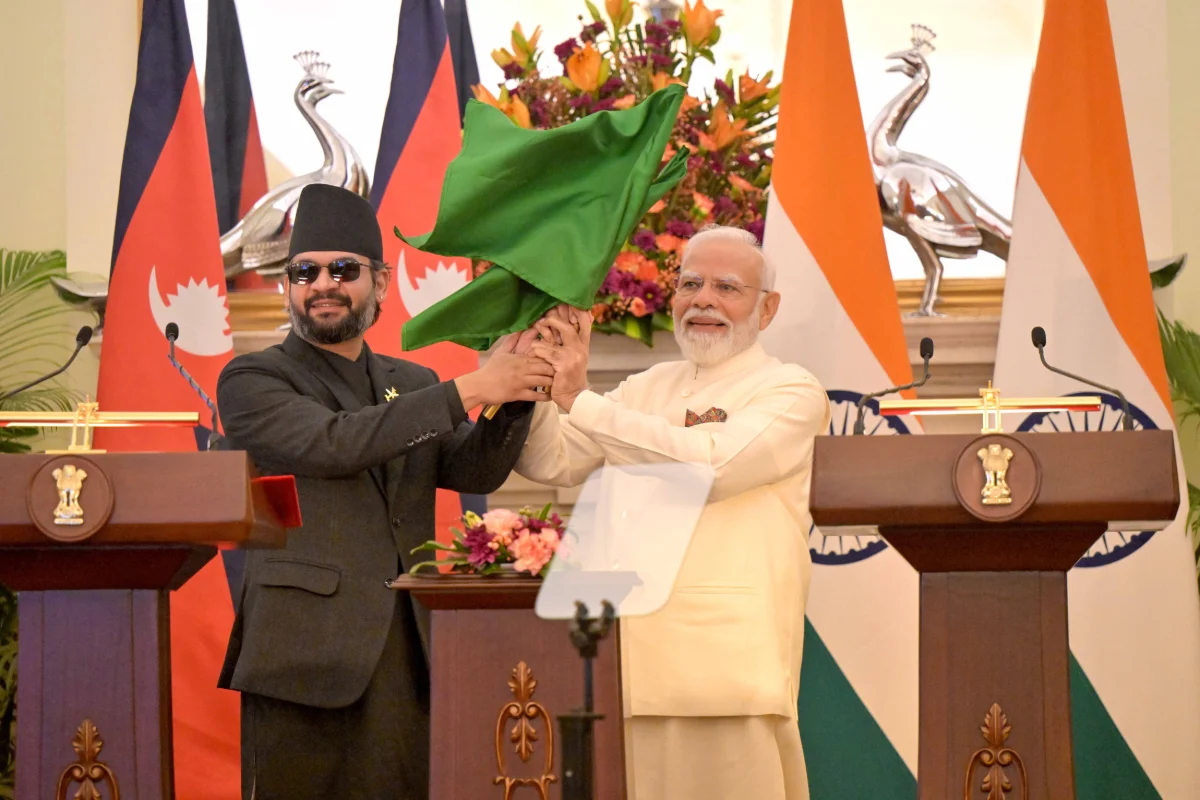
The Sarayu-Kamala Express links two cities central to the Ramayana tradition: Ayodhya, revered as the birthplace of Ram, and Janakpur in Nepal, associated with Sita. Modi and Shah flagged off the service together from Hyderabad House.
The official outcome documents did not set out a timetable or fares. Passengers planning a pilgrimage should check schedules, ticketing and border-crossing requirements with the railway operators before travelling, particularly in the first weeks of service.
What changes for flights between India and Nepal?
According to the joint statement, the existing B345 route linking Kathmandu, Bhairahawa and Lucknow, which currently operates in one direction only, will become two-way. The details are to be settled in technical consultations.
The change matters because Nepal has sought extra entry routes through Indian airspace since 2009 to make its newer international airports at Bhairahawa and Pokhara viable. Before the Balen Shah India visit, Nepali officials said their priority was two-way operation of the L626 route through Mahendranagar in the far west. The two governments agreed in 2016 to make that route two-way, but the change was never implemented, and a Nepali airline once dropped plans for Pokhara-Bhairahawa-Lucknow flights because of the route restrictions.
That route was not among the published outcomes, and Nepal’s other long-standing requests remain unresolved. In the week before the Balen Shah India visit, Nepali tourism officials said India had instead suggested that Nepal let flights to Bagdogra in West Bengal use Nepali airspace, a proposal they said they needed time to study. The background is set out in our report on Nepal’s air-route requests ahead of the visit.
What is an integrated check post?
It is a single facility at a land border that brings customs, immigration and related services together to speed up the movement of goods and people. India has built three in Nepal with grant assistance, at Birgunj, Biratnagar and Nepalgunj, which opened in 2018, 2020 and 2024. Posts at Bhairahawa, Sunauli and Dodhara-Chandani are under construction, and Banbasa is the newest.
Why does the energy support matter after the floods?
The Rasuwa-Bhotekoshi floods in August damaged Nepal’s hydropower plants, which had met almost all of the country’s electricity needs. Nepal, which had exported surplus power to India for years, was forced to import electricity, and India approved supplies in September to help it through the shortfall.
Before the floods, the trade ran the other way. India’s Ministry of External Affairs says Nepal exported about 1,100 MW of electricity to India in the previous year and also sent power to Bangladesh through the Indian grid. Much of the new package is directed at energy and reconstruction, and the foundation stone for the 669 MW Lower Arun project was laid during the visit.
How does the package compare with what Nepal asked for?
It is smaller. Before the Balen Shah India visit, officials in Kathmandu said Nepal would seek more than $2 billion, including about $1 billion in grants and a line of credit of about $1.15 billion through the Export-Import Bank of India, mainly for flood reconstruction and energy projects. The $1.6 billion announced falls short of that request. The timing matters for Kathmandu: Nepal is due to graduate from the United Nations category of least developed countries in November 2026, a change that can affect its access to some concessional finance.
How quickly the money reaches projects is the next test. India’s offers have grown over the past decade. During his 2014 visit to Kathmandu, Modi announced a $1 billion concessional line of credit. India has extended lines of credit worth $1.65 billion to Nepal for infrastructure, and after the 2015 earthquake it committed $1 billion, of which $250 million was a grant and $750 million a line of credit. Nepali officials said before this visit that Nepal had been unable to use earlier credit lines fully because of the conditions attached. For comparison, India’s budget for 2026–27 set aside a grant of Rs 800 crore for Nepal for the whole year.
What does it mean for people who cross the border?
Citizens of India and Nepal can travel and work in each other’s country without visas under long-standing arrangements, and several of the outcomes affect how they cross. The new bridge, on which construction began in October 2022 with Indian grant assistance, links Dharchula in Uttarakhand with Darchula in far-western Nepal, and the planned check post at Banbasa adds to the network of integrated border posts.
Traders gain from access to Deendayal and Paradip ports for transit cargo. The official documents do not estimate the effect of the energy projects on fuel or electricity supply for households.
One subject is absent from the published outcomes: the boundary dispute over Kalapani, Lipulekh and Limpiyadhura, which both governments say should be resolved through dialogue.
What happens next?
The package still has to be allocated to specific projects, and the official outcome list gives no implementation dates for the eight memorandums signed during the Balen Shah India visit. The air-route change depends on technical talks between civil aviation officials. The Ministry of External Affairs’ bilateral brief lists the existing joint mechanisms through which such work is normally taken forward.
For readers in both countries, the practical markers will be the first published train timetable, a confirmed start date for two-way flights on the B345 route, and the list of projects funded from the new package. Each will show how far the commitments of the Balen Shah India visit translate into services people can use.