Sixty village councils should approve discussions before the government proceeds with its Siang dam proposal, Katon Moyong says. For the Adi activist appearing in social-media videos, even preliminary investigations raise a question of consent: who decides what happens to the river and the land beside it?
That question has become harder for Arunachal Pradesh’s government to answer. On 9 November 2026, Arunachal East MP Tapir Gao said in Tezu that the Siang Upper Multipurpose Project would be built. A day later, Adi Bane Kebang United demanded clarification, contrasting his position with Chief Minister Pema Khandu’s assurances to affected communities.
The argument joins three different disputes: a proposed Indian hydropower project, the authority of indigenous institutions, and India’s concerns about a Chinese project upstream. Moyong’s intervention is that the third cannot settle the first two. The people living beside the Siang, he argues, must have a say before the state commits their future to a dam.
Who is Katon Moyong, the activist in the videos?
Katon Moyong is an Adi engineer and anti-dam campaigner from Arunachal Pradesh, also known publicly as “Abor Man”. His name is rendered “Mayong” in some coverage, but the caption accompanying the widely shared press-briefing video uses Moyong.
His public position centres on the proposed Siang Upper Multipurpose Project, usually shortened to SUMP. At a press conference in Itanagar on 5 November, he called for an end to the pre-feasibility process and demanded the approval of 60 village councils before discussions about the project.
He has also called for the release of people detained in connection with the agitation and questioned security deployments in the Siang belt. Those demands place him in a wider movement involving farmers, village institutions, student organisations and the Siang Indigenous Farmers’ Forum, rather than at the head of an entirely new cause created by a video.
Moyong has distinguished opposition to a large dam on the Siang from opposition to every form of development. His public statements leave room for smaller hydropower projects while rejecting the proposed main-river scheme. He has challenged elected representatives to obtain clearer information about China’s upstream plans instead of presenting that project as sufficient reason to proceed locally.
What is the Siang project, and why are surveys contested?
The Siang project is a proposed large hydropower and water-storage scheme whose preliminary investigations are themselves contested; it is not a completed dam or an operating power station.
NHPC’s 2022–23 annual report records that the Ministry of Jal Shakti entrusted preparation of a pre-feasibility report to the company in April 2022. It describes alternative sites and configurations, followed by the need for further geological investigations. The proposal therefore predates the recent videos and China’s July 2025 construction announcement.
Figures circulating about SUMP need that context. NHPC’s 2024–25 annual report lists 11,200 megawatts, while its February 2026 budget-utilisation document uses 11,000 megawatts. The latter document is its February 2026 expenditure statement. These are descriptions of a developing proposal, rather than evidence that a final plant with one settled capacity is already being built.
| Official document | Capacity stated | What the figure describes |
|---|---|---|
| NHPC annual report, 2022–23 | 11,200 or 11,600 MW | Alternative configurations discussed during preliminary planning |
| NHPC annual report, 2024–25 | 11,200 MW | Siang Upper Multipurpose Project entry |
| NHPC budget utilisation, February 2026 | 11,000 MW | Capacity label used in the spending statement |
What is a pre-feasibility report?
A pre-feasibility report, or PFR, is an early technical assessment of whether a proposed project merits further development. Investigations can inform its location and design. Preparing a PFR is different from granting final approval to build a dam.
That distinction is central to the government’s case for gathering information. It is also why opponents are trying to intervene now. They do not want preliminary work treated as an administrative step to which communities can object only after the main direction has been set.
Moyong’s demand, expressed as “No Dam, No PFR”, rejects that sequencing. His requirement for approval from 60 councils is a campaign demand about legitimate decision-making. It should not be confused with a verified count of villages that a final reservoir would submerge.
Why do traditional custodians see more than a compensation dispute?
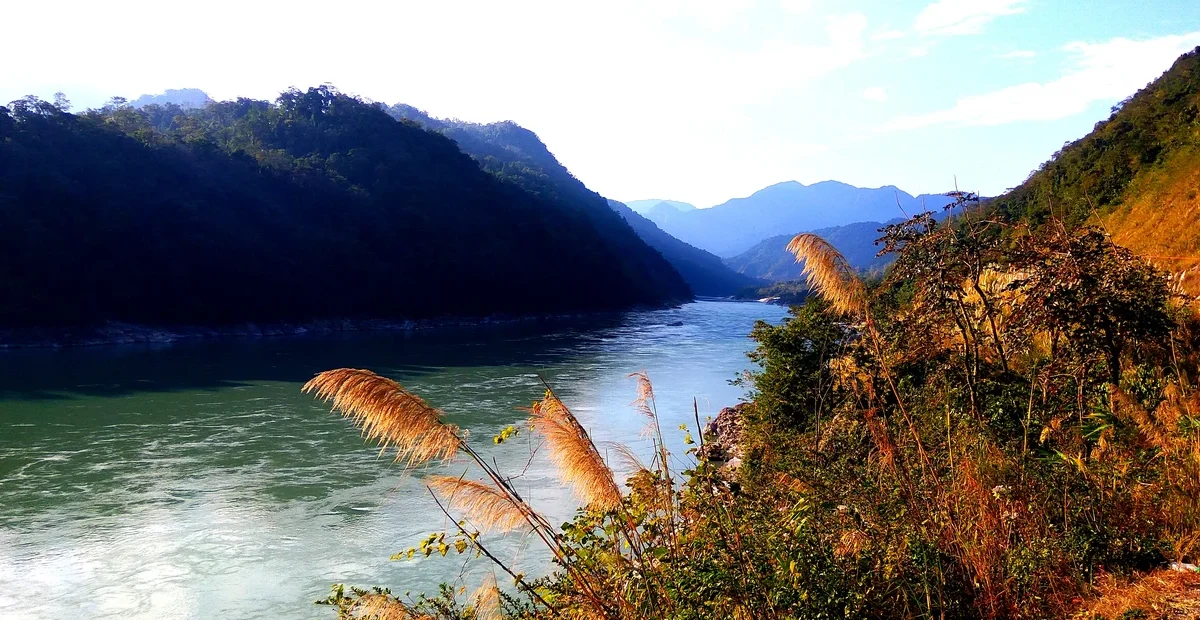
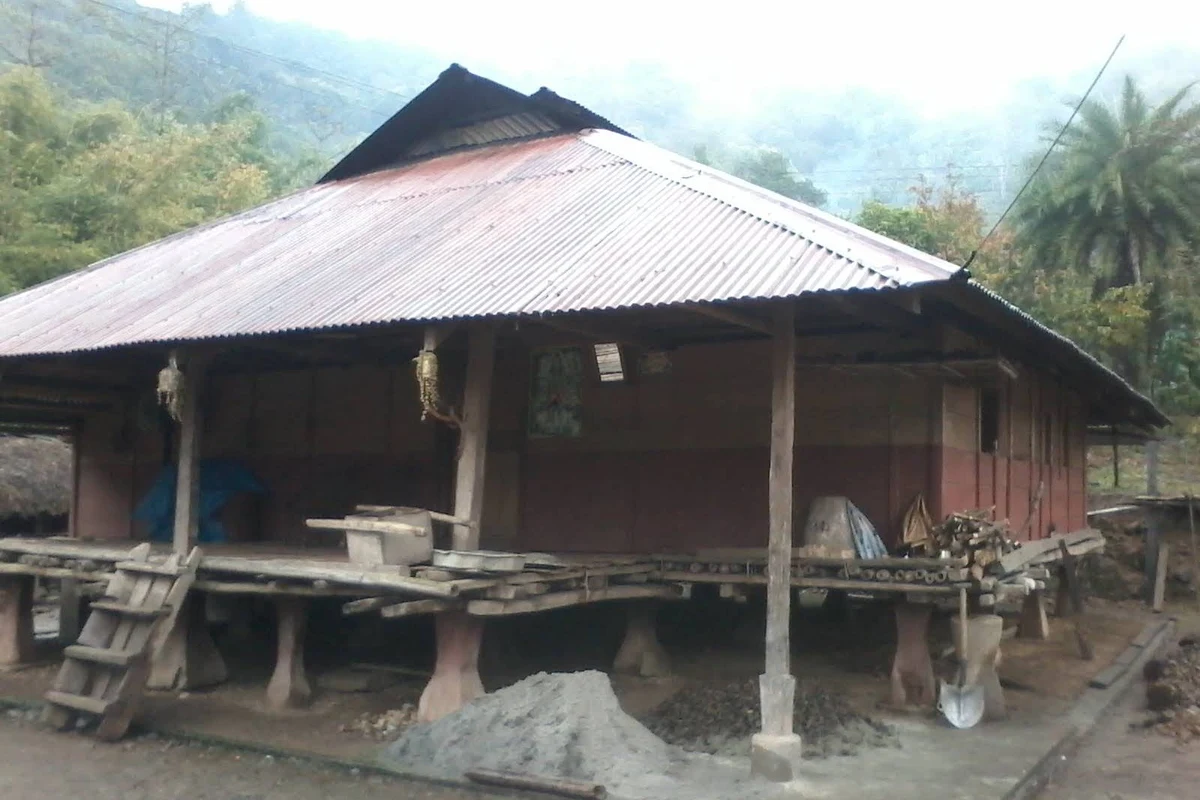
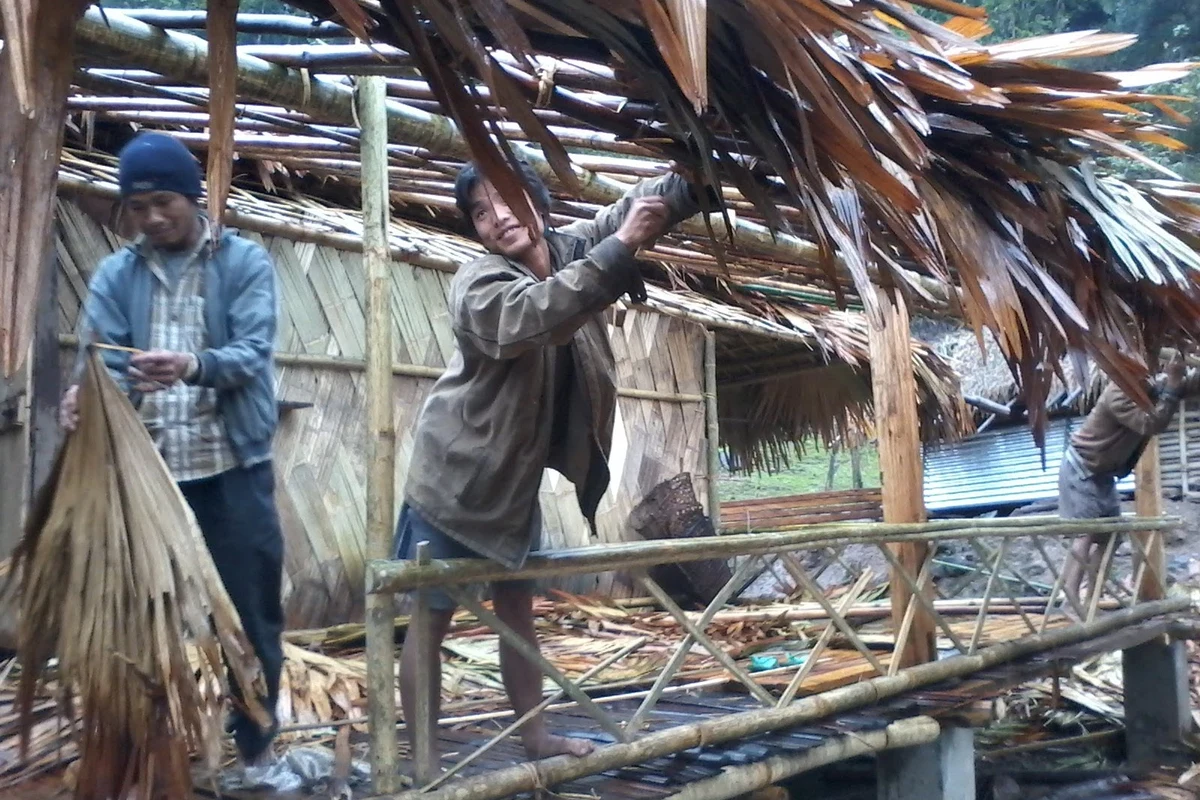
For opposing Adi residents, the threatened loss concerns the continuity of a place and a community, alongside the value of individual plots or houses. Their description of the Siang as Mother Siang expresses a relationship with the river that cannot be captured by a power-generation figure.
Accounts from Geku put farming and the ability to remain on ancestral land at the centre of the objection. Resident Tajom Ejing has questioned how families dependent on that land would sustain their livelihoods. Such concerns explain why a promise to discuss compensation later does not necessarily answer opposition to the project itself.
Village institutions are part of that argument. In field research published in March 2026, researcher Tadu Rimi documented how Adi communities use the kebang, a traditional deliberative council, to discuss the proposed project. A larger gathering at Geku on 20 August 2025 brought together villagers, elders and student representatives.
Rimi’s study of the local response describes kinship, oral histories and attachments to ancestral places as resources in the campaign. It also records differences within communities. Indigenous society is neither a single organisation nor a unanimous voting bloc.
The distinction matters when officials or campaigners invoke “the people”. Attendance at a meeting, an agreement involving particular representatives and a village-wide decision are different kinds of evidence. A credible account of consent has to identify who participated, what information was available and what they actually agreed to.
The Siang Indigenous Farmers’ Forum has separately challenged consultation arrangements. Its representatives, including Tagori Mize, have called for the involvement of private and community landowners. Dubit Siram, representing residents of Parong, has also raised questions about agreements and the process through which support is recorded.
State minister Ojing Tasing has denied claims that the agreement was signed under duress and said preliminary work would continue. Khandu has said no construction decision has been taken. Those responses leave the disagreement over the legitimacy and timing of consultation unresolved.
These are claims about authority as much as about development. They ask whether communities enter negotiations as people entitled to decide, or principally as people whose losses are to be assessed after a preferred project has been selected.
What does the dispute reveal about Arunachal’s politics?
The immediate political fault line is between assurances that communities will be heard and declarations suggesting the project’s outcome is already decided.
In a public statement on 2 November 2026, Khandu acknowledged concerns about homes, land and the Siang. He promised dialogue, transparency and meaningful consultation, and said people’s aspirations and interests would receive due consideration.
Gao’s remarks in Tezu on 9 November prompted Adi Bane Kebang United to ask which position represented government policy. Its 10 November representation to Commissioner (East) Amjad Tak said it would decline further invitations for talks unless the government supplied an acceptable clarification.
Both Khandu and Gao are BJP politicians. The disagreement over their messages therefore cannot be reduced to a conventional government-versus-opposition exchange. It concerns whether an invitation to consult is credible if another prominent representative presents construction as inevitable.
Congress has criticised that inconsistency. Former chief minister Gegong Apang has also opposed the project and supported demands to stop preliminary work. These interventions bring established political figures into a movement whose authority is also claimed through village councils and landholding communities.
The costs of the confrontation extend beyond speeches. The Jawaharlal Nehru College Students’ Union in Pasighat has sought the early release, through applicable legal procedures, of students detained after the 23 October unrest. Its appeal points to December semester examinations. Detention is not a finding of guilt, and alleged offences should not be attributed to an entire protest movement.
What role does China actually play?
China is relevant because it is building a major hydropower project upstream on the same river system, and Indian leaders cite the resulting water-security concerns in support of SUMP. That is different from evidence that China directs the Arunachal protests.
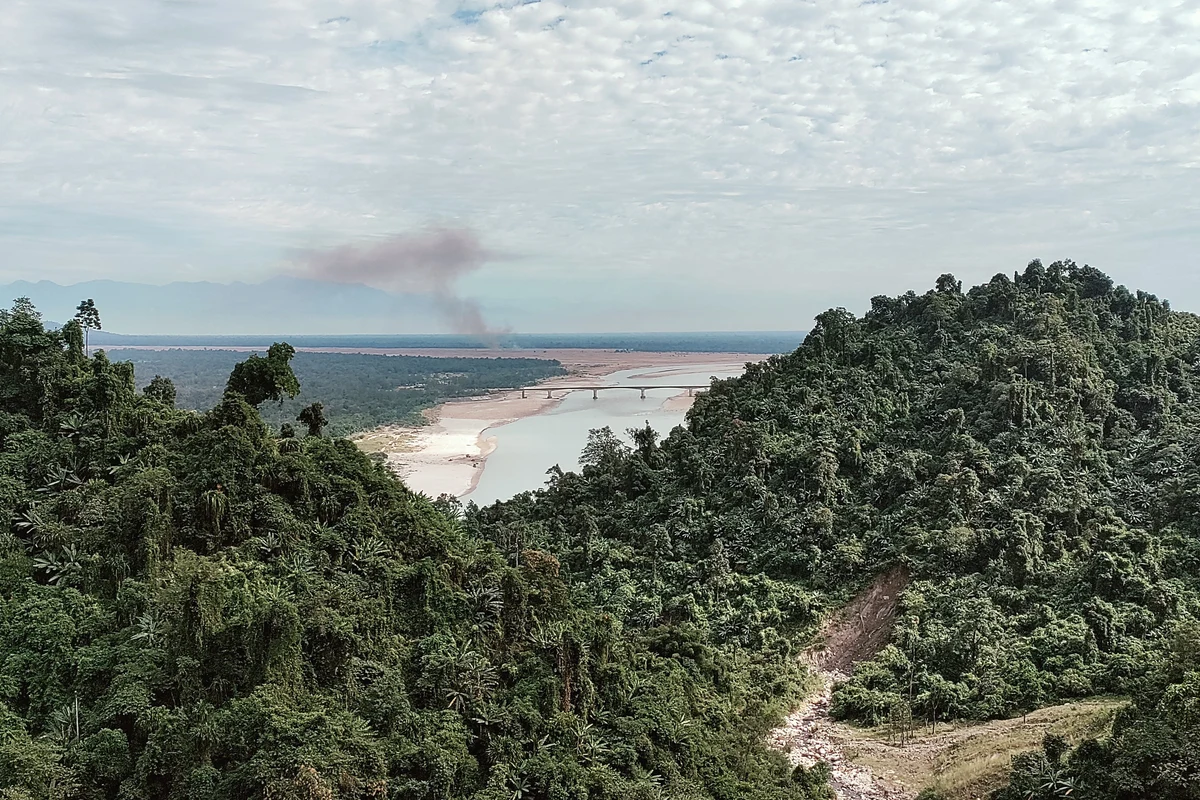
On 19 July 2025, Chinese Premier Li Qiang attended the start of construction of the lower Yarlung Zangbo hydropower project in Tibet. The river flows into Arunachal Pradesh as the Siang and continues through the Brahmaputra system. India’s concern is consequently about decisions upstream affecting people downstream.
In a parliamentary answer dated 7 August 2025, India’s Ministry of External Affairs said it monitored developments and conveyed concerns about transparency, consultation and downstream interests. It described diplomatic engagement and the bilateral Expert Level Mechanism established in 2006.
Beijing’s position is different. Foreign Ministry spokesperson Guo Jiakun said on 23 July 2025 that the project would support clean energy and would not adversely affect downstream areas. That was an official assurance, not an independent assessment establishing that every downstream risk had been resolved.
For Indian supporters of SUMP, storage offers a response to uncertainty about upstream flows. Opponents question whether a second enormous intervention is the right answer and why communities in Arunachal should bear its local consequences. Moyong has urged political representatives to pursue answers from China through diplomacy.
The dispute is therefore also about scale: the state considers strategic and basin-wide interests, while residents ask what happens to their own settlements and authority over land. Neither China’s announcement nor India’s diplomatic objection establishes that the proposed Indian scheme has obtained local consent.
There is no verified evidence in the sources examined that China funds or directs Moyong or the movement. Treating indigenous opposition as proof of foreign interference would make an allegation do the work of reporting. The documented Chinese role is upstream construction and the strategic argument surrounding it.
The wider water-sharing questions are discussed in this earlier analysis of China’s dam and downstream interests. Its April 2025 publication date matters: it predates the later construction announcement.
What does this mean for people following the dispute?
The most useful check is to separate a speaker’s demand, an official assurance and a legally operative project decision. They answer different questions.
For families with land or relatives in the Siang belt, the relevant documents are those identifying the proposed location, the investigation authorised and the people or institutions consulted. NHPC’s dated reports explain the technical stage. The state government’s statements explain its political position. Neither should be substituted for a final, plot-specific account of impacts.
Land records and customary authority also require care. Arunachal Pradesh has its own land legislation. A reference online to protections applying in another state is not enough to establish the consent procedure for this project. The Ministry of Panchayati Raj’s list of notified Fifth Schedule areas does not include Arunachal Pradesh; claims that PESA automatically supplies the answer here need checking.
For readers abroad, a short clip can open an important Indian public-interest story without establishing a separate diaspora campaign. Check the date and full context of footage before sharing it, particularly where a caption turns opposition to a dam into an allegation about national loyalty. Further news reporting should distinguish developments from recycled footage.
What happens next in the Siang dam dispute?
The next test is whether the government clarifies the relationship between consultation and its commitment to the project. Adi Bane Kebang United has made that clarification a condition for returning to talks.
Alongside that political response, the technical questions remain: which configuration is being pursued, what investigations establish and how affected communities are identified and consulted. A settled footprint and credible impact documents would carry more weight than a capacity figure repeated without context.
Moyong is seeking to stop the preliminary process, while the government argues for obtaining the information needed to assess the proposal. Whether dialogue resumes will depend on more than another invitation. It will require an answer to the question now being put directly to Arunachal’s leadership: can the people whose land is at stake still change the decision?