Anthony Albanese told Vladimir Putin to end Russia’s war in Ukraine while sharing an economic forum with him in Shenzhen, then reaffirmed Australia’s support for Ukraine the following morning. The intervention by Albanese at APEC linked the human cost of war with the disruption feeding higher prices and uncertainty across trading economies.
In his 19 November 2026 address, Australia’s prime minister called for more predictable trade, stronger supply chains and cooperation over artificial intelligence. At a press conference on 20 November, he said Putin had heard the message and described dialogue between major powers as preferable to conflict.
The two statements set out a balancing act: Australia is maintaining its opposition to Russia’s invasion while engaging China, its largest export market, and participating in a forum that includes economies with sharply different security interests. They did not announce an end to the war or a new Australian trade agreement.
What did Albanese at APEC say to Putin?
Albanese directly asked Putin to end the war, delivering the message during the 33rd APEC leaders’ meeting on 19 November.
“And I say very directly to President Putin: end your war, end it now,” he said in the official summit speech.
The prime minister described conflicts in Ukraine and the Middle East as major sources of disruption to international trade. His argument connected foreign-policy decisions with supply chains, inflation and household costs rather than presenting peace and economic cooperation as unrelated parts of the meeting.
At the next day’s Shenzhen press conference, Albanese said Australia stood with President Volodymyr Zelenskyy and the Ukrainian people in defending their sovereignty. Asked whether Putin had reacted, he said the Russian president had heard the intervention, as had others in the room.
That account establishes the message Australia delivered. It does not establish that Putin accepted it, agreed to a ceasefire or changed Russia’s military policy. Any such development would need its own announcement and evidence.
Why was the summit photograph controversial?
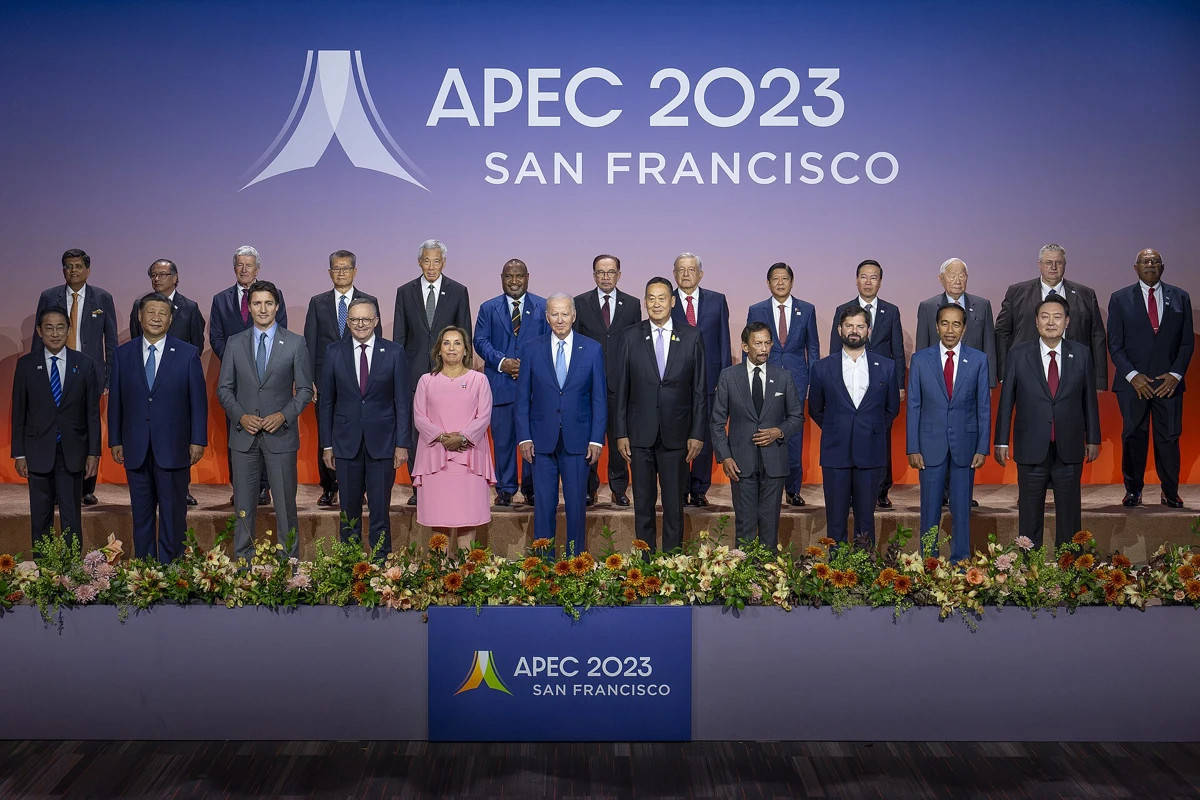
The question was whether appearing alongside Putin weakened the signal of Australia’s opposition to Russia’s invasion.
Australian ministers were questioned about Albanese taking part in a leaders’ group photograph that included the Russian president. Acting prime minister Richard Marles defended participation as part of attending a multilateral meeting hosted by another country, while reiterating Australia’s opposition to the war.
In a 19 November interview, Marles said other leaders with the same position on Ukraine had also participated. Critics’ concern about the image and the government’s explanation of diplomatic protocol are different assessments of the same encounter.
Australia’s substantive position also has a recent documentary reference. Albanese and Zelenskyy signed a bilateral security agreement on 24 September 2026. The government described its purpose as supporting a lasting peace that respects Ukraine’s sovereignty and prevents renewed aggression.
The photograph therefore should be considered alongside the speech and policy commitments. Neither a smiling image nor a sharp public remark, on its own, measures the effect of Australia’s diplomacy on the conflict.
What did Albanese say about the Xi, Trump and Putin meeting?
He welcomed dialogue between the three leaders but maintained Australia’s support for Ukraine and its president.
During the 19 November speech, Albanese welcomed the meeting then due between Xi Jinping, Donald Trump and Putin. By his 20 November press conference, that encounter had taken place. He described the resulting declaration positively, including its references to nuclear weapons and proliferation.
A journalist asked whether peace in Ukraine could be discussed without Zelenskyy present. Albanese’s response was that dialogue was preferable to conflict, while again stating Australia’s position on Ukrainian sovereignty and repeating his demand that Russia end the war.
The chronology matters. An account written before the trilateral meeting should not continue to describe it as merely planned once it has occurred. Equally, a declaration concerning peace and nuclear issues should not be presented as proof that Ukraine has accepted a settlement or that fighting has stopped.
Australia was participating in APEC and conducting its own bilateral engagement. Its prime minister was not announcing a negotiated Ukrainian peace agreement on behalf of the parties to the war.
Why does trade occupy so much of the Australian message?
Albanese argues that Australia’s jobs and prosperity depend on reliable access to overseas markets and a less disrupted trading system.
In his speech, he put annual Australian goods and services trade with APEC economies at almost A$1 trillion and Australian business investment across those economies at around A$2.5 trillion. He said China accounted for more than a quarter of Australian exports.
These figures describe different measures. Annual trade is a flow over a period; accumulated investment is not another year’s exports. They should not be added together to produce a single measure of trade, or presented as new deals signed at the summit.
On 20 November, following a bilateral meeting with Xi, Albanese said stabilising the China relationship had helped trade and people-to-people engagement. He referred to agriculture, services and exchanges between business and other organisations while acknowledging that political differences remained.
The government’s argument is that engagement can continue despite those differences. That is a policy position, not a finding that every commercial barrier has disappeared or that businesses can disregard legal and security requirements.
| Statement or measure | Date or period identified | What it establishes |
|---|---|---|
| Direct call for Putin to end the war | APEC address, 19 November 2026 | Australia’s stated position in the meeting |
| Almost A$1 trillion in goods and services trade | Annual trade cited in the address | Scale of Australia’s APEC commercial relationship |
| Around A$2.5 trillion in business investment | Investment across APEC economies cited in the address | A separate investment measure, not annual trade |
| Follow-up remarks after meeting Xi | 20 November 2026 | Australia’s account of its bilateral engagement |
What is APEC, and is India a member?
APEC is a regional economic forum of 21 member economies, and India is not among its current members.
The official membership list includes Australia, New Zealand, China, the United States, Russia, Canada and a range of other Pacific economies. It uses the term “economies” because the cooperation centres on economic and trade matters.
Does an APEC commitment automatically become domestic law?
No. APEC works through consensus and voluntary commitments. Its cooperation can influence policies and practical procedures, but a summit statement does not itself amend a country’s customs law, visa conditions or a private company’s contract.
APEC’s description of how it operates sets out cooperation across trade facilitation, the digital economy and other policy areas. Implementation depends on the relevant economy and the particular initiative.
For an Indian-origin business in Australia, the relevance is the Australian trading environment. Indian nationality or ancestry does not turn India into an APEC member or create a special entitlement under a regional declaration.
What do paperless trade and AI mean in the speech?
Albanese backed easier adoption of digital trade processes and cooperation on developing and using AI safely.
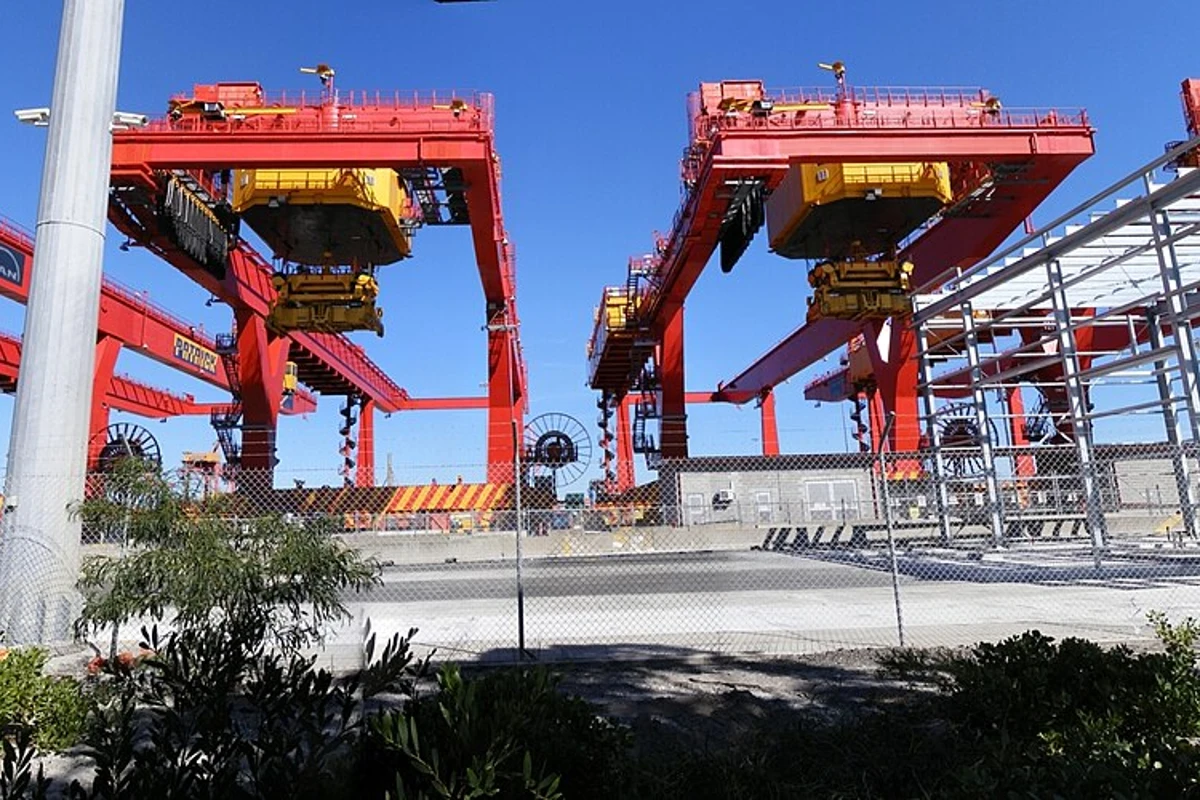
His address supported APEC work on paperless trade, a trade-digitalisation framework and the forum’s digital-economy and AI roadmap. These proposals concern how economies and businesses exchange information and develop systems, rather than a single new benefit available immediately to every trader.
He also said Australia was developing national AI standards. That statement should be distinguished from the final publication of a standard, its legal status and any date on which a business must comply. A commitment to develop safeguards is not a complete compliance instruction.
The practical test is the implementation document: which agency is responsible, which transactions or systems are covered, and when the process becomes available. A business planning software changes or a customs submission needs those details before treating a summit announcement as an operational requirement.
The same distinction applies to a claimed commercial opportunity. An expression of regional support for AI does not establish a government grant, a supplier contract or permission to transfer restricted technology.
What should India–Australia businesses check before acting?
They should use the rules governing their actual goods, services and trade agreement, while following any later implementation of the APEC initiatives.
Australia’s Department of Foreign Affairs and Trade maintains the Australia–India Economic Cooperation and Trade Agreement information. That bilateral framework is separate from India’s non-membership of APEC and from Albanese’s remarks in Shenzhen.
A trader should identify the product or service, the destination and the applicable agreement before assuming a preferential tariff or another concession is available. The fact that goods pass through an APEC economy does not by itself answer which trade rules apply to a transaction between India and Australia.
For employees and households, the speech explains the government’s view of the connection between overseas conflict and living costs. It does not specify a guaranteed reduction in a supermarket bill, freight quotation or mortgage repayment.
The week’s Quad cooperation announcements in Manila provide a separate account of initiatives involving both India and Australia. They should not be confused with the APEC programme or with the debate over the Manila press encounter.
What happens next?
The next test is whether the announced cooperation produces published measures and whether diplomacy produces a demonstrable change in the conflict.
On trade and AI, that means following the responsible agencies’ implementation documents rather than assuming a leaders’ statement is already a domestic rule. On Ukraine, it means distinguishing talks and declarations from measures accepted by Ukraine and actual changes on the ground.
Albanese’s 19 and 20 November statements establish Australia’s public position at this point: engage through regional forums, support open trade and continue to demand that Russia end its war. Their practical results will be measured against the decisions and actions that follow.