The “Spare India from Anarchy” appeal has brought another set of overseas Indian voices into the dispute over electoral integrity, urging political disagreements to be resolved through constitutional institutions rather than methods its supporters describe as anarchic.
Reports published on 19 October 2026 put support at more than 400 Indian-origin students, researchers, academics and alumni associated with universities across 27 countries. The appeal criticises attempts to weaken confidence in elections and the judiciary, while acknowledging that dissent is part of democracy.
Its wording requires care. The statement does not identify a particular political party, protest movement or court case. Although it appeared amid demonstrations against the Election Commission of India, it is not a university resolution, a court finding or evidence that the wider diaspora shares one political position.
What does the Spare India from Anarchy appeal say?
The appeal argues that challenges to electoral outcomes and judicial decisions can damage constitutional governance when they become a campaign to discredit institutions themselves.
It presents peaceful transfers of power and institutional checks and balances as evidence of Indian democracy’s resilience. Its supporters say they are concerned about allegations surrounding election procedures after unfavourable results, criticism of judicial independence after adverse rulings and the involvement of the Armed Forces in partisan argument.
The statement also alleges that matters pending before courts are being used to sow doubts about democracy and that street mobilisation amplifies those doubts. These are the signatories’ political assessments. The appeal does not identify the people allegedly coordinating such an effort or establish their intentions.
Its proposed response is debate, dialogue and dissent through constitutional institutions. That is a position in the argument over how democracy should work, rather than an official determination of whether a particular demonstration is lawful.
The distinction matters because a disagreement about protest methods does not, by itself, resolve the underlying claims about voter registration. Those claims require evidence and a response from the authorities responsible for the electoral rolls.
Who has backed the statement?
The reported supporters include people who identify as students, researchers and alumni, rather than a group made up exclusively of professors.
Affiliations listed in coverage include the Massachusetts Institute of Technology, Oxford, Cambridge, Harvard, Stanford and the National University of Singapore. The reported geographical spread includes the United States, United Kingdom, Canada, Australia and several European and Asian countries.
The country and signature totals should be understood as claims associated with the appeal. An independently authenticated, complete register of signatories and their current academic positions was not available for this report. No conclusion about an individual’s employment or citizenship follows from appearing in a reported list.
Association with a university also does not mean that institution has endorsed the statement. A graduate’s signature represents that person’s position unless the university separately issues an authorised institutional statement.
This is a diaspora intervention in a debate taking place in India. It should not be read as a representative survey of overseas Indians, nor as a common position adopted by students at the named universities.
Why has the appeal appeared amid Election Commission protests?
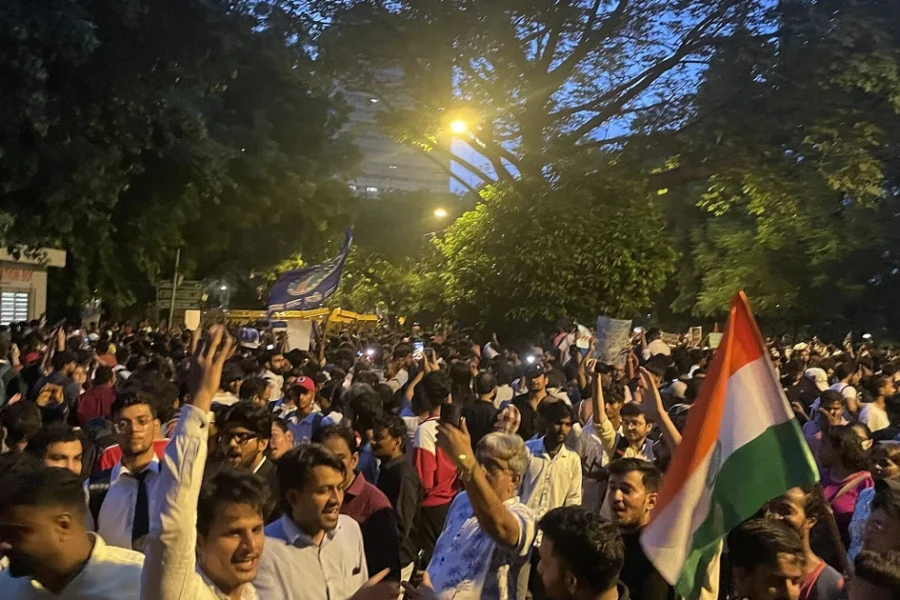
The immediate political backdrop is a dispute over the Special Intensive Revision of electoral rolls and the space available for protests against it.
Opposition parties and demonstrators say eligible voters have been excluded and want greater scrutiny of the revision. The Election Commission and the government reject allegations of manipulation and say the exercise removes duplicate and ineligible entries.
The Cockroach Janta Party, led by Abhijeet Dipke, has demanded Chief Election Commissioner Gyanesh Kumar’s resignation. Its campaign and restrictions on protest venues have been covered in the dispute over CJP demonstrations and its leaders’ release.
On 13 October, CJP policy lead Mehar Pasrecha said the group had sought a protest date from Delhi Police and objected to Jantar Mantar’s removal as a designated venue. That position frames access to a place of protest as part of democratic participation, rather than a rejection of constitutional government.
There is no verified direct response from the protest organisers to this particular overseas appeal in the material reviewed. Their earlier arguments explain the opposing position, but should not be presented as an answer to a letter they may not have addressed.
Nor should the appeal be described as naming CJP. The contemporaneous political context and the actual targets identified in a statement are separate questions.
What is a Special Intensive Revision?
A Special Intensive Revision is an exercise to check and revise electoral rolls. The dispute concerns who is included or excluded and the procedures used, rather than the act of voting itself.
Does the Constitution protect peaceful protest?
Yes. Article 19 protects citizens’ freedom of speech and expression and their right to assemble peacefully without arms, subject to the restrictions the Constitution permits.
The Legislative Department’s published Constitution allows reasonable restrictions on assembly in the interests of sovereignty and integrity or public order. Restrictions on speech are set out separately in Article 19(2).
Consequently, the legal question is not simply whether dissent occurs in Parliament or on a street. It also concerns the nature of a gathering, the applicable restrictions and the legality of any official action. A political appeal cannot substitute for that assessment.
The protections for expression also apply to criticism of protesters. Reading the appeal accurately therefore means recognising both the signatories’ freedom to argue their position and the constitutional protection for peaceful assembly.
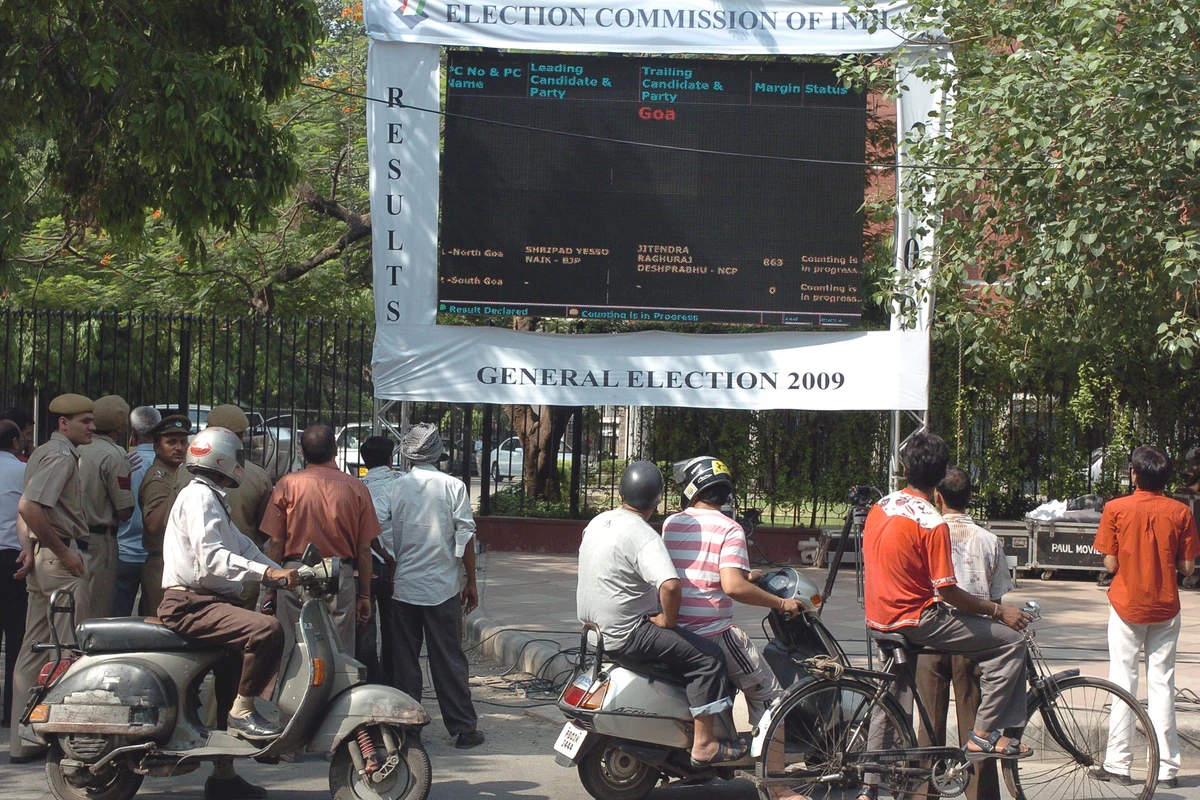
Why does the statement invoke B. R. Ambedkar?
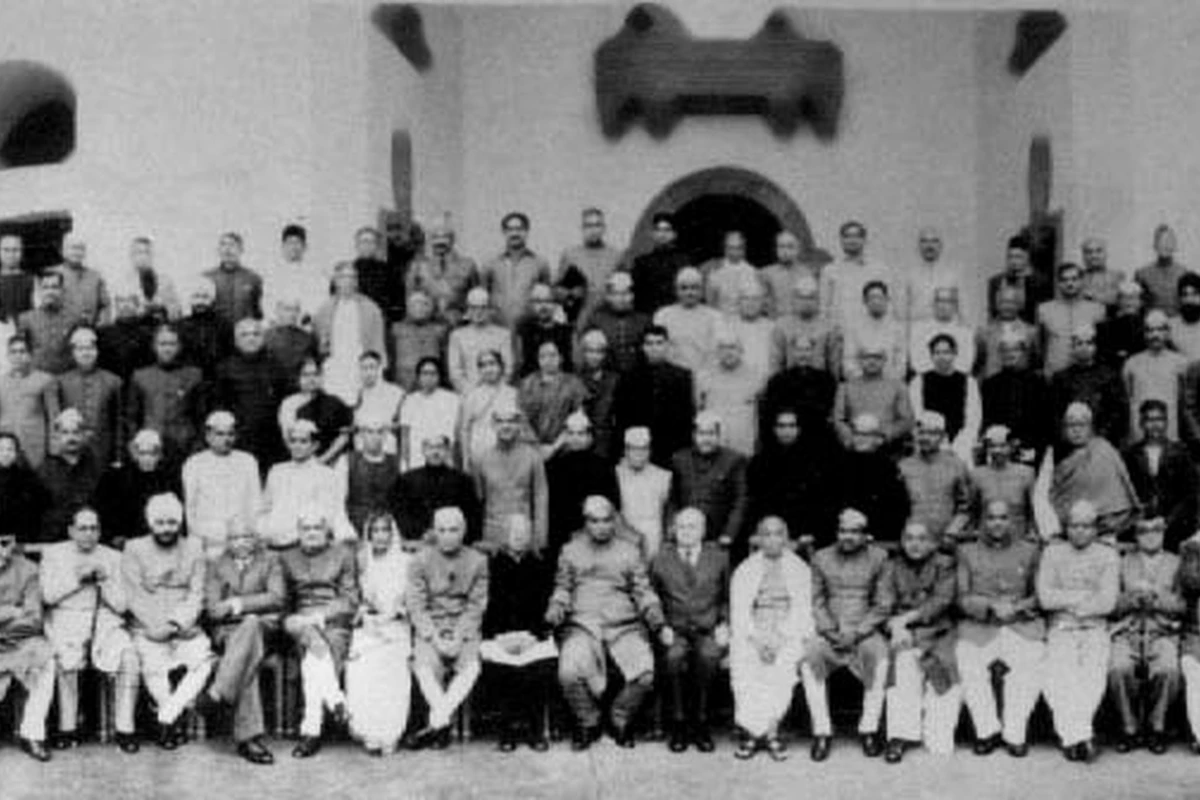
The statement draws on Ambedkar’s warning about abandoning constitutional methods in his address to the Constituent Assembly on 25 November 1949.
In the passage reproduced in the Ministry of External Affairs’ collection of Ambedkar’s writings, he argued that constitutional methods should be used to achieve social and economic objectives. He described methods outside that framework as the “Grammar of Anarchy”.
The passage specifically discussed civil disobedience, non-co-operation and satyagraha. It belongs to the historical debate around the new republic and is not a ruling on today’s voter-roll exercise or any named protest.
Invoking Ambedkar therefore explains the appeal’s reasoning. It does not establish that contemporary protesters have acted unlawfully, that electoral allegations are false or that institutional criticism is prohibited.
Article 324 of the Constitution places the preparation of electoral rolls and the conduct of elections under the Election Commission’s superintendence, direction and control. Its responsibilities cover Parliament, state legislatures and the offices of President and Vice-President. The provision establishes institutional responsibility; it does not make a disputed administrative decision immune from scrutiny.
That constitutional role explains why the argument is larger than a disagreement with an individual office-holder. Protesters question how the roll exercise has been carried out, while the appeal’s supporters emphasise the consequences of weakening confidence in the institution. Those positions must be tested against particular decisions and evidence, not treated as interchangeable claims about every election.
A voter who encounters an incorrect entry therefore has a different immediate task from someone assessing the political letter. The voter needs to identify the relevant entry and registration authority, retain the information needed to explain the problem and use the applicable official process. A signature on a public statement cannot correct a roll entry, and a correction application does not require agreement with either political campaign.
Which claims should readers keep separate?
The appeal’s political argument, the reported scale of support and the legal rights involved answer different questions.
| Issue | What can be said | What it does not establish |
|---|---|---|
| More than 400 supporters across 27 countries | The scale attributed to the appeal in contemporary reports | An independently audited count or a diaspora-wide mandate |
| University affiliations | Individuals identify with named institutions | Endorsement by those universities |
| Criticism of protest methods | The signatories favour constitutional institutional routes | A judicial finding against a particular gathering |
| Electoral-roll allegations | Protesters and the authorities dispute the process | Proof of either manipulation or its absence |
What does this mean for Indians living abroad?
For an overseas Indian citizen concerned about the electoral dispute, checking their own registration is a practical step separate from signing a political statement.
The Election Commission’s overseas-voter guidance says eligible Indian citizens living abroad who have not acquired another country’s citizenship can apply using Form 6A. Registration relates to the Indian address recorded in the applicant’s passport.
Its guidance says an overseas elector votes in person at the relevant polling station using the original passport. Signing an appeal does not enrol someone to vote, and Indian ancestry alone does not confer electoral eligibility.
Readers can use the Election Commission’s citizen service portal to find registration services and check the appropriate process. Any personal case should be checked with the relevant Electoral Registration Officer, rather than inferred from a general debate about the revision.
The Commission lists overseas electors in a separate section of the polling-station roll and allows Form 8 for corrections. Registration should be checked before arranging travel.
The wider argument also concerns how overseas Indians engage with politics at home, a subject examined in earlier coverage of the voter-deletion dispute. Readers following it can distinguish between a person’s right to express a view, their eligibility to vote and the authority to speak for an institution. None automatically supplies the other.
Which official forms address voter-roll problems?
The Election Commission’s portal separates new registration, overseas registration, objections and corrections into different forms. The choice depends on the problem and the applicant’s eligibility, not on support for a political campaign.
| Form | Purpose shown on the official portal |
|---|---|
| Form 6 | Registration as a new voter |
| Form 6A | Registration as an eligible overseas elector |
| Form 7 | Deletion or an objection to inclusion of a name |
| Form 8 | Shifting residence, correcting particulars, replacing an EPIC or marking disability |
These are distinct applications. A person looking to correct their own details should not assume that a form for objecting to someone’s inclusion is the appropriate route. Likewise, an overseas applicant should check the overseas eligibility conditions rather than choosing a form simply because it appears first on the portal.
For Form 6A, the official application asks for the applicant’s Indian address as recorded in the passport, passport details and information about residence abroad. The supporting-document requirements should be read from the form itself. Signing the overseas appeal supplies none of those registration details to the electoral authority and does not take the place of an application.
The portal also offers a search for names in the electoral roll. Checking that record is a separate exercise from checking an identity document: the Election Commission’s published explanation says that possession of a photo ID does not by itself allow someone whose name is absent from the roll to vote.
Anyone following up a problem should therefore establish whether the issue is a missing name, inaccurate particulars, a change of residence or an objection to an entry. The relevant Electoral Registration Officer can clarify the process for that case. Readers should check the current official instructions and applicable dates rather than rely on a forwarded message describing another person’s circumstances.
These services provide concrete administrative routes within the constitutional system. Their availability does not resolve the political dispute over how the wider revision has been conducted, and an individual application should not be presented as evidence for or against allegations about the exercise as a whole.
What happens next?
The appeal adds pressure to an existing political debate but does not change voter-registration rules, court proceedings or the legal conditions for a demonstration.
The next substantive developments will be the authorities’ handling of electoral complaints, decisions in the legal challenges and the protest organisers’ announced actions. Any newly published signatory register or response to this statement will need to be checked on its own evidence.
Until then, the dispute remains about both the integrity of electoral procedures and the legitimacy of the methods used to challenge them. The overseas appeal states one side’s preference; it does not settle either question.