
Flip a coin, and on one side, India and Pakistan appear destined to remain perpetual rivals.
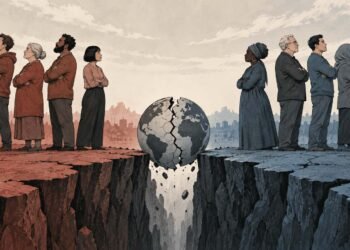
On the other, they share deep common roots, cultures, languages, and traditions. Bound together by history yet divided by politics, the two nations embody a relationship marked by both affinity and antagonism.
This complex relationship is rooted in centuries of shared civilization and shaped by decades of political conflict. Cross-border militancy originating from Pakistan, coupled with India’s unresolved dispute over Kashmir, has sustained mistrust and hostility between the two neighbours.
When British colonial rule ended in 1947, the Indian subcontinent was partitioned, and Pakistan was created as a separate homeland for Muslims.
The new borders were drawn hastily, carving out territories in the northwest and the northeast of British India. The result was the geographically unusual state of Pakistan, consisting of two wings, East and West Pakistan, separated by more than 1,600 kilometres of Indian territory.
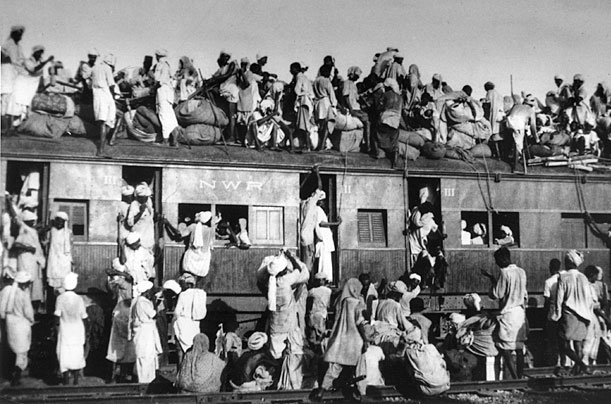
The partition of British India into India and Pakistan triggered one of the largest and bloodiest forced migrations in history.
Communal violence claimed hundreds of thousands of Hindu, Muslim, and Sikh lives. Millions were uprooted from their ancestral homes, enduring immense hardship as they crossed the newly drawn borders in search of safety.
In the aftermath of this human tragedy, Pakistan emerged as a Muslim-majority nation.
Yet the premise that religion alone could provide a durable foundation for nationhood soon proved problematic.
Pakistan’s Muslim population was far from homogeneous. It comprised diverse languages, cultures, ethnic identities, and Islamic sects.
These differences eventually culminated in the secession of East Pakistan and the birth of Bangladesh in 1971.
The creation of Bangladesh challenged the assumption that a shared religion could override deep linguistic, cultural, and regional identities.
Viewed in this light, one may ask whether the partition of the subcontinent achieved its stated objective.
If the creation of Pakistan was intended to provide a homeland for the Muslims of British India, it neither included all Muslims nor resolved the aspirations of its own diverse population.
Muslims from South India did not migrate to Pakistan. Nor did all the Hindus in the Sind province of Pakistan move to India.
Many Urdu-speaking migrants who settled in Sindh and Punjab example experienced social and political alienation despite migrating to what they regarded as their homeland.
Moreover, partition left behind a legacy of enduring rivalry between India and Pakistan.
The unresolved dispute over Kashmir has remained at the centre of that hostility, fuelling repeated wars, military confrontations, and diplomatic crises.
Nearly eight decades after partition, the region continues to bear the consequences of decisions made in 1947, raising enduring questions about whether dividing the subcontinent on religious lines provided a lasting solution or merely created new and persistent conflicts.