
Shivaji Mukherjee, Simon Fraser University
Gen Z protesters have taken to the streets in mass numbers in South Asia in recent years — particularly in Nepal, Sri Lanka and Bangladesh, leading to regime change in those countries. These protests are part of a broader, global Gen Z movement.
Experts suggest these youth movements are fuelled by economic precarity, exclusion from power and corruption. Young people are also often facing state repression.
But India, the world’s biggest democracy, has largely seemed impervious to such Gen Z movements. That is no longer the case.
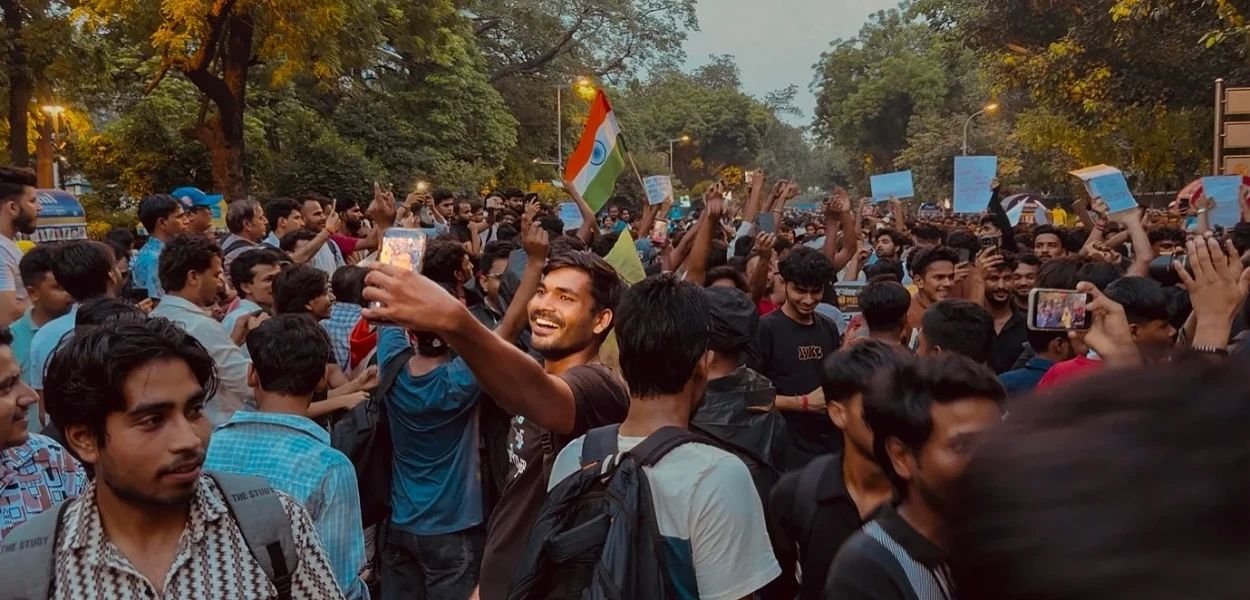
In July, thousands of students, parents and youth gathered near Jantar Mantar in Delhi to protest the cancellation of a medical entrance exam after the questions were leaked — a scandal that drove some young people to take their own lives.
There are other underlying grievances and anxieties in India related to rising unemployment, the inability of university graduates to find jobs and an increasingly commercialized yet dysfunctional higher education system.
Police used bamboo sticks, pellet guns and tear gas against young protesters, causing injuries that resulted in public outrage. The uproar forced Indian Prime Minister Narendra Modi to give into their demands for the resignation of Education Minister Dharmendra Pradhan.
The power of social media
While the protests may not immediately lead to job opportunities for Gen Z — that would require sustained reforms in the economic and educational sectors — they could be help put a stop to democratic backsliding in India.
In his recent book The Revolutionary City: Urbanization and the Global Transformation of Rebellion, Princeton University scholar Mark Beissinger shows that “at the end of the 20th century, as urban centres grew, revolution returned to the city” using the power of numbers.
Other researchers have analyzed the role of social media as a mobilizing and aggregating force for social movements, from the Arab Spring to Make America Great Again. Social media has allowed Gen Z urban protesters to overcome government surveillance and mobilize effectively.
The rise of the cockroaches
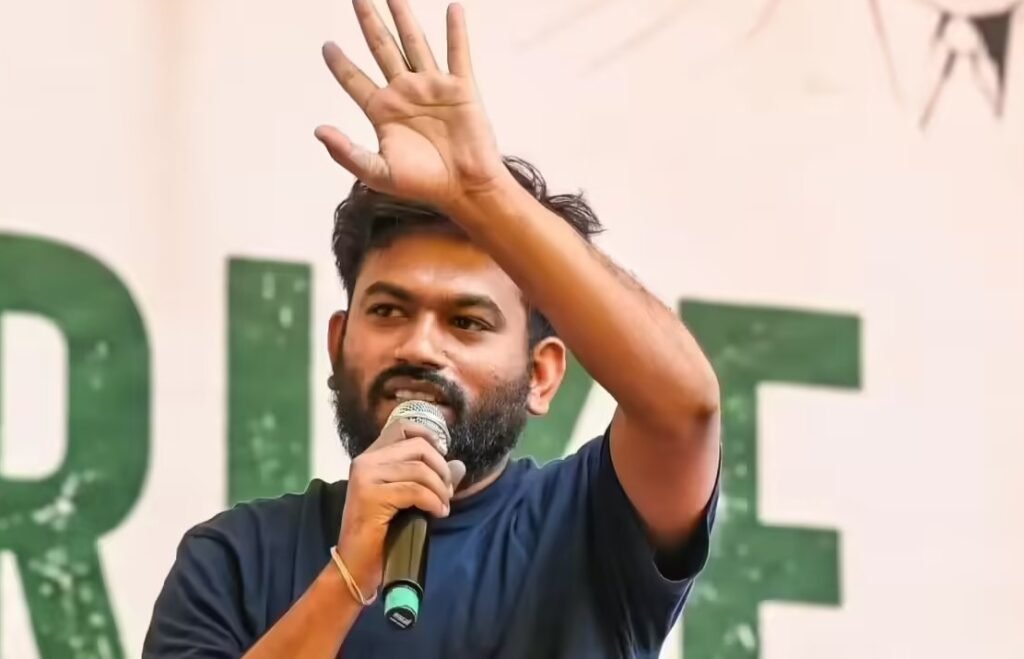
In response to an Indian Supreme Court justice’s comment that the unemployed youth are like “cockroaches,” Boston University student Abhijeet Dipke creating a social media post that asked: “What if all the cockroaches come together?”.
He formed the Cockroach Janata Party (CJP), a satirical take on the ruling Bharatiya Janata Party. Within a few weeks, the CJP had a following of 24 million, much larger than the nine million online BJP followers.
The CJP has used social media to successfully channel youth frustrations about the medical exam paper leaks that led to student suicides. The party also gained moral support through a hunger strike by respected educationist and activist Sonam Wangchuk.
Why youth protests have been successful
The formation of the CJP was like a proverbial spark that ignited simmering discontent against the ruling party, which seemed out of touch with the aspirations of the millions of youth in India.
At the CJP’s launch of a nationwide campaign to address pressing youth concerns, Dipke stated:
“Over 65 per cent of our population is below 35 years of age, yet our leaders, political parties, and governments do not speak seriously about their education, employment and future. The government’s focus is solely on Hindu-Muslim politics.”
Why are these Indian Gen Z protests succeeding when previous protest movements in the country have failed, including the Shaheen Bagh protests in Delhi by Muslim women against the Citizenship Amendment Act?
The only recent movement to succeed was the farmer’s protest of 2020-21, when thousands of farmers camped just outside Delhi for a year, demanding the government repeal inegalitarian farm laws and forcing the BJP government to backtrack.
This is because the BJP government’s strategy when facing protests is to “outlast, fragment, or delegitimize opposition” rather than to negotiate.
Youth protests could not be ignored
Since the Shaheen Bagh protests were led by Muslims, the government could more easily frame them as “jihadis” and delegitimize them.
The farmers’ movement was initially dismissed as being led by “separatists,” “Maoists” and “terrorists.” However, as it gained support from farmers across Haryana, Punjab and Uttar Pradesh — the backbone of India’s agricultural sector and key voting blocs — the movement became impossible to ignore, especially with elections looming in Punjab and Uttar Pradesh.

In comparison to the farmers movement that was geographically contained near Delhi’s border, the Gen Z protests marched to parliament in Delhi and resonated very broadly with families across the country.
A large segment of the group of youths and their parents were urban, educated, upper-caste Hindus and part of the BJP’s core electoral base. They could therefore not be ignored, leading to Modi’s strategic retreat.
The relative success of protest movements in India thus hinges on two main factors: the strategic importance of the movement’s voting base to the BJP, and the degree to which the issue can be delegitimized. Gen Z protesters bypass both hurdles by focusing on universal issues like education and job scarcity — demands that defy traditional voter politics and resist “anti-national” labelling.
Shivaji Mukherjee, Associate Professor, Somjee chair in Indian Political Development, Simon Fraser University
This article is republished from The Conversation under a Creative Commons license. Read the original article.