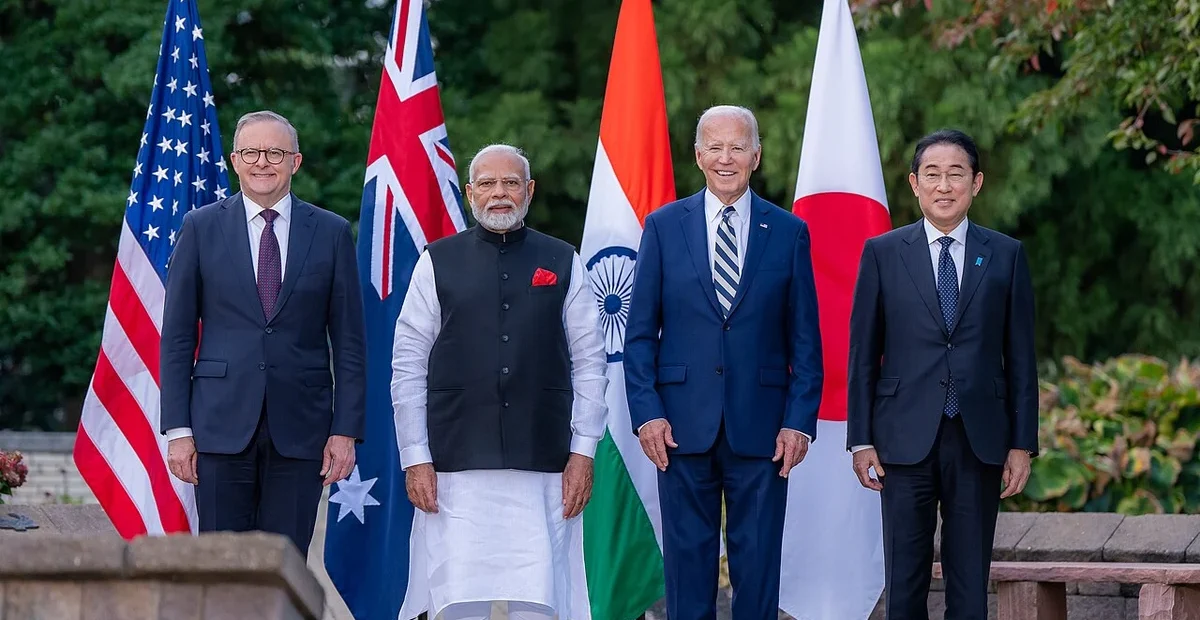
Bilateral relations between India and Australia brought an A$10 million Maitri grants commitment at the leaders’ July 2026 summit, alongside education and trade initiatives that require separate checks before NRIs act on them.
Prime Minister Anthony Albanese and Prime Minister Narendra Modi held their third annual summit in Melbourne on 9 July. The relationship reaches into study, graduate work, professional qualifications and goods trade, but a summit announcement does not give every Indian national a new visa entitlement.
The Indian connection is substantial rather than assumed. Australian Bureau of Statistics estimates put the India-born population at 971,020 on 30 June 2025, the country’s largest overseas-born group. That category includes different citizenship and residence circumstances, each with different practical needs.
For a family or business, the useful question is which agreement changes a real decision. This guide examines the arrangements and the limits checked on 8 October 2026, without presenting July’s summit as new breaking news.
What did the July summit add to bilateral relations?
The summit added commitments on grants, education, energy and other cooperation, while endorsing work towards a wider trade agreement. The Australian joint statement is the primary record of those commitments.
The leaders welcomed progress towards Australian university campuses in India, including a letter of intent involving Flinders University’s proposed Bengaluru campus and a letter of approval for Victoria University in Gurugram. These are stages in a regulatory process, rather than proof that every proposed course has opened for enrolment.
The statement also announced A$10 million in Maitri grants through the Centre for Australia–India Relations and addressed an administrative arrangement for uranium cooperation. It reaffirmed efforts on the Comprehensive Economic Cooperation Agreement, known as CECA.
The Indian prime minister’s summit account supplies the Indian government’s record of the meeting. Read both records alongside the agency responsible for implementing a particular initiative.
The difference matters when an announcement reaches a community group or recruitment advertisement. A funded programme can still require an application round; a university approval can still precede course admission; a negotiation can still end without a concluded treaty.
Which trade agreement is already in force?
The Australia–India Economic Cooperation and Trade Agreement, ECTA, has been in force since 29 December 2022. CECA is the separate, wider agreement under negotiation, so the two names should not be used interchangeably.
What is the difference between ECTA and CECA?
ECTA is the trade agreement already operating between Australia and India. CECA refers to the wider Comprehensive Economic Cooperation Agreement being negotiated. A commitment to negotiate CECA does not establish a new tariff or immigration entitlement.
The Department of Foreign Affairs and Trade’s ECTA page explains the agreement and its implementation. It describes broad tariff liberalisation, but businesses must check the product, schedule and origin requirements applying to their goods.
A headline about free trade does not mean every shipment arrives without customs procedures, taxes or standards requirements. Nor does Indian ownership of a business establish that its product qualifies as Indian-origin goods under the agreement.
For an importer, begin with the actual product classification and supply chain. For an exporter, identify the importing country’s requirement before agreeing the delivered price. Those are the points where a trade agreement can become a measurable business benefit.
What should an NRI business check before relying on tariff preferences?
Check the tariff classification, origin evidence and applicable schedule for the actual shipment. The agreement’s benefit depends on satisfying its conditions, rather than simply trading between the two countries.
The ECTA official text and the department’s implementation materials should guide that review. Ask a customs adviser to identify the precise provision behind any promised saving.
| Decision | Document to check | What an announcement alone cannot establish |
|---|---|---|
| Importing or exporting goods | ECTA schedules, origin rules and customs requirements | That every product automatically qualifies for a zero tariff |
| Employing an Indian graduate | Current Home Affairs visa conditions | That a trade deal provides unrestricted work permission |
| Entering a regulated profession | Relevant registration authority’s requirements | That an academic qualification grants a professional licence |
| Applying for a grant | Published programme criteria and application round | That a summit allocation is an automatic payment |
| Studying at a proposed campus | Provider and regulator’s current approvals | That a letter of intent establishes an open course |
Keep the commercial agreement and the regulatory check together. A low customs duty can still leave freight, compliance and payment costs. Compare the complete delivered cost, not just the tariff component.
This is also a reason to avoid a generic “NRI benefit” claim. A student, an Australian citizen running a shop and a temporary visa holder importing goods may each interact with the same relationship through a different legal route.

What does the relationship mean for Indian graduates in Australia?
Indian nationals have specific post-study stay periods preserved under ECTA arrangements, subject to the visa requirements. The benefit is more concrete than a general promise of easier mobility, but it is not automatic approval.
The post-study work side letter and Home Affairs’ graduate visa information describe the relevant periods: two years for a bachelor’s degree, three years for eligible first-class STEM honours and master’s degrees, and four years for a doctorate.
Check the degree type and current visa conditions before using those periods in a financial plan. A period of possible graduate stay is not a job offer, a professional registration outcome or a promise of permanent residence.
The student visa question is separate again. Australia’s family and onshore application rules changed on 2 October 2026. A bilateral arrangement affecting graduate stay does not remove the need to check whether a new student application can include family members.
Read the current student family rules alongside the graduate guidance before making a household budget. The plan should identify which person holds which visa and at what stage of study or work.
Does MATES offer another route for young Indian professionals?
The Mobility Arrangement for Talented Early-professionals Scheme, MATES, offers a distinct route for eligible Indian graduates and early-career professionals. Home Affairs describes an annual allocation of 3,000 places and a stay of up to two years.
The official MATES page sets the eligibility and ballot arrangements. It is the document to check for qualifying education, age, fields and application timing, rather than an agent’s description of a general work visa.
Do not treat the annual allocation as 3,000 guaranteed jobs. A scheme place, visa eligibility and an employment offer are different outcomes. Nor should an applicant assume that a ballot is open simply because the scheme remains on the government website.
Before paying for assistance, ask the adviser to show how the applicant meets the published criteria and what service is being supplied. Keep ballot participation, selection and the subsequent visa application distinct in the records.
MATES should also be compared with the actual alternative available to the person, not with an imagined unrestricted route. A graduate already in Australia and a newly qualified person in India may have different choices and deadlines.
Are Indian qualifications automatically recognised in Australia?
No, the bilateral mechanism for recognising qualifications does not itself grant permission to practise every regulated profession. Academic recognition and professional registration serve different purposes.
The Department of Education’s recognition agreement materials explain the mechanism signed in March 2023. Its official questions and answers distinguish qualifications recognition from professional requirements.
A doctor, lawyer or another regulated professional must still check the responsible registration body. A university accepting a qualification for further study does not establish that a regulator will accept it for practice, or that an employer will recruit the applicant.
ECTA’s professional-services annex supports cooperation towards recognition arrangements. Cooperation is a process; it should not be advertised as an already completed licence transfer.
For the reader, ask three separate questions: is the qualification accepted academically, is it accepted for professional registration, and is the person authorised to work in the country? An answer to one is not evidence for the other two.
What should families check about Australian campuses in India?
Check the named institution’s current course offering, regulator approval and award arrangements before paying a deposit. The summit’s references to campus progress establish specific milestones, rather than a general guarantee about every proposed provider.
A family considering an India-based course should ask which institution awards the degree, where teaching takes place and which approvals cover the programme. Obtain those answers for the exact course and intake rather than relying on the university’s international reputation alone.
If later overseas study or work is part of the plan, ask how that step would be assessed separately. Studying at an Australian institution’s Indian campus does not, by its name alone, establish eligibility for a visa based on study completed in Australia.
Keep tuition, refund terms and any promised transfer pathway in writing. A conditional option should be budgeted as conditional, particularly if the family’s plan depends on travelling abroad during the degree.
What do the agreements mean for community organisations?
They can create programme opportunities and institutional links, but the practical entitlement depends on the published criteria. The Maitri commitment illustrates why a summit allocation and an individual grant application should be kept separate.
An organisation should identify the administering body, the purpose of the programme and the current application round before planning activities around expected funding. Announced cooperation can guide a proposal, but it cannot establish eligibility or an award date.
The DFAT India relationship page provides the broader official context. For continuing reporting on diaspora enterprise and finance, use the business coverage hub.
The community’s size creates an audience for these arrangements, but does not prove that every organisation or family receives a direct benefit. The value for the reader comes from the specific programme, its conditions and the decision it supports.
What should NRIs watch next?
Watch implementation documents for the July commitments and the official status of CECA negotiations. A completed agreement, an open grant round or an approved course would each provide a more specific next step than a general statement of cooperation.
For an immediate decision, identify the responsible authority and save its current instruction beside the offer, shipment or application. Recheck before committing money or changing employment. The relationship can widen opportunities, while the individual route still depends on the rule that applies at the point of action.