A proposed compromise over where a child could wear a religious marking lies at the heart of the tilak school dispute at Vicar’s Green Primary School in west London. The family says its son’s religious expression was restricted; the school says it sought a reasonable accommodation.
The parents of the nine-year-old British Hindu boy have reportedly brought a High Court claim alleging religious discrimination. The school disputes wrongdoing. No judicial finding in the family’s favour has been established in the material checked for this report.
The distinction between an allegation and a judgment is central. The legal challenge concerns an individual child’s treatment and the school’s obligations, not a ruling that every appearance policy in England is unlawful. The child is not identified here.
What is the tilak school dispute about?
It concerns a tilak-chandlo, a religious forehead marking worn in the family’s Swaminarayan tradition, and the school’s response to the child wearing it. The family’s account says objections arose in late 2025 and the child was withdrawn in January 2026.
The reported claim seeks £25,000 from the governing body. That is the remedy requested, not compensation awarded. Reports identify Ambrish Limbachia of Ashray Law as the family’s lawyer and Action for Harmony as supporting the case.
The family alleges discrimination and says the marking was part of the child’s religious practice. The school rejects the allegation that it acted unlawfully. The available reporting does not supply a final judgment, and a claim’s existence cannot establish that its factual allegations have been proved.
The school’s own website publishes a uniform-information page and identifies its location in Alperton. Families seeking the policy should obtain the applicable document and date, rather than assume a current website file proves what was in force at an earlier meeting.
What has the school said?
The school has defended its approach as an effort to maintain cohesion and a shared sense of belonging while respecting different backgrounds. Its public response earlier this year said it had discussed the matter with the parents and offered an exception allowing the marking on a less prominent part of the body.
That response was published on 21 January 2026, months before the latest legal coverage. It described a longstanding restriction on visible skin markings, including religious ones, and said the governing body had reviewed the case. The school said the proposed adjustments were not accepted.
The parents’ position is different: they regard a forehead marking as a religious observance that cannot be adequately accommodated by moving it elsewhere. The disagreement therefore involves the meaning of the practice as well as the school’s reason for restricting it.
Neither the school’s statement that it is inclusive nor the family’s allegation of discrimination settles the legal question. A fair account needs both positions, the actual policy and the evidence of how it was applied.
Why does the earlier timeline matter?
Because the underlying disagreement predates the latest reports of legal action. A January 2026 statement by INSIGHT UK raised concerns about Hindu pupils’ treatment at the school.
INSIGHT UK is an advocacy organisation, not a court or independent regulator. Its claims must be attributed to it. The statement also concerned other children, but those allegations do not establish the facts of every family’s experience.
The newer development is the reported legal claim. Presenting the whole dispute as an incident that first happened this week would erase the months of disagreement and confuse the child’s age at different points in the timeline.
| Stage | What is reported or documented | What it does not establish |
|---|---|---|
| Late 2025 | Family says objections arose to the marking | A judicial finding about those events |
| January 2026 | Advocacy concerns and the school’s response became public | An independent ruling on every allegation |
| November 2026 | Reports describe a High Court claim | Compensation awarded or the case decided |
| Next legal stage | Depends on the court process | A hearing date not independently verified here |
What is religious manifestation? It means expressing a religion or belief through practice or observance, rather than simply holding a belief privately. The right is protected, but restrictions require examination under the applicable legal tests.
What does England’s school-uniform guidance require?
It requires schools to consider equality and human-rights obligations when deciding and implementing appearance policies. A governing board’s power to set rules is not a power to discriminate unlawfully.
The Department for Education’s guidance updated on 8 October 2026 says religion or belief is among the protected characteristics relevant to uniform policy. It asks schools to act reasonably and sensitively towards different religious and cultural needs.
The guidance also recognises that a restriction may be justified for a good reason, including genuine safety concerns or cohesion and good order. That does not make an asserted reason automatically sufficient. Where a requirement disadvantages a group, the question includes whether it is a proportionate means of achieving a legitimate aim.
Consultation and individual circumstances matter. A rule described as applying to everyone can still affect some pupils differently. Conversely, the fact that a rule interferes with a preferred practice does not by itself establish the outcome of a legal claim.
How does equality law differ from a school’s policy?
Equality law sets obligations that a school policy must meet. The policy is the institution’s rulebook; it is not the final statement of what the law permits.
Section 85 of the Equality Act 2010 addresses discrimination in admission and the treatment of pupils, including access to education, benefits and services. It provides a statutory framework against which particular treatment can be examined.
The Act’s explanatory material also illustrates why a complaint about religious discrimination should not itself become a reason to penalise a pupil. Families and schools need to keep the handling of a complaint separate from assumptions about the child raising it.
Indirect-discrimination questions are addressed in section 19. Broadly, a general requirement can disadvantage people sharing a protected characteristic. Whether it can be justified is a further question, rather than something answered simply by describing the rule as neutral.
These distinctions help explain the issues raised by the reported claim. They do not substitute for the pleadings or determine the school’s liability in this case.
Is the right to express a religion unlimited?
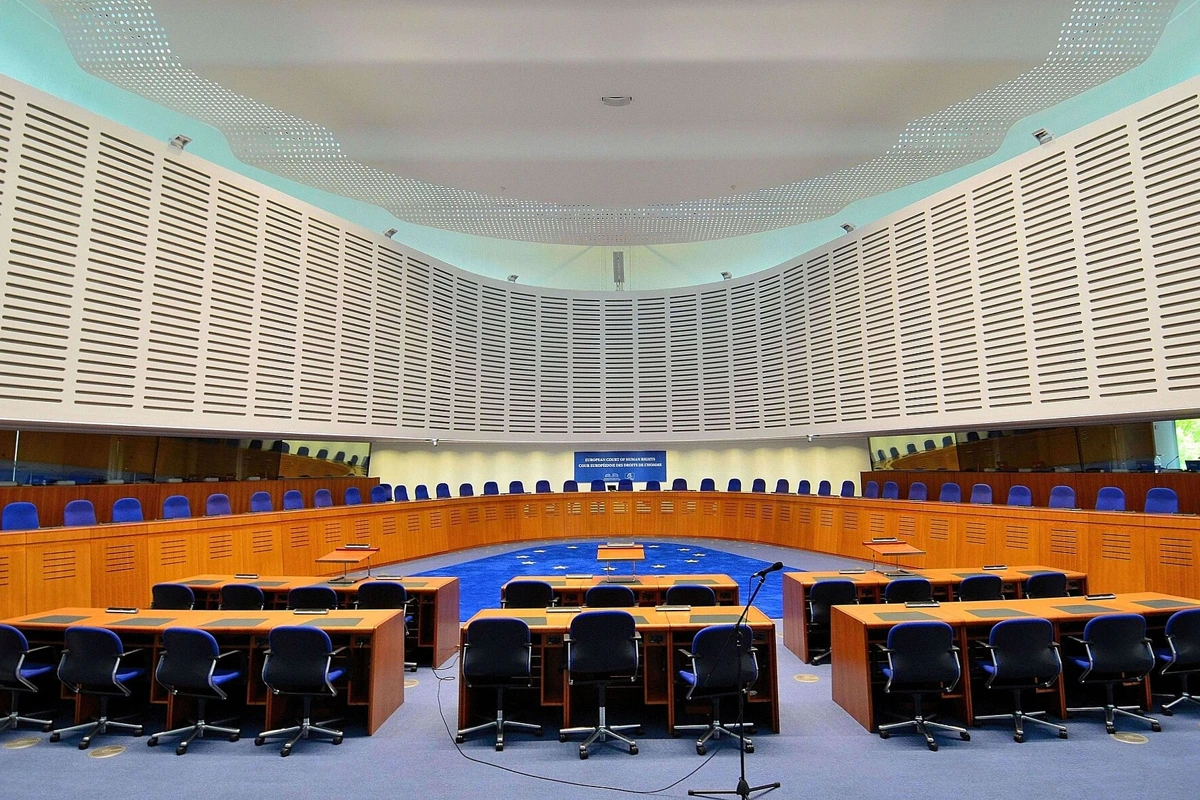
No. The European Convention protects belief and its manifestation, while allowing specified restrictions on manifestation under the conditions in Article 9.
The European Court of Human Rights’ Article 9 guide, in the edition dated 31 August 2025, distinguishes holding a belief from outwardly practising it. It describes the requirements that restrictions be prescribed by law and necessary for an identified legitimate aim.
This is why the case cannot responsibly be reduced to either “schools can ban any symbol” or “every symbol must always be allowed”. The practice, the restriction, its reason and its effect all need examination. Decisions from another country or a different school setting should not be presented as an automatic answer to this dispute.
Is there an earlier school-uniform precedent?
Yes. In the 2006 Denbigh High School judgment, the House of Lords considered a different dispute over religious dress. The opening opinion stressed that it concerned a particular pupil, school, place and time, rather than a universal decision about religious clothing.
That caution is useful here. A decision about another garment, policy and set of facts cannot simply be announced as the outcome of the tilak claim. The current school’s reasons and the child’s actual treatment still require their own examination.
What does this mean for parents facing a similar disagreement?
Begin with the school’s written policy and complaints procedure, and ask for the specific decision and reasons in writing. Keep the relevant version of the policy, correspondence and dates.
The government’s school-uniform advice directs parents to raise concerns with the school. Its school-complaints guide identifies the Equality Advisory and Support Service as a contact for discrimination complaints and points to education-law advice.
A parent can explain the significance of a practice and ask what accommodation was considered. A school can explain its objective and why a particular restriction is thought necessary. A written exchange makes it easier to distinguish an actual policy, a suggested compromise and a misunderstanding.
Families should avoid publishing a child’s identity or private records to argue a case on social media. They can seek appropriate advice about their own circumstances without treating another family’s reported claim as a guaranteed route or outcome.
Our school-admissions reporting and wider UK coverage provide related context for families settling in Britain.
What happens next?
The next substantive development would be a verified court order, hearing or judgment, or a clearly documented resolution between the parties. No hearing date or judgment is asserted here.
Until then, the claim and the school’s defence remain distinct positions. The public issue is how an appearance rule is justified and applied to a pupil’s religious practice, with the child’s education and privacy kept at the centre of the account.