As the Monsoon session of Indian Parliament commenced on June 20, a student-led movement for justice in India’s education system stepped up their peaceful agitation on the streets. What unfolded was a dance of democracy – between the government and student protestors across the country backed by the Opposition. By the end of the week, the government accepted the immediate demands of students, and the movement became the symbol of dissent that is essential in a vibrant democracy.
Student unions have been agitating against the issue of rampant paper leaks in India’s national level qualifying entrance examinations. The examination papers of the national entrance for medical and dental courses (NEET) have been leaked thrice in the last five years including this year.
The competition for each available seat and expenditure of private tuition in the preparation are factors that by themselves exert unhealthy pressure on students. Exam cancellations and rescheduling owing to paper leaks have driven students to distress. This year alone, more than a dozen students died by suicide following the NEET paper leak in May.
We are all cockroaches
The Cockroach Janata Party is a student and Gen Z uprising that took the Internet by storm this May. But what began as a parody and Internet meme-campaigns grew into India’s first mass protests by Gen Z on the streets last week, albeit working in conjunction with Student Union organising bodies. It began with a remark by India’s Chief Justice during a hearing where he likened unemployed youth in law to cockroaches, and criticised activists for attacking institutions through media, social media, and right to information channels.
But the comment struck a raw nerve with youth more broadly who are grappling with precarious futures from a broken education system and wide-scale unemployment. As Abhijeet Dipke launched the Cockroach Janata (people’s) Party (CJP) web platform, 40,000 members signed up within hours. The CJP’s Instagram followers crossed 17 million in the first five days, eventually overtaking both major political parties the BJP and Congress. See a timeline of the rise and rise of cockroaches here.
Democracy on the streets
Following its Internet success the CJP took to the streets through a meeting at New Delhi’s protest precinct the Jantar Mantar in early June, demanding the resignation of the Union Education Minister. Nation-wide peaceful demonstrations followed a few days later. With their demand unmet, the CJP began an indefinite sit-in at Jantar Mantar in late June. By month end, the sit-in deepened into an indefinite hunger strike by renowned environmentalist and educator Sonam Wangchuk who had joined the agitations, as well as Student Union leaders.
Youth leaders and a renowned educationist had exercised various means of democratic dissent including the long tradition of hunger strikes made famous by Mahatma Gandhi under British imperialism. Still, and despite protestors putting themselves at risk through fasting, the government remained unresponsive. By the time Parliament commenced its monsoon session on June 20th, protestors had sustained their hunger strike for nearly three weeks.
A Gen Z week in the world’s largest democracy
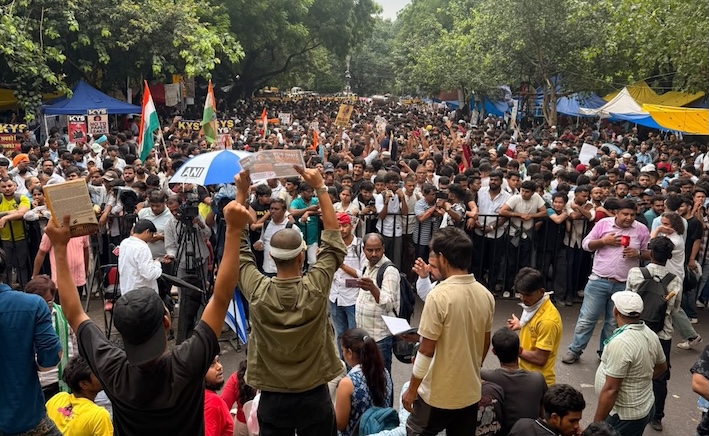
The first meeting at Jantar Mantar on June 6 began a 36-day student-led protest on the streets by the CJP and Student Unions that finished last Saturday when the Indian government accepted their immediate demands. It coincided with the beginning of the monsoon session of Indian Parliament, and the stepping up of their peaceful agitation through Chalo Sansad / March to Parliament events in the capital and solidarity marches across India.
As the student protestors began marching towards Parliament on June 20, their immediate demand was simple: that the Union Education Minister must resign. But the excess use of force by the police on peaceful youth protests transformed their significance into something far bigger than beginning to reform education.
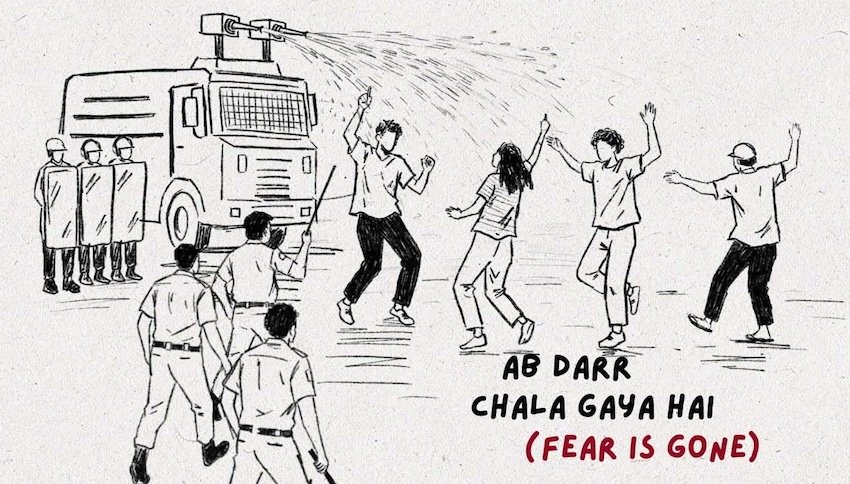
The resilience of young people in the face of beatings, tear-gassing, and water-cannoning by the police, in Delhi and across India, demonstrated that they were not going to let dissent be muzzled in a democracy.
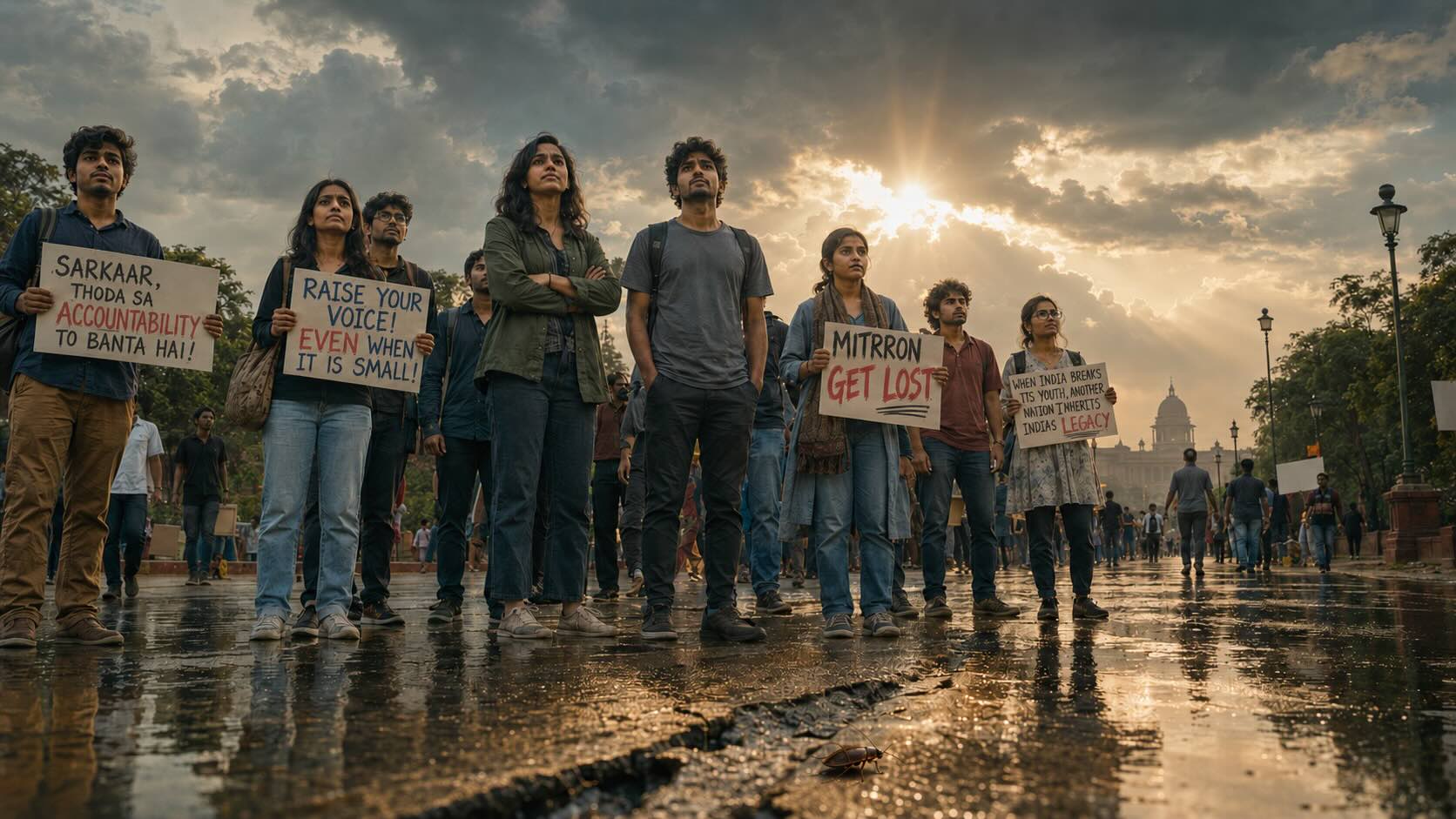
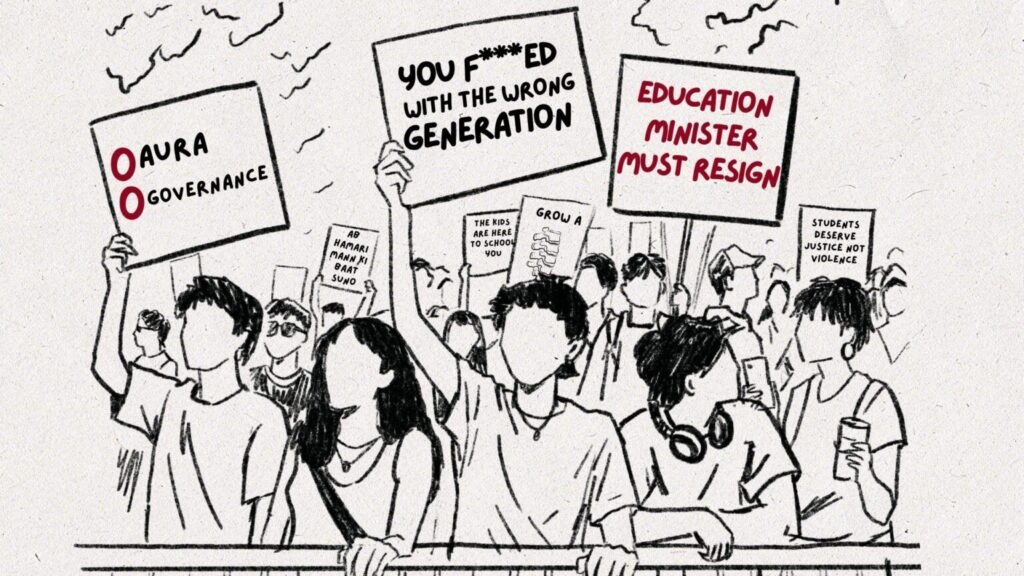
June 20th and subsequent protests during the week proved to be flashpoints in Indian democracy. Youth had poured out in record numbers across cities, taking their collective grievances to the streets. The Gen Z satire of their placards brought a new language of protest to the streets of India that the police and government are altogether unfamiliar with.
Inspiring stories emerged from across the country of how students braved the backlash from the police and stood their ground. In Gen Z style, these street protest moments were turned into reels and memes that went viral.
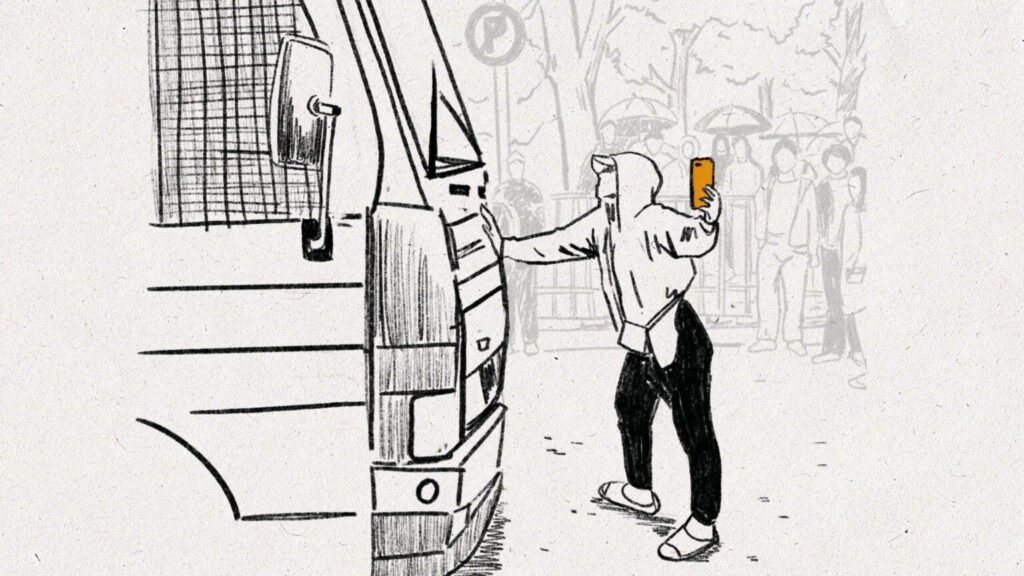
Undeterred by the police backlash, they returned again to the protests. As Jantar Mantar in New Delhi swelled again with crowds in the evening, students joked about feeling FOMO for not being beaten by batons by the police. In Patna, the capital city of Bihar in eastern India, students danced while the police hosed them with water cannons. It was getting hot out here, they said!
On June 25, the government met the immediate demands of the movement with the resignation of India’s Education Minister. The government accepted the movement’s demand for compensation for families of the students who took their lives following NEET paper leaks, and agreed not to press charges against peaceful student protestors.
The government under India’s longest serving Prime Minister Narendra Modi has never conceded a ministerial resignation under public pressure before. Saturday’s resignation proved to be significant achievement for accountability in governance. It proved to be a victory for democracy and for a peacefully protesting movement for its rights.
To top it all, India saw its first mass uprising of Gen Z, as tens of thousands of students took to the streets across the country’s cities.
Solidarity from Australia and around the world
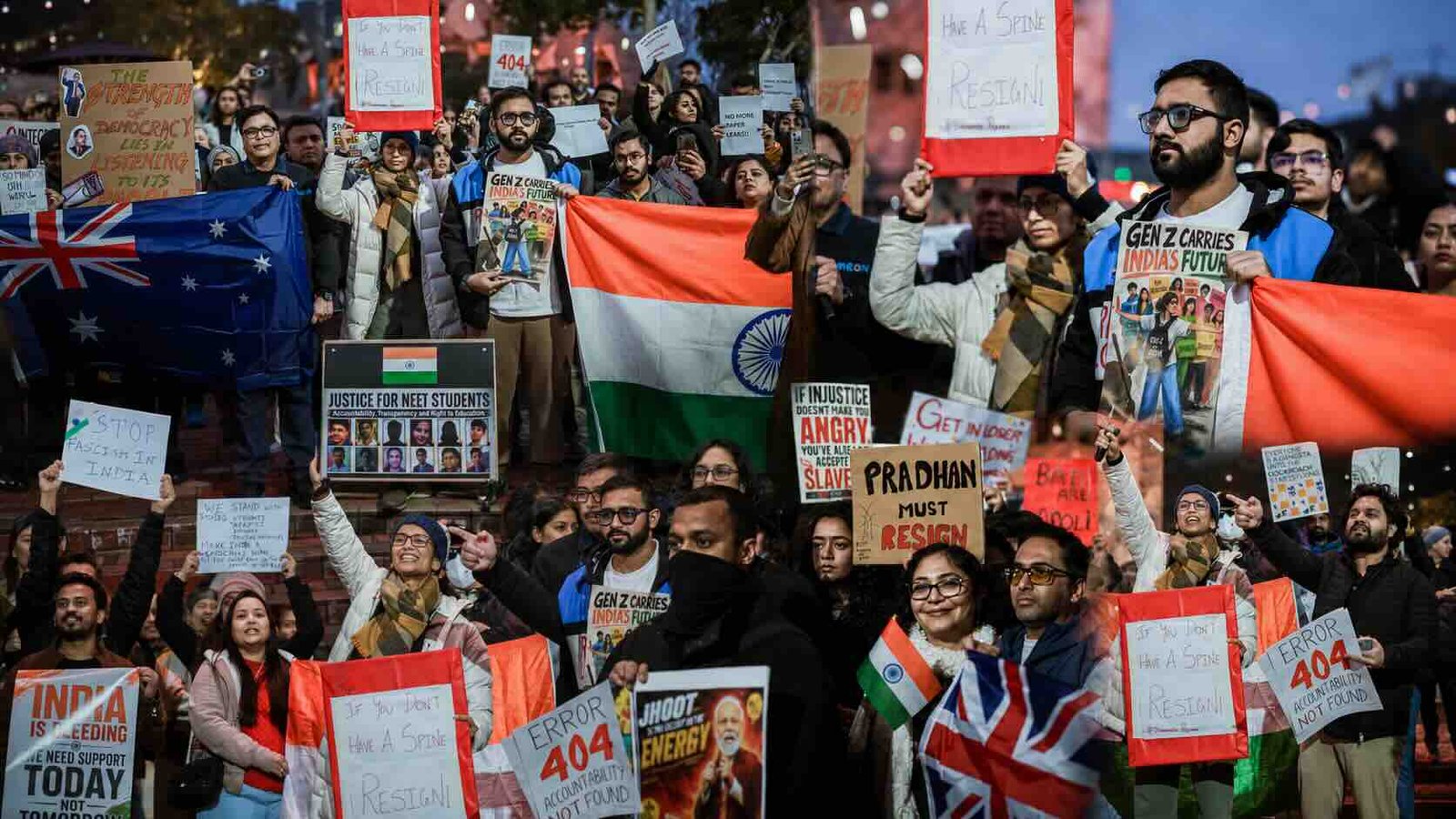
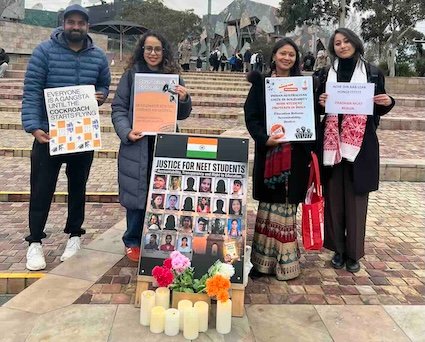
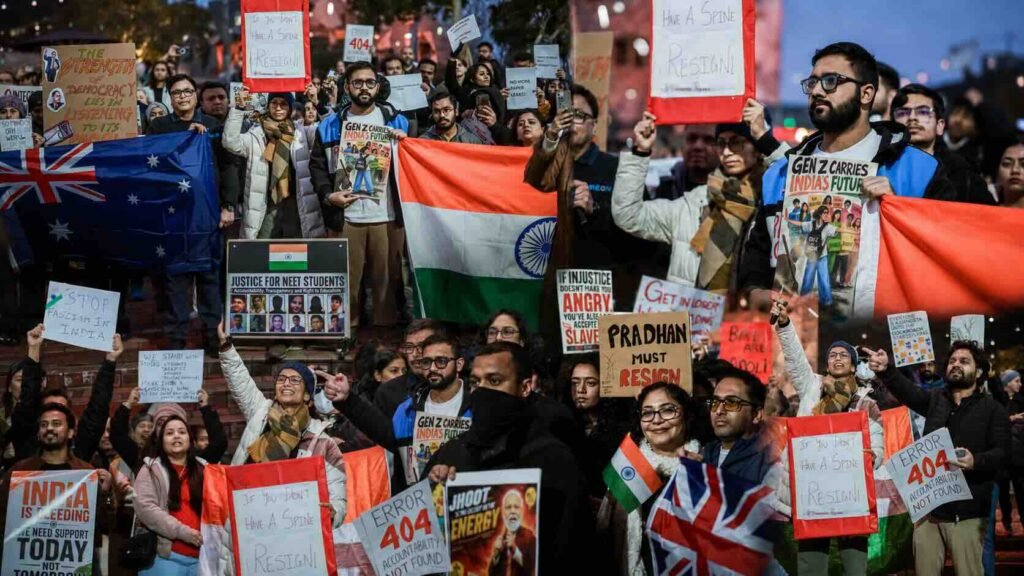
Solidarity for Indian students poured in from around the world through Indian diaspora hosted demonstration gatherings in major cities around the globe. This included the Indian diaspora and allies in Sydney and Melbourne.
The solidarity gatherings were remarkable owing to the presence of a large number of young people, both students and recent migrants to Australia who had relatively recent experiences with the ‘leaky’ education system in India.
The conversations invariably turned from reform in education to the need for accountability in governance and being able to exercise democratic rights in India. Watch a slideshow of images from the Melbourne solidarity meet on June 24th here:
Déjà vu
I have watched the last one week in Indian democracy unfold with a distinct sense of déjà vu. Peaceful protests for citizens’ rights and for justice for affected communities have often catapulted in significance to an expression of dissent as a democratic right when the government has clamped down on legitimate movements.
Many of us remember the government clampdown on civil society organisations in India in 2015, deeming their activism as anti-national. And how the Indian Court upheld the democratic right to dissent when groups sought legal justice for the government’s repressive actions.
In my book The Politics and Resistance of Coal in Australia and India I make the case that especially since 2014, be it against coal extraction, or for Indigenous and human rights, forests and rivers, many movements have found broader and deeper solidarity in Indian civil society as struggles for democratic rights of citizens and special guarantees for vulnerable communities under the Indian Constitution.
Like the Gen Z-led protests for reforming education in India, these movements have experienced moments where acts of repression by the government have sparked nationwide concerns not just for the issue at hand but for democracy.
With its immediate demands being met, India’s first Gen Z protests have been called off for now. A long road to reforming the crisis in India’s education system lies ahead. The youth demographic of the movement has brought a new language, politics and energy to the streets. And yet, the story of their success, even if momentary, will be remembered like that of many other Indian movements as a reclaiming of democracy.
Republished from sapnasolidarity.org. Read the original article here.