
Last updated: 8 July 2026
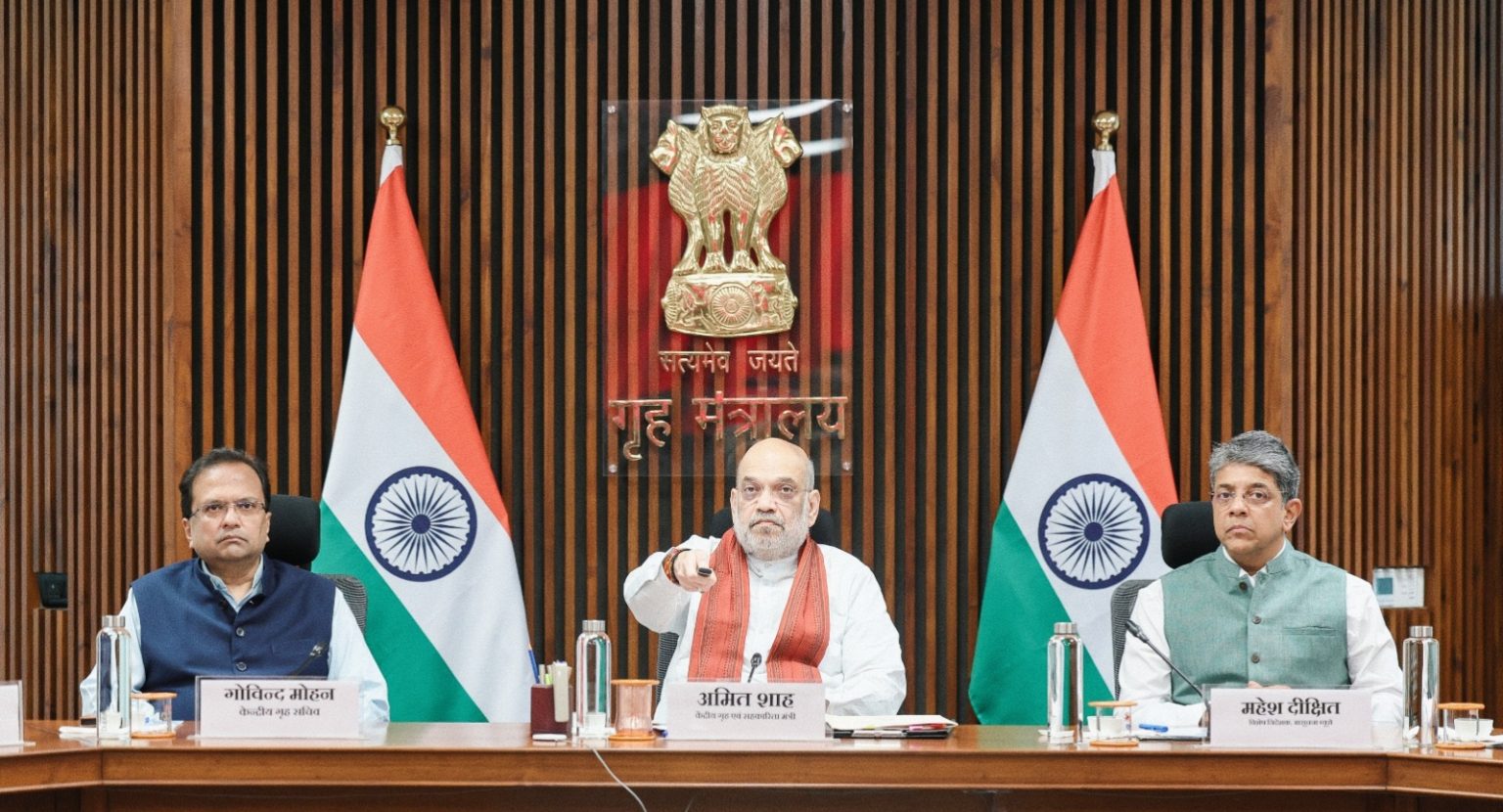
The blue-grey OCI booklet that millions of Indians abroad have carried for two decades is being phased out. From 30 June 2026, the Overseas Citizen of India card is fully digital. Home Minister Amit Shah launched the e-OCI system in New Delhi on Tuesday alongside the FCRA 2.0 portal, describing the move as the most significant overhaul of OCI services since the scheme was introduced in 2005.
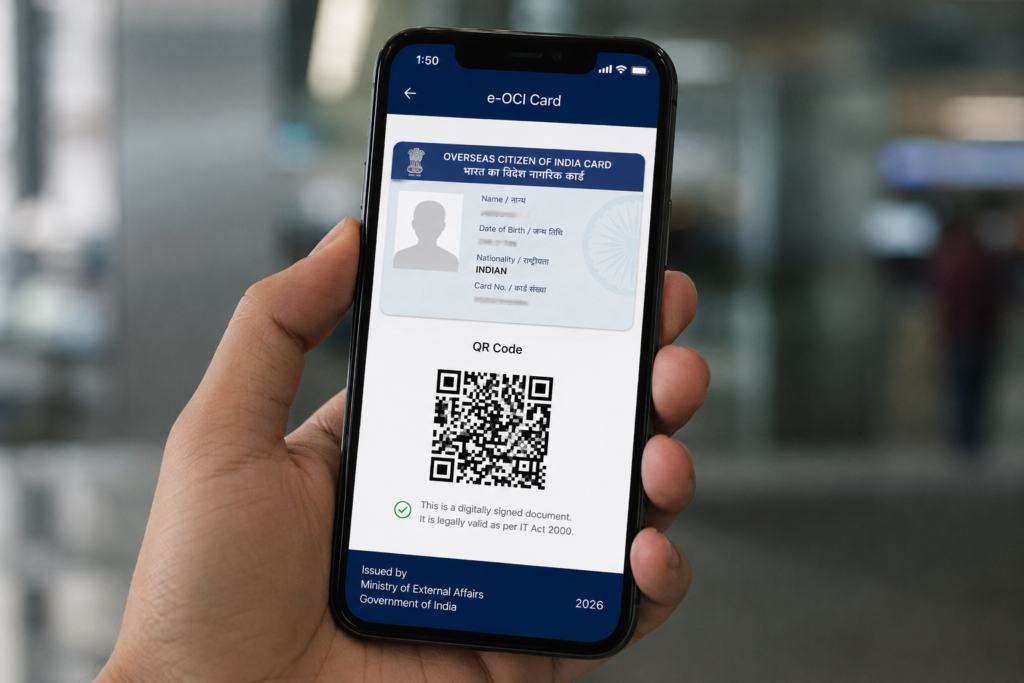
For the diaspora, the practical change is immediate and substantial. The entire OCI process application, document upload, verification, and card issuance now runs online. The physical booklet is no longer required for travel or immigration clearance in India. A QR-coded digital credential, stored on a smartphone, replaces it.
More than 5 million (50 lakh) OCI cardholders are affected. Most existing holders can transition to the digital format without a fresh application or physical verification.
What is the OCI card?
What is an OCI card? An Overseas Citizen of India card is a lifelong, multi-purpose visa available to foreign nationals of Indian origin. It is not citizenship. OCI cardholders can live, work, and study in India without a separate visa, own property, and access most economic and educational facilities on par with NRIs. They cannot vote in Indian elections or hold government posts. The scheme was introduced in 2005 and currently has over 5 million registered holders worldwide.
From 8 July, no physical booklet will be issued to new applicants
The Bureau of Immigration confirmed on 8 July 2026 that the e-OCI system has moved from launch to full operational status. All fresh Overseas Citizen of India registrations from today will result in a digital e-OCI card only. No physical booklet will be issued under any circumstances for new applicants.
“You no longer need to carry your physical OCI booklet everywhere. Simply download your digital e-OCI Card to your mobile phone and present it, along with your passport, at Immigration Check Posts and to participating airlines,” the Bureau of Immigration said in an official post on X on 8 July.
New applicants must download their e-OCI from the official portal at ociservices.gov.in after approval. No physical document will follow in the post. The acknowledgement number issued at the time of application allows real-time tracking of application status on the portal.
What has changed for existing OCI cardholders
The single most significant change for NRIs already holding an OCI card is the elimination of the re-issuance requirement.
Under the previous rules, OCI cardholders were required to apply for a fresh physical booklet each time they obtained a new passport after the age of 20. This process, which ran through VFS Global and Indian missions abroad, cost upwards of £215 in the UK and USD 275 in the US, and took weeks to complete. It was the most common source of friction for the diaspora managing travel to India around a passport renewal cycle.
That requirement is now removed. When an OCI cardholder receives a new passport, they will update their passport details online through the OCI portal. No physical re-issuance, no VFS appointment, no fee for the update itself.
Cardholders must complete the online update within three months of receiving a new passport. This is a firm deadline under the Citizenship (Amendment) Rules, 2026, which came into force on 1 May 2026 and underpin today’s launch.
There is one further upgrade relevant to frequent travellers. E-OCI holders enrolled in the system will be linked to India’s Fast-Track Immigration Programme, enabling entry through automated facial-recognition e-gates at Delhi, Mumbai and Bengaluru airports. The integration removes the need to queue at a manned immigration counter for OCI holders.
The overhaul also removes two renewal triggers that have long frustrated the diaspora. Existing cardholders will no longer be required to renew their cards after receiving a new passport at the age of 20 or 50. Changes to personal details such as name, nationality or gender can now be updated online without triggering a card renewal. Physical visits to an Indian Mission, Post or Foreigners Regional Registration Office are now required only in cases where a personal interview is mandated, specifically for applicants registering based on marriage under Section 7A(1)(d) of the Citizenship Act, 1955.
What the e-OCI means for new applicants
For those applying for an OCI card for the first time, typically those who have naturalised in Australia, the UK, the US, Canada, New Zealand or the UAE and have completed the mandatory Indian passport surrender the application process is now fully online from end to end.
The Surrender Certificate requirement has not changed. It remains the prerequisite for any OCI application and cannot be bypassed. What has changed is everything that happens after: document upload, verification, and card issuance are all digital, with the ministry citing a target processing time of 15 days under the new system, compared to processing times that previously ran to months at many missions.
The e-OCI card itself is a digitally generated credential with a QR code linked to government records. Immigration authorities at Indian airports can scan it directly. Cardholders store it on a mobile device. The risk of losing or damaging a physical booklet, long a practical headache for the diaspora, is eliminated.
Fresh OCI application fees remain unchanged as of April 2026: USD 275 in the US, approximately AED 1,010 in the UAE, CAD 376 in Canada, and SGD 349 in Singapore. The application fee in the UK through VFS Global is approximately £215 plus service charges. The online update for passport renewals is separate and does not attract the full application fee.
| Element | Previous rule | New rule from 8 July 2026 |
|---|---|---|
| Physical booklet for new applicants | Issued as standard | No longer issued under any circumstances |
| Re-issuance after new passport (age 20+) | Mandatory | Eliminated; online passport update required within 3 months |
| Re-issuance after new passport (age 50) | Required | Eliminated |
| Personal detail updates (name, nationality, gender) | Required card renewal | Online update only, no renewal triggered |
| Personal interview | Required for all applicants | Required only for spouse-basis applicants under Section 7A(1)(d) |
| Processing time | 6-8 weeks (physical) | 15 business days (digital) |
| e-gate access | Not available | Available at 13 airports; biometric enrolment required |
| December 2026 | N/A | Full facial recognition e-gate integration at 13 airports |
The FCRA 2.0 portal: what NRIs need to know
The second initiative launched on 30 June is the FCRA 2.0 portal, which governs foreign contributions to organisations in India. This is primarily relevant to NRIs who donate to or work with NGOs, religious institutions, or non-profit organisations registered in India.
What is FCRA?
What is FCRA? The Foreign Contribution (Regulation) Act governs the receipt and use of foreign donations by Indian organisations. Any Indian individual, association, or company receiving money from abroad must be registered under FCRA. The law is intended to prevent foreign funds from being used for activities against national interest. Around 14,500 organisations currently hold active FCRA registration.
The FCRA 2.0 portal fully digitises all processes under the Act: applications, renewals, annual returns, and compliance reporting. It is hosted on MeghRaj, the National Government Cloud, and integrates with PAN, Aadhaar, OCI, NGO Darpan, and the ICAI’s UDIN system. The government processes approximately 15,000 to 20,000 FCRA applications and around 17,000 annual returns each year.
For NRIs who donate to family-run trusts, temples, schools, or charitable organisations in India, the practical implication is simpler compliance for the receiving organisation. Donations themselves are governed by FEMA, not FCRA. FCRA applies to the Indian entity receiving the funds, not to the NRI sending them. If an organisation you donate to has previously faced delays or compliance issues under FCRA, the digitised portal is intended to reduce that friction.
Shah noted at the launch that the FCRA Amendment Rules, 2026, introduced days earlier by the Home Ministry, have been incorporated into the new portal. Those rules include a framework classifying permissible activities under the religious category, which affects temples, mosques, churches, gurdwaras and similar institutions receiving foreign donations.
A new FCRA law is expected to be tabled in the monsoon session of Parliament to further support the regulatory framework.
The three changes to act on now
For the diaspora, today’s launch produces three immediate action items depending on individual circumstances.
First, existing OCI cardholders who receive a new passport should update their details online within three months of the new passport being issued. The physical re-issuance process is no longer required, but the online update is mandatory and has a deadline.
Second, those who have naturalised abroad and have not yet applied for an OCI card should confirm their Surrender Certificate is in order. The e-OCI system has made the post-surrender application process faster and fully digital, but the Surrender Certificate remains the gateway. Without it, no OCI application will be processed.
Third, NRIs who donate to FCRA-registered organisations in India may find that the receiving entity’s compliance and reporting process is now smoother. If an organisation you support has previously cited FCRA paperwork as a constraint, that should improve under the new system.
What is coming by December 2026
The e-OCI system’s integration with India’s Fast-Track Immigration Programme will expand by December 2026. The Bureau of Immigration has confirmed that e-OCI holders will be able to clear immigration through facial recognition e-gates at 13 major Indian international airports, including Delhi, Mumbai and Bengaluru, in under 60 seconds. Biometric enrolment at the time of fresh OCI registration is required to access the e-gate facility. Existing cardholders transitioning to the digital format should confirm whether biometric enrolment is required at the time of their next passport update.
What NRIs are asking
Does the e-OCI card replace my physical booklet immediately? Existing physical OCI booklets remain valid for travel to India. The transition to a digital credential happens when you next update your passport details online or apply for a fresh card. You are not required to surrender the physical booklet immediately.
Do I need to pay a fee to convert to the e-OCI format? The online passport-detail update under the new system does not attract the full OCI application fee. The full fee applies only to fresh applications. Confirm the current fee schedule with your jurisdictional Indian mission or the OCI services portal before applying.
Can I use the e-OCI card at Indian airports right away? E-gate access through the Fast-Track Immigration Programme at Delhi, Mumbai and Bengaluru airports requires biometric enrolment at the time of OCI registration. If you are an existing cardholder transitioning to the digital format, confirm whether enrolment is required at the time of your passport update. The ministry has not published a firm activation timeline for legacy cardholders.
I donate to a temple in India. Does FCRA 2.0 affect me? FCRA applies to the Indian organisation receiving the funds, not to you as the NRI donor. If the temple or trust you support is FCRA-registered, their compliance process will be handled through the new portal. Your obligation as a donor under FEMA remains unchanged.
My child was born abroad and holds a foreign passport. Are they eligible for an OCI card? Yes. A child born abroad to at least one parent who is or was an Indian citizen is eligible to apply for an OCI card. The application is now fully online. You will need the child’s foreign passport, birth certificate with apostille, and the Indian-origin parent’s documentation. Check your jurisdictional mission’s current document checklist, as requirements vary slightly by country.