
Over a million Indian professionals are waiting in the United States employment-based green card queue. Many have waited a decade. Some will wait several decades more. Their children, born in the US while that wait continues, now have their citizenship confirmed by the highest court in the country.
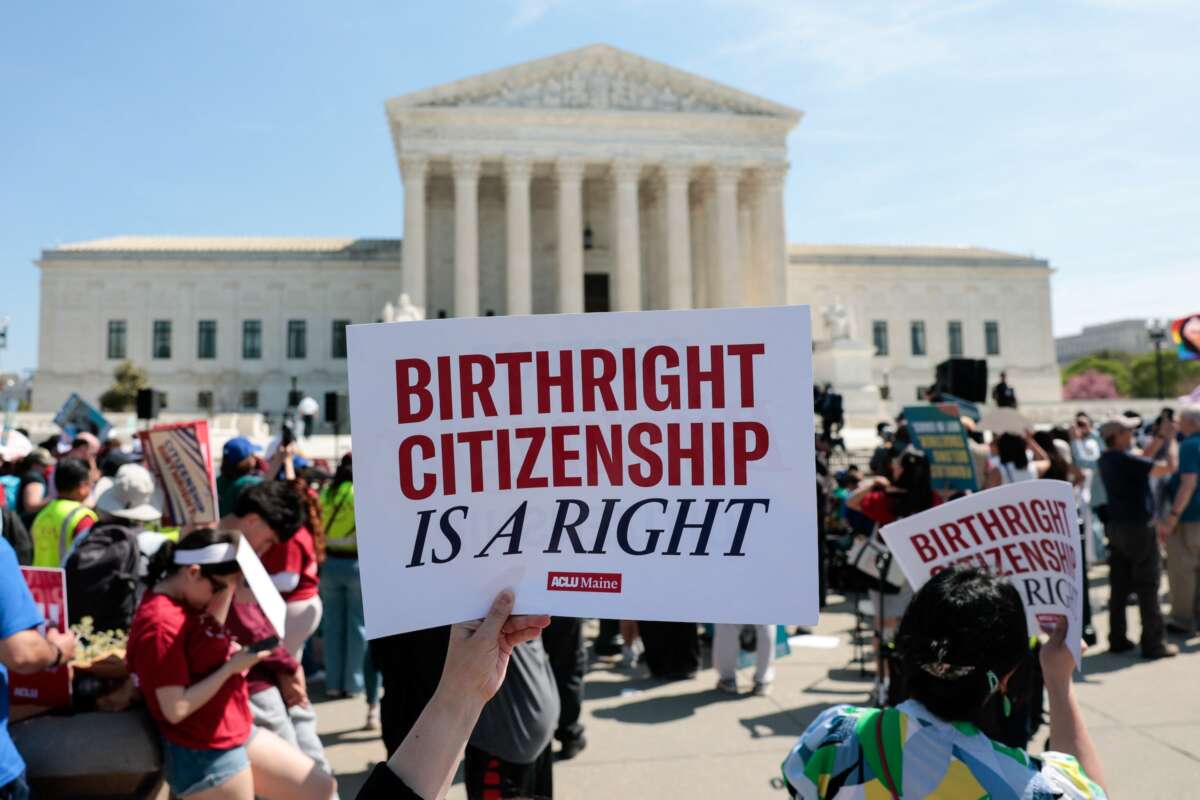
The US Supreme Court ruled 6-3 on 30 June 2026 that the Fourteenth Amendment to the US Constitution guarantees automatic citizenship to virtually all children born on American soil, regardless of the immigration status of their parents. The ruling in Trump v. Barbara struck down Executive Order 14160, signed by President Trump on his first day back in office in January 2025, which had sought to deny birthright citizenship to children born to parents who were in the country unlawfully or on temporary visas, including H-1B, H-4, F-1 and other non-immigrant categories.
Chief Justice John Roberts wrote for the majority: “Citizenship, then and now, was the right to have rights to freely participate in our political community. The Framers of the Fourteenth Amendment extended that promise to ‘every free-born person in this land.’ We keep that promise today.”
What the ruling means for Indian H-1B families
No group was more directly exposed to Trump’s executive order than Indian nationals on H-1B visas and their families.
Indians account for approximately 72 to 75% of all H-1B visas issued in recent years, according to data cited by multiple immigration analysts. More than 300,000 Indian professionals are currently in the employment-based green card backlog, a queue so long that applicants at the back of it today may not receive permanent residency for 50 years or more, given per-country caps that have remained unchanged for decades.
For these families, children are routinely born in the United States long before any path to a green card is in sight. Under the executive order, those children would have lost automatic citizenship at birth. Under Tuesday’s ruling, they retain it.
Chintan Patel, Executive Director of Indian American Impact, said the ruling was “a profound affirmation of who belongs in America.” He added: “Indians and South Asian immigrant families are among those most directly threatened by Trump’s executive order. Their children are often born here long before their parents have a clear path to permanency. Today the Supreme Court looked at those families and said: your children are American. They belong here.”
Khanderao Kand, President of the Foundation for India and Indian Diaspora Studies, said the decision provided “much-needed certainty for millions of families who have built their lives in America,” and called on Congress to address the green card backlog that leaves so many Indian professionals in long-term limbo.
Indian-American Congresswoman Pramila Jayapal welcomed the ruling on X: “I am an immigrant. I know what this country’s promises mean when they are kept, and I know what it costs when they are broken.”
What the US Supreme Court decided
The legal question in Trump v. Barbara was narrow: does the phrase “subject to the jurisdiction thereof” in the Citizenship Clause of the Fourteenth Amendment exclude children whose parents are in the United States unlawfully or temporarily?
The Trump administration argued it did, and that the 1898 precedent in United States v. Wong Kim Ark, which had long been read to guarantee birthright citizenship for children of foreign nationals, only applied to children whose parents had permanent domicile in the United States.
Roberts rejected that argument. The majority held that the historical evidence was clear: the drafters of the Fourteenth Amendment chose the broad formulation “born in the United States” deliberately, and the contemporary legal understanding in 1868 treated birth on American soil as the decisive factor, not the parents’ residence status or legal standing. Roberts wrote that there was “scant evidence” for the administration’s reading and called it “dramatically revisionist.”
The court also reaffirmed that Congress had codified this understanding in the Immigration and Nationality Act of 1952, meaning birthright citizenship rests on both constitutional and statutory grounds.
Justice Brett Kavanaugh, in a concurring opinion that agreed with the outcome but on narrower statutory grounds, suggested that Congress could potentially amend the 1952 law. That avenue was quickly closed off by constitutional scholars and other justices, who noted that the constitutional holding of the majority forecloses it. Changing birthright citizenship now would require a formal constitutional amendment, a process requiring approval from two-thirds of both houses of Congress and three-quarters of all US states.
Justices Clarence Thomas and Neil Gorsuch dissented. Justice Samuel Alito also dissented separately.
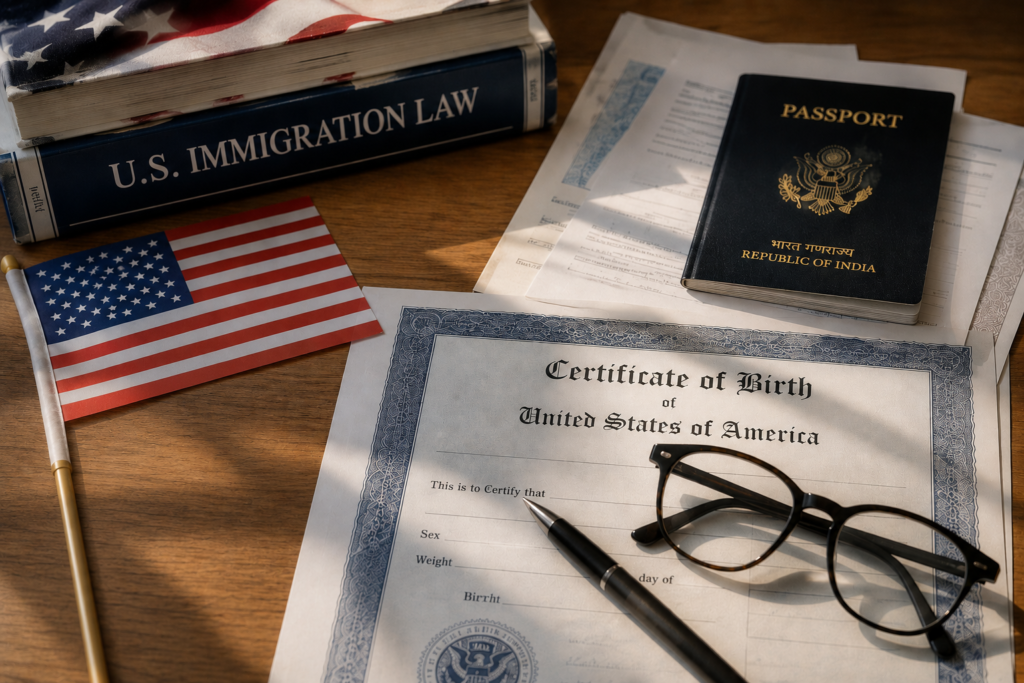
What is the Fourteenth Amendment?
Ratified in 1868 after the Civil War, the Fourteenth Amendment to the US Constitution established, among other rights, that “all persons born or naturalised in the United States and subject to the jurisdiction thereof, are citizens of the United States.” It was enacted to overturn the Dred Scott decision, which had held that Black Americans could not be citizens. In 1898, the Supreme Court confirmed in United States v. Wong Kim Ark that the clause applied to children of foreign nationals born on US soil. That interpretation has stood for 128 years.
What happens next
Trump responded to the ruling on Truth Social, describing it as wrong and suggesting Congress should act. Speaker of the House Mike Johnson echoed that position, though constitutional experts from both sides of the argument said the court’s ruling on the constitutional question makes legislative change insufficient to alter birthright citizenship.
The ACLU, which argued the birthright citizenship case before the court, said it did not anticipate a “round two” of this fight given the emphatic nature of the ruling. However, advocates flagged two areas of ongoing concern.
First, the administration could tighten documentation requirements at the point of birth, requiring additional proof of parental status to register citizenship, creating bureaucratic friction without formally altering the legal standard. Second, the administration’s broader immigration enforcement agenda continues. Birthright citizenship has been confirmed. The conditions under which Indian H-1B holders maintain their own status in the US, their ability to work, and the future of the green card backlog remain open and contested questions.
For the 5.2 million-strong Indian-American community, Tuesday’s ruling settles one existential question about the next generation. It does not settle the conditions in which the current generation continues to live and work.
The green card backlog, the per-country caps, the H-1B lottery and the H-4 employment authorisation rules are all still in play. The ruling does not change any of them. What it does is confirm that children born in America while their parents navigate that system are, and remain, Americans.
What Indian families in America are asking
Does this ruling affect Indians in Australia, the UK, the UAE, Canada or New Zealand?
Not directly. The ruling applies to the United States only and concerns the US Fourteenth Amendment. NRIs in other countries are governed by those countries’ own citizenship laws. However, for Indian families who have relatives or are themselves in the US on H-1B or F-1 visas, the ruling is directly relevant.
My child was born in the US while I was on an H-1B visa. Are they definitely a US citizen?
Yes, under Tuesday’s ruling. The Supreme Court confirmed that children born on US soil are US citizens regardless of their parents’ visa status. That position is now confirmed at the highest legal level in the United States.
Can Trump try again through Congress or a new executive order?
The Supreme Court’s majority ruled on constitutional grounds, not just statutory ones. Changing birthright citizenship now requires a constitutional amendment, which needs two-thirds of both houses of Congress and three-quarters of all US states. That threshold is considered extremely high. A new executive order restating the same position would face the same constitutional bar.
If my child is a US citizen by birth, do they also hold Indian citizenship?
No. Under Article 9 of the Indian Constitution and Section 9 of the Citizenship Act, 1955, Indian citizenship is lost automatically when a person acquires foreign citizenship. A child born in the US who is a US citizen from birth is not an Indian citizen. They may be eligible for an OCI card as a person of Indian origin, which grants broad rights in India but is not citizenship. For more on OCI card rules and the e-OCI system, see our earlier coverage.
What is the green card backlog and how does it affect Indian H-1B families?
The US employment-based green card system operates under per-country caps, meaning no single country can receive more than 7% of the annual green card allocation. Because demand from India vastly exceeds that cap, Indian nationals face waiting times that stretch decades. More than 300,000 Indian professionals are currently in this backlog. Children born to these families during the wait had their US citizenship confirmed by Tuesday’s ruling.