
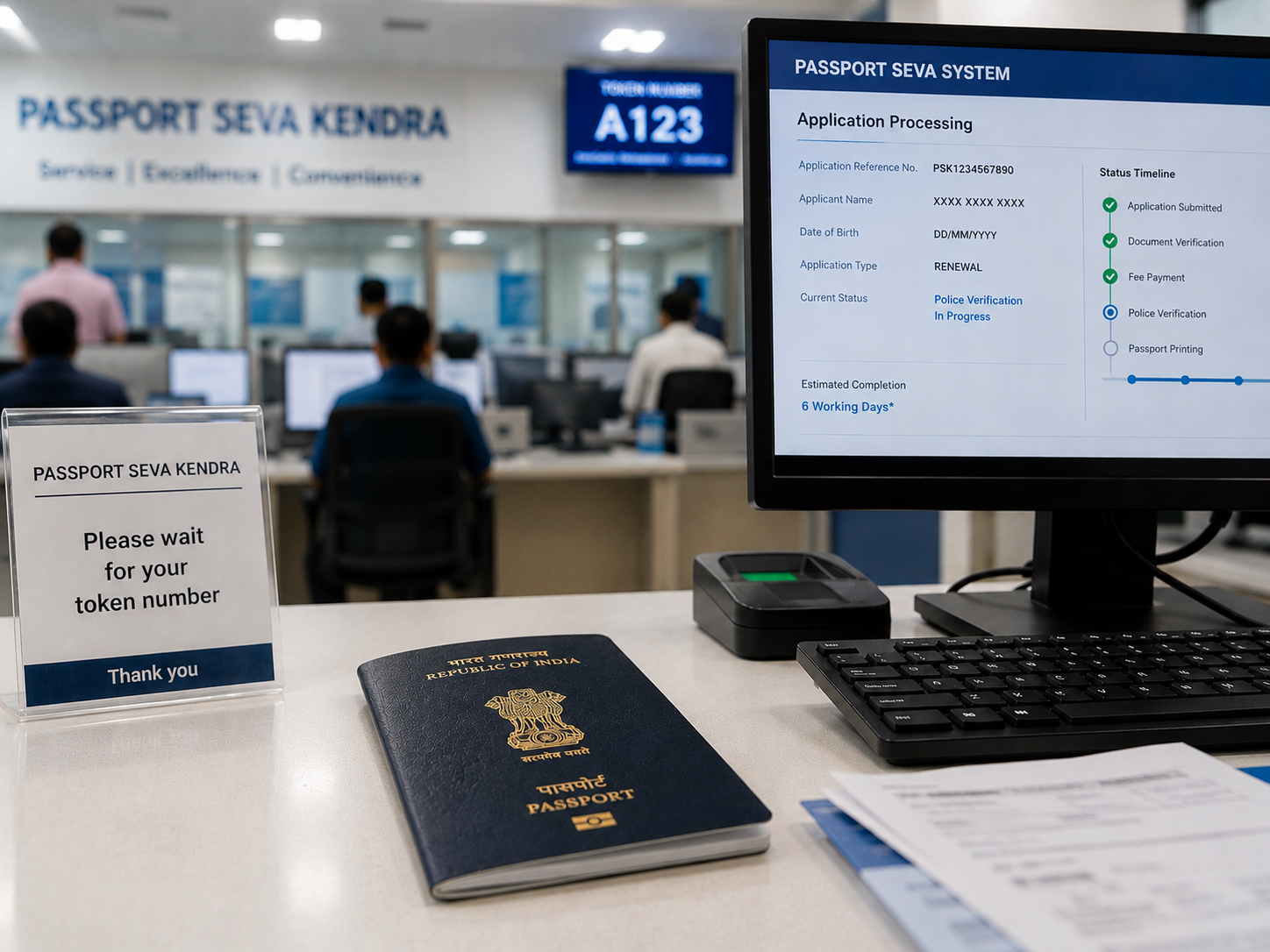
India processed more than 138 lakh passports in the financial year just ended. A decade ago, the number was 83 lakh. That is a 66% rise in annual issuance, and it is only one of the numbers the Ministry of External Affairs put on the table on 24 June 2026, at the 14th Passport Seva Divas.
The same event produced a remark that stopped many NRIs mid-scroll: that a passport is a travel document, not proof of citizenship. We covered the legal and practical implications of that clarification in detail, including what actually proves Indian citizenship and what naturalised NRIs must do about their Surrender Certificate. However, the numbers tell a parallel story. The document is not a citizenship proof. It is, however, the product of a system that has been rebuilt from the ground up over ten years, and that rebuild now extends to every Indian mission abroad.
The decade in numbers
In 2014, India had 77 Passport Seva Kendras. Today, there are 545, a seven-fold increase, supported by 454 Post Office Passport Seva Kendras that push services into districts and towns that had no access a decade ago. EAM S. Jaishankar put it plainly at the Regional Passport Officers’ Conference on 19 June: “From 77 Passport Seva Kendras in 2014 to 545 today, Bharat’s Passport Service Programme has reached the remotest places of the nation.”
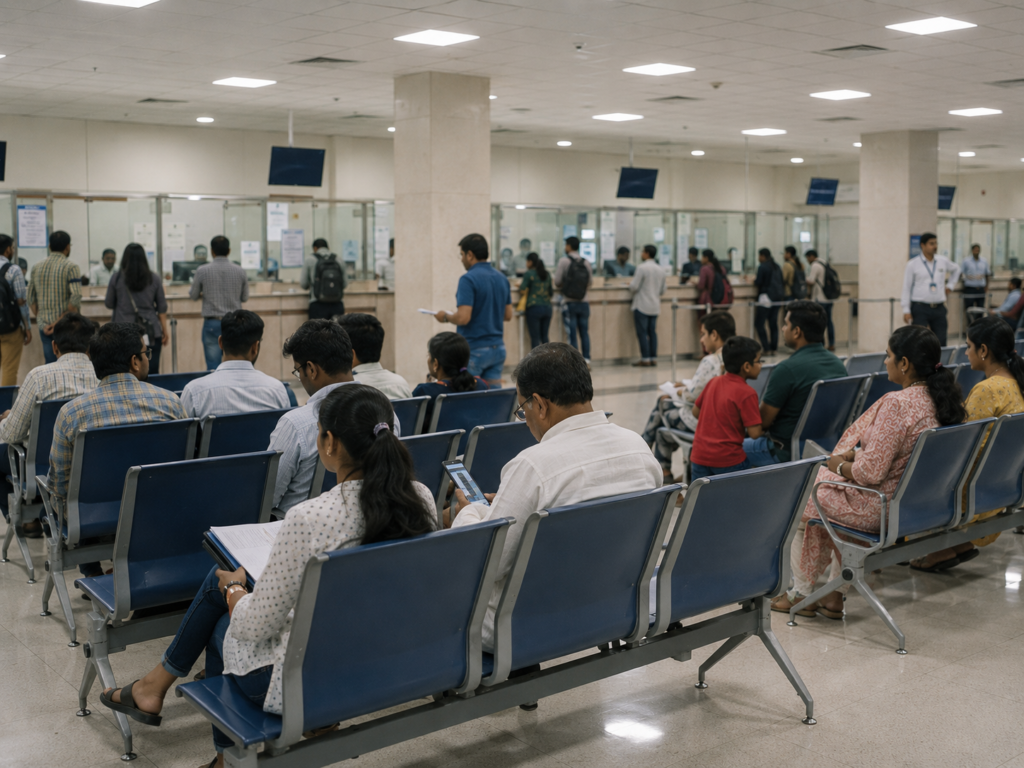
The processing times reflect that scale. An applicant now spends under 45 minutes at a Passport Seva Kendra. A passport is dispatched within six working days of police verification being cleared. The mPassport Police App has brought police verification itself down to five to seven days in 25 states and union territories, against a national average that once ran to weeks.
Annual issuance tells the same story. The 138 lakh figure for FY2025-26 compares against 83 lakh in FY2013-14. In calendar year 2025 alone, the MEA delivered 1.39 crore passports and related services totalling 1.5 crore documents. These are not aspirational projections. They are the numbers from the ministry’s own count.
What is an e-passport?
What is an e-passport? An e-passport contains an embedded RFID chip and antenna that store the holder’s personal and biometric data. It meets the International Civil Aviation Organisation’s security standards, including Basic Access Control and Extended Access Control protocols. The chip is read at automated border control gates at participating airports. India’s e-passports are issued under the Passport Seva Programme 2.0 and look identical to the standard booklet from the outside.
The e-passport rollout began in April 2024, with pilot issuances at Regional Passport Offices in Nagpur and Bhubaneswar. By late 2024, those two centres had issued over 80,000 e-passports between them. The programme has since expanded to 13 cities: Nagpur, Bhubaneswar, Jammu, Goa, Shimla, Raipur, Amritsar, Jaipur, Delhi, Chennai, Hyderabad, Surat, and Ranchi. A nationwide rollout was announced at last year’s Passport Seva Divas.
Jaishankar cited the e-passport programme and its DigiLocker integration as a defining feature of the current phase. The standard fee for a 36-page adult passport remains unchanged at Rs 1,500. Existing passports remain valid until their expiry date. No separate application is needed to switch; the chip-enabled booklet is simply issued on renewal or first application at participating offices.
Where an Indian passport gets you
The MEA confirmed on 24 June that 27 countries now offer visa-free entry to Indian passport holders, up from 16 in 2019. A further 47 offer a visa on arrival, and 66 provide e-visa facilities.
The Henley Passport Index, as of its February 2026 ranking, placed the Indian passport 75th globally, with access to 56 destinations. That is up from 85th the previous year. The rank has moved through a range this year: 80th in January, 75th in February, 78th by May, because the index updates monthly and small shifts in other countries’ access affect relative positions.
Two access points were lost in this period. Iran revoked visa-free entry for Indian passport holders in November 2025. Bolivia moved to an e-visa requirement in January 2026. India’s relative ranking still improved because other passports declined more sharply.
For NRIs, the visa-free and visa-on-arrival numbers matter most when travelling to a third country on an Indian passport, which those who have not yet naturalised still carry. For those who have naturalised and hold a foreign passport, the Indian passport’s travel access is no longer relevant to their movement, though it remains relevant to their documentation history and to the visa and immigration obligations that come with it.
The upgrade that matters most for the diaspora
The figure that got the least attention on 24 June was not in the domestic numbers. On 28 October 2025, the MEA deployed the Global Passport Seva Programme V2.0 at Indian diplomatic missions worldwide.
GPSP V2.0 brings the same backend that powers PSP V2.0 domestically to every Indian High Commission, embassy, and consulate. DigiLocker integration, UPI and QR-based payments, auto-populated application forms, and a 24/7 AI-chatbot support system are now live at missions globally. Jaishankar specifically cited GPSP V2.0 in his 14th Passport Seva Divas message as reinforcing “the security and convenience of the Indian diaspora.”
For NRIs in Australia, the UK, the UAE, the US, Canada and New Zealand, passport renewal has always been the friction point. The process is a two-step one: apply online through the Passport Seva portal to generate an Application Reference Number, then complete submission through VFS Global, which has been the sole authorised service provider for Indian passport applications abroad since it replaced CKGS in the US in November 2020. Indian embassies and consulates no longer accept applications at the counter.
GPSP V2.0 sits behind that VFS workflow, handling data processing, verification checks, and dispatch. NRIs applying through VFS Global are now, in effect, going through the same upgraded system as a first-time applicant walking into a PSK in Jaipur.
Processing timelines abroad remain longer than domestic ones. A normal renewal takes three to six weeks in most jurisdictions, with some European missions running to eight weeks during busy periods. Tatkaal, the priority processing option, brings that down to three to four business days where the police verification record is clear and available.
What the numbers mean for the diaspora right now
| Document / service | Status | NRI implication |
|---|---|---|
| Standard passport renewal | Available via VFS Global in all major diaspora countries | Use online portal first to generate ARN, then VFS |
| e-Passport | Issuing at 13 cities in India; missions abroad where GPSP V2.0 is live | Issued on renewal or fresh application; no separate fee |
| Tatkaal abroad | Available at most Indian missions | 3-4 business days if police verification is clear |
| Surrender Certificate | Required on naturalisation before OCI application | Mandatory; delays attract graduated penalties |
| OCI card | Requires valid Surrender Certificate and current foreign passport | Must be re-issued once post age 20 on new foreign passport |
The Surrender Certificate row in that table is not a coincidence. The 14th Passport Seva Divas produced two separate stories that belong together. One is the scale of the system that issues Indian passports. The other is the legal clarification about what those passports do and do not prove. For NRIs who have naturalised, the obligation to surrender the document and obtain a certificate before applying for an OCI card sits at the intersection of both stories.
For those still holding Indian citizenship and living abroad on work or student visas, the numbers from 24 June are mostly good news. The document they carry is the product of a system that is faster, more accessible, and now globally connected. What the document is not, proof of citizenship, was the other thing the MEA said that day.
What NRIs are asking
Do I need to do anything to get an e-passport if I am renewing abroad? No separate action is required. When you apply for renewal through VFS Global at a mission where GPSP V2.0 is live and e-passport capability is deployed, the chip-enabled booklet is issued automatically. Confirm with your local Indian mission whether e-passports are currently being issued at that post, as rollout is phased.
How long does passport renewal take for NRIs in Australia? Normal renewal through VFS Global typically takes three to six weeks from submission to dispatch. Tatkaal processing reduces this to three to four business days, where the police verification report is available. Processing times vary by mission and application volume; check the VFS Global Australia portal for current estimates before applying.
Can I renew an Indian passport after naturalising abroad? No. Indian citizenship ends automatically the day you naturalise in a foreign country under Section 9 of the Citizenship Act, 1955. You are legally obliged to surrender the Indian passport and obtain a Surrender Certificate. Renewing an Indian passport after naturalisation is a violation of the Passports Act, 1967 and can attract significant penalties.
What is the Henley Passport Index and should NRIs care about it? The Henley Passport Index ranks passports by the number of destinations their holders can access without a prior visa. India ranked 75th as of the February 2026 update, with access to 56 destinations. For NRIs who have naturalised, the index reflects the strength of their new country’s passport, not India’s. For those still on Indian citizenship, it is a useful guide to visa-free travel options, though individual eligibility depends on personal documentation and destination-country rules.
Does the GPSP V2.0 upgrade change the VFS Global process? The front-end VFS Global process, covering document submission, appointment booking and fee payment, is unchanged. GPSP V2.0 operates on the backend at the Indian mission, improving processing speed, data security, and payment options. The practical difference for most NRIs is faster turnaround and fewer administrative errors in document handling.