Jasjit Singh, University of Leeds
The murder of 18-year-old Henry Nowak by Vickrum Digwa in Southampton in December 2025 is a profound tragedy that has left a family grieving and deeply affected the wider community. Any discussion that follows must keep that loss clearly in view.
Following Digwa’s conviction and sentencing, Nowak’s father said the family did not want his death “to be used to create further division, hatred or tension. We want his story to help make our streets safer for everyone.”
Local and national Sikh organisations expressed deep sorrow and offered condolences, while unequivocally condemning the killing and stating that Digwa’s actions were “in direct contradiction to Sikh teachings and values” and wholly unrepresentative of Sikhs.
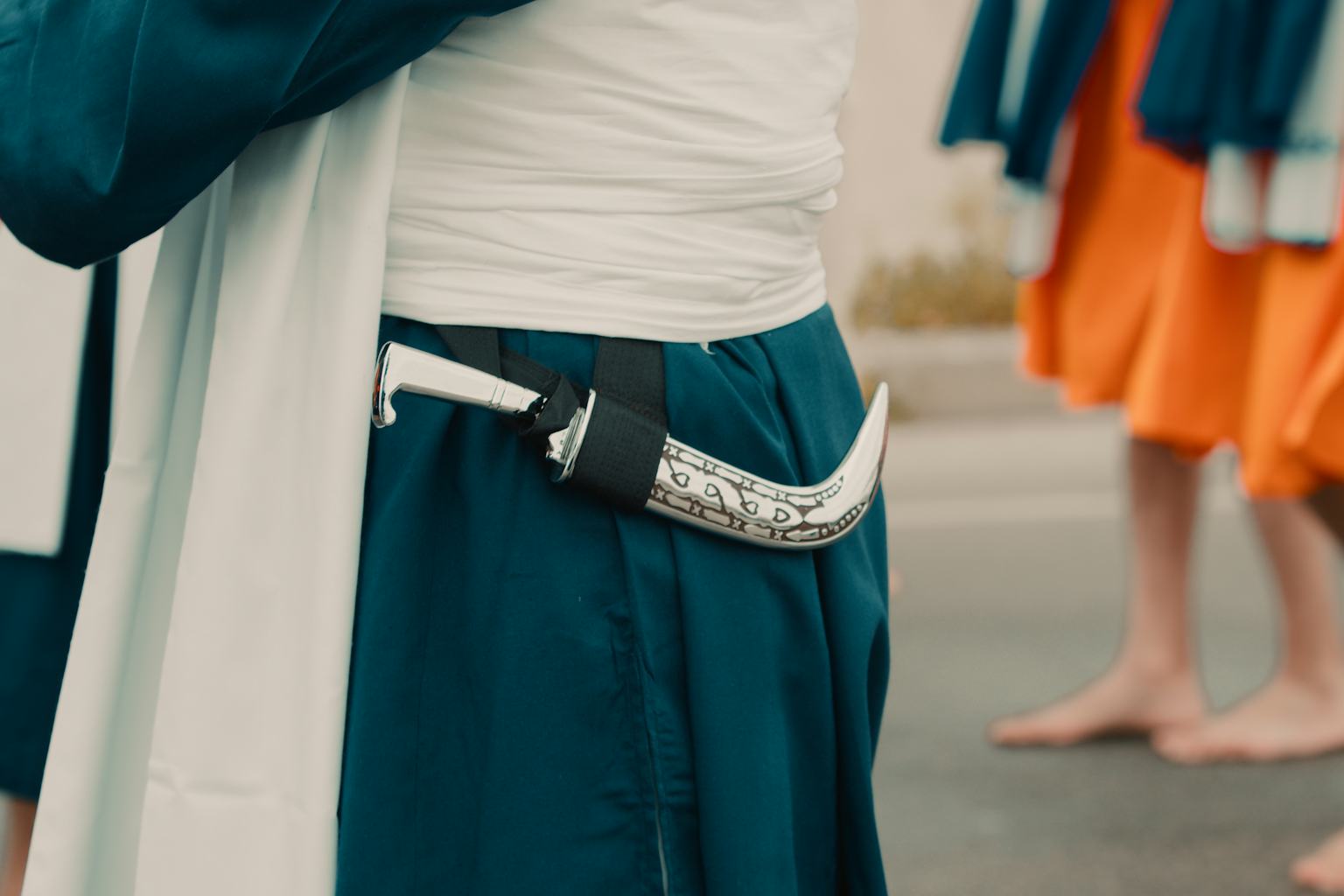
In court, the judge noted that Digwa was carrying a kirpan – a ceremonial blade that is typically worn in a small, discreet form – as well as a larger bladed weapon, which was used in the attack.
Wider questions have since been raised about religious exemptions. Should Sikhs be allowed to carry kirpans in public? And, given this horrific case, are existing legal protections for religious bladed instruments still justified?
What is the kirpan and who carries it?
The kirpan is a blade worn as part of the Five Ks – the five markers of identity adopted at initiation into the Khalsa (the community of initiated Sikhs).
These are kesh (uncut hair), kangha (a wooden comb), kara (an iron or steel bangle), kachera (specific undergarments) and kirpan. The term kirpan combines kirpa, meaning compassion, and aan, meaning honour or dignity.
There is a widespread misunderstanding, reinforced in some media reporting, that all Sikhs wear a kirpan. In practice, only Amritdhari Sikhs, those formally initiated into the Khalsa and committed to its teachings, are required to do so. They represent a small proportion of the global Sikh population.
UK law treats the kirpan through a “good reason” provision, allowing it to be carried for religious purposes in a specific context – typically as part of an ongoing commitment to the Five Ks – rather than as a standalone item.
Within Sikh tradition, the kirpan is understood as a gift from the Guru and is linked to a duty to protect the vulnerable, resist injustice and stand against oppression. It is carried as a reflection of the ideal of the “saint soldier”, combining spiritual discipline with societal responsibility and a commitment to protect others.
What does the law say?
In UK law, carrying a knife or bladed article in public is an offence under the Criminal Justice Act. But the law allows the carrying of a bladed article where there is a good reason to do so, including religious practice and national dress – as in the case of a sgian dubh, worn as part of traditional Scottish Highland dress.
Crucially, the law distinguishes between carrying and use. The “good reason” justification applies only to possession. If a blade is used to harm others, any justification falls away and it is treated as a weapon. This means the law permits the carrying of the kirpan as a religious article, but never its use for harm.
Unlike most religious exemptions, which do not involve objects associated with risk in public space, the kirpan also sits within criminal weapons law that aims to address knife crime. Because knife laws focus on potential harm rather than intention, the kirpan occupies an unusual position: both a religious obligation and an object associated with risk. The law does not remove this tension, but manages it.
Different legal systems respond to the kirpan in different ways. Where Sikh communities are long established, accommodation is more common. Where they are smaller or less visible, the kirpan is more likely to be understood primarily as a risk.
In Canada, courts have emphasised accommodation, allowing kirpans in schools while accepting proportionate safeguards to manage risk. In Italy, courts have taken a stricter approach, treating the kirpan under general weapons law regardless of its religious meaning.
In Australia, a school incident prompted a temporary ban that was later reversed after consultation with Sikh organisations. Elsewhere, the kirpan is managed through broader frameworks of public order or justified possession.
India’s constitution explicitly recognises the kirpan as part of Sikh religious practice.
There is little evidence that blanket bans reduce harm. Instead, most legal systems manage the issue through safeguards and negotiation. The challenge lies in balancing religious freedom with perceptions of risk, rather than attempting to resolve that tension entirely.
Balancing religion and risk
Courts generally recognise the kirpan as a genuine religious obligation while also acknowledging its potential for harm. Within Sikh tradition, the kirpan is linked to the duty to protect others. In law, however, this does not create a right to use force.
Any use of a kirpan as a weapon falls outside legal protection, even in defence of others. The law manages this tension by allowing possession in defined circumstances while maintaining clear limits on harm.
Henry Nowak’s murder raises a difficult question: would restricting possession of the kirpan prevent incidents of this kind? The short answer is no. Violence using a blade is already illegal.
Restricting the exemption would affect who can carry a kirpan, not the legality of violence itself. It would place Amritdhari Sikhs in conflict with the law, without addressing the underlying causes of violent acts.
A more productive approach would be to clarify the terms of the exemption. Shared expectations already exist within Sikh communities about how the kirpan is to be worn in everyday contexts, reflecting longstanding practices. These are increasingly developed and clarified through engagement with schools, employers and policymakers.
Initiation into the Khalsa is intended to establish how the kirpan should be worn and the responsibilities it entails. But these expectations are not always clearly understood outside Sikh communities, or consistently applied.
As Mark Nowak, Henry’s father, has said, the aim should be to make change for the better, not to create further division. The challenge is how to respond to violence in ways that improve safety without deepening misunderstanding.
Jasjit Singh, Professor of Religion and Global Engagement, University of Leeds
This article is republished from The Conversation under a Creative Commons license. Read the original article.