Shambhavi Siddhi, Western University
In August 2019, India took the significant step of ending the autonomous status of Jammu and Kashmir.
Articles 370 and 35A of the Indian constitution granted Jammu and Kashmir semi-autonomous status following the territory’s accession to India in 1949. But in 2019, India revoked these special constitutional provisions.
The provisions included land rights for the Indigenous population of Jammu and Kashmir, a separate constitution and autonomy in internal administration. They also limited the powers of the Indian parliament.
As noted by Amnesty International, since India’s 2019 move, Jammu and Kashmir has faced increased challenges, including more violence, a higher military presence, frequent internet shutdowns and repression of dissent.
The initial internet blackout lasted about seven months, making it the longest in any democracy, and caused widespread disruption.
Also disconcerting was the fact that schools were closed. Even after reopening, many remained largely empty because of safety concerns.
Crucially, militarization in Jammu and Kashmir is a structural issue affecting girls’ and women’s access to education.
Girls’ education
In March 2026, data presented before the Indian parliament and reported by the news source Kashmir Life, shows that Jammu and Kashmir’s secondary-level dropout rate for girls peaked at 12.6 per cent in 2023–24 — above India’s national average of 9.6 per cent.
More striking still, the overall secondary dropout rate more than doubled in just two years. It surged from 5.96 per cent in 2021–22 to 13.4 per cent in 2023–24.
Female education statistics reveal crucial differences that have largely been unaddressed. 2020 statistics show a female literacy rate of 58 per cent against a male rate of 78 per cent.
Data from the Status of Education Report 2023, produced by the Indian non-governmental organization Pratham Education Foundation, revealed that 5.5 per cent of girls in Jammu and Kashmir aged 14-16 weren’t enrolled in school. This rate was more than three times wider than boys’ non-enrollment, at 1.7 per cent.
These figures aren’t just abstract data — they reflect the limited opportunities girls are facing in their educational journeys.
Empowerment hampered by militarization
As noted by political anthropologist Ather Zia, among the reasons given by the Indian government for abrogating article 370 was gender discrimination, with the suggestion that the constitutional changes would represent women’s empowerment.
However, research shows that after the abrogation, shutdowns have had a disproportionate effect on women’s education in Jammu and Kashmir.
An article in The Peace Review documents how the seven-month internet shutdown overlapped with the COVID-19 pandemic, creating, as the authors describe, a lockdown within a lockdown. Students had no access to online learning. Examination registrations could not be completed and academic years were effectively lost.
Restrictions on mobility
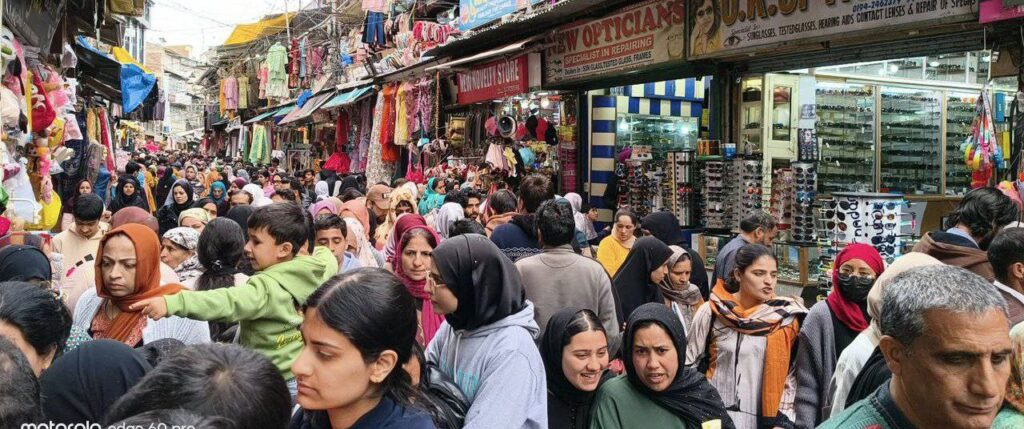
Women’s mobility is also impacted by a military presence, ostensibly instituted in the name of securing public well-being.
The 2023 Status of Education Report notes how restrictions on mobility affect women significantly more than men. Women face restrictions on their movements because of the increased military presence, fears of sexual violence by military personnel and curfews.
In a study published by the Canadian Journal, female PhD scholars across five Kashmiri institutions documented how militarization, internet outages and curfew-related disruptions directly compromised women’s academic pursuits, leading to deferrals, abandonment and detours.
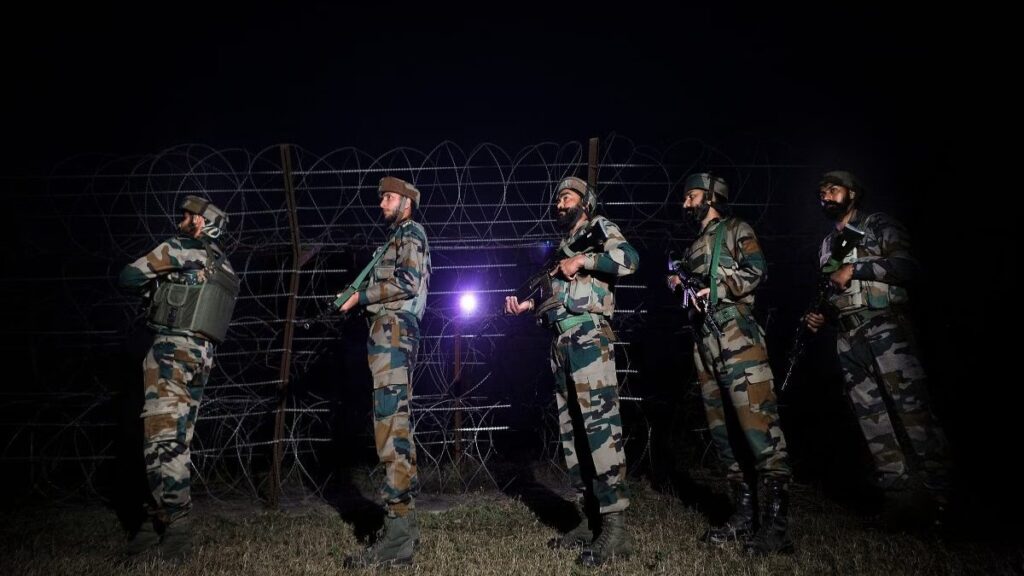
Jammu and Kashmir remains one of the most militarized zones in the world.
Increased surveillance, patrolling and abrupt search-and-cordon operations are among the most common facets of the militarization. The pervasiveness of militarized governance undermines people’s abilities to access to education and other infrastructure and to carry on with their lives.
Statistics about Kashmiri women’s education reflect a negative shift in the range of opportunities, knowledge and futures available to Kashmiri women.
This situation is shaped by a governance system rooted in military control, legal immunity and characterized by frequent disruptions in communication.
More attention needed
The Kashmiri case has received limited sustained attention in international human rights forums — a gap that the United Nations Office of the High Commissioner for Human Rights’ 2018 report acknowledged when it described its Kashmir documentation as the first of its kind.
Increased international scrutiny of the situation in Jammu and Kashmir offers opportunities for a deeper understanding of the mechanisms and reasons behind the continued impact on women and other marginalized genders in conflict and military settings.
The stark gendered difference in women’s education statistics, as well as their lived experiences, shows how Kashmiri girls and women are bearing a disproportionate brunt of militarized governance.
Shambhavi Siddhi, PhD Candidate, Gender, Sexuality, and Women’s Studies, Western University
This article is republished from The Conversation under a Creative Commons license. Read the original article.