


‘I had planned in advance to feel nothing.’
— Arundhati Roy, on her way to meet a father she has never known in Mother Mary Comes to Me.
This could hold true for me too, in a way. Not about a father in absentia, though with an army man for one, away on long field postings through my childhood, there may be parallels, but about the book itself, for reasons perhaps as complicated and as contradictory as hers.
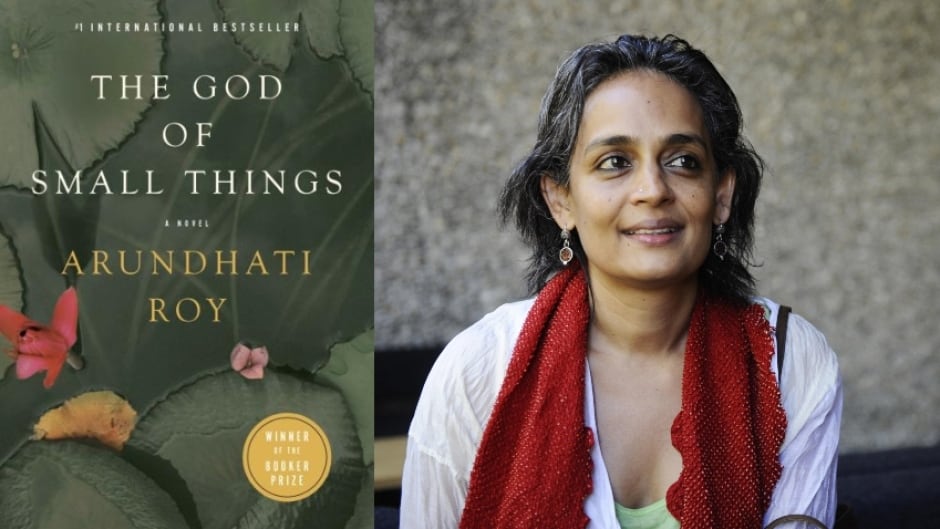
I read The God of Small Things as a somewhat small thing myself. Read it in that sleepwalking-from-bedroom-to-dining-table-back-to-bedroom, nose-to-page-I’ll-breathe-when-I’m-done way. In Kolkata, studying English Literature at Loreto College, it arrived as ‘out-of-syllabus’ as anything could, my world saturated with Chaucer and Donne and Shakespeare. Into that world came the seven-year-old twins, Estha and Rahel, their mother Ammu, and the unforgettable Velutha. I knew a Baby Kochamma, as poisonous in real life as her fictional twin. And which child growing up in India didn’t know an ominous Orange-drink Lemon-drink man? Sometimes an over-friendly uncle with groping, clammy hands; a cousin with an extra keen interest; any man in the orbit of our young lives, and in some cases, a predatory woman. That particular footnote of girlhood in India, the casual, pervasive, all-consuming presence of sexual entitlement, shows up in her pages as it shows up in all our pages, barely remarked upon, almost unremarkable. That it still arrives as a footnote, in her story as in ours, hurts and angers me in equal measure.
More than the characters, though, I came upon a language I was unfamiliar with. A language as vernacular as it was English, as rooted in our land, our waters and sky as the taste of earth in my mouth.
Twenty years later, more critical of words and writers, I read The Ministry of Utmost Happiness. My politics were evolving, and I remember being moved and drawn into her world set in Kashmir, the world of my childhood. It was discomforting then as it is now, to engage with Kashmir through stories. Some sit at odds with my memories, sheltered as I was in my time there, and yet some truths are undeniable. Kashmir for me remains beloved and complex, as I rediscovered in my recent reading of Abhishek Majumdar’s The Djinns of Eidgah, his captivating play about a generation of young Kashmiris, orphaned siblings, a football team, and a landscape lost to conflict.
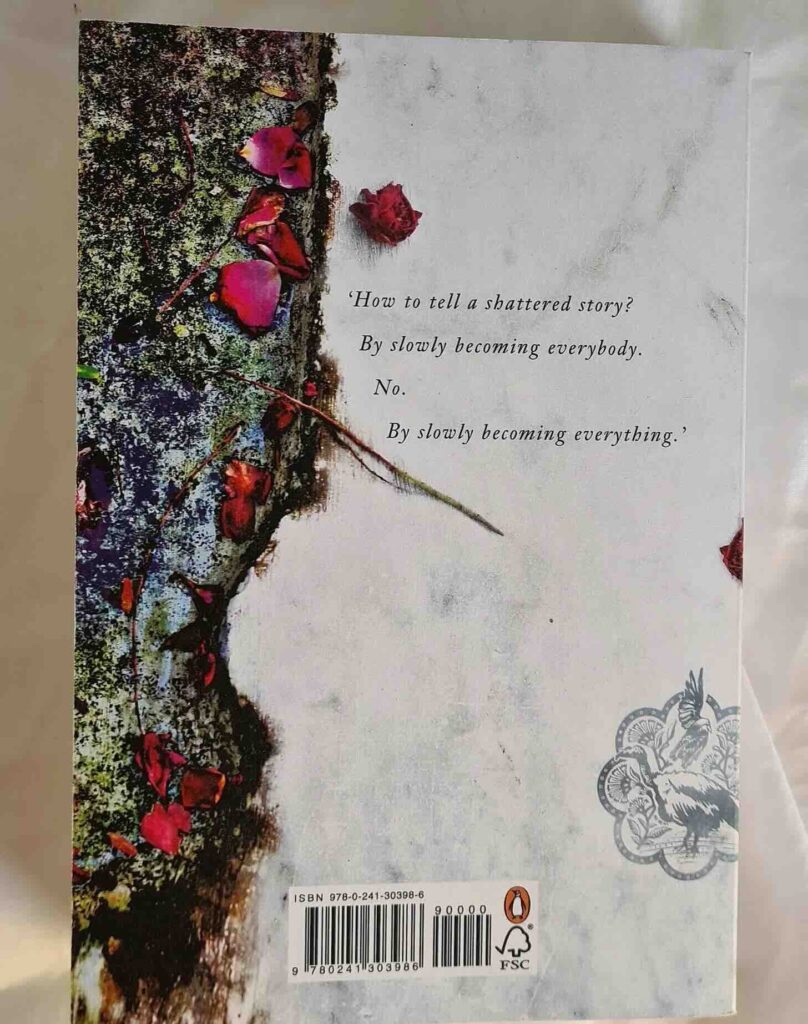
What has changed since The Ministry? Anti-Muslim, anti-minority hate is now as normalised as bulldozer justice in the land of my birth. The Adivasis are still fighting the mining companies that come with open mouths to swallow their lands. My own work has taken me into spaces of community-building, interfaith dialogue, and difficult conversations. I also found something akin to my voice in poetry. Some serendipity, some seeking has taken me into Ambedkarite spaces and literature, and it is there I first encountered an unease in some quarters with Arundhati’s work. An article in Round Table India passionately denounced her book-length introduction to an annotated critical edition of Dr. Ambedkar’s Annihilation of Caste. A central critique: a non-Dalit taking space, and then using it to centre the Gandhi-Ambedkar dynamic, once again sidelining the Dalit voice. I listened and reflected. Alongside this came an active phase of unlearning: the decolonised gaze, the internalised misogyny, the covert casteism in my privileged lived experience, a reckoning with solid ground I had stood on for years, all of it beginning to come untethered. Horses quietly leaving their paddocks to roam the meadows free.
And so, much like Arundhati’s plan, I decided to read Mother Mary without the impassioned admiration of my youth or the self-mortifying guilt of The Ministry. I decided to critically engage, to read with the clear-eyed gaze of a Sotheby’s appraiser, a rather grand endeavour to set for oneself against a globally beloved, Booker Prize-winning author. But the test was more for myself than for her. Was I capable of reading Arundhati critically, a writer known as much for her politics as for her prose?
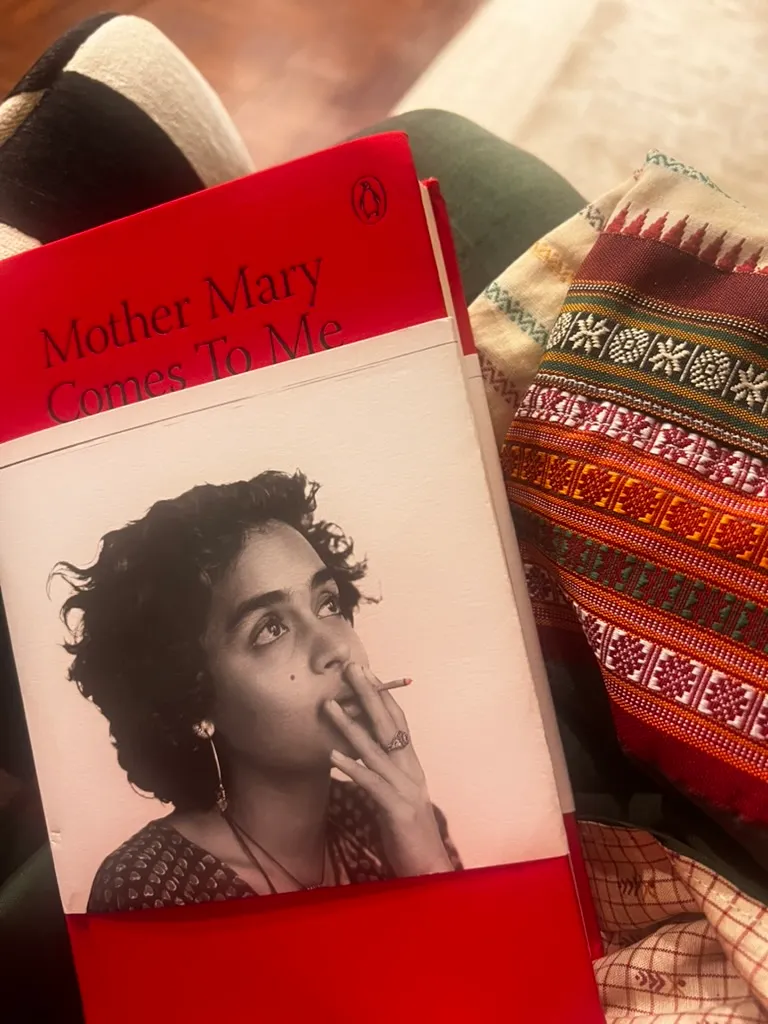
What I met in the book wasn’t self-assurance. It was a two-headed fish, looking in opposite directions all at once.
I finished reading it this afternoon, and perhaps it is unwise to write while the embers are still smouldering. But I wanted to capture the scent of the burning logs, the light in which they crackle, and catch in some way the animal body of her language between my teeth.
This is, to me, the story of a child. A child who looks at the world first through the body of a child, and even though the body comes into adulthood and encounters changing streets and homes, countries and lovers, the eyes remain the same. The serious eyes of a child looking at the world of grown-ups, never quite trusting it, or herself in it. A fish with two heads, one forever looking at the door, forever keeping a way out within sight.
The book is intensely poetic. She says her stories come to her first as pictures, and as a writer of poetry I understand that. From that seed picture, she draws out character and texture, flesh and blood, pulling and shaping destinies. In Arundhati, the prose is not separate from the poetic impulse; it is what the poetic impulse becomes when it has a long story to tell.
When I read this book as a story of a child, it is inescapably also a story of guilt. In a home of volatility, guilt sometimes fills the space of not knowing. This is not the guilt of having done something wrong, but the guilt of not quite deserving one’s own pain. Of possessing a sorrow that one hasn’t, by the measures of a cruel and comparative world, fully earned. Is it me? If I became quieter, or happier, or more accommodating, would it change anything? How much more can I shrink?
But Arundhati did not shrink beyond a point. She left. And she left, and she left, and she left.
In every place she inhabits, she is arriving and leaving almost at the same time. The only places she appears to wholly inhabit are paradoxically, places she knows she will leave: Italy, Bastar, Kashmir, the Narmada Valley. At the whisper of a settling, the other eye stirs and the fish squirms so much that staying becomes an impossibility.
I don’t know about the leaving, but I know something of guilt. My own privileges intersect with hers in ways I don’t always know what to do with: English-speaking in a country where that wins social capital; supposedly upper caste; acutely aware of material suffering around me; a childhood in a somewhat fractured home. Do we then have to earn our sorrow? Do we have to prove the wound before we’re allowed to bleed? There is something quietly devastating about a writer of her stature and courage still asking, in the marrow of her pages if not in their words, whether her pain is legitimate.
Her mother, Mary Roy, appears simultaneously rebel and enforcer, victim and perpetrator, liberator and jailer. This is a profoundly Fanonian figure. She fights patriarchy, yet sometimes reproduces domination within her own household. Fanon would perhaps ask: what if this contradiction is not hypocrisy but history? What if the injuries inflicted upon Mary become the tools through which she relates to others? What happens to people under systems of oppression, to their psyche, their loves, their modes of harm? It is the central question running through so much of Arundhati’s work. If she cannot answer it completely about herself, she can perhaps spend a lifetime unravelling it through the world of her creation.
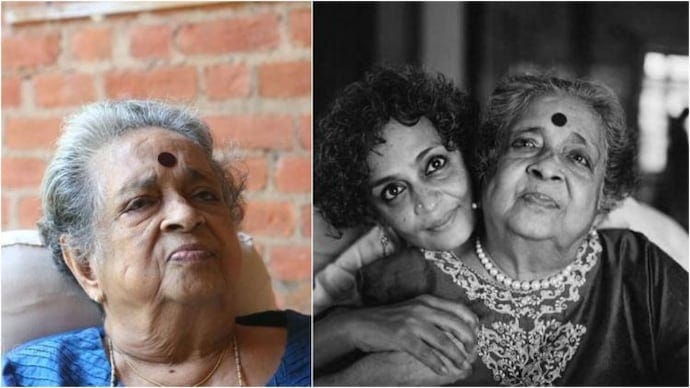
In contrast, I find the father, Micky, carries echoes of the jester, a foil to the mad king. he lives impishly, uncontrollably, an antithesis to the need for utter dominance. Mary was loved and feared. He was only loved, occasionally thrown out for terrible behaviour but often re-loved. Arundhati appears far more in control of herself with Micky than she does with her mother. She does not seek his approval. She is amused by him as she would be by an errant child, exasperated and indulgent at once. Of all her family, it is only with him that she is almost fully an adult. She parents him. She cares for him with the patience she was perhaps never shown. That he has given her little reason to love him does not diminish her care; it only clarifies what that care is. Not a debt repaid or parental warmth earned. A choice she makes, clear-eyed, in the absence of any obligation.
I return again to Mary: what is the heartbreak of loving someone so profoundly unlovable, and yet being pulled into the orbit of their genius? What is it to live with an abuse you cannot name, and if you did, no one would help you? You help yourself, carry all your broken bits, swearing that if you went far enough, for long enough, you would no longer cut yourself on the shards. But you will. And not only yourself. You will cut others too.
Many stories of our times find their way into her story, and I read them with an ache that has nowhere to go. The rise of the far right in the city square of our lives, the politics of hate, the tearing down of dissent. For those unfamiliar, it puts her story in context; for me, I almost wanted to engage only with her journey and the characters that inhabit her world.
A curiosity: in her storytelling, there is an understatement around sex and intimacy that reads almost as shielding, as though, at any moment, Mrs. Roy might appear in the doorway and scream Get out! The ‘Hooker who won the Booker,’ as she wryly refers to herself. There are other moments of understatement that I imagine are deliberate. The abortion, for instance, is so underplayed it nearly vanishes. It needed to be done and she did it. The prose moves on. There is something almost defiant in the refusal to make it more than it was to her, this matter-of-fact claiming of agency, deeply, quietly political.
I wonder how it’s possible to write a memoir that bares so much, reveals the inner workings of an extraordinary mind, and yet keeps something of itself unseen. She cannot trust wholly; she will never arrive fully. And instead of making her seem distant, I find that omission deeply humane. She doesn’t tell us all because she doesn’t know all. There are things that have happened to her psyche, to her being, that have left her forever fractured in a way that cannot perhaps be made completely whole again. Some parts that may have rolled under the couch, and her mother’s Get out! made it impossible to retrieve them safely.

And so I return to where I began.
She is on her way to meet a father she has never known, and she arms herself with numbness the way one might pack an umbrella, just in case. But what that meeting quietly enacts is that there is no great arrival of feeling that replaces the numbness. No revelation, no flood, no earned catharsis. Only a calibration to what is. To who he is. And she finds a way to be with him as he is, which is not the same as forgiving him, or needing him, or understanding him. The unanswered question, does she love him?, becomes almost unnecessary. What she arrives at is something quieter and in some ways harder: acceptance, and in her particular way, care.
The same might be said of Mary. Mary, who gave her daughter fire and fury and language and terror and the peculiar freedom of not being quite held. Mary, who screamed Get out as a verdict and a weather system and a way of life. Arundhati did not choose to love her mother. She simply could not not, the way water cannot choose but find its level. And having survived her, she turns to this errant father-child and offers him what Mary perhaps never could: patience without purchase, love without debt.
The things she doesn’t close neatly are the things that are not knowable. Why does she stay in some places and flee others? Why does she care for people she has every reason to abandon? She doesn’t say. In not saying, in refusing to assemble a tidy architecture of causation, she is telling us something true: I don’t know. Not as evasion, but as the most honest answer available.
Are any of us so different? Are we not all, in some way, a two-headed fish, one eye turned outward, one in; one arriving and one forever returning; one part always hovering near the door, testing the distance to the exit?
I went in prepared to feel nothing, as a discipline. What I found instead was a writer who has made exactly the same preparation for most of her life, and who has arrived through language, through the stubbornness of her survival, through a book she may or may not have planned, at the same quiet, unglamorous, sufficient answer.
And then I found myself thinking about Shakespeare. The sonnet I first encountered in that English Literature-saturated classroom in Kolkata, the one that asks what love actually is and answers with a kind of magnificent stubbornness.
Love is not love which alters when it alteration finds, or bends with the remover to remove.
I learned it as a definition of romantic feeling, and carried it that way for years. But reading this book, I find myself wondering if Shakespeare’s definition describes not a feeling at all, but a behaviour, perhaps a pattern of return.
She left, and she left, and she left. And yet, she circles back, to Micky, to her brother, LKC, to Pradip, to Sanjay, JC, and finally, to Mrs. Roy herself, who gave her every reason to go and never look back. The ever-fixed mark is not a declaration made in the first flush of love. It is more like a gravitational constant. You may not know it is there until you notice that you keep returning to the same centre, across different years and geographies and selves, and something in you will not let the thread go entirely.
I think of my own saturations across worlds often quite unlike each other, and yet they all exist somewhere in the body of how I read and think and write. With this book, I have been deeply moved, and cannot say precisely why, which is perhaps the only honest thing that can be said about any love.
‘Nothing made me think about the world like reading did.’
— Arundhati Roy, Mother Mary Comes to Me
Republished from Nandini Sen Mehra’s Substack – a reader supported publication. To receive new posts and to support Nandini’s work, consider becoming a free or paid subscriber.