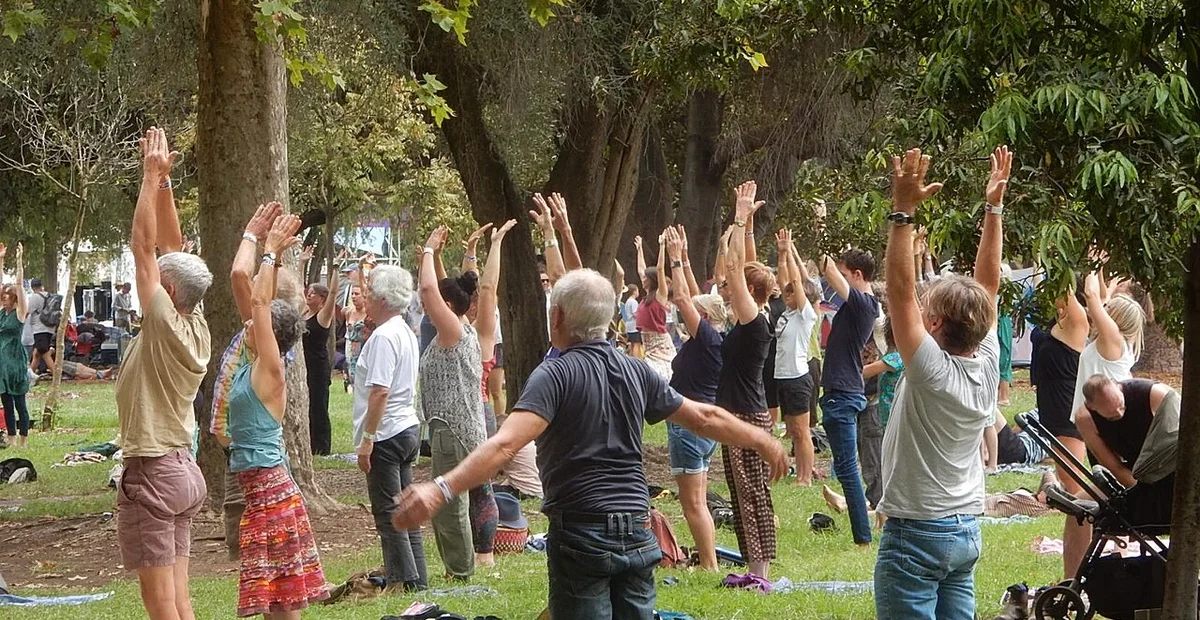
An 89-year-old participant was among those celebrated after Vasudeva Kriya Yoga’s annual competition in Melbourne, where the published programme combined physical postures with Bhagavad Gita chanting.
The event took place at VKY Mandir in Braeside on 15 November 2026. Its age categories extended from children to adults over 60, making participation across generations a feature of the competition’s design.
The organiser has shared an account highlighting an 89-year-old participant. Her involvement gives the community event a human focus, but it should not be treated as a medical demonstration that every person of the same age can attempt the same movements.
The programme also offers a view of how an Indian-origin practice is being maintained through a Melbourne organisation: as physical activity, structured competition and engagement with a religious text, rather than as a single fitness exercise.
What did the Vasudeva Kriya Yoga competition include?
The published programme included yoga asana and Bhagavad Gita chanting, with separate age categories for each activity.
The organiser’s event notice set 15 November as the date. The venue was VKY Mandir, Unit 1, 80 Mills Road, Braeside, in Melbourne’s south-east.
The chanting section had categories for participants up to 12 and those aged 13 and above. For asana, the notice asked entrants to perform four postures and listed categories for children up to 15, adults up to 40, adults up to 60 and people above 60.
Those are the organiser’s published category labels. They describe the event’s structure; they should not be read as a general prescription for the difficulty of poses appropriate to everyone in an age group.
| Part of the programme | Published categories or requirement |
|---|---|
| Bhagavad Gita chanting | Up to 12; 13 and above |
| Yoga asana | Four postures |
| Asana age labels | Children up to 15; adults up to 40; adults up to 60; above 60 |
Why does the age range matter?
It shows that the event was designed to include different generations, rather than restrict participation to young athletes.
The organiser’s public community page shared coverage highlighting the 89-year-old participant. The published age structure had already provided a category for people over 60.
That combination supports a specific account of this event: older participants had a place in its programme. It does not establish how many older people practise yoga across Australia, nor demonstrate a national participation trend.
For families deciding whether to attend a future class or event, the useful questions are more individual. What experience does the participant have? What movements are involved? Can an instructor adapt the practice? A broad age category cannot answer those questions on its own.
What is an asana, and how does it differ from chanting?
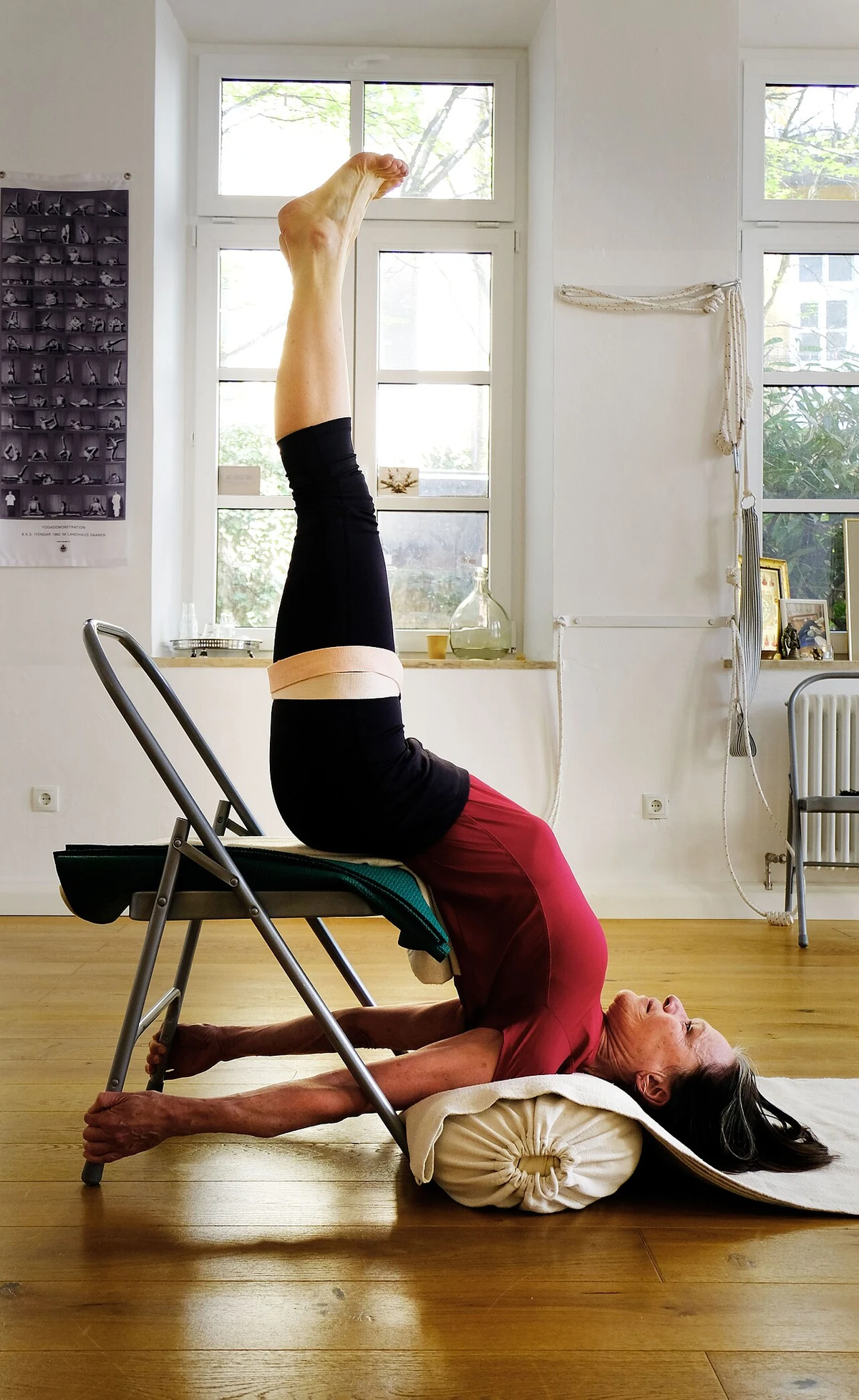
An asana is a yoga posture; chanting is a vocal practice, and this competition listed the two activities separately.
What does asana mean?
Healthdirect describes asana as a pose in yoga. Postures can be performed standing, sitting or lying down and may be combined with focused breathing and meditation. The word identifies the posture, not the whole of yoga practice.
Healthdirect’s explanation of yoga and Pilates describes yoga as originating in India and combining movement, breathing and meditation. That provides context for why a community programme might contain more than a physical contest.
The Bhagavad Gita section should likewise be identified as the programme’s chanting component, rather than counted as another set of physical poses. The event joined these activities within one organisation’s programme while retaining their separate categories.
Can a competition result show that yoga is safe for everyone?
No. An individual’s participation or result does not determine which practice is suitable for another person.
The US National Center for Complementary and Integrative Health’s yoga review describes a wide range of styles, from gentle practice to demanding physical activity. It notes that differences between approaches also affect how research findings should be interpreted.
The centre advises people with health conditions and older adults to discuss their needs with a healthcare professional and a qualified instructor. Adaptation matters: a practice suitable for an experienced participant may need to be changed for someone beginning, recovering from an injury or managing a medical condition.
The evidence concerns particular practices and outcomes, not an assurance that a demanding posture is harmless because another person performed it successfully. A competition photograph is also not a set of exercise instructions.

What should a beginner check before joining a class?
Choose an appropriately qualified instructor and explain any injury, health condition or need for adaptation before starting.
Healthdirect recommends learning the basics, beginning gradually and asking an instructor for guidance if movement causes pain. It also advises checking with the studio about equipment and the requirements of the particular session.
For someone inspired by an older participant, the relevant first goal may be learning a comfortable, adapted practice rather than preparing for a competition. The event’s achievement and a beginner’s starting point need not be the same.
Families enquiring about a future programme can ask whether the session is a general class, a chanting activity or a competitive event. They can also check the age group, expected experience and whether supervision is appropriate for children.
These questions connect the community story with decisions a reader can actually make. They do not require assuming that competitive performance is the purpose of every yoga class.
What does the event show about Indian cultural practice in Melbourne?
It documents a local organisation bringing an Indian-origin practice and Bhagavad Gita chanting into an intergenerational programme in Braeside.
The evidence is specific to the named organisation and event. It does not speak for every Indian-Australian family or establish how all participants understand yoga’s spiritual and physical dimensions.
The public programme is useful precisely because it shows the activities offered, the venue and the categories. Broader cultural coverage and Australian reporting provide context for other community programmes without treating them as interchangeable.
What recognition had the organisation received before this competition?
Vasudeva Kriya Yoga was among the international organisations recognised in India’s Prime Minister’s Yoga Awards, with the presentation held in New Delhi on 19 December 2025.
The Morarji Desai National Institute of Yoga’s December 2025 newsletter identifies the organisation in its awards coverage. It names founder Rajendra Yenkannamoole and describes centres in Melbourne, the United States and Bengaluru, together with International Day of Yoga activities in Australia.
The Prime Minister’s Office’s record of the ceremony confirms that recipients of awards for the years 2021–2025 were felicitated at the closing of the second WHO Global Summit on Traditional Medicine. The December presentation date should therefore be distinguished from the award year assigned to an individual recipient.
That earlier recognition concerns the organisation’s promotion of yoga. It is separate from the judging or results of the November 2026 competition, and it does not constitute clinical validation of every health claim associated with yoga.
The local programme also has a presence beyond a single event. Yarra Ranges Council’s directory describes teaching by Yenkannamoole and volunteer instructors, including workshops for older people and children with additional needs. Those are descriptions of provision, not evidence that a programme treats a particular medical condition.
For readers assessing a class, recognition and community history can be part of the background. The practical questions remain the instructor, the activity offered and how it can be adapted to the participant. A national award does not remove the need for those individual checks.
Where can readers check ongoing local classes?
The City of Monash, in Melbourne’s south-east, lists a separate Yoga for All programme at Fregon Hall Community Centre in Clayton on Monday evenings, from 7.30 pm to 8.30 pm.
The council listing identifies Vasudeva Kriya Yoga and says the sessions are organised by Kritha with support from Multicultural Women Victoria. It gives readers a local, named programme to enquire about, rather than an assumption that the Braeside competition is also a weekly class.
A listing establishes the advertised programme. Participants should still check the current date, availability, access requirements and suitability directly before attending. Neither a place at the competition nor an interest in its results establishes enrolment in a separate session.
Yarra Ranges Council’s community directory also identifies the organisation and its founder, Rajendra Yenkannamoole. It describes teaching aimed at people with different ages and abilities. That is the directory’s description of the organisation’s approach, rather than a clinical finding about any participant’s health.
What happens next for prospective participants?
Future classes and competitions require fresh information from the organiser. The 15 November event has finished, and its notice should now be read as a record of that programme.
People interested in taking part can use the organisation’s official channels to check the next activity and its conditions. Those considering physical practice should match the class to their experience and needs, with individual guidance where appropriate.