Oregon’s governor-hosted ceremony is still ahead, even as Diwali lamps have already been lit in other American state institutions. The US Diwali celebrations described by India’s Seattle consulate run through 10 November 2026, linking community events with recognition from governors and local governments.
At the national level, President Donald Trump participated in a White House celebration on 6 November. In New York, India’s consulate welcomed a proclamation recognising 8 November as Diwali. These are related developments, but each has its own date, institution and legal significance.
For Indian-American communities, the story is the widening presence of the festival in public life. It is not evidence that the United States has created a new nationwide Diwali holiday, or that every announced event has already happened.
Where have US Diwali celebrations taken place?
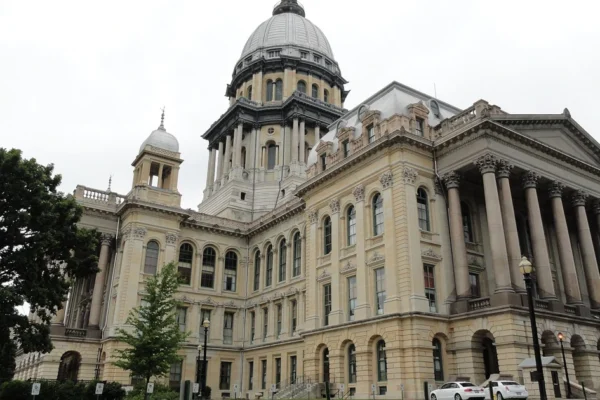
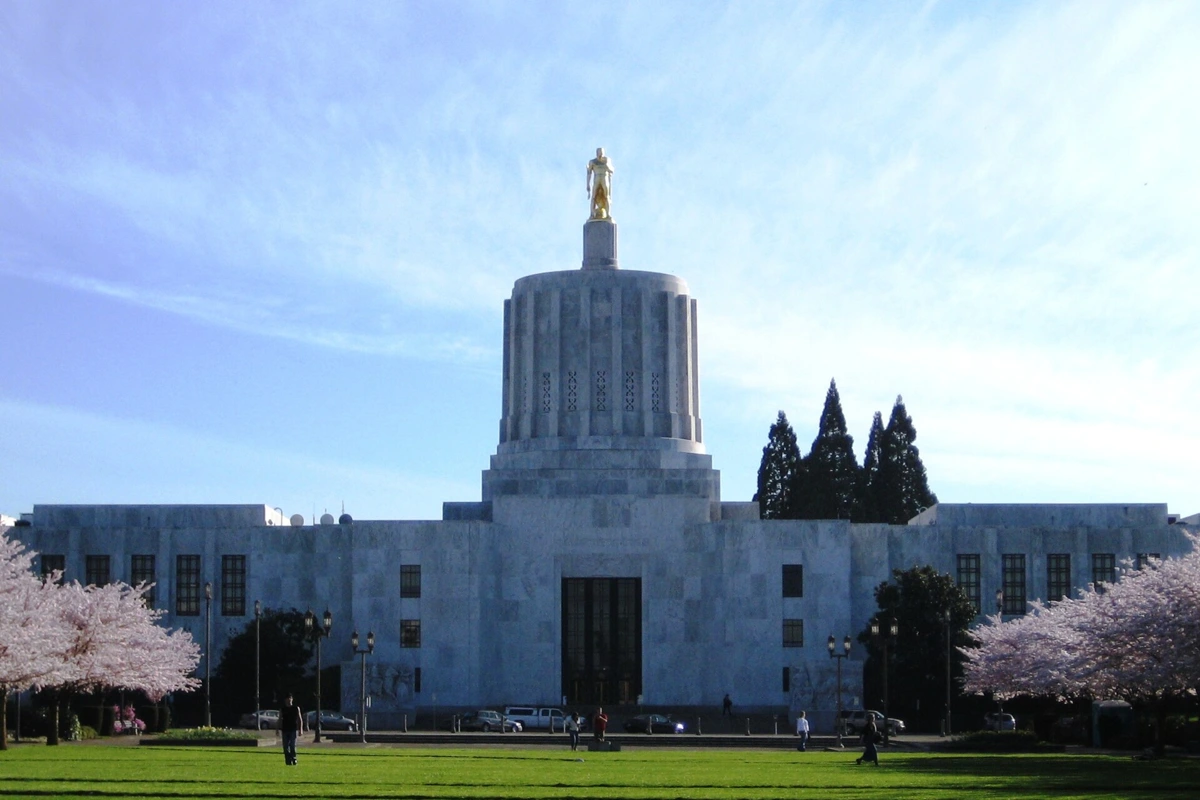
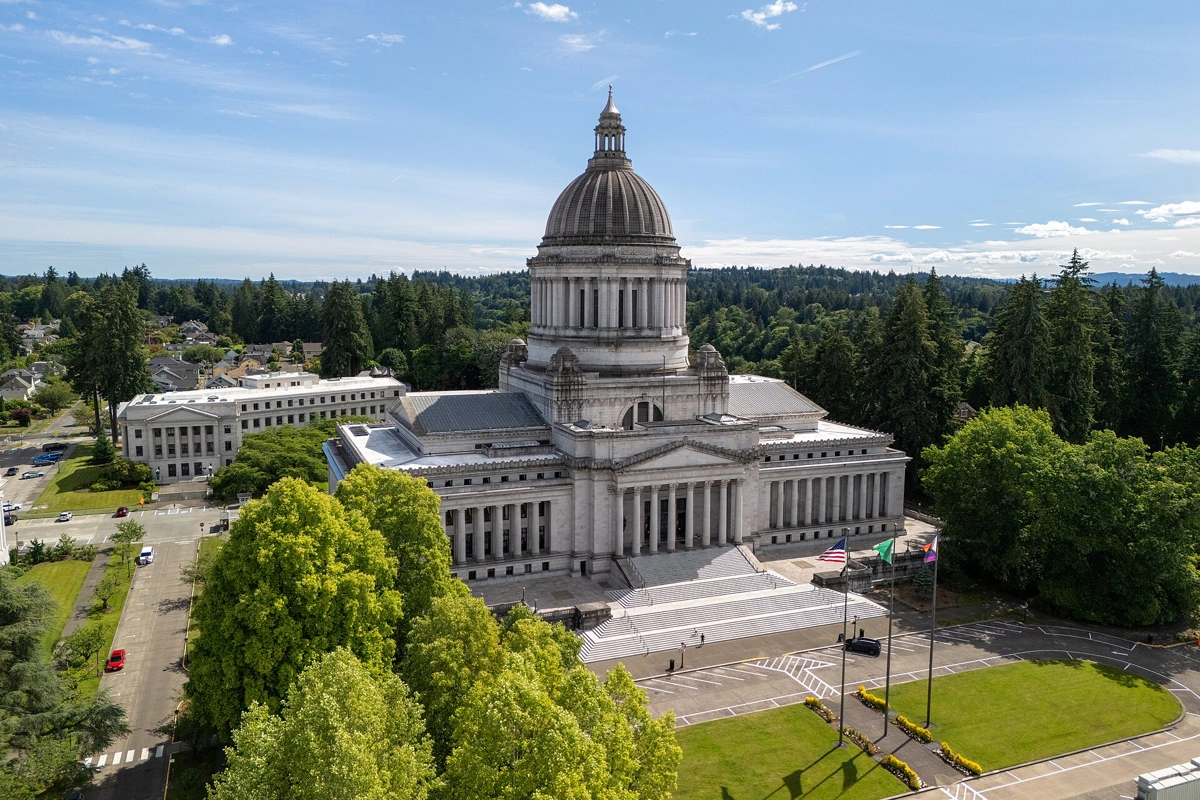
The Consulate General of India in Seattle identifies governor-hosted events in Idaho, Nebraska, Montana, North Dakota and Washington. Its 5 November statement says Oregon’s ceremony is scheduled for 10 November at the State Capitol in Salem.
The consulate’s official account dates the programme from mid-October through 10 November. It records events at state capitols and governors’ residences, along with ceremonies and proclamations involving cities in the Greater Seattle area.
The distinction between the five completed state events in that statement and the sixth planned ceremony explains why descriptions of the programme can appear to use different totals. A programme involving six states does not establish that six governor-hosted ceremonies had already occurred on the date of the statement.
The consulate says it worked with Indian-American community leaders to organise and co-host the events. That provides a documented community role beyond the presence of a ceremonial lamp or a greeting from an elected official.
What happened at the White House?
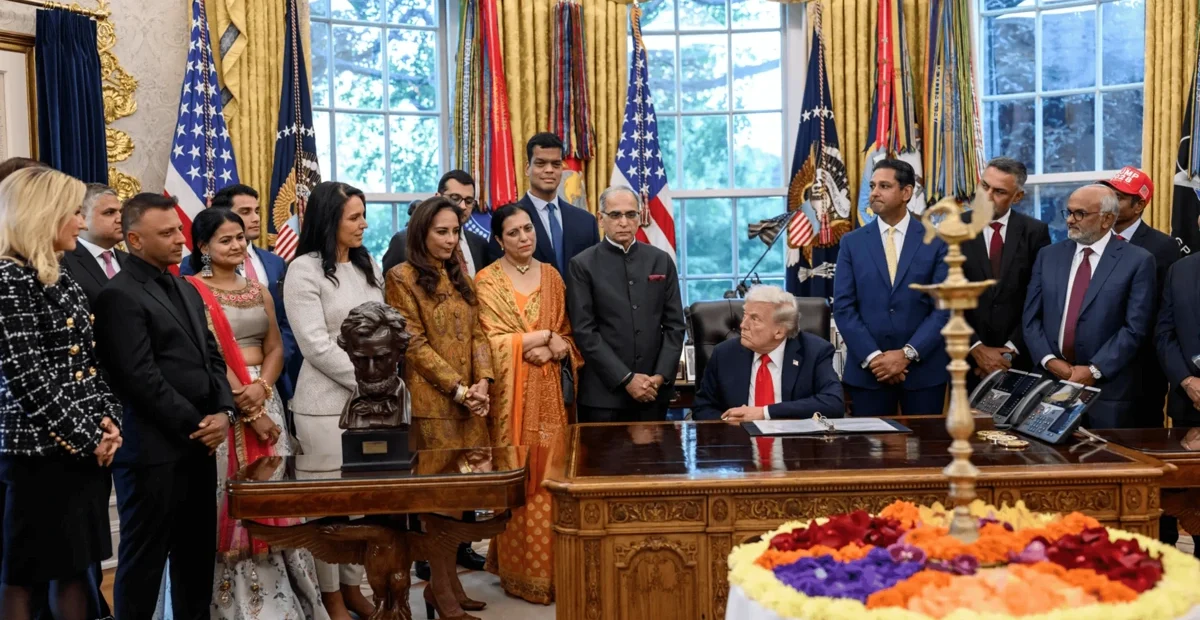
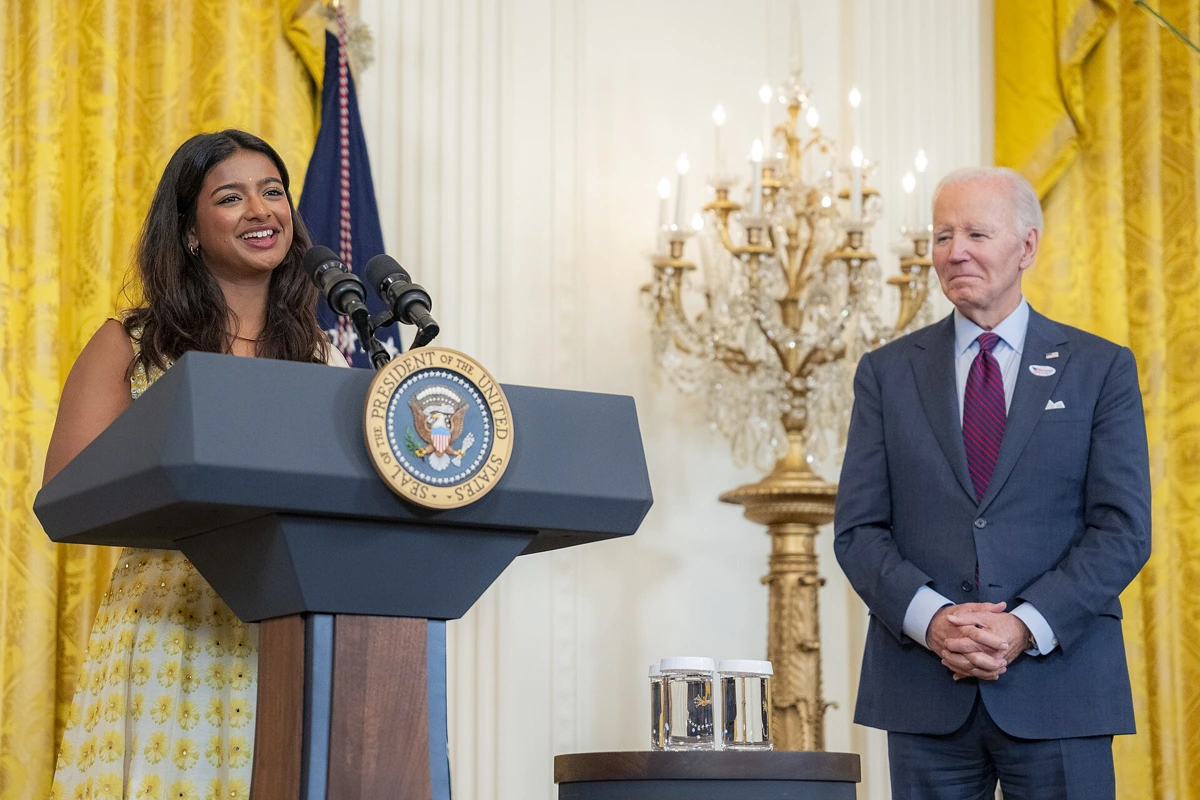
Trump took part in a Diwali celebration on Friday, 6 November. Coverage of the event records Indian-American guests and the presentation of a copy of the Hanuman Chalisa by entrepreneur Vishal Gondal.
The ceremony belongs to a longer history of White House Diwali observances. The tradition began during George W. Bush’s presidency, and Barack Obama became the first serving president to light a diya at the White House in 2009.
That precedent places the latest ceremony in context without turning a religious or cultural gathering into evidence of a new government policy. Participation in an event does not itself establish a change to immigration rules, trade measures or other decisions affecting the diaspora.
The cultural meaning of a gift should also be described accurately. A devotional text presented by a named participant is part of the ceremony. It does not establish that all Indian Americans share the same religion or that one event represents every diaspora organisation.
Does official recognition mean a public holiday?
No. A ceremony, a proclamation, a state observance and a legal holiday are different forms of recognition. The document and the jurisdiction determine which one applies.
The Seattle consulate notes that Washington’s Senate passed a measure in February recognising Diwali and Bandi Chhor Divas as state observances, described as non-legal holidays. That wording should not be shortened into a claim that all workers receive a day off.
What is a Diwali proclamation? It is an official statement recognising the festival or commending its observance. Its practical legal effect depends on the document and local law; the word proclamation does not by itself establish a paid holiday or school closure.
An example is the North Carolina governor’s 2026 proclamation, which recognises 8 November as Diwali and commends its observance. Recognition should be reported in those terms rather than expanded into an employment entitlement.
The same distinction applies to New York’s proclamation welcomed by the Indian mission. A state-level greeting or declaration and the rules governing a particular school or employer are separate records. The earlier New York school-holiday development belongs to its own policy history.
Why do the dates need care this year?
The main festival falls on Sunday, 8 November, while public ceremonies have taken place over several weeks. A ceremony before the main date is not necessarily an error, and an announced ceremony after it is not evidence that the festival date has changed.
The Seattle programme illustrates that difference. Events began in October, Washington’s capitol event took place on 4 November and Oregon’s governor-hosted ceremony is scheduled for 10 November. Each should retain its actual date.
| Development | Date or status | What it establishes |
|---|---|---|
| Washington State Capitol ceremony | 4 November 2026 | A completed event recorded by the consulate |
| White House celebration | 6 November 2026 | Presidential participation in a ceremony |
| Main Diwali date | 8 November 2026 | The festival date this year |
| Oregon governor-hosted ceremony | Scheduled for 10 November 2026 | A forthcoming event, not a completed one |
For someone arranging attendance, the organiser’s time, venue and access instructions matter more than a broad festival calendar. An account of an earlier event should not be used as an invitation to a different ceremony, and a statement that leaders will attend is not a record that they already have.
What does the expansion show about community participation?
It shows Indian-American community organisations working with public institutions to make the festival visible in civic settings. The official Seattle account identifies a partnership with local leadership rather than treating recognition as something communities simply received.
The events also extend beyond the largest traditional centres of Indian-American settlement. The named state institutions include Idaho, Nebraska, Montana and North Dakota. The consulate’s account emphasises community contributions to local economies and cultural life.
Those statements establish what officials and organisers chose to recognise. They do not measure how every participant felt about representation, whether every community group was included or what a whole state’s residents think about the celebrations. Those questions require reporting beyond an event notice.
The US developments are separate from the interfaith celebrations in Sydney and Melbourne. Together they show different approaches to public celebration, without making the Australian events part of an American programme.
What should families and community groups check?
Check the specific organiser’s current notice for attendance and the relevant school or employer’s calendar for closures. A public ceremony is not a substitute for either.
When sharing photographs, retain the place and date so that an October event is not presented as having occurred today. When sharing a proclamation, preserve the wording that explains what is being recognised rather than describing a broader legal change it does not establish.
Do New York pupils get a weekday off this year?
New York City Public Schools says holidays falling at weekends do not result in a substitute weekday closure. Its May 2026 family update explicitly lists Diwali on Sunday, 8 November among the 2026–27 holidays that will not be observed as school holidays that year.
This is a practical example of why recognition and a calendar need to be read separately. The festival’s place in the city’s holiday policy does not mean parents should assume an additional closure on Monday, 9 November.
The instruction concerns New York City’s public-school system. It should not be extended to every private school, another district in New York State or a university. Families should use the current calendar for their own institution when making childcare or attendance arrangements.
A proclamation recognising the community’s contributions and a school notice explaining attendance can therefore both be accurate while doing different things. One honours the festival; the other tells a family whether the school is open.
Does a public celebration establish a paid day off?
A public celebration does not, by itself, determine an employee’s holiday pay. The US Department of Labor’s holiday-pay guidance says the Fair Labor Standards Act does not require payment for time not worked on holidays, whether federal or otherwise.
The department describes such benefits as generally a matter of agreement between an employer and an employee or their representative. Its guidance also identifies separate requirements that can apply to certain government contracts. A broad claim that every worker receives the same entitlement would therefore be misleading.
Employees should check their contract, workplace policy and any other applicable rights through the appropriate official guidance. The FLSA point alone does not decide every question about religious accommodation, leave or an individual’s employment agreement.
For community organisations, that distinction also helps invitations stay accurate. A weekday ceremony may require participants to arrange time away from work even where an elected official has recognised the festival. Announcing a celebration should not imply that everyone invited is automatically entitled to paid leave.
What happens next?
The Seattle consulate’s published programme points to 10 November for Oregon’s governor-hosted ceremony and additional local events. Those remain forthcoming as of this report’s 8 November check.
The next reportable development will be what actually takes place, confirmed by the organisers or the relevant public institution. For now, the completed ceremonies and the remaining dates can be reported together without turning a programme’s ambitions into events that have already happened.