The Bharat Summit visa row has outlasted the event itself: speakers who were expected in Hyderabad missed the gathering, while the Union government’s public answer asserted its authority over visas without setting out individual reasons.
Congress MP Shashi Tharoor said on 13 November 2026 that 115 of 315 speakers cleared by the Ministry of External Affairs had been refused entry or had their visas cancelled. His allegation was that the restrictions apparently followed instructions from the Ministry of Home Affairs. He questioned their legal basis.
Asked about that claim at its briefing the same day, external affairs spokesperson Randhir Jaiswal said visa decisions were “sovereign functions”. The ministry’s published transcript records that answer, but does not provide a delegate list, confirm Tharoor’s total or identify the legal provision applied to any individual.
The distinction is central to the dispute. The government has stated its position on who exercises visa authority. Congress is asking why that authority was exercised against people it says had already received clearance.
What is established about the Bharat Summit visa row?
The summit took place on 13 and 14 November, and both organisers and invited speakers have publicly alleged that foreign participation was restricted.
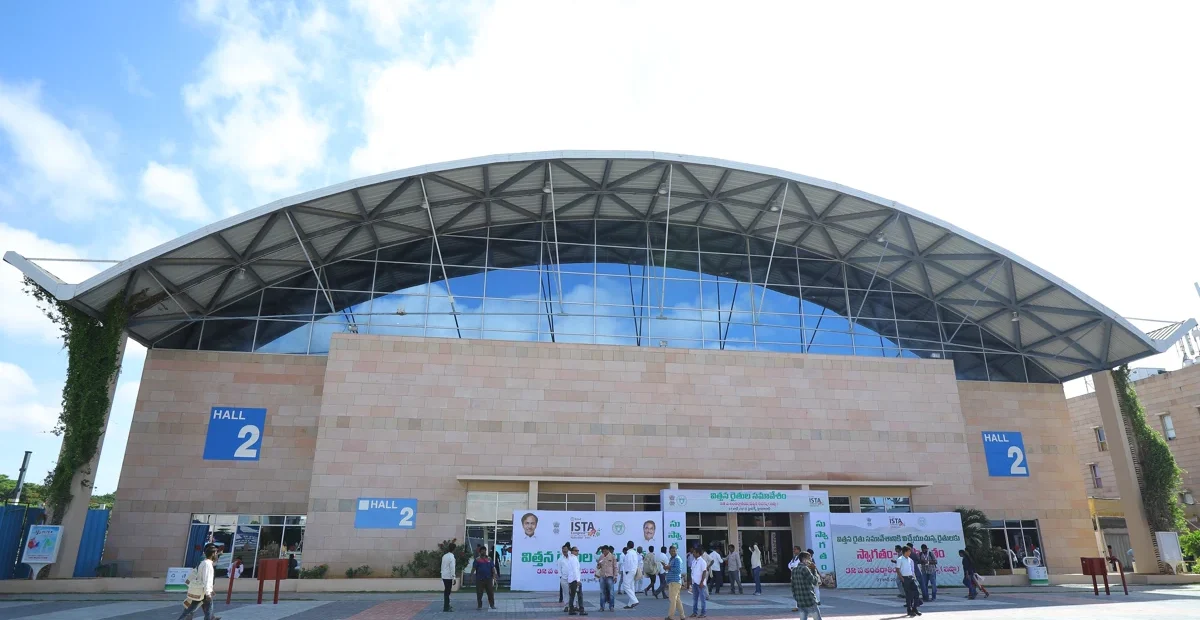
The official programme identifies the venue as Hyderabad International Convention Centre and sets out discussions on international affairs, economic policy, artificial intelligence, climate change and social justice. The Telangana government confirmed the closing session on 14 November, with Chief Minister A. Revanth Reddy and Lok Sabha opposition leader Rahul Gandhi participating.
Tharoor’s 13 November statement puts a named political representative behind the claim about 115 speakers. It is an allegation by an organiser-side participant, rather than a tally published by the immigration authorities.
An earlier account gave the figure as 113, citing people close to the organisers. The two figures should not be combined or treated as independently established totals. Without a dated list of cases and their outcomes, it is not possible to determine whether the difference reflects an updated count or another distinction.
Nor does the description establish that every affected person reached an Indian airport. Refusal of entry, cancellation before departure and an unsuccessful visa application are different events. The public allegation groups more than one kind of restriction together.
| Public account | Figure or position | What it establishes |
|---|---|---|
| Earlier organiser-linked account | 113 affected speakers | A reported claim, without a public case list |
| Tharoor’s statement, 13 November | 115 of 315 cleared speakers | His stated total and allegation about the home ministry |
| MEA briefing, 13 November | Visa matters are sovereign functions | The government’s public position, without an individual explanation |
| Telangana closing statement, 14 November | Some invited delegates were denied visas | The state government’s account after the event |
What did the government actually say?
Jaiswal asserted government authority over visa decisions, without addressing the circumstances of the individual speakers in his published answer.
At the 13 November briefing, a journalist asked about the claim that 315 speakers had received MEA approval but 115 had no visas or had their visas cancelled. A follow-up raised Tharoor’s suggestion that the home ministry had directed the action. Jaiswal responded to both questions together.
His answer did not say that every detail of the allegation was correct. It also did not explain whether the cases involved visa refusals, cancellations or another restriction. Those questions therefore remain separate from the principle he invoked.
The transcript matters because a short response can acquire a broader meaning when repeated. It records neither a published finding of misconduct by the delegates nor an assurance that political clearance alone guaranteed their admission. Attributing either position to the spokesperson would go beyond his words.
The ministry’s general description of its Conference Clearance System provides the administrative context. The system processes political-clearance applications for foreign nationals attending conferences, seminars, workshops and sporting events organised in India by government or private bodies.
Why does political clearance differ from a visa?
Political clearance concerns participation in an event, while a visa is a separate authorisation for an individual’s visit.
The MEA describes an organiser-facing online process: an organisation registers, submits its proposal and can check the application’s status. When a proposal is cleared, a communication goes to the registered email address. That process does not turn an event invitation into a visa document.
What does political clearance mean for a conference?
It is the Ministry of External Affairs’ approval processed through its conference system for foreign participation in the event. It should be distinguished from the individual participant’s visa and from any additional security clearance required for the event or case.
The home ministry’s published conference guidance identifies circumstances requiring prior security clearance, including specified participant categories and certain locations. It also describes the role of Indian missions in examining applications.
These general instructions help explain why several authorities appear in the public discussion. They do not establish which instruction was applied to a particular Bharat Summit speaker. A general rule and an individual decision are different forms of evidence.
For a delegate contesting a restriction, the relevant records would include the invitation, the clearance communication, the visa and any subsequent notification. A speaker’s presence in a programme establishes an invitation or planned role. It does not independently establish what happened to their immigration application.
What has Norwegian journalist Helle Lyng said?
Helle Lyng Svendsen has said that her visa was cancelled before she could travel to speak about media and press freedom.
In a public post dated 11 November, she said she had obtained a visa and had been due to leave that morning for Hyderabad. She attributed its cancellation to instructions from the home ministry and addressed a video message to Home Minister Amit Shah.
Her statement is a first-person account from an affected invitee. It provides a concrete example of the disruption alleged by organisers, while her attribution of responsibility remains her account rather than a published finding by the Indian authorities.
Her case also illustrates why the stage at which a restriction occurs matters. The journey she described was stopped before departure. Calling every person in the overall tally someone turned back at the Indian border would therefore misrepresent at least this account.
The media session was part of the summit’s wider political programme. That establishes the proposed purpose of her visit; it does not, by itself, establish why the authorities acted. The MEA’s general response did not supply a case-specific explanation for her cancellation.
How have Congress and the BJP framed the dispute?
Congress leaders describe an attempt to exclude critical voices, while BJP leaders dispute the purpose and political character of the gathering.
Revanth Reddy accused the Centre of preventing people who question Prime Minister Narendra Modi from reaching India. Tharoor’s statement likewise linked the restrictions to concern about criticism and asked which law justified the action.
Union Minister G. Kishan Reddy described the summit as bringing together forces critical of India. Telangana BJP president N. Ramchander Rao questioned expenditure on the event and accused the state government of sponsoring people he characterised as hostile to the country.
Those positions address different questions. Criticism of the gathering’s politics or cost is not a published explanation of an individual visa decision. Equally, an organiser’s allegation of political motivation is not proof of the reasoning used by the authority handling that case.
The Telangana government’s closing-session account records Revanth Reddy saying that more than 1,000 delegates from 70 countries had been invited and that some were denied visas. It describes his call for international cooperation around democracy, rights and public services.
That is the host government’s explanation of its aims. The figure concerns invitations, and should not be presented as an audited count of people who attended.
How has the dispute developed since the summit?
The argument has widened to the political activity of a foreign participant who did attend, a separate issue from the earlier exclusions.
On 16 November, reports quoting unnamed government sources alleged that Giacomo Filibeck, secretary-general of the Party of European Socialists, had breached the conditions of a conference visa by intervening in domestic politics. The allegation followed his public support for Rahul Gandhi and Congress at the gathering.
Filibeck’s argument, made during the summit, was that progressive political movements should cooperate in defence of democracy and voting rights. His party’s official leadership page identifies his position. BJP figures, in contrast, characterised his remarks as foreign interference.
The reported government-source allegation is not a published adjudication of a visa violation. It also does not explain the pre-event treatment of other speakers: conduct by someone who entered India cannot, on its own, establish why another person’s travel was stopped earlier. These issues need their own evidence and official decisions.
What was lost when speakers could not attend?
The immediate consequence was the loss of planned participation in a time-limited event, rather than a delay that could necessarily be repaired by a later visa decision.
The published programme scheduled simultaneous panels and named speakers and moderators. Its subjects included economic policy, climate cooperation, gender justice and the role of international institutions. Those sessions depended on particular people being available at particular times.
A programme is evidence of intended participation, however, rather than a complete record of delivery. It cannot show on its own whether a missing speaker joined remotely, a substitute appeared or a session changed. Claims about cancelled panels or the final scale of disruption require evidence beyond the original timetable.
Tharoor made the timing explicit in his 13 November post: with the conference ending the next day, he considered a reversal too late to restore the affected participation. The event’s conclusion changes what an explanation could now achieve. It could clarify the decisions, but it cannot restore an in-person appearance at a session that has already ended.
What does this mean for people organising or attending events in India?
Keep the event’s approval, the invitation and each participant’s travel authorisation separate, and confirm the current requirements with the responsible Indian mission.
The MEA’s system allows organisers to check a proposal’s status and receive clearance communications. Those records should accompany, rather than replace, the participant’s own correspondence about their visa. If an instruction changes, the written notice and issuing authority matter more than assumptions based on an earlier approval.
The controversy does not establish a new rule for all overseas Indians. The public claims concern foreign speakers invited to a particular gathering. A person’s citizenship, travel document, purpose of visit and any applicable permission need to be assessed on their own terms.
Earlier reporting on Indian visa and OCI restrictions provides historical context, dated to 2021. Wider diaspora coverage concerns other circumstances and should not be mistaken for evidence about these delegates’ cases.
What happens next after the summit?
The outstanding issue is whether the responsible authorities provide case-specific reasons and whether organisers substantiate their overall tally.
A public list distinguishing refusals, cancellations and entry restrictions would allow the numbers to be assessed. An official explanation would also show whether the decisions shared a common basis or arose from different circumstances.
For now, the record contains named allegations, an affected speaker’s account and a government assertion of authority. The summit has ended. The question of how that authority was applied remains unanswered in the published briefing.