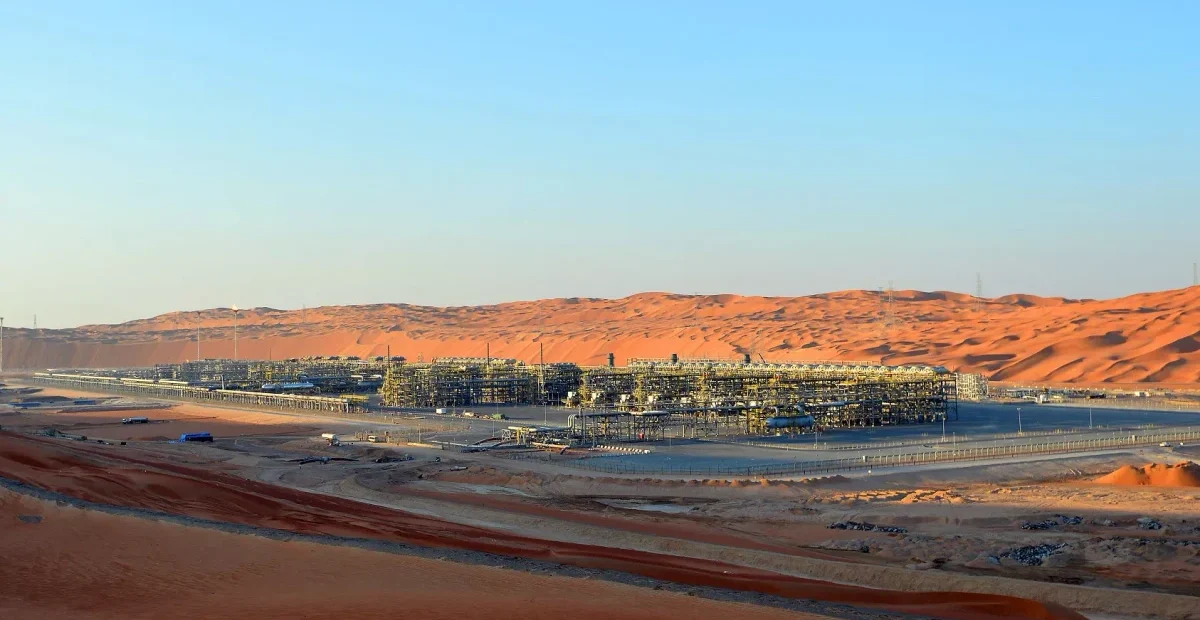
Falling debris from an intercepted drone killed two foreign nationals and injured two others at Saudi Arabia’s Shaybah oilfield on 21 October, according to Saudi authorities. One injured person is Indian. The Shaybah drone attack has prompted the Indian Embassy in Riyadh to contact Saudi officials and offer assistance.
The embassy confirmed the Indian national’s injury in a statement dated 21 October in Saudi Arabia and said it was awaiting further details. It did not publicly identify the person or provide a medical prognosis. Those omissions matter for families looking for reliable information: an injury confirmation is not confirmation of a particular hospital, treatment plan or condition.
Saudi Arabia’s Ministry of Energy said the fatalities were Filipino and Nepali nationals, while the injured were Indian and Pakistani nationals. Its account said debris sparked a fire in a contractor’s vehicle outside the facility’s perimeter. The ministry said operations at the oilfield were not affected.
What is confirmed about the Shaybah drone attack?
The confirmed public accounts describe an attempted strike, an interception and casualties from falling debris. They do not establish that the drone directly hit the oilfield’s main processing equipment. That distinction explains how people could be killed or injured while the operator’s production facilities continued functioning.
The accounts from the Indian embassy and Saudi authorities address different parts of the incident. India’s mission confirmed the injury to its national and the assistance response. The Saudi ministry provided the wider casualty and operational account. Neither should be stretched into details that it has not supplied.
| Publicly reported consequence | Official account |
|---|---|
| People killed | Two, identified by nationality as Filipino and Nepali |
| People injured | Two, identified by nationality as Indian and Pakistani |
| Reported fire | Contractor’s vehicle outside the facility perimeter |
| Oilfield operations | Saudi ministry said they were unaffected |
What has India’s embassy said?
The embassy said it was in contact with Saudi authorities and would provide necessary help to the injured Indian national. That places the mission’s immediate role in assistance and coordination. It is not a substitute for the medical assessment of the treating facility or the Saudi investigation into the incident.
For relatives, the most useful next information is verified identification, the responsible medical contact and how official assistance is being coordinated. Circulating an unconfirmed name, workplace roster or photograph can create confusion for another family and intrude on the injured person’s privacy.
The embassy’s contact page lists its community-welfare and emergency channels. It was updated on 21 October. Families should use the contacts published there rather than a telephone number copied into an unattributed forwarded message.
What does consular assistance mean here?
It is help from India’s diplomatic mission with communication and coordination involving an Indian national abroad. It does not make the embassy the treating medical provider or the authority investigating the attack.
Where is Shaybah and why does the location matter?
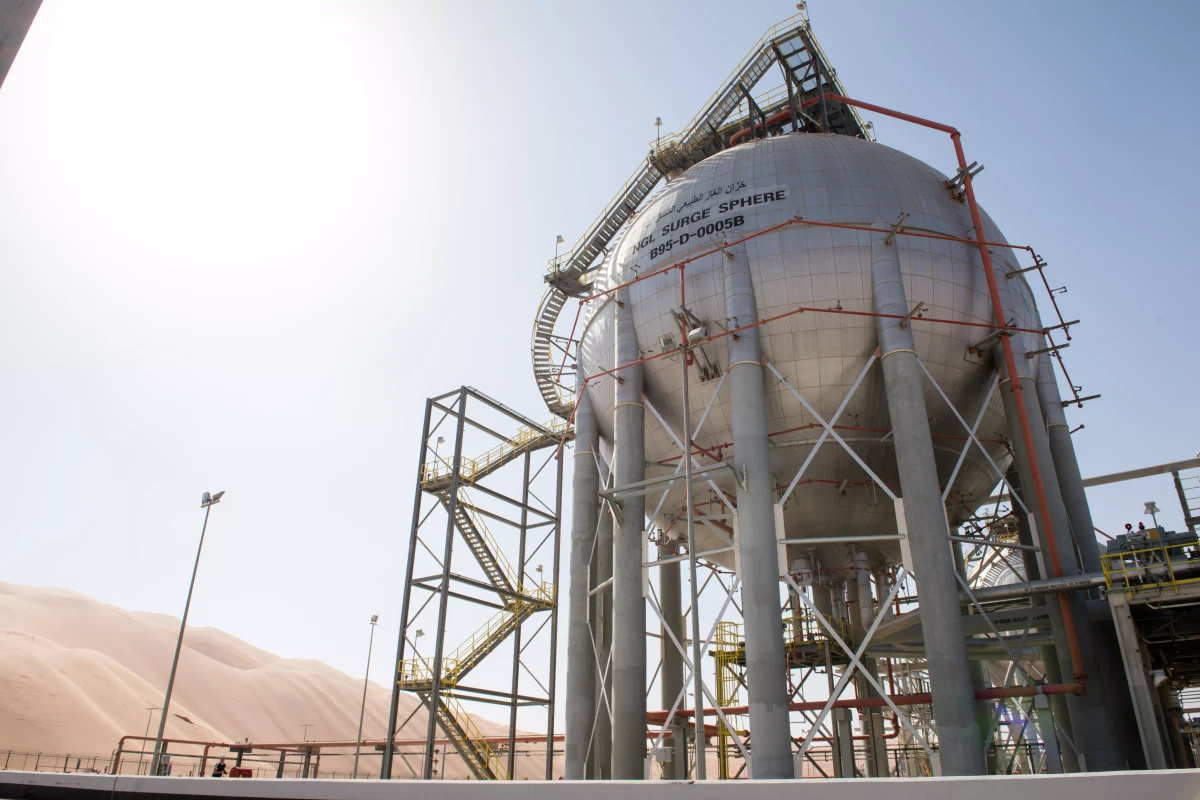
Shaybah is an Aramco oilfield in Saudi Arabia’s desert interior, with industrial facilities and associated contractor activity. The relevant context is the location of workers and operations, rather than an assumption that all residents of Saudi Arabia were exposed to the same immediate danger.

Aramco’s description of the Shaybah project dates its start-up to 1998 and says a 2016 expansion raised production capacity to one million barrels a day. That is historical capacity information from the company, not a verified measure of output on the day of this incident.
An unchanged operational position does not reduce the seriousness of deaths and injuries. It answers a separate question about the facility. For the affected households, the immediate issues are medical care, reliable communication and practical assistance, not the daily production figure.
What remains unknown about the injured Indian national?
The publicly available confirmation does not establish the injured person’s identity, home district, exact job, employer or medical condition. None should be inferred from the fact that a contractor’s vehicle was involved. A nationality confirmation cannot safely identify which member of a workforce was injured.
There is also no basis in the embassy’s initial statement to promise discharge, compensation or repatriation on a particular timetable. Each would require additional facts and decisions. Reports using reassuring terms such as “stable” should identify an authoritative medical or official source before families rely on them.
How can families seek reliable help?
Relatives can begin with the Indian Embassy in Riyadh’s official contacts, providing the affected person’s name and known employer privately to the appropriate officials. The page lists +966-11-4884697 and +966-542126748 as 24-hour helpline contacts, including WhatsApp on the mobile number.
Within Saudi Arabia, the embassy’s emergency-number directory lists 997 for ambulance and medical emergencies, 999 for police and 998 for fire services. An immediate local emergency belongs with the relevant emergency service; a request for consular follow-up belongs with the mission.
Keep those two purposes separate when contacting officials. A family trying to establish a relative’s whereabouts should explain what it knows and what still needs confirmation, rather than forwarding an entire unverified account as fact. Sensitive identity documents and medical records should be shared only through the verified channel that needs them.
Does this establish a wider travel or evacuation rule?
No new general travel or evacuation instruction is established by the embassy’s injury confirmation alone. Readers should check the mission’s current advisories and the instructions of Saudi authorities, employers and transport operators for their own location and journey.
Earlier reporting on the Riyadh airport attack and Indian advisory concerns a separate incident. It provides context for the security concerns facing families, but its casualty figures or airport arrangements must not be merged into the Shaybah account.
The Saudi Arabia coverage can help readers distinguish developments by place and date. A report about an airport, a border crossing or an oilfield is not automatically a nationwide instruction to leave, nor a guarantee that every route remains available.
What help does the community-welfare team provide?
The embassy’s community-welfare wing supports Indian nationals with specified consular and employment problems. Its published responsibilities include counselling on labour disputes, communication with sponsors and Saudi authorities, and registering workers’ grievances through the MADAD portal. Those services are relevant if a family’s immediate medical concerns are followed by questions about the employer or employment records.
The mission also lists free interpreter support for Indian workers pursuing cases in Riyadh’s labour courts. That is a defined service for a legal process, not a promise that embassy officials will determine a dispute themselves. A family should ask which team handles its particular question and keep a record of the reference number or official contact provided.
The welfare page identifies documents needed for registering complaints, including a passport or iqama copy, visa-page copy and sponsor’s contact details. These should be supplied through the verified official route when requested. Keeping records available can help officials identify the correct worker and employer, but documents should not be posted publicly in an attempt to obtain faster attention.
Is emergency welfare support automatically available?
No. The embassy’s guide to worker-welfare schemes describes Indian Community Welfare Fund assistance as means-tested and directed to deserving cases. It lists emergency medical care, initial legal assistance and travel support among the types of help that missions may provide. The description of a fund is not approval of an application by a particular person.
The same guide distinguishes welfare assistance from insurance and employment-related compensation. Families should establish which policy or employment scheme applies, who administers it and what evidence is needed. An embassy helpline can help direct a query, but it cannot substitute for an insurer’s assessment or the competent Saudi authority’s decision.
No verified public information establishes the injured national’s policy, registration or entitlement. A compensation amount cannot therefore be calculated from the nationality of the worker or the fact that the incident happened near an oilfield. The practical step is to obtain the relevant employment and insurance records through the employer and authorised officials, alongside the immediate medical information.
How are work-injury claims assessed in Saudi Arabia?
Saudi Arabia’s General Organization for Social Insurance publishes separate occupational-hazards rules. Its benefit regulations describe medical care and the role of medical boards in assessing whether an injury is occupational and the extent of any disability. That framework requires a case-specific assessment; an initial news report cannot establish the outcome.
The regulations address accidents during work and certain journeys connected with work, with detailed conditions governing coverage. Location alone is not enough to decide a claim. The relevant facts include the worker’s registration, what the person was doing and the authority’s assessment of the incident. Relatives should seek confirmation from the responsible body rather than assume that all contractor employees have identical arrangements.
This is distinct from the question of responsibility for the drone attack. A medical assessment, a consular assistance request and an investigation into the incident are separate processes. Information gathered for one may be relevant to another, but none should be reported as a concluded compensation decision before the appropriate authority has made it.
What happens next?
The next substantive update is further verified information on the injured national and the authorities’ response. Until then, the embassy’s offer of assistance and the Saudi ministry’s casualty account define what can be stated confidently. Families should look for dated official updates, especially any change in medical information or local safety guidance.