The politics of migration and refugee care is a contentious issue globally, often intertwined with notions of national security, identity, and morality. In their illuminating article, Disinformation and Calculated Care Beyond the Global North: Comparing Refugee Discourses in Australia and India, Dr Sukhmani Khorana and Dr Nisha Thapliyal dissect the ways disinformation and media narratives shape public perception and policy regarding Muslim refugees in Australia and India.
Their study highlights the concept of “calculated care,” a mechanism where acts of apparent humanitarianism are deployed to disguise exclusionary policies and Islamophobic ideologies. This duality enables governments and media to appear empathetic while simultaneously fuelling fear and hostility toward refugees, particularly Muslim. Khorana and Thapliyal’s analysis sheds light on how these dynamics operate differently but converge in their outcomes in the two countries.

In Australia, the legacy of the 9/11 attacks profoundly shaped national policies and media discourses about asylum seekers, particularly those arriving by boat from predominantly Muslim countries. The Australian government’s stance on “stopping the boats” became a cornerstone of political campaigns, backed by narratives that painted Muslim refugees as potential security threats. These narratives, amplified by the media, fostered widespread public support for offshore detention centres and restrictive immigration policies. Dr Khorana points out how this approach uses selective care—protecting “worthy” refugees while vilifying others—to legitimise exclusionary practices.

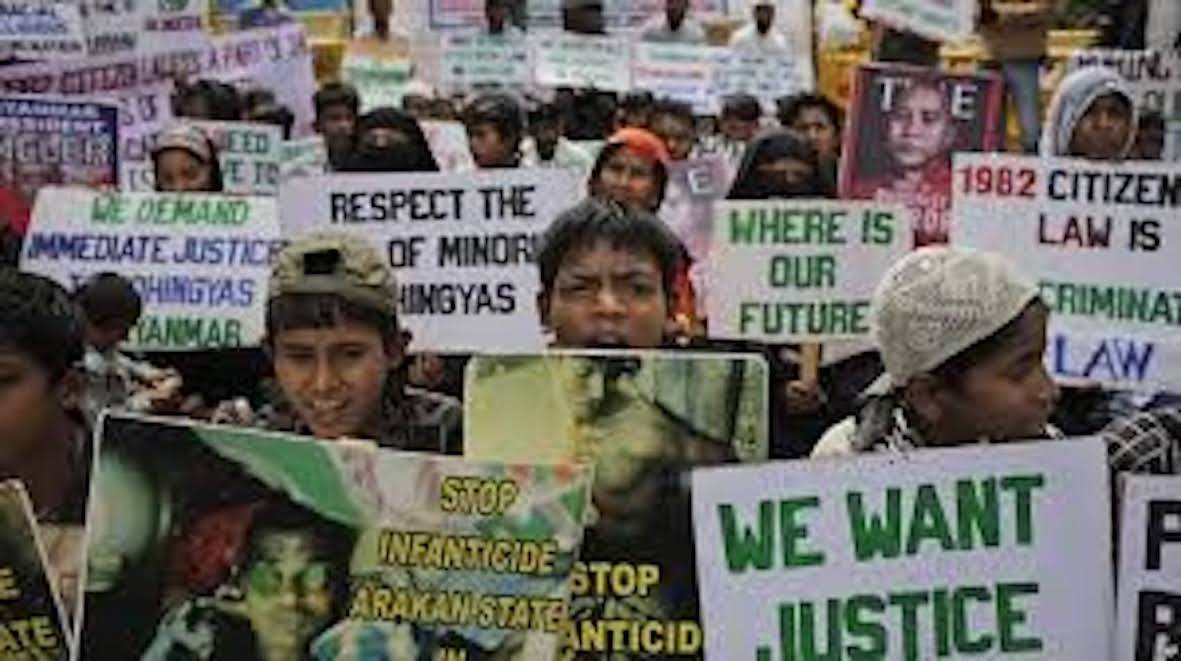
In contrast, the Indian context revolves around the treatment of Rohingya Muslims fleeing persecution in Myanmar. While India has historically presented itself as a haven for refugees, recent years have witnessed an overt shift in its policies. The current government has openly labelled Rohingya refugees as security threats and “illegal immigrants,” despite international criticism. Dr Thapliyal illustrates how this rhetoric is reinforced through disinformation campaigns, portraying the Rohingya as perpetrators of violence rather than victims of it. These narratives are bolstered by communal tensions within India, where the political climate often exploits religious divides.
The article argues that both nations employ disinformation to advance political agendas, but the outcomes are profoundly dehumanising for Muslim refugees. By framing their presence as a “problem,” governments and media create a moral justification for restrictive measures. Moreover, the authors note the emotional manipulation at play—using narratives of calculated care which project empathy while enacting policies that perpetuate harm.
ALSO READ: Racist chants at MCG and online hate against Indians spark outrage in Australia
Khorana and Thapliyal’s work emphasises the global significance of these trends, extending the critique of Islamophobia and refugee policies beyond the traditional focus on the Global North. They call for a reimagining of public discourse and current strategies to combat disinformation to challenge these harmful narratives and for the development of inclusive and genuinely compassionate refugee policies and practices.
This article is a crucial contribution to the fields of sociology, migration studies, and media analysis. It not only critiques existing practices but also pushes readers to consider the broader implications of how Muslim refugees are perceived and treated worldwide.
About the Authors:
Dr. Sukhmani Khorana is a Scientia Associate Professor at the School of the Arts and Media, University of New South Wales Sydney. Her research focuses on media, migration, and affect, with an emphasis on refugee narratives, cultural diversity, and the role of emotions in social change. Through her work, Dr. Khorana aims to raise awareness about the lives of asylum seekers and contribute to the empowerment of disadvantaged migrant communities.
Dr. Nisha Thapliyal is a Senior Lecturer at the School of Education, The University of Newcastle, Australia. Her research interests include social movements and other collective forms of social justice activism, critical, anti-racist and feminist pedagogies, and media studies. Dr. Thapliyal’s current work intersects with issues of migrant identity and culture, and education activism in the global Indian diaspora.
For a deeper dive into their analysis, readers can access the full article at Frontiers in Sociology.