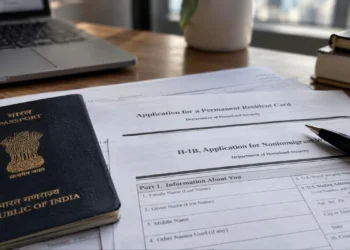


This NRI guide Australia 2026 opens with the fact most migration agents leave out: India is not one of the eleven countries holding a reciprocal health care agreement with Australia, so every Indian national arriving on a temporary visa, whether student, partner, or skilled worker, has zero automatic Medicare access and needs private health cover arranged before landing, not after.
That gap catches people out because Australia’s healthcare system looks universal from the outside. It is, but only for citizens, permanent residents, and nationals of the eleven countries with a standing agreement. Everyone else pays out of pocket for a GP visit or an emergency department trip unless they have private cover already in place, and student visa holders are legally required to hold Overseas Student Health Cover for the length of their course as a condition of the visa itself.
What is a reciprocal health care agreement, and why doesn’t India have one?
A reciprocal health care agreement lets citizens of specific countries access Medicare for immediately necessary treatment while in Australia, in exchange for Australians getting similar cover in that country’s public system when they travel the other way. Australia currently holds these agreements with Belgium, Finland, Ireland, Italy, Malta, the Netherlands, New Zealand, Norway, Slovenia, Sweden and the United Kingdom. India has never signed one, largely because it has no equivalent national public health scheme that could offer Australians matching cover in return. The practical result is that Indian visa holders need private health insurance arranged before arrival, not as an afterthought once they land.
The scale of Indian migration to Australia makes this a bigger issue than it might first appear. India led nearly every skilled migration category in 2024-25, according to the Department of Home Affairs: 48,326 permanent skilled places went to Indian nationals, split between 12,762 employer-sponsored grants, 11,355 state or territory nominations, 13,193 regional places and 5,058 Skilled Independent visas. Temporary visas added a further 430,567 grants in the same period, including 48,536 student visas and 26,875 skilled employment visas. Software programmers, registered nurses and ICT business analysts were the most common occupations among sponsored migrants.
Banking is more straightforward than the health cover question, but it still catches people off guard on timing. CommBank, one of Australia’s largest retail banks, allows an Everyday Smart Access account to be opened online up to 14 days before arrival or within 12 months afterward. The catch is that opening the account online does not mean full access: new arrivals must visit a branch in person within 20 days with an original passport and a tax identification number for any country where they hold foreign tax residency, or the account is automatically closed.
Only after that in-person identity check does the debit card and app access activate. NAB offers a similar pre-arrival option, and most Indian arrivals report the process is faster than opening an account back home, provided the branch visit happens inside the window.
Tax residency is where a lot of good financial advice from India stops applying. The Australian Taxation Office uses four separate tests, and none of them depend on your visa or citizenship status with the Department of Home Affairs, which runs an entirely different test for immigration purposes.
The primary resides test looks at physical presence, intention, family ties, employment and where your life is actually based. If that test does not settle it, the domicile test asks whether your permanent home is in Australia unless you can show your permanent place of abode is genuinely overseas. A 183-day test catches anyone present in Australia for more than half the income year, and a fourth test applies only to Australian government employees posted overseas.
In practice, most people on a skilled or student visa who intend to stay become Australian tax residents well before they become permanent residents, which changes how both Australian and Indian income gets taxed and is worth checking with an accountant rather than assuming continuity from NRI status back home.
Living costs have moved as well. The Australian Bureau of Statistics recorded Living Cost Index rises of between 0.5 and 1.5 percent in the June 2026 quarter alone, and between 3.7 and 4.7 percent over the twelve months to June, depending on household type. Insurance and financial services, food and non-alcoholic beverages, and housing were the categories doing most of the pushing. For anyone budgeting a move from India, that means the cost-of-living comparisons circulating on migration forums from even a year ago are already out of date.
What this NRI guide Australia 2026 means for new arrivals
None of this is meant to talk anyone out of the move, migration numbers this large suggest most people find it worthwhile, but the sequence matters. Health insurance needs sorting before the flight, not after. The bank account can be started early, but the in-person branch visit within 20 days is a hard deadline, not a suggestion. And tax residency status should be checked against the ATO’s own tests rather than assumed, since it usually arrives sooner than the immigration paperwork does.
What Indian families ask before the move
Does Medicare cover Indian citizens once they arrive in Australia?
No, unless they hold Australian citizenship or permanent residency. India has no reciprocal health care agreement with Australia, so temporary visa holders, including students and skilled workers, need private health cover from the day they arrive.
Can an Indian national open an Australian bank account before landing?
Yes, CommBank allows online applications up to 14 days before arrival, and NAB offers a similar option, but full account access requires an in-person identity check at a branch within 20 days of opening, with an original passport and any foreign tax identification number.
Does holding a temporary visa mean someone is not an Australian tax resident?
Not necessarily. The ATO applies four separate tests that are independent of immigration status, and many people on skilled or student visas become tax residents well before they qualify for permanent residency.