
Centuries ago, migration was a natural course of life. People moved from one place to another, driven by natural calamities, local violence, community upheavals, or simply the pursuit of better pastures. But there were no borders to cross, only the freedom of unrestricted movement.
Today, the reasons for migration are the same: political upheaval, crime, violence based on cultural or religious ethnicity, conflicts, and persecution.
But in our modern world, borders exist, and they have become an elaborate, costly operation.
Razor-sharp electric fences, towering walls, ‘smart’ walls equipped with cameras, drones, sensors, radars, and 24/7 armed personnel are deployed to secure entry and exit points.
Billions Spent to Secure World Borders, the US Leads
The global border security industry estimates the market at about US$52–54 billion in 2025, with forecasts projecting growth to US$78–84 billion by the mid-2030s, according to the World Border Security Congress report, which is holding a conference in Lisbon, Portugal, in April next year.
The U.S. leads the pack in border-related spending, pouring billions into its southern boundary, not to fend off military invaders but desperate, unarmed migrants seeking refuge from violence and poverty.
Since the creation of the Department of Homeland Security (DHS) in 2003, the federal government has spent over half a trillion dollars (an estimated $532.5 billion through Fiscal Year 2026) on the agencies that carry out immigration enforcement, and tens of billions more on border barriers and other immigration enforcement-related infrastructure projects, according to the American Immigration Council.
The Department of Homeland Security employs more than 240,000 personnel for border security and immigration enforcement, according to Wikipedia.
Who Drew the World’s Borders
Most of the world’s borders, especially those in South Asia, the Middle East, and the Americas, were drawn through war or colonial ambition.
For instance, the United States and Mexico were once part of the same landmass, without fences or checkpoints.
In earlier times, migration was less of a bureaucratic nightmare, even when national borders existed in vague forms.
Those seeking refuge or new opportunities faced fewer barriers, in contrast to the harsh policies and inhuman treatment migrants often endure today.
These rigid structures, legal and physical, dehumanize people trying to escape violence or seek a better life.
United Nations High Commissioner for Refugees reports:
“Globally, as of the end of December 2025, the most recent reporting period, there were 41.6 million refugees, 9 million asylum-seekers and 68.7 million people displaced due to conflict or violence within their own country.
“There are also about 4.5 million stateless people, who have been denied a nationality and lack access to basic rights such as education, health care, employment and freedom of movement.”
The scale of human migration today is staggering. Millions of people have been forcibly displaced worldwide recently due to conflicts, violence, persecution, or human rights abuses.
This includes refugees, asylum seekers, and internally displaced persons.
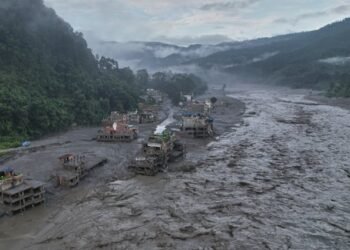
As climate change worsens natural disasters and resource scarcities, these numbers will likely grow.
“No one leaves home unless home is the mouth of a shark,” writes poet Warsan Shire.
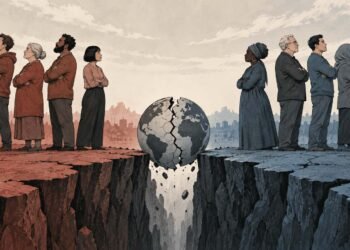
Borders are prisons, and many risk their lives to cross them, trudging through snowstorms or sailing dangerous seas in search of safety. But instead of embracing these people, many nations enforce rigid borders that trap them in camps, poverty, and conflict.
Beyond refugees, millions of others want to move for better economic opportunities, family reunification, or a fresh start.
In an interconnected world, where technology and travel bring people closer, the question arises: Do we still need rigid borders and nation-states?
While preserving culture and tradition, these structures have also divided us as one human race for centuries.
Can we imagine a future without borders, where people move freely across the planet without passports or visas?
A world where they don’t have to risk their lives scaling walls or digging tunnels in pursuit of sanctuary?
With 8.3 billion people inhabiting Earth as of now in 2026 (Worldometer) and the number still growing, our planetary citizenship becomes clearer when viewed from space, as astronaut Rusty Schweickart noted in 1969.
“We are part of everyone and everything,” he said.
We belong to the Earth, not just the arbitrary lines drawn across it.
While borders have historically preserved culture and fostered multicultural societies, they’ve also erased many cultural identities and created conflicts.
The push for a borderless world is gaining momentum in today’s digital age.
Visionaries like Balaji Srinivasan, former CTO of Coinbase, advocate for creating new nations that transcend traditional concepts of citizenship.
In his book How to Start a New Country, Srinivasan outlines how blockchain and the internet could help birth digital nations that redefine governance and belonging.
From digital nations to physical ones, borders could rapidly fade as technology redefines how we live.
Though a world without countries may seem chaotic or utopian, it could lead to a war-free, unified global village where refugees and migrants find welcome, not walls.
No borders, no nations. One human race under one flag from Earth to the moon and beyond.