
India in the World
- On the 6th of April, India’s High Commissioner Pranay Verma and Bangladesh’s newly elected Prime Minister Tarique Rahman had a meeting in New Delhi, and two days later, Bangladesh’s national security adviser Khalilur Rahman met with Indian external affairs minister S. Jaishankar. The visits represent a step to strengthen bilateral relations, as Bangladesh is India’s most prominent South Asian trading partner. However, bilateral ties are constrained by political flashpoints, the biggest one remains the border killings of civilians along their heavily militarised 4,096km border, especially by India’s Border Security Force. Other points of friction are the stale mate of water-sharing of the Teesta River, one of Bangladesh’ economic lifelines and market access issues such as visa bottlenecks, non-tariff barriers and bureaucratic inefficiencies.
- On the 8th of April, India’s Ministry of External Affairs issued a statement welcoming the ceasefire in West-Asia, more than 6 hours after its announcement. The brief statement read that India hoped for lasting peace in the region and further argued that they have continuously advocated for “deescalation, dialogue and diplomacy.” It further acknowledged that the conflict had “already caused immense suffering to people and disrupted global energy supply and trade networks”. At the government’s daily briefing later, the Ministry of External Affairs stated that hoped this development in the region will also “encourage peace efforts in Ukraine.” Notably, the statement did not refer to Pakistan’s involvement in mediating the truce, a role that both the U.S. and Iran publicly acknowledged. In the initial phase of the war, New Delhi appeared aligned with Israel, as Modi visited Israel two days before the escalations began. At the same time, external affairs minister S. Jaishankar held at least five conversations with his Iranian counterpart during the crisis.
- On the 14th of April, External Affairs Minister Jaishankar spoke to Israel’s Foreign Minister Gideon Sa’ar on the phone in their first conversation since the April 8th ceasefire between US-Israel and Iran. On X, Jaishankar tweeted that the discussion “covered different aspects of the West Asia situation’, while Minister Sa’ar described the call as “a good conversation” with his “friend” Mr Jaishankar.
- On the 14th of April, US President Trump called with PM Modi to discuss “the situation in West Asia and stressed the importance of keeping the Strait of Hormuz open and secure”, Modi described on X. In a Press statement, the Indian Ministry of Foreign affairs stated that “the two leaders reviewed the substantial progress achieved in bilateral cooperation across various sectors and expressed commitment to further strengthening the Comprehensive Global Strategic Partnership in all areas”. The US Ambassador to India described the call on X as “very positive and productive.” Their continued communications represent a stabilisation of their relationships after the strain in ties last year over US imposition of tariffs on India.
- India has withdrawn its offer to host the 33rd session of the UN Climate Conference (COP33) in 2028. According to the environment ministry, India is unable to host the conference “following a review of its commitments for the year 2028.” India’s proposal to host was made by Modi in 2023 following the successful hosting of the G20 summit in New Delhi. The ministry did not provide any further explanation but reaffirmed India’s commitment to engage constructively with the global community on climate action. the UN climate body’s Asia-Pacific Group, which is responsible for the coordination with host countries, will now likely rely on South Korea to host the event. Türkiye will host COP31 later this year, while Ethiopia will host COP32.
- On the 18th of April, India’s foreign secretary Vikram Misri summoned Iran’s ambassador, Mohammed Fathali, to express concern after two Indian ships were fired upon in the Strait of Hormuz. The UK Maritime Trade Operations Centre reported that an Iranian Revolutionary Guard Corps vessel approached and opened fire on a tanker despite prior clearance. While the crew remained safe, some cargo was damaged without environmental impact. Iran had briefly reopened the strait but reimposed restrictions, citing the US blockade of its ports as a ceasefire violation. India emphasised the safety of merchant shipping and urged Iran to facilitate safe passage for India-bound vessels.
Civil society, human rights defenders, and journalists
- On the 1st of April, the Press Club of India (PCI) released a statement in which they expressed grave concern over the recent take down orders issued across social media platforms that targets content critical of the government, resulting in creators being blocked or their material removed. A day earlier, the Ministry of Electronics and Information Technology published proposed amendments to the Information Technology Rules (2021) that will enable such takedowns. According to the Press Club, the vague provisions enable arbitrary online censorship and create a chilling effect as the takedowns target news outlets, satirists and other critical voices. Fact-checker Zubair reportedly received notifications that multiple posts were blocked nationwide per a Ministry of Electronics and Information Technology order under Section 69A, though the specific content of the order wasn’t described. In the statement, the PCI termed the move “arbitrary and violative of the Constitution” and demanded that “authorities respect citizens’ and journalists’ fundamental right to freedom of speech and expression enshrined in and protected by Article 19(1)(a) of the Indian Constitution.”
- On the 7th of April, Manipur’s government imposed a three-day Internet suspension in five of its districts following violent protests. According to reports, an explosive device hit a civilian’s house in the Bishnupur district, killing two young children and injuring their mother. The incident, allegedly carried out by Kuki militants, triggered panic and led to protests across the district. In response, the State of Manipur ordered an Internet shutdown, stating that “anti-social elements might use social media for transmission of images, hate speech and hate video messages” which could affect law and order. It was in the public interest to stop “the spread of disinformation and false rumours”, the order read. Officials have also imposed a curfew in four valley districts. Manipur has witnessed a series of internet shutdowns in the nearly three years of ethnic violence, with the first and longest one imposed on the 3rd of May 2023, lasting 200 days. The same village, bordering a politically volatile hill, witnessed a similar attack in September 2024, when an explosive fell on the residence of former chief minister Koireng, killing an elderly man and injuring five others.
- On the 7th of April, clashes erupted in multiple constituencies in Assam over the single-phase assembly elections, leaving around 30 people injured and seven arrested. In the Partharkandi constituency, Congress candidate Kartik Sena Sinha allegedly stormed into the Rangamati polling booth and accused the presiding officer of allowing fake electors to cast votes. According to police reports, this was followed by a clash between Congress and BJP supporters injuring about 25 people. Three political parties, the Assam Jatiya Parishad, the Raijor Dal and the UPPL, reported that members and candidates of their party were attacked by BJP supporters. Officials further stated that minor scuffles happened in several polling booths due to heavy rush, queue-breaking and disputes between oppositional parties, but police presence brought these under control.
- On the 14th of April, stand-up comedian Anudeep Katikala was arrested after he made jokes about Andhra Pradesh Deputy Chief Minister Pawan Kalyan and his family in a comedy set titled “The Tollywood Roast Show. The controversy began when clips of his performance went viral online, prompting backlash from supporters of Kalyan, particularly members of the Jana Sena Party. A party leader filed a police complaint alleging that the jokes were defamatory, insulting, and potentially harmful to public order. Based on this complaint, an FIR was registered, and police detained Katikala from Prayagraj in Uttar Pradesh, where he was visiting family. He faced charges under several legal provisions, including defamation and laws related to offensive or harmful online content. The next day, approximately at 3 a.m. following his 9:30 p.m. arrest he was set free. Y. Rajesh and Md. Iqbal from the Human Rights Forum (HRF) advocated on behalf of Katikala and provided a detailed statement explaining the alleged illegalities of his arrest. They further noted that the report submitted by the police is “full of lies, misleading statements, contradictions and devoid of law”.
- On the 17th of April, the Union government has failed to pass an amendment to the constitution which would have resulted in an increase in the number of seats in the Parliament to 850. Congress MP Priyanka Gandhi Vadra referred to the failure of the amendment as a “very very big win for democracy” as according to her, the bill would have been about delimitation as opposed to protection of women nor allowing for reservation for them – allegedly only the Bharatiya Janata Party (BJP) would have benefited from such amendments. In 12 years of the Narendra Modi government, this was the first time they failed to pass a constitutional amendment, proposed as an act aimed at increasing women’s reservations. However, according to opposition parties the goal was to limit representation for some states, mostly southern ones. According to the Wire, claims of the Union home minister Amit Shah, do not hold up against factchecking. Allegedly, there has been an ongoing issue of men trying to reserve their own seats and according to Priyanka Gandhi, the delimitation is not to be trusted, and that Congress wasn’t and never would be against women’s reservation in the Parliament. On the other hand, Modi referred to the situation as “the government is committed to implementing the constitutional amendment within a clear timeline” and that “this decision is dedicated to women’s power”. In his eyes, India now stands “on the bring of making history” and asserts that the reform will have the effect of deepening democracy and women-led development, described it as transformative, and that the government is committed to implement this amendment within a clear timeline.
- On the 19th of April, activists, lawyers and journalists held a press conference at the Press Club of India to condemn the repression of protesters involved in the recent Noida worker’s protests. In the statement, they called the police crackdown “illegal and extrajudicial” and stated that those arrested were denied their legal rights. Four activists claimed to be forcibly taken into a police vehicle on the 11th of April without any justification nor a disclosure of their whereabouts to their relatives. Once their lawyers sought information at the Surajput Court, the police had “kidnapped’ them as well and “manhandled, abused and threatened” them. They further claimed that the UP police had initiated a ‘smear campaign’ in which they portrayed the protests as part of a conspiracy with links to Pakistan and the arrested activists as the masterminds behind it. The activists called these claims “baseless” and highlighted that there was texts and video evidence of them pledging to hold the strike in a peaceful manner. According to Supreme Court advocate Kawalpreet Kaur, who was at the press conference, it has become a predictable pattern that as soon as a mass movement emerges, a narrative of “conspiracy” emerges as well. Advocate Kabir pointed out that Journalists and intellectuals that weren’t at the protest were arrested as well, simply because they spoke in favour of the movement.
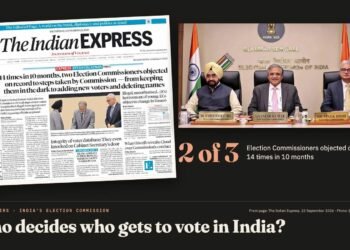
- The Electoral Commission has so far cut the Electoral rolls with 5.58 crore names since the initiation of the nation-wide Special Intensive Revision (SIR). The EC argued that the last intensive revision was carried out about 20 years ago and that rapid urbanisation and migration since then necessitated a clean-up of the rolls. As opposed to a Summary Revision, where the rolls are updated, an Intensive Revision prepares the roles anew. In previous SIRs, Booth Level Officers went house to house to check the number and details of electors. Now, the EC requires electors to submit a form themselves with documents proofing citizenship and eligibility, those that do not meet the one-month deadline face deletion. The SIR, taken place in 10 states and three union territories so far, led to 9.55% names being cut from 58.87 crore to 53.38. In Uttar Pradesh there was a decrease of 13.23% while Andaman and Nicobar Islands had the highest decrease (16.86%). Interestingly, Bihar, which had adopted a different methodology, saw a decrease of only 6%. The EC announced that it will start the SIR in the remaining states and union territories soon.
Hate Crimes and Hate Speech against Minorities
- On the 11th of April, PM Modi claimed that if the BJP forms the government in West-Bengal, the process of granting citizenship under the Citizenship Amdentment Act (CAA) will be fast-tracked for refugee communities in West-Bengal. Modi made these statements while addressing an election rally ahead of West-Bengal Assembly elections, Simultaneously, PM Modi warned ‘infiltrators’ to leave the country or they will be identified and removed. Similar statements have been made by the Union Minister Amit Shah who promised that a Uniform Civil Code would be implemented within six months of the BJP taking office. These statements are meant to reassure members of Matua, Namasudra and other refugee communities who are key electorate groups in Bengal. Modi’s reassurance arrived a day after the BJP in Bengal shared a manifesto pledging citizenship and rehabilitation for Hindu refugees. This was seen as a direct threat to Matua and Namasudra voters amid voter roll deletions by the Election Commission. During his speech, Modi accused the Trinamool Congress Party of creating fear among refugee families during their 15-year rule and failing to secure the interest of these communities.
- On the 10th of April, a Dalit Medical student died after a fall from a building at the Kannur Dental College Campus in Kannur. His death caused outrage in Kerala after allegations emerged that he has been the victim of caste-based discrimination and humiliation by faculty members. A special investigation team has been formed to probe the case, headed by the Assistant Commissioner of Police, and two faculty members have been booked in the case. Two days after the incident, an audio clip emerged in which the victim reportedly describes how teachers publicly humiliated him and insulted his mother. The student’s sister claims that his brother had been the subject to repeated insults over his complexion, caste and parents’ occupation. The State Human Rights Commission has requested a report from the Kannur City Police Commissioner on the incident.
- On the 27th of April, the body of a Muslim Cleric was found near railway tracks in Uttar Pradesh, the man was allegedly thrown of the train. The evening prior, Imam Tousif Raza had called his wife three times in distress while reportedly being beaten by drunk men on the train. The post-mortem report recorded multiple ante-mortem (prior to death) injuries, including the fracturing of all of his ribs. In an audio call recording can be heard how Tousif asks his wife to call the police and begs fellow passengers to help him. According to Tousif’s wife, the men had accused him of theft and killed him deliberately. She further argues that his body was thrown of board and Tousif’s brother, who viewed the victim ‘s body, reported “wounds around his eyes (…) and injuries on both sides of his torso.” The family, residing in Kishanganj, stated they will file a formal complaint in Bareilly once they travel to the state. On April 30th, the Bareilly police alleged in a post on X that Tousif had dozed off and fallen of the train, which resulted in his death. In a later post, the police stated that necessary legal action will be taken once the family has filed a complaint. The All India Muslim Jamaat requested the CBI to probe into the case “It is our apprehension that this seems to be an incident related to mob lynching, so we have asked for a probe.”
Religious Freedoms and Minority Rights
- On the 6th of April, the Union Government filed a submission urging the Supreme Court to uphold a restriction on menstruating women from entering a temple. In September 2018, the SC had ruled that not allowing women of menstruating age into Kerala’s Sabarimala temple was anti-constitutional and ordered that all women should be allowed to enter the temple. On the 4th of April, the Supreme Court announced a nine-judge bench to hear the long-pending Sabarimala review, which was initiated trough petitions against the 2018 judgement. Filed by solicitor general Tushar Mehta, the Union Government submission cautions the bench against adopting standards of review that assess religious practices on grounds such as “rationality,” “modernity,” or “scientific defensibility.” It argued that the restriction of women of menstruating age was not gender discrimination but rooted in religious practise, which falls within the domain of religious faith and denominational autonomy and outside the scope of judicial review.
- In Tamil Nadu, Assembly elections are nearing, yet Adivasis communities allege that hardly any politicians visit their settlements to seek votes or to enquire about their grievances. Around 30 tribal settlements in the Anamalai hills fight for survival as they lack basic infrastructure such as electricity and paved roads. Children are sent to residential schools in Valparai as daily commutes to local schools remain inaccessible. Government healthcare schemes do not reach the most vulnerable community members while malnutrition, poverty, and diseases threaten their existence. Tribal activists are demanding the State government to create special healthcare schemes, improve living standards and to declare these villages as ‘Particularly Vulnerable Tribal Groups (PVTGs)’. On the 2nd of April, the Chief Minister met with a Kadar tribal leader to speak about their grievances, a meeting which many tribals consider to be a promising gesture.
- In Nabarangpur in the state of Odisha, two Christian families were prevented from burying their family members in the village cemetery due to their faith. Local Hindus issued the ultimatum to the family converted to Christianity to either reconvert to Hinduism or lose access to the cemetery. Both families kept the dead bodies in their houses for several days while they negotiated with local Hindu community leaders. One of the families alleged that the district administration and the local police colluded with the Hindu groups in the village. The other family stated that hostilities in the community towards Christians began only a year ago. “Religious practice was never an issue here, we coexisted peacefully and even participated in each other’s celebrations”, they stated. The family claimed that the Christian families in the village were forced to sign a letter that permanently closed their church. “We are just a few families, and we are scared for our lives,” the family said. The two incidents in the BJP-ruled state are part of growing struggles for Christians to access cemeteries and rising interference by Hindu right-wing groups.
- On the 13th of April, the Allahabad High Court condemned the Uttar Pradesh government over the filing of false First Information Reports (FIR) under the Prohibition of Unlawful Conversion of Religion Act 2021. The bench made the observation while hearing petitioners who are seeking to invalidate a registered FIR. The complainant had alleged that his daughter was being forced to marry the petitioner. However, the woman has said in her statement that she was in a consensual relationship with the petitioner and denied any allegations of change of religion, forced marriage or physical relations. She further claimed safety concerns for her and her family members due to harassments by Hindu organizations. The bench noted that despite the woman’s statement, the Investigative officer only dropped the charge of rape but continued the investigation under charges of kidnapping, assault and sections of the Anti-Conversion Act. According to the court, “it emerges that the Investigating Officer is acting under pressure or is ‘persuaded’ by some other factors.” The bench requested a hearing of the complainant for lodging a “patently false, fake and frivolous FIR” and directed the state to provide adequate security to the petitioners and their family members. The Court termed the false FIRs “a disturbing trend” and directed the additional chief secretary of the state to file a personal affidavit specifying the action being taken in such cases.
- The recent Indian Supreme Court ruling that reaffirmed that individuals who convert to Christianity cannot continue to be recognised as members of Scheduled Castes (Dalits) under the Constitution, sparked unrest. The ruling has caused significant concern in Punjab, a state with one of the highest proportions of Dalits in India (around one-third of the population) and where many Dalits are either Christian or have converted in recent years. For these communities, Scheduled Caste status is crucial, as it provides access to reservations in education and employment, as well as legal protections under laws such as the Scheduled Castes and Schedule Tribes (Prevention of Atrocities) Act. The judgment effectively denies these protections to Dalit Christians, even if they continue to face caste-based discrimination. The National Council of Dalit Christians (NCDC), Catholic Bishops Conference of India (CBCI) and National Council of Churches in India (NCCI) have filed dozens of petitions seeking to extend Scheduled Caste status to Dalits of other religions.
Internet and Technology
- On the 30th of March, the Telangana Assembly passed the Platform-Based Gig Workers Bill 2026, the legislation gives legal recognition to gig workers and regulates platform work to ensure the protection of workers. Labour, Employment and Mines Minister Venkataswamy introduced the bill, stating that workers in the digital economy lacked minimum wages, job security, health insurance, labour rights or other benefits. As per the Bill, the Congress-led government will tax 1-2% on gig-platform transactions, with strict high fines on non-compliance. From these taxes, a special welfare board will be constituted which will provide insurance, pension and maternity benefits to an expected 4 lakhs of gig-workers. The Bill further mandates transparency and accountability policies: the platforms must clearly disclose salary and deduction details, and cannot use arbitrary algorithms that affect workers. Similar bills have passed in four other states (Karnataka, Rajasthan, Jharkhand, and Bihar), although only Jharkhand way able to progress beyond negotiations and implement the measures.
- Investigative journalism by Decode reveals that AI Facial Recognition tools used by welfare programmes deny pregnant women food. Since July 2025, beneficiaries of the Integrated Child Development Services (ICDS) must pass an AI-powered facial scan and electronic verification before receiving supplies. However, the AI tool, downloaded on smartphones of community workers, uses old identity photos and often cannot recognize the changing facial features of pregnant women. Government data shows that nearly half of eligible beneficiaries did not receive emergency rations in 2025, leaving thousands of pregnant women, nursing mothers and young children without food. Experts who analyzed the AI-tool stated that the open-source Google ML kit was used. In response, Google responded that the ML Kit “does not have facial recognition capabilities” and is not designed to identify specific individuals. The company further stated that the legal responsibility of the technology lies with the developers who integrate it, which highlights a crucial accountability gap. The system was mandated by the Ministry of Women and Child Development, despite warnings from workers’ unions that it would fail vulnerable women whose faces change during pregnancy, illness or ageing. Further, the electronic verification process on personal phones is a high technical barrier for many poor women, those that cannot pass the system are removed from the welfare rolls entirely.
Political Parties
- On the 15th of April, BJP leader Samrat Choudhary was sworn in as the Chief Minister of Bihar, becoming the first BJP politician to hold the post in the state. His appointment followed the resignation of long-time Chief Minister Nitish Kumar, who stepped down and moved to the Rajya Sabha, ending his extended tenure in state politics. The decision came after Choudhary was elected leader of both the BJP and the ruling NDA legislative parties after days of political uncertainty.
Police and authorities
- On the 13th of April, the Uttar Pradesh police has cracked down a protest on workers, resulting in 350 being arrested, contractors facing blacklisting and licence cancellations over violence. Following the protest, the Noida administration stated that in the event of a “disruptive conduct” or “violence” committed by the workers, the agencies and contractors outsourcing them will be held accountable, and such agencies might even be blacklisted and have their licences get taken away. Thousands of workers have been protesting for better wages and improved working conditions, from various industrial units, with protests reported across cities in North India. As a response, the government of Uttar Pradesh set up a high-level committee in the Labour Department in the aim of engaging with the workers and industry representatives. Advocate Kawalpreet Kaur said that “the manner in which the police picked up workers and activists is illegal and extrajudicial” and that “only seven FIRs have been registered against 350 workers” as well as “mass detentions without presenting grounds for arrest or copies of FIRs” – as stated by him – are illegal means of actions by the police. Advocate Kabir further pointed out, that situations when people arrested who were not allowed to exercise their legal rights called for a lawyer resulted in the lawyer being detained as well, without any arrest memos shown to establish legal grounds. Other victims mentioned custodial torture, fabrication of evidence, verbal abuse, and being illegally abducted and threatened for hours by the police.
- On the 23rd of April, the Delhi High Court warned the Delhi police that it will order a probe into the alleged illegal detention and torture of students and activists by the police last month. The Bench of Justices examined the sealed cover reports handed in by the Delhi police and expressed dissatisfaction with the materials as well as the police’s conduct so far, “we can’t trust you with the investigation.’ The bench observed that the allegations of torture against police officials is of such serious nature that the investigation will be conducted by the Central Bureau of Investigation (CBI). The students and activists were under investigation for the alleged disappearance of a woman and alleged alliance to Maoist ideologies. According to the police, the students had joined the investigation voluntarily. The Bench expressed that the gravity of the alleged offences does not justify the negligence of the proper procedure and requested proof that the procedures were followed. The police named the allegations of abduction, wrongful confinement, torture and sexual harassment “false, fabricated, and devoid of any material particulars.” A sealed cover report on the status of the CCTV cameras in the Delhi Police Special Cell office was handed over to the High Court. However, the Bench had deemed it unsatisfactory and ordered the police to release the entire file of the case. The next hearing will be on the 19th of May.
Judiciary
- On the 13th of April, the Supreme Court of India had agreed to assess the plea pursuing the examination of finger and iris-based biometric identification at the polling stations, to mitigate duplicate and fraudulent voting behaviors, such as impersonation. The has been filed to prevent electoral manipulation matters by ways of impersonation and voting twice and calls for biometric verification systems to be put in place. The petition alleges out that issues such as “bribery, undue influence, personation, duplicate voting and ghost voting” are influencing the “purity and integrity of the electoral process”. The current voting system makes use of largely ID cards and manual verification methods for voter identification, which is argued to be prone to misuse via old photographs, real-time validation, and other errors. The proposed biometric system is argued to be unique and immune to duplication, which in theory should be effective against impersonation and multiple voting. However, the Court was explicit on not allowing the potential new system to be used during the state elections – Tamil Nadu, Assam, Kerala, Puducherry and West Bengal – some of them which took place in April and one coming up in the beginning of May. Therefore, the Court will examine the proposal to be implemented in future polls only not for ongoing state Assembly elections. The Bench further claimed that such a regulation may consequently result in a major amendment in law, and that they must consider the financial implications as well.
- The Campaign for Judicial Accountability and Reforms (CJAR) expressed its concern over the Supreme Court’s recent order directing Union and state governments to disassociate Professor Michel Danino, Suparna Diwakar, and Alok Prasanna Kumar from all publicly funded curriculum work. The three had supervised the drafting of a chapter in the NCERT textbook, which contained a section on corruption in the judiciary. The Court had ordered a ban on the publication and circulation of the textbook in February. The order was issued without hearing the three experts or giving them the adequate opportunity to present their case. According to the court, the chapter held “a discernible agenda to undermine the institutional authority and demean the dignity of the judiciary” and argued that the writers had no reason to continue shaping textbooks meant for future students. According to the CJAR, the top court’s conclusion was “factually incorrect” as the book opens with a quote honouring the judiciary and only had one page devoted to corruption. “The judiciary has not been singled out but has been reasonably criticised as an institution that is not perfect and requires corrective steps as other branches of the state,” said CJAR. The organisation further urged the Supreme Court to revoke the ban on the textbook and its authors, and to permit healthy public discussion of the judiciary’s accomplishments alongside its challenges.
Business & economy
- The Union Cabinet approved India’s updated Nationally Determined Contribution (NDC), which commits to 60% of its electric capacity being non-fossil sources by 2035. The NDC further pledges to radically reduce its emissions and increase its carbon sink to 3.5-4 billion tonnes of CO₂ equivalent. These targets will be communicated to the UN Framework Convention on Climate Change and arrive right after an analysis showed that India’s growth of CO2 emissions stood at its lowest in 2025 in more than 20 years. Under the Paris agreement, every signatory country is mandated to periodically submit NDC’s, India will very likely reach its 60% non-fossil capacity target as its already at 52%. When analysing every country’s NDCs, they so far close less than 14% of the emissions gap needed to reach the goal of reducing global warming to 1.5°C, according to the World Resources Institute. Further, no country set a target for reducing oil and gas production and international finance falls tremendously short to help subsidise developing countries’ targets.
Compilation by: Diaspora in Action for Human Rights and Democracy.