
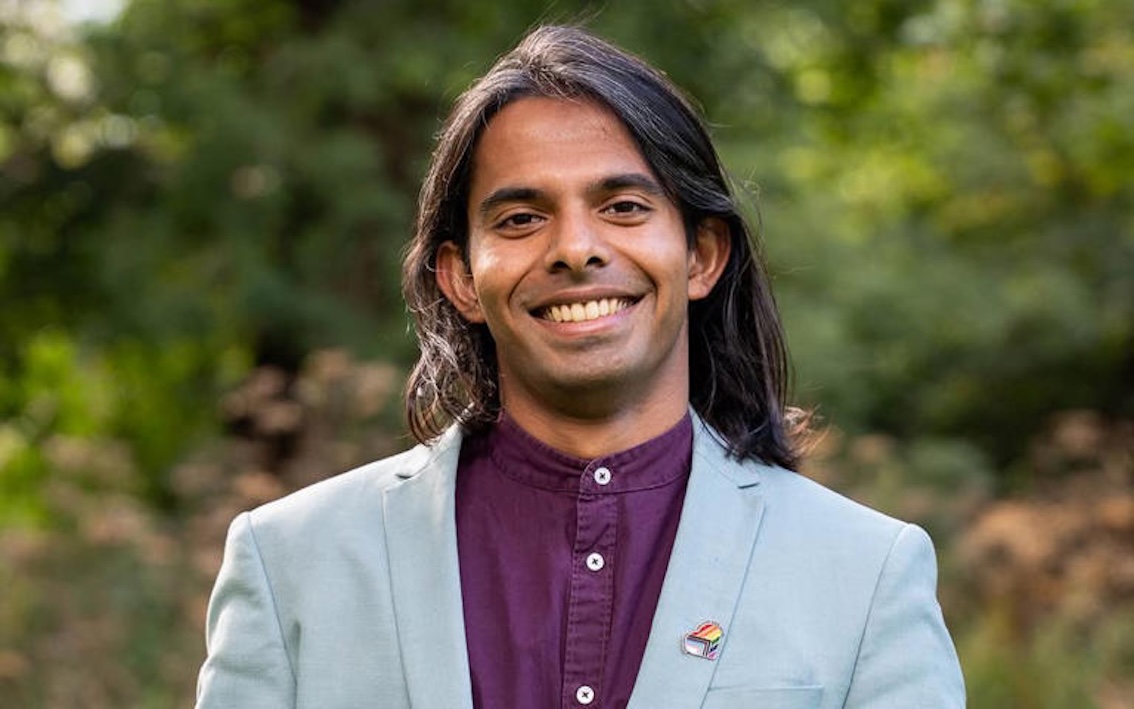
A Tamil Nadu born academic and activist has become the centre of political controversy in Scotland after being elected to the Scottish Parliament despite not holding British citizenship or permanent residency.
Q Manivannan, who identifies as non-binary and uses they/them pronouns, was elected as a Member of the Scottish Parliament (MSP) for the Edinburgh & Lothians East regional list representing the Scottish Green Party in the 2026 Scottish Parliament election.
The issue drew international attention after GB News reported that Manivannan was seeking support while transitioning from a student visa to a graduate or talent visa in order to remain in the UK during their parliamentary term.
Subsequent reporting by The Times, STV News and several Indian media outlets amplified the controversy.
Academic background and move to Scotland
According to public profiles and media reports, Manivannan studied liberal arts at O.P. Jindal Global University in India before completing an MPhil in international peace studies at Trinity College Dublin. They moved to Scotland in 2021 to pursue a PhD in international relations at the University of St Andrews.
Before entering the Scottish Parliament, Manivannan was involved in activism linked to migrant rights, queer inclusion, academia and human rights campaigns in Scotland. They previously contested a local council by-election for the Greens in Edinburgh in 2025 before being selected on the party’s regional list for the 2026 Scottish Parliament election.
The Scottish Greens recorded their best-ever election performance in 2026, winning 15 seats. Manivannan and fellow Green MSP Iris Duane also became the first openly transgender MSPs elected to Holyrood.
Scottish Greens defend candidate
Scottish Green Party says MSP fully eligible under Scottish law
The Scottish Green Party has strongly defended Manivannan’s candidacy and immigration status.
Party co-leader Gillian Mackay said the Greens were confident the MSP would be able to renew their visa and continue serving in parliament.
In a public statement reported by Holyrood magazine, Manivannan said: “Every MSP from every party represented in the Scottish Parliament unanimously voted to allow everyone with the right to live here to stand in elections, including new Scots on visas like me.”
Manivannan said they were currently on a student visa due to expire later this year, but were transitioning to a graduate visa while also applying for a Global Talent Visa that could allow them to remain in the UK for the duration of their parliamentary term.
Laws that opened the door for foreign nationals
The controversy has focused attention on reforms introduced by the Scottish Parliament in recent years.
Under changes backed by the Scottish Government and later incorporated into the Scottish Elections (Representation and Reform) Act 2025, some foreign nationals legally resident in Scotland became eligible to vote and stand in devolved Scottish elections.
As a Commonwealth citizen legally residing in Scotland, Manivannan qualified to contest the election under existing rules.
Supporters of the reforms argue that people who live, work and contribute to Scottish society should be allowed democratic representation regardless of citizenship status.
Critics, however, say lawmakers should at minimum hold British citizenship or permanent residency before being allowed to serve in elected office.
Visa debate intensifies
The current dispute centres not on whether Manivannan was legally allowed to contest the election, but whether their immigration status is compatible with the practical demands of serving as an MSP.
According to reports in The Times, concerns were raised about whether student visa conditions could restrict full-time parliamentary work or the employment of staff.
Former SNP Westminster leader Ian Blackford criticised the Greens’ vetting process and reportedly called on the party to replace Manivannan. Scottish Conservative politicians also questioned whether voters had been properly informed about the visa situation.
The Scottish Greens rejected those criticisms, arguing that Manivannan remained legally entitled to serve and was in the process of securing a longer-term visa.
Wider political flashpoint
The case has reignited broader debate in Britain around immigration, citizenship and political participation.
Supporters view Manivannan’s election as a sign of an increasingly inclusive democracy that reflects migrant communities and social diversity in modern Scotland.
Opponents argue the situation exposes loopholes in electoral law and raises questions about national identity, citizenship and accountability in public office.
The controversy has also unfolded amid increasingly polarised political debates in the UK over immigration and transgender rights, with Manivannan attracting both strong support and intense online criticism since the election.