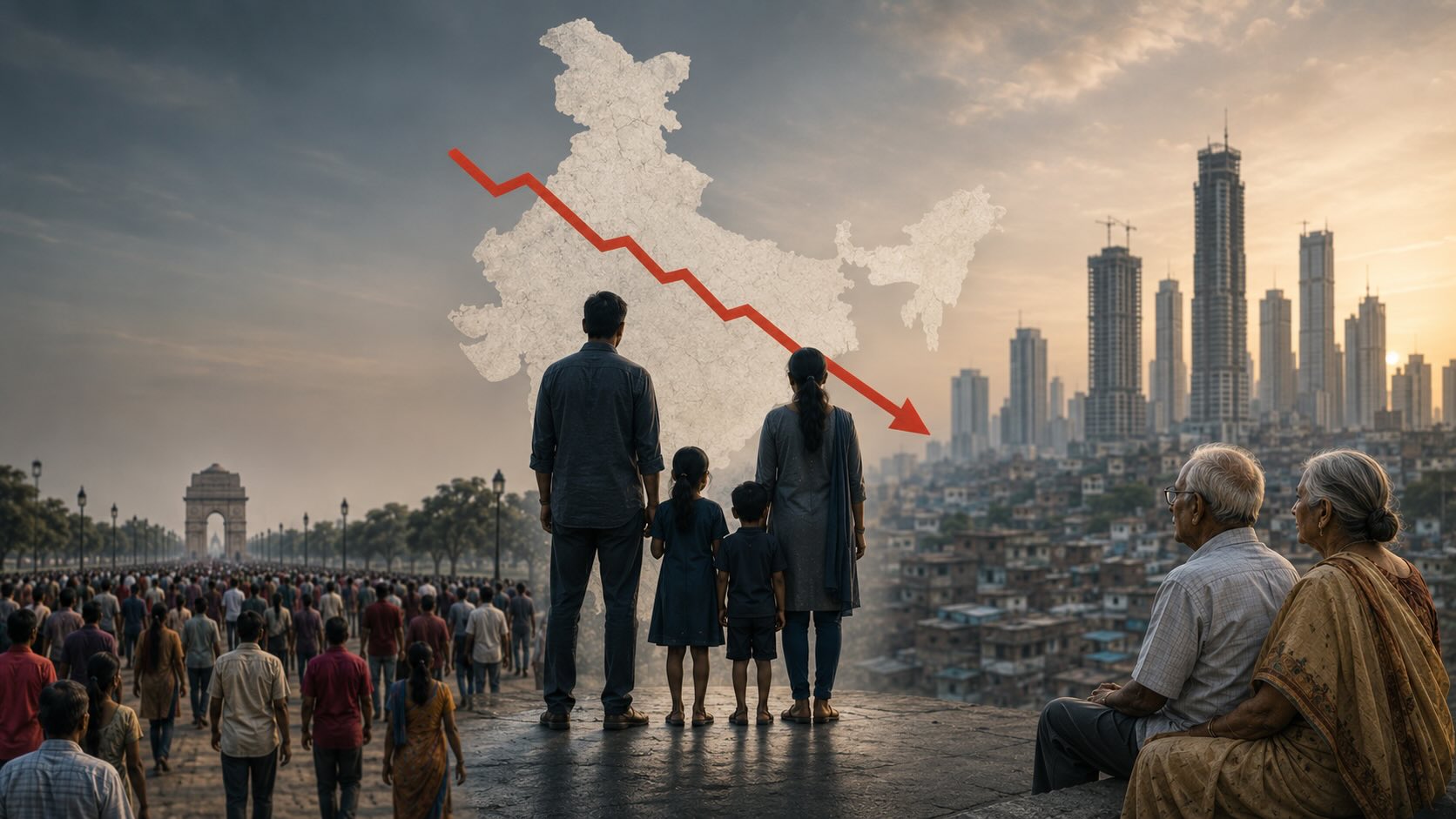
India’s fertility rate has plummeted below replacement level, signalling an impending population contraction that will reshape the subcontinent’s economic and geopolitical future. With a total fertility rate of just 1.9 children per woman, India faces the prospect of becoming old before it becomes rich, with profound implications for both the nation and the diaspora invested in its trajectory.
The scale of the shift is extraordinary. In 1950, Indian women had an average of six children. Today, despite widespread poverty and marriage rates above 90%, that figure has collapsed to 1.9 nationally, with southern states like Tamil Nadu and West Bengal matching fertility rates in Finland. In Delhi, the figure stands at just 1.2.
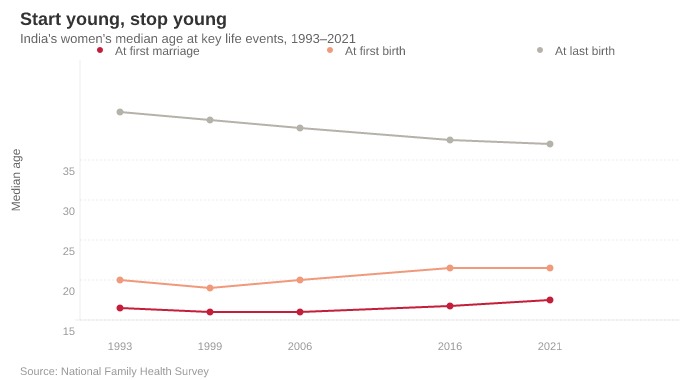
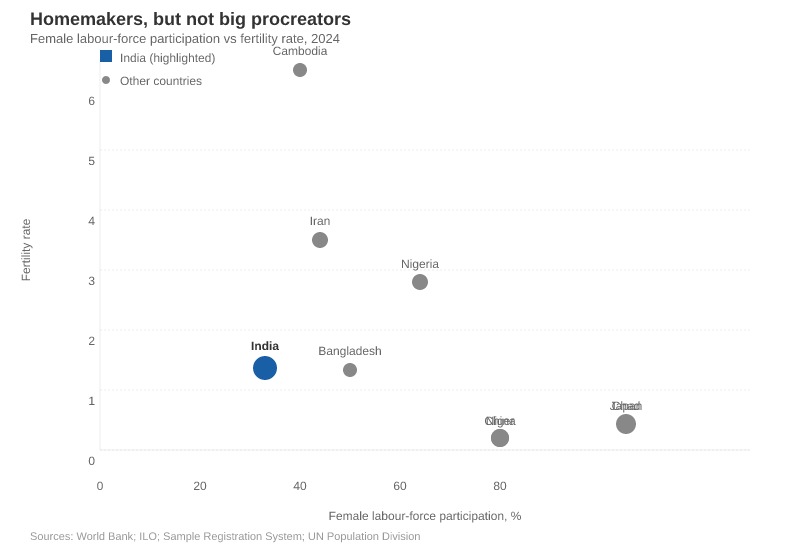
Unlike Western nations where low fertility correlates with female workforce participation and delayed marriage, India defies conventional demography. Most Indian women marry young (average age 19) and have their first child by 21. Yet they are choosing radically smaller families anyway. Surveys show Indian women desire even fewer children than they currently have, with a cultural norm now firmly established around one or two offspring rather than larger broods.
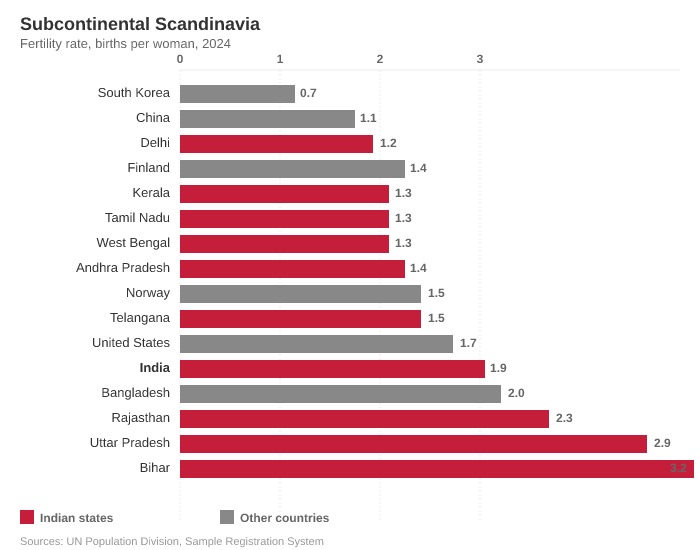
Three factors drive this shift. First, parents have embraced what demographers call the “quantity-quality trade-off”. As private school fees consume household budgets (now 38.8% of Indian children attend fee-paying schools, up from 31.7% in 2015), couples consciously limit family size to concentrate resources. A single child can receive tutoring and elite education; multiple children mean divided resources and compromised futures.
Second, the extended family is collapsing. In 2001, half of Indian families still lived under one roof across multiple generations. That figure has dropped to roughly 30%, eroding the traditional childcare infrastructure that once made larger families feasible. Urbanisation and labour market changes have fractured the joint family model faster than new social support systems have emerged.
Third, cultural attitudes have shifted decisively. Cable television brought images of urban, middle-class women with small families in the 2000s, lowering fertility in villages exposed to these broadcasts. Smartphones are amplifying this effect. In Uttar Pradesh villages, women now consume videos depicting small families as aspirational. The preference for sons, which historically drove higher fertility as couples bore children until obtaining a male heir, has largely evaporated. These are not policies imposed from above but choices made from within.
The implications are staggering. Demographers at the University of Washington’s Institute for Health Metrics and Evaluation project India’s population peaking in 21 years, then contracting as sharply as it has risen. By 2100, India’s population could shrink to just over one billion, a decline of nearly half a billion people. The UN’s more optimistic forecast (assuming fertility stabilises tomorrow, an assumption few experts believe) still has India’s population falling from the 2060s onward. Other models suggest the peak arrives even sooner.
India will face what no wealthy nation has yet navigated: ageing rapidly whilst remaining relatively poor. Pension coverage remains dire. In Kerala, where nearly a fifth of the population is already over 60, just 19.4% of the workforce belong to any pension scheme. The national figure is 12%. The social safety net that wealthy nations built whilst young and rich does not exist for India’s burgeoning elderly population. The collapse of the extended family means the traditional assumption that children will care for aged parents no longer holds. Cases of elderly relatives abandoned at mass gatherings like the Kumbh Mela are rising.
For the diaspora, this reshapes conversations about India’s future trajectory. The nation’s capacity to remain a geopolitical power depends partly on demographic dividend: working-age populations sustaining growth. That window is closing faster than expected. India’s share of working-age population could peak as soon as 2030, far sooner than previously modelled. The economy must now wring vastly more productivity from fewer workers, whilst simultaneously supporting an ageing population without the infrastructure or wealth to do so.
The political consequences are already rippling. Prime Minister Narendra Modi has flipped from warning of a “population explosion” in 2019 to framing low fertility as a crisis. His government is revising school textbooks to warn of “too few” rather than “too many” children. Hindu nationalist leaders have begun exhorting “patriotic” Indians to have three children. Andhra Pradesh’s chief minister announced a 30,000 rupee payout for couples having a third child. Yet evidence globally suggests such inducements fail. Fertility appears driven by forces too powerful for states or religious leaders to easily control.
For a diaspora community navigating questions about India’s future stability and capacity, this demographic reality is non-negotiable. India’s capacity to deliver on its geopolitical ambitions, manage urban pressures, create employment and construct adequate welfare provision has been predicated on a young, growing population. That assumption is now obsolete. The challenges ahead are structural, not cyclical, and they will define India’s place in the world for decades to come.