The United States Department of Justice has confirmed it intends to seek the extradition of Lawrence Bishnoi from India to stand trial on federal racketeering charges, including the alleged ordering of the 2023 assassination of Sikh separatist leader Hardeep Singh Nijjar in Surrey, British Columbia.
Ciaran McEvoy, Public Affairs Officer at the US Attorney’s Office for the Central District of California, made the confirmation at the Operation Hard Ball press conference in Los Angeles on 8 July 2026. “Bishnoi himself remains incarcerated in India. We intend to seek his extradition to the United States,” McEvoy said. “Extradition is a lengthy legal process and often takes years to complete.”
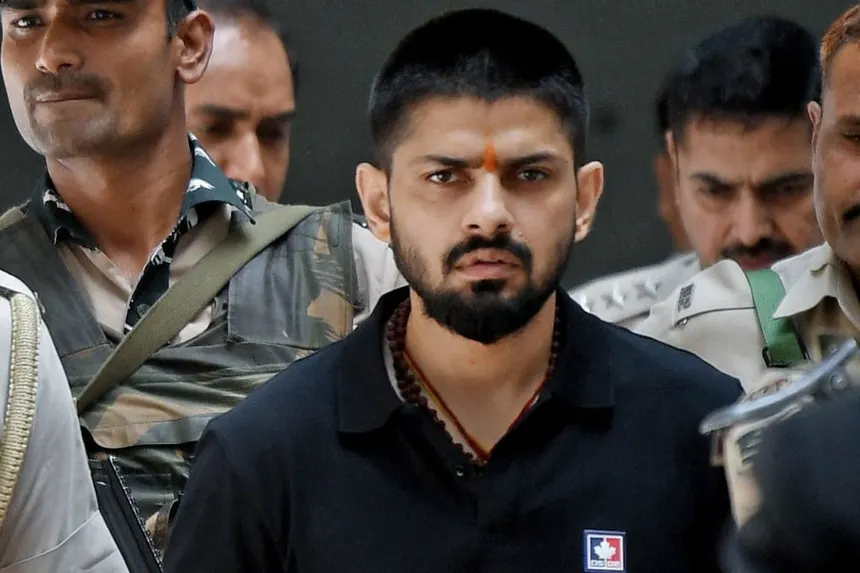
Bishnoi, 33, has been in a Gujarat jail since 2015 and faces more than 50 criminal cases in India, including allegations of involvement in the 2022 killing of Punjabi singer Sidhu Moose Wala. The US indictment, unsealed on 7 July as part of Operation Hard Ball, charged Bishnoi and his Canada-based deputy Satinderjeet Singh, known as Goldy Brar, with directing a transnational criminal enterprise spanning murder, extortion, kidnapping and large-scale drug trafficking across North America and beyond. The indictment alleged Bishnoi ran the operation from his jail cell using contraband mobile phones and voice-over-internet communication devices smuggled into his prison.
The Ministry of External Affairs has not issued any public response or official comment on the indictment or the extradition intention as of 12 July 2026.
What the extradition process involves
The formal extradition request has not yet been transmitted. Under the procedure, the US Department of Justice prepares the request and the US State Department transmits it to India’s Ministry of External Affairs. India’s courts then examine the request before any executive decision is made.
What is the India-US Extradition Treaty?
What is the India-US Extradition Treaty?
India and the United States signed a bilateral Extradition Treaty in 1997, which governs the mutual surrender of individuals accused or convicted of serious criminal offences. The treaty covers crimes punishable by imprisonment of more than one year in both countries. It provides for extradition of nationals, meaning India can extradite its own citizens, unlike some countries whose treaties contain nationality exceptions. However, the treaty also provides India with grounds to refuse extradition, including where the offence is considered a political offence, where the person faces risk of persecution, or where the evidence presented is insufficient to establish a prima facie case. India’s Extradition Act 1962 governs the domestic legal process.
Under the 1997 India-US Extradition Treaty, India can extradite for serious crimes but may refuse on grounds of political offences, human rights risks, or lack of evidence. Bishnoi faces over 50 cases in India, including the 2022 Sidhu Moose Wala murder. Extradition would lead to trial in the US with fair trial assurances, while India can seek his return for domestic cases.
India could also argue that Bishnoi must first face trial domestically and serve any sentence imposed by Indian courts before extradition proceeds. Given the volume of pending cases against him in India, that argument carries significant legal weight and could delay the process by several years.
Before the indictment was unsealed, Indian central agencies worked through the MEA to share extensive intelligence with US law enforcement, including a list of US-based gangsters and evidence of their networks, which helped facilitate Operation Hard Ball. The intelligence sharing signals a level of bilateral cooperation, but does not indicate India’s position on the extradition request itself, which is a separate legal and diplomatic matter.
What RCMP said about the impact of extradition
RCMP Deputy Commissioner Lisa Moreland, speaking at the same Los Angeles press conference, addressed the likely impact of removing Bishnoi from Indian custody and placing him in a US prison.
“I think when you take this in totality, being able to take out the leadership, not only the top person, but the next layer down is significant to disrupt how they operate,” Moreland said. She added that removing both Bishnoi and his senior leadership would have “a direct impact on public safety here in Canada and abroad.”
The question of whether a US prison would be more secure than an Indian one is implicit in the extradition push. The US indictment’s central allegation is that Bishnoi has continued to run a global criminal network from inside an Indian jail, using smuggled devices. Moving him to a US federal facility would remove the communications infrastructure he has allegedly exploited.
The names in the indictment, other than Lawrence Bishnoi
Bishnoi is not the only jailed figure the US is pursuing. Jaggu Bhagwanpuria, 38, leader of the Bhagwanpuria gang and currently imprisoned in an Assam jail, is also named in a separate indictment under Operation Hard Ball. The DOJ has not confirmed whether it will also seek Bhagwanpuria’s extradition, though the indictment names him as a defendant.
Goldy Brar, Bishnoi’s Canada-based deputy and the other named defendant in the Nijjar killing charges, remains at large. The FBI has announced a reward of USD 50,000 for information leading to his arrest. Brar has not been apprehended as of the date of publication.
McEvoy confirmed that trial dates for other defendants in the Operation Hard Ball cases have been set, with Dhanda gang members scheduled for 31 August and Bhagwanpuria gang members for 1 September, both in the Los Angeles federal court. He added the dates would “likely get continued,” signalling the cases will be rescheduled.
The diplomatic dimension
The extradition request, when it arrives, will land in New Delhi at a moment of active India-US engagement. The two countries have been cooperating more closely on transnational crime in recent years. The intelligence sharing ahead of Operation Hard Ball, confirmed by Outlook India, is evidence of that cooperation.
However, extradition and intelligence sharing are distinct matters. India’s decisions on extradition requests are made through its own legal system, independently of the diplomatic relationship. India has previously declined US extradition requests where domestic legal considerations have taken precedence, and the volume of pending Indian cases against Bishnoi gives New Delhi substantial procedural grounds to manage the timeline of any extradition proceedings.
If the Indian government approves extradition after judicial clearance, Bishnoi would be handed over to US authorities at a designated point under heavy security, stand trial in a US federal court on the specific charges in the extradition documents, and the US would be required to provide diplomatic assurances regarding fair trial rights, access to legal counsel, and the non-application of the death penalty if it is not permissible for equivalent offences under Indian law. India would retain the right to seek his return after the US trial concludes if he still faces pending cases in India.
No timeline has been set for the formal extradition request to be transmitted. McEvoy’s own words at the press conference are the most accurate guide to expectations: “Extradition is a lengthy legal process and often takes years to complete.”
What this means for the Nijjar case
The extradition push adds a new dimension to an already complex legal and diplomatic situation. Four Canadian nationals were arrested and charged with the Nijjar killing in 2024 and are awaiting trial in Canada. The US indictment separately charged Bishnoi and Brar with ordering the assassination. The two sets of proceedings are distinct, running in parallel in different jurisdictions.
The US indictment does not allege any Indian government involvement in Nijjar’s killing. Canada’s then-Prime Minister Justin Trudeau made that allegation in September 2023. New Delhi has consistently rejected it as “absurd and motivated.” The US indictment, by charging a gang rather than state actors, offers India a legal framing of the Nijjar case that is significantly different from Canada’s original accusation.
Whether Bishnoi ever stands trial in an American courtroom depends on decisions that have not yet been made in New Delhi. What is confirmed is that the United States has stated its intention to ask.
What happened and what comes next
Has the formal US extradition request been sent to India?
No. McEvoy confirmed the intention to seek extradition, but the formal request has not yet been transmitted. Under the procedure, the US Department of Justice prepares the request, and the US State Department transmits it to India’s MEA. India’s courts then examine it before any executive decision.
How long does extradition from India to the US typically take?
Extradition proceedings between India and the US have historically taken several years. The process involves judicial review in India, executive approval, and potential legal challenges by the subject. McEvoy himself noted at the press conference that “extradition is a lengthy legal process and often takes years to complete.”
Can India refuse to extradite Bishnoi?
Yes. Under the 1997 India-US Extradition Treaty, India can refuse on grounds including classification as a political offence, insufficient evidence to establish a prima facie case, human rights concerns, or the need for the subject to serve existing Indian sentences first. Bishnoi faces more than 50 pending criminal cases in India. India has not indicated its position on the request.
Does the US extradition request affect the separate Canadian proceedings in the Nijjar case?
No. The four Canadian nationals charged with the Nijjar killing in 2024 are facing a separate trial in Canada. The US proceedings against Bishnoi and Brar run in parallel and are distinct from the Canadian case. Both sets of proceedings concern the same assassination but operate independently in different jurisdictions.
Is Goldy Brar also facing extradition?
Brar remains at large. He has not been apprehended and therefore extradition does not apply to him at this stage. The FBI is offering USD 50,000 for information leading to his arrest.