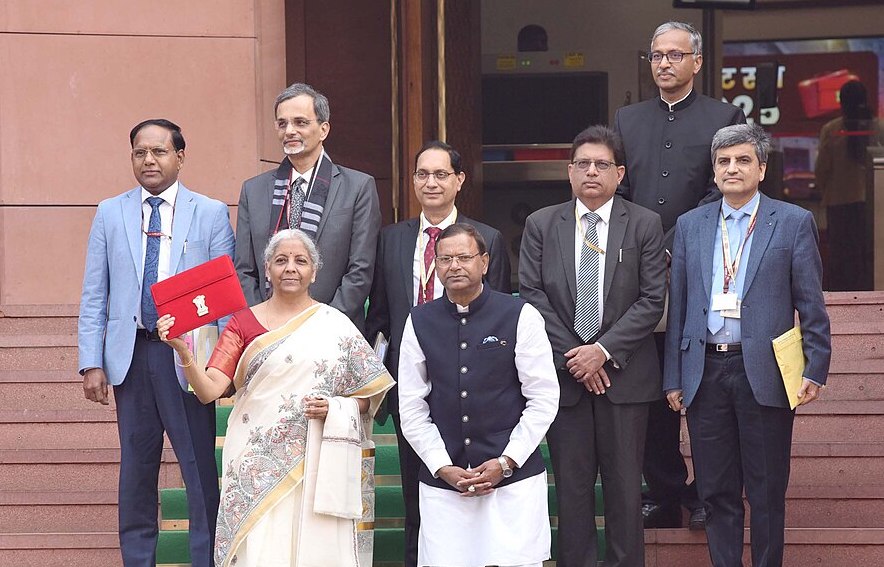
The Government of India Economic Survey 2024-25, released ahead of the Union Budget, provides a detailed analysis of India’s economic performance and future prospects. Among its key insights, the survey highlights the critical role of trust in fostering economic growth, innovation, and scale. It points out that India’s kinship-based societal structure, while fostering strong internal trust, creates a low-trust environment when dealing with outsiders, which inhibits economic expansion and innovation.
Key Insight: Trust Deficit and Its Economic Implications
The survey emphasises that societies structured around communities, groups, and kinship—like India—are often hierarchical and resistant to change. Unlike Western societies, where institutional forces encouraged building relationships with strangers as early as the first millennium, India’s close-knit communities rely heavily on internal trust. This limits the ability to scale economically and necessitates elaborate verification, compliance, and reporting mechanisms. The survey underscores that hierarchical societies are often geared toward maintaining the status quo rather than fostering disruption, change, and innovation.
“Getting out of the way” is not easy for societies that are still structured around communities, groups, and kinship. These societies are largely hierarchical in nature. Various institutional forces propelled people in Western societies to go out and build relations with strangers. This process started as early as the first millennium. As a result, dealing with strangers and building networks and communities with them became necessary. Scale became inevitable and easier. One has to trust to deal with and form relationships with strangers. Written contracts formed the basis of such trust, and other institutional developments followed. However, in close-knit and kinship-based communities such as India, the trust quotient is still high within but low without. That inhibits scale. The low-trust quotient also gives rise to elaborate verification, compliance, and reporting requirements. Further, by and large, hierarchical societies are not made for disruption, change, and innovation but for maintaining the status quo.”
~ Government of India Economic Survey 2024-25
Related Content: Institutional Reforms and Digital Transformation
The survey advocates for institutional reforms to bridge the trust deficit, emphasising the role of digital technologies and transparent systems. It highlights the success of initiatives like Digital India, Aadhaar, and the Unified Payments Interface (UPI) in fostering trust and enabling economic transactions beyond traditional kinship networks. The report also calls for strengthening legal frameworks and contract enforcement to build confidence in dealing with strangers, which is essential for scaling businesses and integrating into global value chains.
Broader Economic Outlook:
The survey projects a GDP growth rate of 7% for FY25, driven by robust domestic demand, infrastructure development, and a resilient financial sector. It acknowledges global challenges such as geopolitical tensions and inflationary pressures but underscores India’s ability to navigate these headwinds through prudent policy measures. The report also highlights the importance of green energy, inclusive development, and job creation as key priorities for sustainable growth.
The Economic Survey 2024-25 serves as a roadmap for India’s economic priorities, balancing optimism with a candid assessment of structural challenges. By addressing the trust deficit and promoting institutional reforms, India can unlock its full potential for scale, innovation, and inclusive growth. As Finance Minister Nirmala Sitharaman prepares to present the Union Budget, the survey’s insights are expected to guide policy decisions aimed at fostering a more dynamic and equitable economy.