By Indira Laisram
New Australian Greens leader David Shoebridge has used his first visit to Melbourne since taking the party’s top job to reach out to Indian-Australian and other multicultural communities, as the Greens prepare for Victoria’s state election on 28 November.
The NSW senator was elected federal leader on 30 September following the resignation of Larissa Waters, who stepped aside because of a worsening kidney condition. His election followed a contested party room ballot, with Victorian Senator Steph Hodgins-May chosen as deputy leader.
The leadership change comes as the Greens seek to broaden their appeal and strengthen their position ahead of the Victorian election. Shoebridge’s message to Indian-Australians centres on a set of familiar concerns: housing affordability, the cost of living, recognition of overseas qualifications and access to essential services.
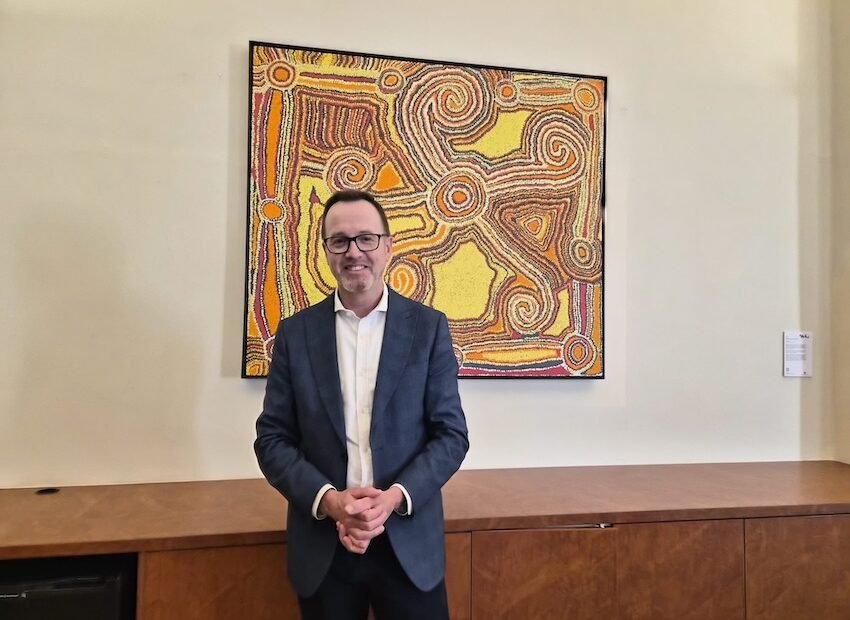
Speaking to The Indian Sun after a community roundtable at the Commonwealth Parliamentary Offices in Melbourne on Friday, Shoebridge said the party’s efforts to connect with migrant communities were already reflected in its candidates.
Asked how the new leadership intended to build stronger relationships with Indian-Australians, he pointed to the Greens’ candidates for the Victorian and New South Wales state elections. Many came from South Asian backgrounds, he said, with the Indian community “incredibly well represented”.
He described that representation as the result of relationships the party had developed with communities over time. But his broader argument was economic.
Rent was increasingly difficult to afford, home ownership was slipping beyond reach for many people, and households were feeling the pressure of supermarket prices.
“We’re all facing the same economic struggles,” Shoebridge said, arguing that the Greens wanted to offer practical responses to pressures shared across communities.
The conversation turned to a longstanding concern among skilled migrants: arriving in Australia with professional qualifications and experience, only to find themselves unable to work in their chosen fields.
Shoebridge said Australia needed a faster and less expensive process for recognising overseas qualifications. He referred to a limited Labor pilot covering electricians and plumbers, arguing that the approach should be extended to professional occupations.
Rather than leaving migrants to negotiate complex and costly accreditation processes themselves, he proposed a government office that could help streamline recognition through professional bodies.
“It’s a terrible waste of people’s talents, experience and skills,” he said, particularly when someone with world-class engineering expertise could not put those abilities to work in Australian industry.
He also called for more apprenticeships and internships to help newcomers gain the local experience employers frequently require.
Healthcare and aged care were another focus of the interview. The Greens and the Coalition have opposed Labor’s proposal to remove additional private health insurance rebates for people aged over 65.
Asked what the Greens would offer older Australians instead, Shoebridge argued that the priority should be strengthening universal public services. Older people should not have to purchase private health insurance to obtain appropriate care, he said, and the public health system needed to be better equipped to meet demand.
He was particularly critical of for-profit aged care, arguing that older Australians could be left vulnerable when commercial considerations influenced the delivery of care.
Shoebridge favoured community-run, not-for-profit and government-owned aged care services, saying they could provide greater security for people as they aged.
He accused Labor, the Coalition and One Nation of relying too heavily on private providers to deliver essential services.
“When you’re older, you’re more vulnerable,” he said, particularly when living in an institution operated for profit rather than primarily for care.
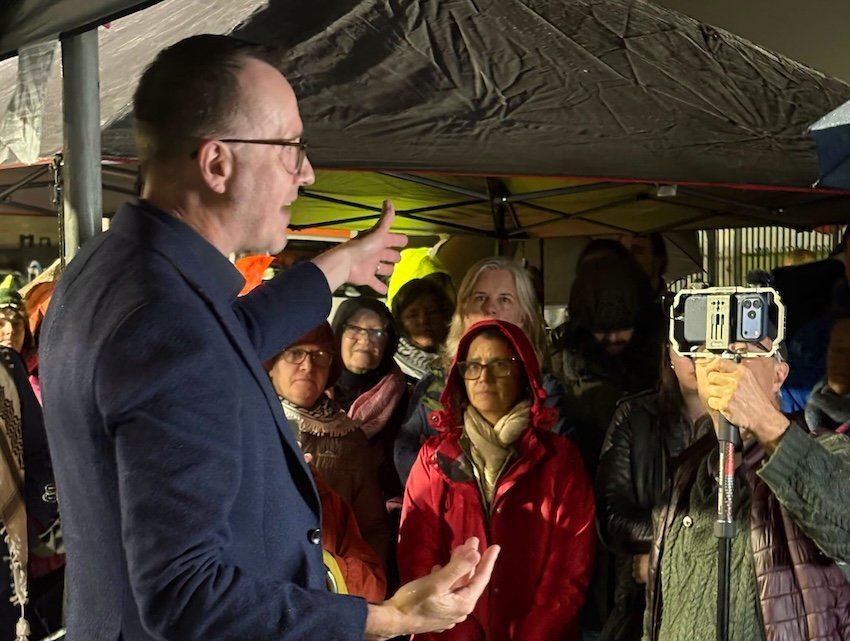
His remarks followed a roundtable attended by representatives of multicultural communities, advocacy organisations and community services. Shoebridge was joined by Hodgins-May and Victorian Greens leader Ellen Sandell at the meeting, one of the new federal leadership team’s first community engagements since taking office.
Shoebridge told participants that the Greens’ commitment to multicultural communities remained firm. He then invited them to explain the issues causing concern and what they wanted the party to address.
The discussion moved across employment, racism, family violence, refugee sponsorship and Australia’s response to the war in Gaza.
A Pakistani-Australian engineer who had previously supported Labor told the meeting that the Greens now better reflected his values.
Shoebridge also raised a recent weekend rally attended by neo-Nazis, saying people should not have to face that kind of intimidation.
Representatives working in family violence prevention expressed concern that specialist services supporting migrant women could be absorbed into larger generalist organisations, potentially weakening the culturally specific assistance those women needed.
Hazara community leaders spoke about families who had remained separated for years while waiting for refugee and humanitarian pathways. One representative said that only six of approximately 100 refugee sponsorship applications had succeeded.
A representative of the Australia Palestine Advocacy Network pressed the Greens leadership about its proposed Red Lines legislation concerning Gaza. The leadership said it hoped to bring the legislation back during the next parliamentary sitting week, with “no backward steps”.
There were questions, too, about the party’s broader economic direction. The Greens leadership acknowledged that it had not yet developed a complete economic or industrial policy.
For Shoebridge, the meeting offered an early opportunity to hear directly from communities the party wants to engage as it enters a new leadership period and an important state election campaign.
Asked what message he wanted to leave with Indian-Australians, he described the community as “colourful and diverse”, with a wide range of political views and economic interests.
He praised its contribution to Australia and said working alongside the community, watching it grow and “kick some real goals”, was one of the great pleasures of his job.
The roundtable also demonstrated the expectations facing the new leadership. Participants had brought specific concerns, from professional accreditation to family reunification, and wanted more than expressions of support.
Shoebridge has begun outlining where he wants to take the Greens. For the communities he met in Melbourne, the next test will be how those commitments translate into policy and action.
Republished from The Indian Sun. Read the original article here.