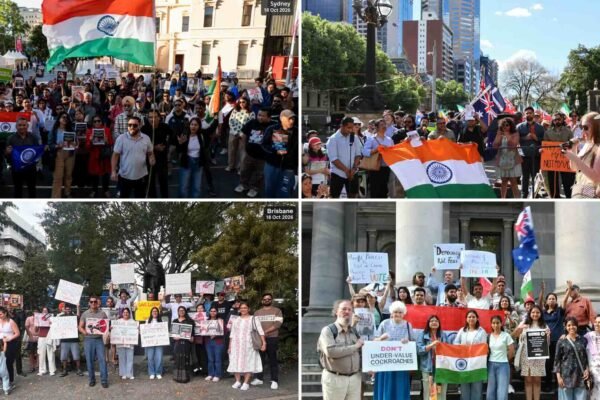
The Australian instrument at the centre of renewed travel warnings is marked “No longer in force” on the federal legislation register. For readers searching for Australia arrival control rules on 22 October 2026, that is the essential starting point: a March order and the law authorising future orders are different things.
The Migration (Arrival Control) Determination 2026 is listed for the period 25 March to 25 September 2026. Its commencement provision brought the restriction into operation the day after registration. It concerned specified people outside Australia with Visitor subclass 600 visas linked in departmental records to Iranian passports.
The register does not support presenting that particular determination as a current blanket prohibition on Indian students, workers or visitors. Nor does its end remove the enabling powers inserted into the Migration Act in March. A practical travel check needs both the current law and any applicable instrument, followed by the person’s own visa conditions.
What does Australia arrival control law allow?
The Migration Amendment (2026 Measures No. 1) Act 2026 introduced powers for temporary restrictions on the arrival of specified classes of temporary visa holders. The amendment received assent on 13 March, with the relevant schedule commencing on 14 March.
The minister must meet the statutory tests concerning overseas events or circumstances and the national interest. The legislation also requires written agreement from the prime minister and the minister responsible for the Diplomatic Privileges and Immunities Act. It is a power to make an instrument, not a statement that every temporary visa is already suspended.
An arrival-control determination identifies the class of people and circumstances to which the suspension mechanism applies. It can therefore have serious consequences for a covered person abroad, but its existence must be established through the actual instrument rather than inferred from a general headline.
What is an arrival-control determination?
It is a legislative instrument made under the Migration Act that can temporarily affect specified temporary visa holders’ ability to use their visas to enter Australia. The enabling Act supplies the power; a determination supplies the particular restriction.
What happened to the March determination?
The federal register now records that determination as no longer in force. Its text established a limited period rather than an indefinite ban. The dated ministerial announcement and older Home Affairs guidance describe the restriction when it began, but they cannot alone establish the rule applying in October.

| Document or check | What it establishes | What it does not establish |
|---|---|---|
| March amending Act | The legal arrival-control powers | That every temporary visa is suspended |
| Determination F2026L00372 | The specified Iran-linked visitor restriction and its period | A current general ban on Indian students or workers |
| Current individual visa check | The visa information and conditions available in VEVO | A guarantee against every future legal change |
An archived warning can remain visible online after a measure ends. Its original accuracy does not make it current. Readers should look for the instrument’s status and operative dates, not only an article’s publication date or an undated screenshot of a department page.
Were Indian students and workers covered by that order?
The March determination described a specified Iran-linked Visitor subclass 600 group, rather than Indian students or workers as general categories. Being a temporary visa holder was not by itself enough to place someone in that class. Passport records, visa subclass, location and the instrument’s exact terms mattered.
That distinction does not mean a future determination could never affect another group. It means a future restriction would need its own lawful basis and actual terms. Speculating that a new class might someday be included is not evidence that it has already been included.
For an Indian student returning home between teaching periods, or a worker taking leave, the relevant question is the rule in force for that person when they travel. A general account of ministerial power cannot settle an individual boarding or entry question.
Who is protected by statutory exceptions?
The legislation contains exceptions, including specified circumstances involving people in Australia when a determination begins, certain humanitarian visa holders and particular family relationships. The precise definitions matter. A casual description such as “has family in Australia” is not an adequate legal test.
A permitted travel certificate is also provided for in the legislation. The power is personal to the minister, and the statute does not require the minister to consider every request. Readers should not treat the certificate as an automatic appeal route or a guaranteed replacement for a visa affected by a determination.
These provisions explain why advice has to address an actual person and instrument. Two travellers on the same flight can have different visa subclasses, family circumstances and conditions. One person’s exemption cannot safely be copied into another’s travel plan.
What should students and workers check before leaving?
Start with the visa currently held, its validity and its conditions. Home Affairs’ Visa Entitlement Verification Online guidance explains that VEVO allows visa holders and authorised organisations to check current visa conditions using information in departmental systems.
Then check current official notices and any instrument relevant to the visa category and circumstances. A visa grant letter is a record of a grant; a dated article is a record of reporting. Neither should be treated as a substitute for checking whether the current position has changed.
Keep the travel document and the department’s records consistent. If a passport or personal circumstance has changed, use Home Affairs’ relevant update process. Where the position is unclear, seek advice about the actual visa rather than relying on a friend’s experience with a different subclass.
The Australia, UK and Canada study comparison provides wider planning context. It cannot determine re-entry rights for an individual traveller, just as a general comparison of destinations cannot override a condition attached to an existing visa.
What should families not infer from the order’s end?
They should not infer that every other visa problem has disappeared. Visa expiry, cancellation, conditions and the status of a pending application are separate issues. Ending a temporary arrival-control instrument does not automatically extend the original period for which a visa was granted.
Nor should families infer that future legal changes are impossible. The accurate position is narrower: the particular March determination is no longer in force, and the statutory power remains part of the legislation. Further restrictions would need to be assessed when, and if, they are actually made.
The visa section covers related changes. When sharing any of that information, retain its dates and qualifiers so that a proposal, an expired instrument and a current rule do not collapse into the same message.
Why does the power remain controversial?
The parliamentary scrutiny issue is the breadth of the minister’s power and the safeguards around its use. The Senate Scrutiny of Bills Committee’s March scrutiny update identified significant concerns about arrival-control powers, including exemption from the usual parliamentary disallowance process. That is a separate question from whether the expired March instrument applies to a traveller today.
The government’s statutory rationale is protecting the integrity and sustainability of the migration system when events abroad increase the risk of temporary visa holders remaining after their permission ends. The scrutiny concern is how exceptional executive powers are constrained and reviewed. Reporting that debate accurately requires explaining both the stated purpose and the accountability question, without treating a committee’s concern as a court ruling that the law is invalid.
Under the Act, the minister must table a determination in each House within two sitting days. Tabling makes the instrument available to Parliament; exemption from disallowance means the ordinary mechanism for either House to overturn an instrument does not apply. Those are distinct procedural safeguards, rather than equivalent forms of parliamentary approval.
What if a traveller holds a bridging visa?
A bridging visa creates a separate travel question that the end of the March order does not answer. Home Affairs’ guidance on travel while holding a bridging visa says only a Bridging visa B allows departure and re-entry while a person waits for an application decision. Holding permission to remain inside Australia is therefore not necessarily permission to return after leaving.
Someone whose substantive visa remains valid may have travel rights under that visa, but its expiry date still matters. Home Affairs says a person anticipating expiry before returning may choose to apply for a Bridging visa B and wait for its grant before travelling. An application receipt is not the grant itself, and a pending application should not be mistaken for a travel facility.
This distinction is especially relevant to a family booking a return journey around an application still being processed. The check is the visa actually held and the travel period it permits, rather than whether the person has submitted another application. The department’s official guidance should be read against the grant notice and current record before tickets become non-refundable.
VEVO can also send evidence of visa conditions to an employer, landlord or another government. Home Affairs distinguishes that service from proof of Australian citizenship, which VEVO cannot confirm. Citizens instead use an Australian passport or citizenship certificate. Checking the right document prevents a visa-information service being asked to establish a status it was not designed to verify.
For a student or worker discussing a journey with an adviser, bring the visa subclass, grant notice, passport details and intended departure and return dates. Those facts allow the adviser to identify the applicable rule. A headline about national powers, however accurately written, cannot supply missing facts about an individual’s permission to travel.
What happens next?
Any new arrival-control determination would need to be checked on the federal register, including its class, commencement, duration and exceptions. For current travel plans, the immediate action is to verify the individual visa and current official guidance, not to assume that the March order continues indefinitely.
How to use this
The instrument status and official guidance were checked on 22 October 2026. Use the Federal Register of Legislation and Home Affairs for current rules, and an appropriately registered migration agent or Australian legal practitioner for a case-specific assessment. Recheck before travel because a legal explanation cannot freeze the position at today’s date.