
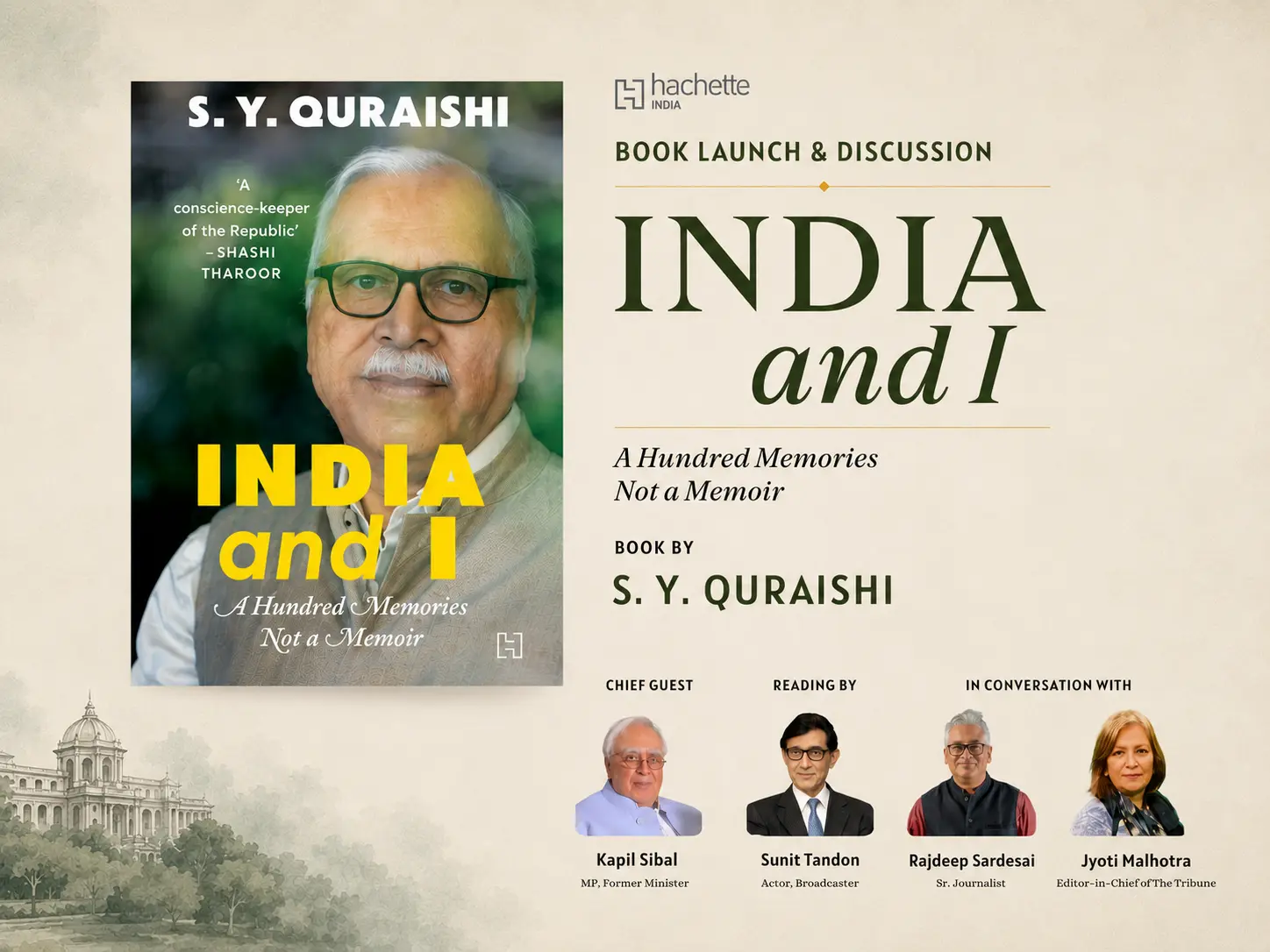
Shashi Tharoor calls him “a conscience-keeper of the Republic.” On 24 July, S.Y. Quraishi, India’s 17th Chief Election Commissioner, brings a hundred of his own stories to the India International Centre in New Delhi.
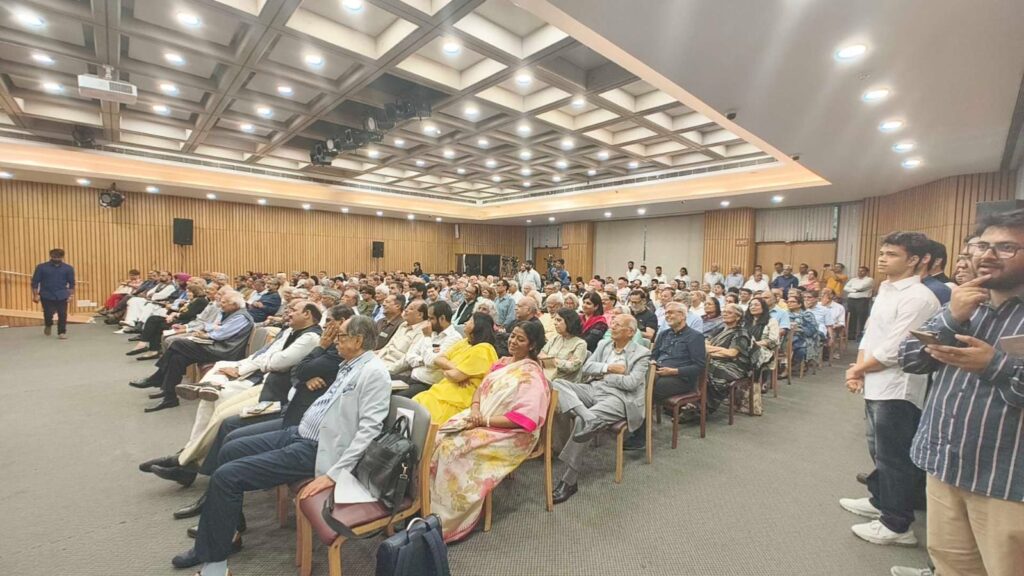
The book launch for “India and I: A Hundred Memories, Not a Memoir,” published by Hachette India, is being held at the IIC’s Multipurpose Hall, with tea from 6 pm and the programme beginning at 6.30 pm. Former Union Minister and MP Kapil Sibal attends as chief guest. Actor and broadcaster Sunit Tandon delivers a reading from the book. Senior journalist Rajdeep Sardesai and Tribune Editor-in-Chief Jyoti Malhotra join Quraishi in conversation.
The book is available for pre-order on Amazon, with copies also on sale at the venue on launch night.
Who is S.Y. Quraishi
Shahabuddin Yaqoob Quraishi, born in Delhi in June 1947, is a 1971-batch IAS officer from the Haryana cadre who served as India’s Chief Election Commissioner from July 2010 to June 2012. He holds a PhD in communications and social marketing, and studied at St. Stephen’s College, Delhi University and Jamia Millia Islamia.
Before he was appointed CEC, Quraishi served as Secretary in India’s Ministry of Youth Affairs and Sports. He is not a first-time author. His earlier book, “An Undocumented Wonder: The Making of the Great Indian Election,” examined the scale and complexity of running the world’s largest democratic exercise. He has also written “Old Delhi: Living Traditions,” a coffee table book on the heritage city’s social and cultural life.
“India and I” marks a departure in form from both. As the subtitle insists, it is not a memoir in the conventional chronological sense, but a collection of a hundred distinct episodes drawn from a public life that placed Quraishi in rooms with prime ministers, foreign heads of government, and the machinery of Indian democracy at its most consequential moments.
What is inside the book
Excerpts published ahead of the launch give a clear sense of the book’s register: intimate, anecdotal, and unafraid to name names.
One passage recounts a 2023 meeting in Dhaka, where Quraishi led a team of election observers that included chief election commissioners from the Maldives, Sri Lanka and Nepal. He describes then-Bangladesh Prime Minister Sheikh Hasina as “visibly strained” during their conversation, months before the student-led protests that would eventually force her to flee to India. According to Quraishi’s account, Hasina spoke bluntly about what she saw as external attempts, particularly by the United States, to engineer a regime change in Bangladesh.
Another excerpt describes a 2012 controversy just weeks before Uttar Pradesh’s Assembly polls, when then-Law Minister Salman Khurshid promised to raise the reservation quota for Muslims in government jobs from 4.5% to 9% if the Congress party won. The Election Commission censured Khurshid for violating the Model Code of Conduct following a complaint from the Bharatiya Janata Party. This decision drew accusations that the Commission had become “arrogant” or “arbitrary.” Quraishi writes that he raised his frustration over the criticism with Harish Khare, then-Prime Minister Manmohan Singh’s press secretary, offering a rare glimpse into how the Commission’s leadership experienced political pressure from within the machinery of government itself.
What Quraishi has said about the ongoing electoral controversy
The book’s launch arrives as Quraishi has been publicly critical of the Election Commission’s current Special Intensive Revision exercise, the same electoral roll revision process that prompted three UN Special Rapporteurs to write formally to the Government of India earlier this month over concerns it disproportionately affected Muslim voters.
In an interview with PTI Videos ahead of the launch, Quraishi said the SIR process was focused more on “exclusion” than accuracy, arguing that the emphasis appeared to be on how many voters could be removed, “as if the EC would get good marks for throwing out as many as it can.” He said the process had “played havoc with democracy” and that free and fair elections had been “disturbed” as a result.
Quraishi’s intervention carries particular weight given his own institutional history: as the man who once ran India’s national election machinery, his public criticism of how his successors are conducting a comparable exercise is a rare instance of a former CEC directly challenging the sitting Commission’s approach.
Why this book matters beyond the launch night
For readers tracking India’s institutional history, particularly around the Election Commission’s independence and its handling of politically sensitive moments, “India and I” offers something rarer than a policy retrospective: a first-person account from inside the room during several of the defining controversies of the past two decades of Indian democracy.
The presence of Rajdeep Sardesai and Jyoti Malhotra in conversation with Quraishi signals the book is expected to generate substantive discussion beyond a ceremonial launch. Both journalists have covered Indian institutional and electoral politics extensively, and their questions are likely to press Quraishi on the same tensions his book excerpts have already surfaced, particularly his account of how the Commission balanced independence against political pressure during his own tenure.
What readers need to know
Where and when is the launch event?
The Multipurpose Hall, India International Centre, New Delhi, on 24 July 2026. Tea is served from 6 pm, with the programme beginning at 6.30 pm.
How can I get a copy of the book?
“India and I: A Hundred Memories, Not a Memoir” is available for pre-order on Amazon. Copies will also be available for purchase at the venue on launch night. It is published by Hachette India, runs to 308 pages, and is priced at Rs 699.
Is this Quraishi’s first book?
No. He previously authored “An Undocumented Wonder: The Making of the Great Indian Election” and “Old Delhi: Living Traditions.” “India and I” is his third book and his first to take a personal, anecdotal form rather than a policy or heritage focus.
What has Quraishi said about the current SIR controversy?
In an interview ahead of the book’s launch, Quraishi criticised the ongoing Special Intensive Revision exercise, saying it was focused on exclusion rather than accuracy and had “played havoc with democracy.” His comments follow a formal communication from three UN Special Rapporteurs to the Indian government raising concerns that the same exercise disproportionately affected Muslim voters.
Who is speaking at the launch event?
Kapil Sibal, Member of Parliament and former Union Minister, attends as chief guest. Sunit Tandon, actor and broadcaster, delivers a reading from the book. Rajdeep Sardesai, senior journalist, and Jyoti Malhotra, Editor-in-Chief of the Tribune, join Quraishi in conversation.