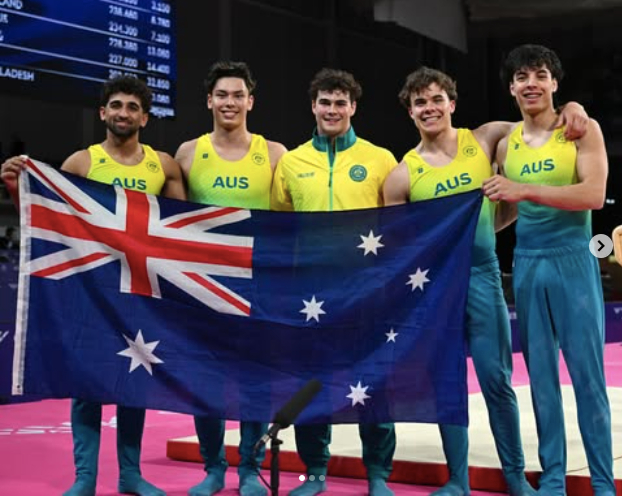
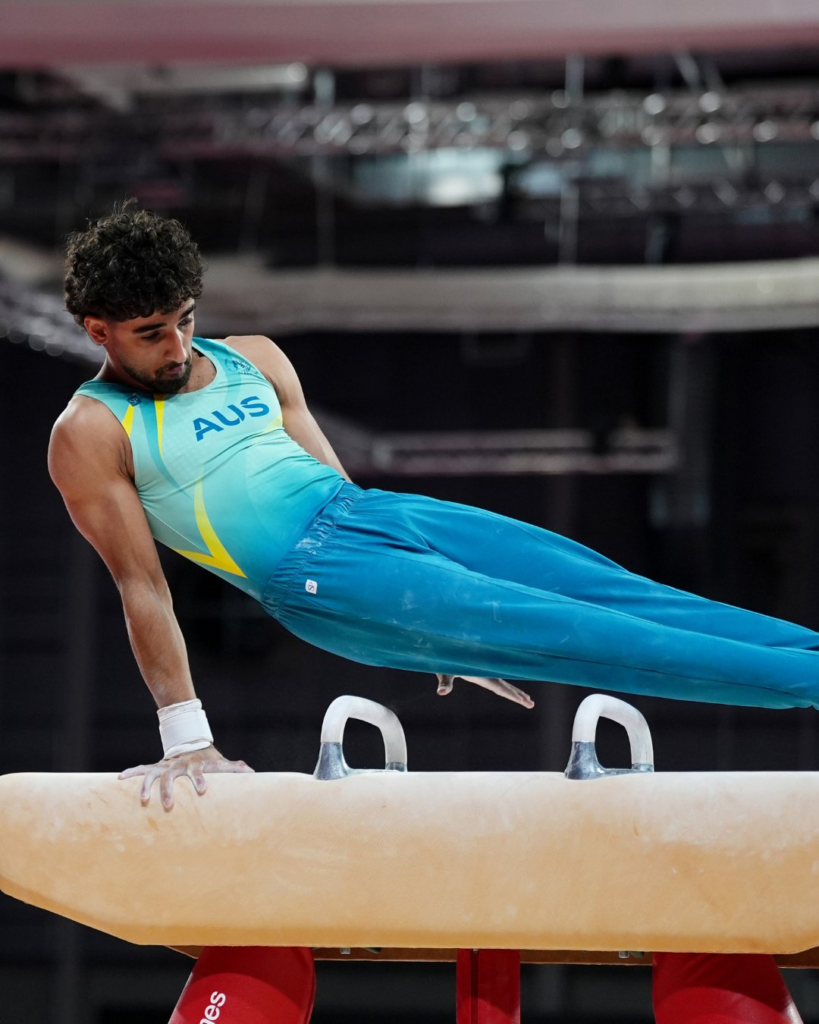
Australia’s men’s artistic gymnastics team won bronze at the Glasgow 2026 Commonwealth Games on 24 July, ending a 16-year wait for a team medal in the sport, with 19-year-old Ritam Malik, the first male gymnast of Indian heritage to represent Australia at the Games, contributing a standout routine on high bar in the qualification round that helped secure the team’s place in the final.
Malik, alongside teammates Jesse Moore, Benjamin Foster, Tru Hagens and James Hardy, combined for a score of 235.650 points in the team final, finishing behind gold medallist Canada, on 241.400 points, and silver medallist England. It was Australia’s first Commonwealth Games team medal in men’s gymnastics since the Delhi Games in 2010.
Four of the five team members, Foster, Hagens, Hardy and Malik, were competing at their Commonwealth Games debut. Moore, a Paris Olympian, was the only member of the squad with prior Games experience.
What happened in the final
Australia opened its qualification campaign on rings, where Hardy, Moore and Malik laid the foundation with routines strong enough to help the team advance. Hardy went on to qualify third for the individual vault final, averaging 13.775 across his two vaults. Moore, drawing on his Paris Olympics experience, scored 13.500 on parallel bars to book his own place in that apparatus final.
Malik delivered what Commonwealth Games Australia’s own recap described as one of Australia’s standout routines of the qualification round, sticking his dismount on high bar to score 13.450 and securing his own place in Tuesday’s individual apparatus final.
In the team final itself, held on the morning of 24 July, host nation Scotland mounted a late challenge that brought back memories of Australia’s heartbreak at the 2022 Birmingham Games, where the team had missed bronze by just 0.650 points after a slip in the closing rotation. This time, with just one point separating the medal positions, Australia held its composure on the final apparatus, the pommel horse, to secure bronze and avoid history repeating.
“You always have that in the back of your mind,” Moore said of the Birmingham memory. “But we had got a job to do. The game’s not over yet.”
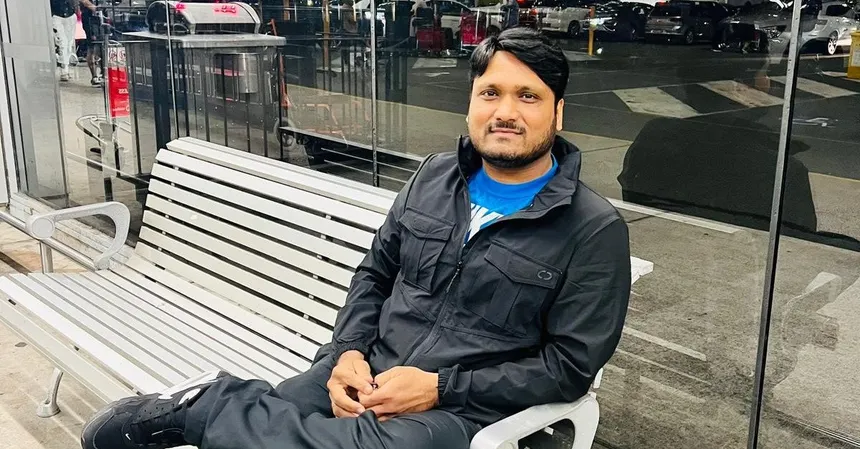
Who is Ritam Malik
Malik, 19, is from Blacktown in Sydney’s north-west, where he trains at Sydney Hills Gymnastics under the coach who has guided him since childhood. He won the All Around title at Australia’s Commonwealth Games Selection Trial earlier in 2026 and finished third at the Continental Championships, results that secured his place on a team already considered a strong medal contender heading into Glasgow.
Gymnastics runs in his family. His father, Rajesh Malik, was a national gymnastics champion in India before introducing his son to the sport. “My father knows this sport, so my selection into the national team is as much his achievement as it is mine,” Malik told Indian Link ahead of the Games. His mother, Nirja, has managed his nutrition, health and the broader logistics of supporting an elite athlete. “They both have sacrificed a lot for me,” he said.
Malik has trained an average of 20 to 22 hours a week since he was around ten years old, a workload that has since increased to nearly 24 to 26 hours across six days a week. He competed at the 2023 Junior World Championships in Antalya and the 2025 Junior World Championships in Manila before making the transition to senior competition ahead of Glasgow.
What is the Commonwealth Games?
What is the Commonwealth Games?
The Commonwealth Games is a multi-sport international event held every four years, contested by athletes from nations and territories of the Commonwealth of Nations, a voluntary association of mostly former British colonies including India, Australia, the United Kingdom, Canada and dozens of other countries. Glasgow 2026 features 257 athletes representing Australia across 10 sports and 6 para sports. The Games are distinct from the Olympics but are considered a major international sporting event within the Commonwealth, with team gymnastics one of several disciplines contested.
Why this matters for Indian-Australians
For Australia’s Indian community, Malik’s achievement carries weight beyond the medal itself. His selection made him the first male athlete of Indian heritage to represent Australia in artistic gymnastics at a Commonwealth Games, a milestone Desi Australia described as reflecting “the growing contribution of multicultural Australians across elite sport.”
Malik continues to pursue his formal education in the United States while training and competing, balancing academic commitments with an elite training schedule that already has him looking well beyond Glasgow. He has spoken about his ambition to compete at the 2032 Brisbane Olympics, where he would have the opportunity to represent Australia at the sport’s highest level on home soil.
What comes next
Malik qualified for the individual high bar apparatus final, scheduled for Tuesday at the Glasgow International Stadium. His performance there will be his next opportunity to add to Australia’s medal count at these Games.
Gymnastics Australia CEO Alistair Edgar said ahead of the Games that the team possessed “the depth and potential to deliver inspiring performances on one of the biggest stages in international sport.” Bronze on debut, and a first team medal since 2010, gives the young squad, of which Malik is a central part, a platform to build toward Los Angeles 2028 and, for Malik personally, a home Olympics in Brisbane in 2032.