
Twenty-eight Indian seafarers came under attack in Iranian waters on Friday, 24 July 2026, and this time, every one of them survived.
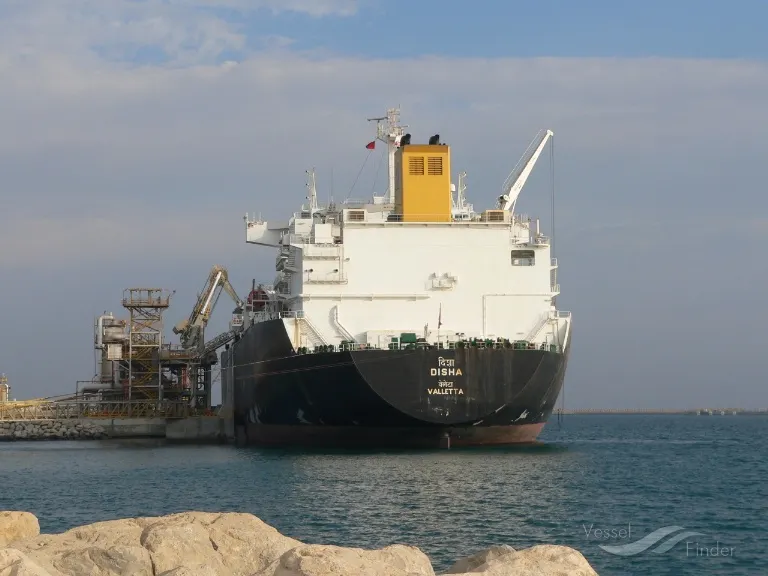
The Mozambique-flagged LPG tanker DISHA, IMO number 8818219, came under attack while sailing in Iranian territorial waters near the Strait of Hormuz. The Indian Embassy in Tehran confirmed the incident and the safety of the crew in an official statement issued the same day.
“The Embassy of India in Tehran is aware that the Mozambique-flagged LPG tanker DISHA came under attack in Iranian territorial waters earlier today. The vessel has 28 Indian crew members on board. The Embassy has been in close contact with the relevant authorities and has confirmed that all Indian crew members are safe,” the statement read.
The embassy said it continues to monitor the situation closely and remains in touch with the concerned authorities.
What happened to the DISHA
The vessel reported coming under attack and issued a distress call near the Strait of Hormuz, according to audio recordings from a public VHF maritime radio channel obtained from a seafarer. No official information has been released on the exact circumstances of the attack, the identity of the attacking party, or any damage sustained by the tanker itself.
The incident occurred amid continuing high tensions involving the United States, Israel and Iran, which have raised sustained concerns over maritime security across the Persian Gulf and the Strait of Hormuz throughout 2026.
What is the Strait of Hormuz?
What is the Strait of Hormuz?
The Strait of Hormuz is a narrow waterway between Iran and the Oman Peninsula connecting the Persian Gulf to the Gulf of Oman. It is the world’s most critical oil transit chokepoint, with approximately one-fifth of global oil supply and significant volumes of liquefied natural gas passing through it. Tanker traffic through the strait has dropped sharply since mid-2026 as escalating US-Israel-Iran tensions have made the route increasingly dangerous for commercial shipping, with vessels either following Iran-controlled routing or avoiding the region entirely.
The second attack on Indian seafarers in three weeks
The DISHA attack is not an isolated event. It is the second confirmed attack on a vessel with Indian crew in the Strait of Hormuz region within a month.
On 12 July 2026, the container ship MV GFS Galaxy was attacked by Iran’s Islamic Revolutionary Guard Corps as it transited the Strait of Hormuz roughly 17 kilometres east of the Omani coast. Of the 11 Indian nationals on board that vessel, 10 were rescued by the Royal Navy of Oman. The eleventh, Heramb Karmarkar, a 30-year-old marine engineer from Pune, was killed. His body was recovered by Omani authorities 60 hours after the attack.
The two incidents, less than two weeks apart, illustrate how the current phase of US-Israel-Iran tension has turned the Strait of Hormuz into an active risk zone for the merchant shipping industry, and specifically for the tens of thousands of Indian seafarers who crew a significant share of the world’s commercial fleet transiting the region.
Why Indian seafarers are so exposed
India is one of the world’s largest suppliers of maritime crew, with several hundred thousand Indian nationals employed on commercial vessels globally at any given time. A substantial proportion of the world’s tanker and container ship fleet, regardless of the flag state or company ownership, carries Indian crew members in engineering, deck and support roles.
That global presence means Indian nationals are numerically overrepresented among casualties and near-misses whenever a commercial vessel is attacked in a contested waterway, simply because Indian crew are present on such a high proportion of the ships transiting these routes in the first place. Neither the DISHA nor the GFS Galaxy is an Indian-flagged or Indian-owned vessel. Both carry large Indian crews because that is standard practice across the global shipping industry.
The Indian government’s pattern of response
The Indian government’s response to the DISHA attack follows a well-established pattern the Ministry of External Affairs has repeated across previous maritime incidents in the Gulf region: rapid confirmation through the relevant embassy, direct communication with local authorities, and public reassurance of crew safety, followed by continued monitoring.
This pattern has recurred through several past crises in the same waters, including previous tanker seizures during earlier periods of Iran-West tension. What distinguishes the current situation is the frequency: two significant attacks on Indian-crewed vessels within roughly two weeks reflect an escalation in risk that goes beyond the isolated seizure incidents of past years.
External Affairs Minister S. Jaishankar had addressed the broader West Asia situation the day before the DISHA attack, reflecting the sustained level of diplomatic attention the crisis is receiving from New Delhi even as the situation continues to develop.
What this means for Indian seafarers and their families
For the families of Indian seafarers currently employed on vessels transiting the Persian Gulf and the Strait of Hormuz, the frequency of these incidents in July 2026 is a legitimate and growing source of concern. Maritime unions including the Forward Seamen’s Union of India, which played a central role in confirming details during the GFS Galaxy incident, remain a key point of contact for families seeking information during these events.
The Indian Embassy in Tehran and the Indian Embassy in Muscat are the relevant consular points of contact for incidents in Iranian and Omani waters respectively. Shipping companies employing Indian crew on vessels transiting the region are expected to provide updated routing and safety guidance as the security situation develops.
What Indian seafarers’ families need to know
Is the LPG tanker DISHA an Indian-owned or Indian-flagged vessel?
No. The DISHA is registered under the Mozambique flag. It carries 28 Indian crew members as part of its operating crew, which is standard practice across international commercial shipping given India’s position as one of the world’s largest suppliers of maritime labour.
Has the attacking party been identified?
No official confirmation has been made public as of the date of publication regarding who carried out the attack on the DISHA or the precise circumstances involved. The Indian Embassy in Tehran has confirmed the attack occurred and that all crew are safe, without detailing the attack’s origin.
How does this incident compare to the GFS Galaxy attack on 12 July?
Both incidents involved non-Indian-flagged commercial vessels with substantial Indian crews attacked while transiting the Strait of Hormuz region during the current period of elevated US-Israel-Iran tension. The GFS Galaxy attack, attributed by US Central Command to Iran’s Islamic Revolutionary Guard Corps, resulted in one Indian fatality. The DISHA attack resulted in no reported casualties, with all 28 Indian crew confirmed safe.
What should families of seafarers currently in the region do if they are concerned about safety?
Contact your family member’s employer or manning agency directly for the most current routing and safety information. The Forward Seamen’s Union of India and the National Union of Seafarers of India are the primary trade union bodies representing Indian maritime crew and can provide guidance. For incidents specifically in Iranian waters, the Indian Embassy in Tehran is the relevant consular authority.
Is it currently safe for commercial vessels to transit the Strait of Hormuz?
Maritime security agencies have reported significantly reduced tanker traffic through the strait since the current escalation began, with many vessels avoiding the route or following alternative Iran-approved corridors. The frequency of recent attacks on commercial vessels with Indian crew reflects an elevated risk environment that shipping companies and maritime authorities continue to monitor closely.