

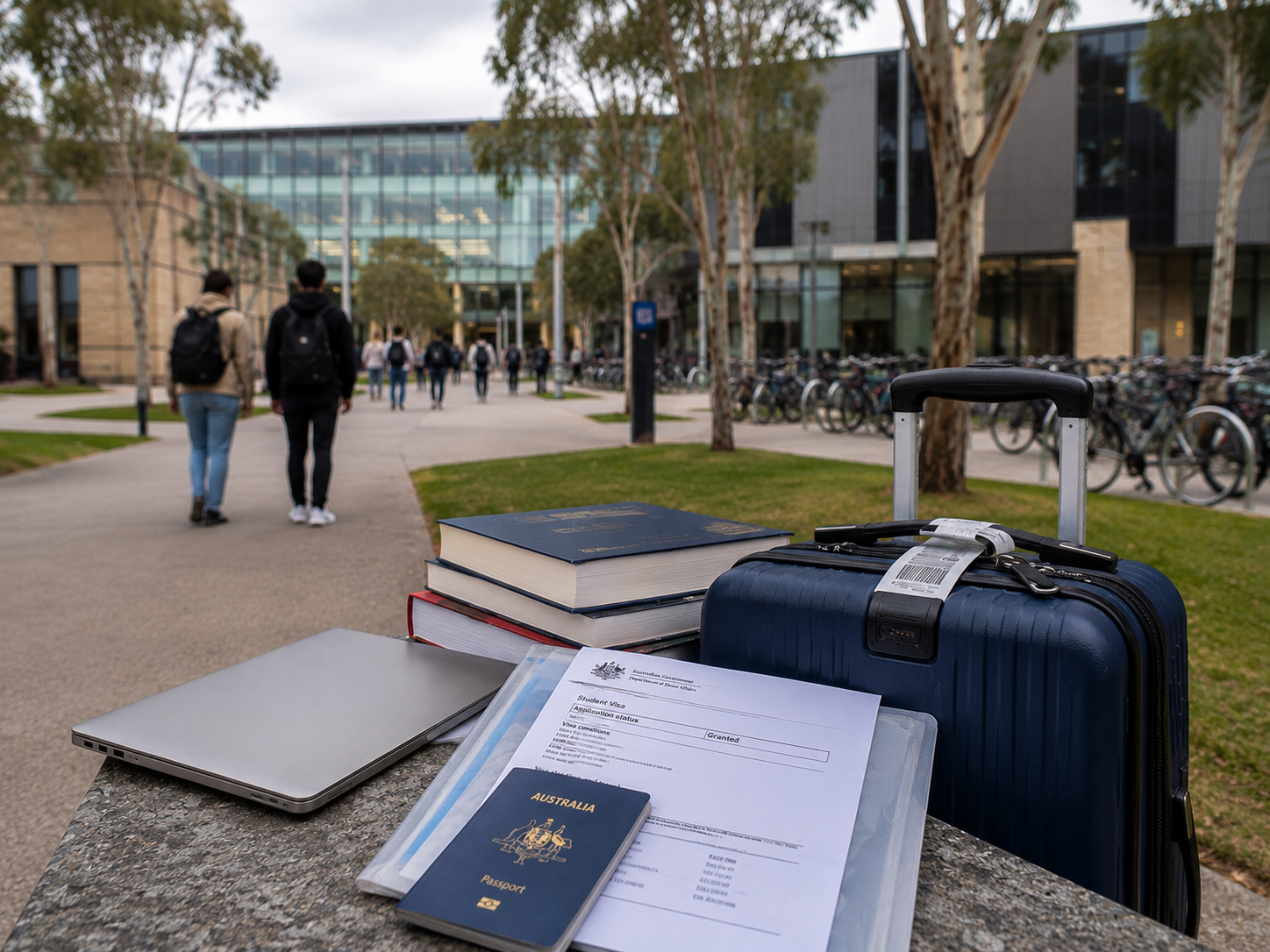
295,000. That is the number Australian Education Minister Jason Clare, Skills Minister Andrew Giles and Assistant Minister Julian Hill confirmed on 3 July 2026 as the National Planning Level for international student commencements in 2027. It is the same figure as 2026. For Indian students and their families in Australia, the UK, the UAE, the US, New Zealand and Canada, the unchanged headline number tells only part of the story.
Current commencements are already running 8% below the same period in 2025 and 13% below 2019 levels. The 295,000 cap has not been hit this year. The government confirmed no active provider will receive a lower allocation in 2027 than in 2026.
“International education is an incredibly important export industry for Australia, but we need to manage it sustainably,” Clare said at the announcement. “This is about making sure international education supports students, universities and the national interest.”
What the National Planning Level actually means
What is the National Planning Level?
Australia’s National Planning Level is not a hard refusal limit on student numbers. It is a visa processing priority system. Every education provider, university, TAFE and vocational college receives an individual allocation of new offshore student commencements. Once a provider reaches 80% of its allocation, new applications linked to that provider are moved to Priority 2 processing. Once it exceeds its allocation by 15%, applications move to Priority 3. Priority 1 applications are processed in two to six weeks. Priority 3 applications can take ten to fourteen weeks. The NPL determines where in that queue your application sits.
The government has managed international student numbers through administrative settings since its earlier attempt to legislate caps failed to pass the Senate. The 2027 arrangements continue that approach, with the Australian Tertiary Education Commission working institution by institution to ensure universities meet but do not exceed their individual allocations.
TAFE students remain exempt from the NPL under the government’s “TAFE at the Heart” policy. Students from Pacific nations and Timor-Leste, Australian Government scholarship holders and certain foreign government scholarship holders also remain exempt and receive priority processing.
Where Indian students stand
India is the second-largest source country for international students in Australia, after China. Indian nationals accounted for 17% of all international students in Australia in the year to December 2025, with more than 120,000 Indian students currently enrolled across the country.
The unchanged cap does not change the structural pressures Indian applicants already face entering 2027. Ministerial Direction 115, which took effect in November 2025, reclassified India as an Evidence Level 3, or high-risk, country. That reclassification means Indian applicants face stricter documentation requirements at the point of assessment, regardless of which priority tier their application sits in.
Visa fees stand at AUD 2,000 for a student visa and AUD 4,600 for the Temporary Graduate visa from March 2026. Living cost requirements are set at AUD 29,710 annually. These figures apply to all international students and have not been changed by the 2027 NPL announcement.
The priority processing system means the institution an Indian student applies to matters as much as the application itself. Universities such as UNSW and RMIT reported 15 to 20% drops in international intakes for Semester 1 2026, partly because high-demand institutions hit their allocation thresholds faster, pushing later applicants into slower processing tiers. Regional universities and providers that have not reached their thresholds continue to offer Priority 1 processing.
What changed, what held, and what the industry wanted
| Element | Status for 2027 |
|---|---|
| National Planning Level | 295,000 — unchanged from 2026 |
| Provider allocations | No active provider receives less than 2026 |
| TAFE exemption | Continues under “TAFE at the Heart” policy |
| Pacific/Timor-Leste exemption | Continues with priority processing |
| India Evidence Level | Level 3 (High Risk) — unchanged |
| Student visa fee | AUD 2,000 — unchanged |
| Temporary Graduate visa fee | AUD 4,600 from March 2026 — unchanged |
The International Education Association of Australia had sought a moratorium on risk rating changes ahead of the September 2026 assessments. That has not been granted. The government’s position, as stated by Assistant Minister Hill, is that it will “not back off from managing the size and the shape of the onshore international student market.”
The university sector had hoped for an increase in the NPL to address revenue pressure from declining commencements. The government’s response, implicit in the 3 July announcement, is that the system is not underutilised enough to justify expansion. Commencements are tracking below the cap on their own.
What this means for Indian students applying for 2027
The practical implications for Indian students considering Australia for 2027 are clearer now that the planning level is confirmed.
The cap itself is not the binding constraint for most applicants. Current commencements are running well below 295,000. The binding constraints are the provider-level thresholds, the Evidence Level 3 documentation requirements, and the fee structure. An Indian applicant going to a high-demand urban university that fills its allocation quickly faces slower processing regardless of the NPL headline figure.
For the July 2026 intake and for 2027 February applications, the timing of lodgement and the choice of provider remain the two variables most within an applicant’s control. Applications linked to providers that have not reached their prioritisation threshold receive Priority 1 processing, the fastest tier. Applications to regional universities, which historically manage their allocations more conservatively, carry a lower risk of being deprioritised.
The Genuine Student test, which replaced the older Genuine Temporary Entrant framework in March 2024, continues to apply. Australian government data confirms that applications which demonstrate a clear academic rationale, strong financial evidence and consistent post-study intentions are processed more smoothly through the system.
What Indian students need to know before they apply
Does the unchanged 2027 cap mean it is harder or easier to get a student visa?
Neither directly. The NPL is a processing priority tool, not a hard limit. The unchanged figure means providers will not receive lower allocations than in 2026, which is stable news for students. The tighter documentation requirements under Evidence Level 3 and the provider threshold system are the more practical factors determining individual outcomes.
What is Evidence Level 3 and how does it affect Indian applicants?
India’s classification as an Evidence Level 3, or high-risk, country means Indian student visa applicants must provide full financial documentation and meet stricter Genuine Student test requirements. It does not mean automatic refusal. It means applications face more thorough scrutiny and incomplete or weak applications face a higher refusal risk. Check the current Department of Home Affairs requirements at immi.homeaffairs.gov.au before applying.
Which universities offer Priority 1 processing for Indian students?
Priority 1 is available at any provider that has not yet reached 80% of its New Overseas Student Commencement allocation. This is not a fixed list and changes throughout the year as providers fill their allocations. Apply early and check your chosen provider’s current status through the Department of Home Affairs student visa processing priorities page before lodging.
What does the Temporary Graduate Visa cost in 2026 and is it changing?
The Temporary Graduate visa starts from AUD 4,600 from March 2026 for most applicants. This figure was not changed by the 3 July 2027 NPL announcement. Check current fees at immi.homeaffairs.gov.au before applying.
When should an Indian student apply for a 2027 February intake?
Education agents advise lodging applications as early as possible, well before peak season from May to July when application volumes spike and providers are more likely to reach their allocation thresholds. A complete application under the Genuine Student framework, with full financial documentation meeting the AUD 29,710 annual living cost threshold, is the strongest hedge against delays.