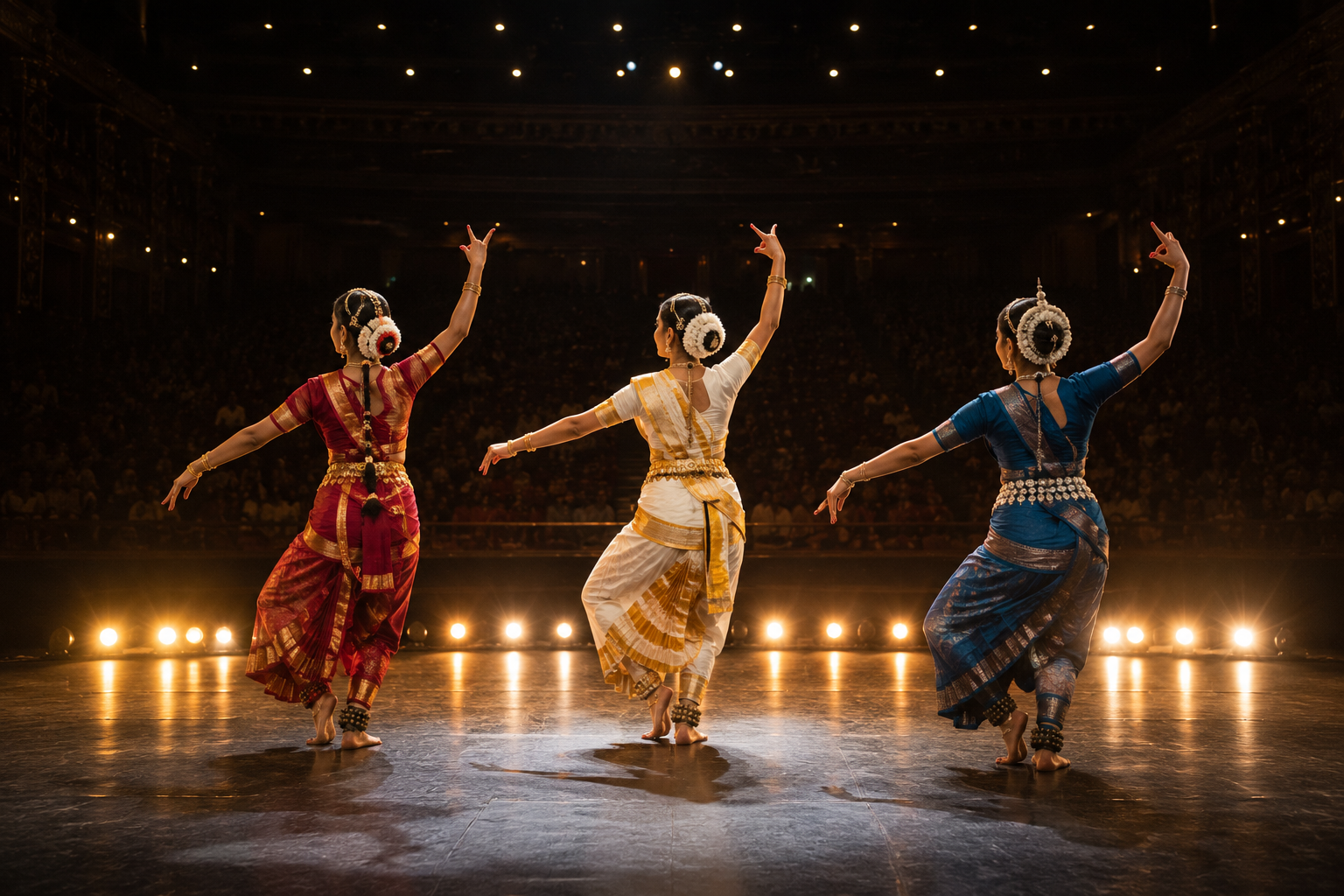
Carnegie Hall has hosted the Beatles, Maria Callas and Miles Davis. On Sunday, 5 July 2026, it hosted something different: more than 300 Indian classical and folk dancers performing across a single afternoon, representing the breadth of a civilisation’s movement traditions on a Manhattan stage.
The All-Indian Dance Festival 2026 was produced by Three Aksha, a Philadelphia-based non-profit dance organisation founded by Bharatanatyam dancer and educator Viji Rao, in partnership with the Consulate General of India in New York. The timing was deliberate. America had celebrated its 250th anniversary the day before. The festival, as Rao framed it, was the diaspora’s answer: a demonstration that immigrant culture does not simply assimilate. It performs.
What filled Carnegie Hall on Sunday
The programme drew dance schools and companies from across the United States, presenting forms that span the length and breadth of the Indian subcontinent.
The Nrithya Samarpanam School of Dance, led by artistic director Gayathri Sudhakar, opened with Sarvam Shiva Mayam, a classical jugalbandi combining Bharatanatyam, Kuchipudi and Mohiniyattam, three distinct southern forms performed together in a single composition inspired by the cosmic dance of Lord Shiva.
The Odisha Society of the Americas, led by artistic director Rashmi Rajaguru, presented Odissi Parikrama, described as a journey from a guru’s blessing to divine liberation, celebrating Odisha’s spirit through one of India’s oldest classical forms.
Lahari Abbaraju, an eleventh grader from Texas and a disciple of Guru Shrimati Hemamalini Chavali, performed a solo Kuchipudi titled Nandakadhara: Betrayal Undone. She was among the youngest soloists on the Carnegie Hall stage.
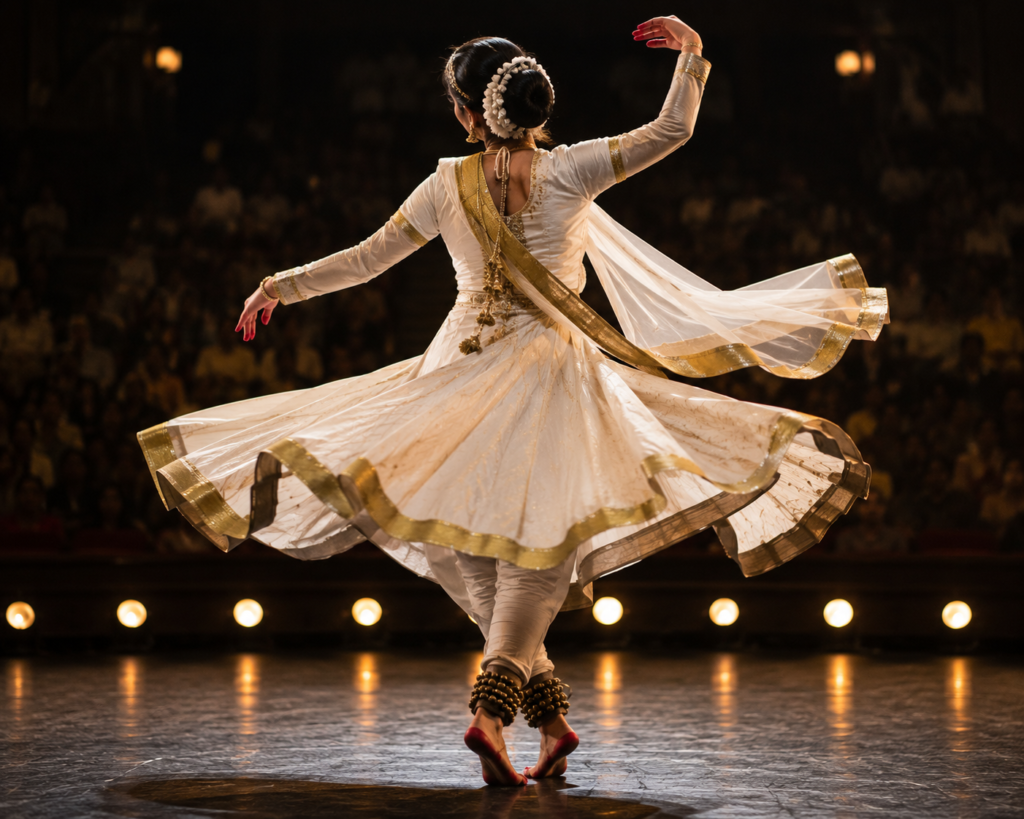
Students of Nupoor Dance School, led by artistic director Radhika Joshi, performed Teentaal, a Kathak piece built on 16 beats and one of the form’s most technically demanding rhythmic cycles.
What is Indian classical dance?
India recognises eight classical dance forms under the Sangeet Natak Akademi, each originating in a specific region and rooted in ancient Sanskrit performance theory. Bharatanatyam originated in the temples of Tamil Nadu. Kathak developed in the courts of northern India and tells stories through footwork and facial expression. Kuchipudi originated in Andhra Pradesh. Odissi is from the temples of Odisha. Mohiniyattam is from Kerala. Each form has its own grammar of movement, hand gestures, costume, and musical tradition. All are performed in diaspora communities worldwide, kept alive by Indian families who enrol children in dance schools as a form of cultural and linguistic connection to India.
Why this festival, and why now
The All-Indian Dance Festival at Carnegie Hall is not a one-off. Three Aksha, founded by Viji Rao, has built the festival as an annual platform specifically designed to present Indian classical and folk forms on mainstream American arts stages, rather than in community halls and temple auditoriums where most diaspora dance is seen.
The Consulate General of India in New York’s partnership signals an institutional endorsement that goes beyond cultural goodwill. The consulate has increasingly used cultural programming as soft diplomacy, presenting Indian artistic excellence to American mainstream audiences at a moment when the Indian-American community, 5.2 million strong, is one of the most economically and politically influential diaspora communities in the United States.
The July 4 weekend timing amplified that framing. America’s 250th anniversary drew national attention to the country’s immigrant history and the cultures that built it. The festival arrived the following day with a specific argument: Indian classical dance has been practised and preserved on American soil for decades, passed from teachers to students in living rooms and community centres in every state, and it belongs on Carnegie Hall as much as it belongs in Chennai or Jaipur.
What the stage represented for the diaspora
For Indian families across Australia, the UK, the UAE, the US, New Zealand and Canada, the cultural stakes of the Carnegie Hall festival are recognisable. The question of how to transmit classical Indian arts across generations, in countries where the forms have no institutional support and no state funding, falls almost entirely on diaspora dance schools, parent communities and teachers like Viji Rao and Gayathri Sudhakar.
Lahari Abbaraju’s solo performance is the clearest illustration of that transmission. An eleventh grader from Texas, she has trained long enough to perform a solo Kuchipudi at Carnegie Hall. That training happened in the United States, under a guru from India, in a diaspora context that has no equivalent in the Indian school system or the American one.
The festival did not resolve any of the structural questions around funding, recognition or institutional support for classical Indian arts in diaspora communities. What it did was put those arts, and the people who carry them, on one of the world’s most visible stages.
Three Aksha has not announced the dates for the All-Indian Dance Festival 2027.