
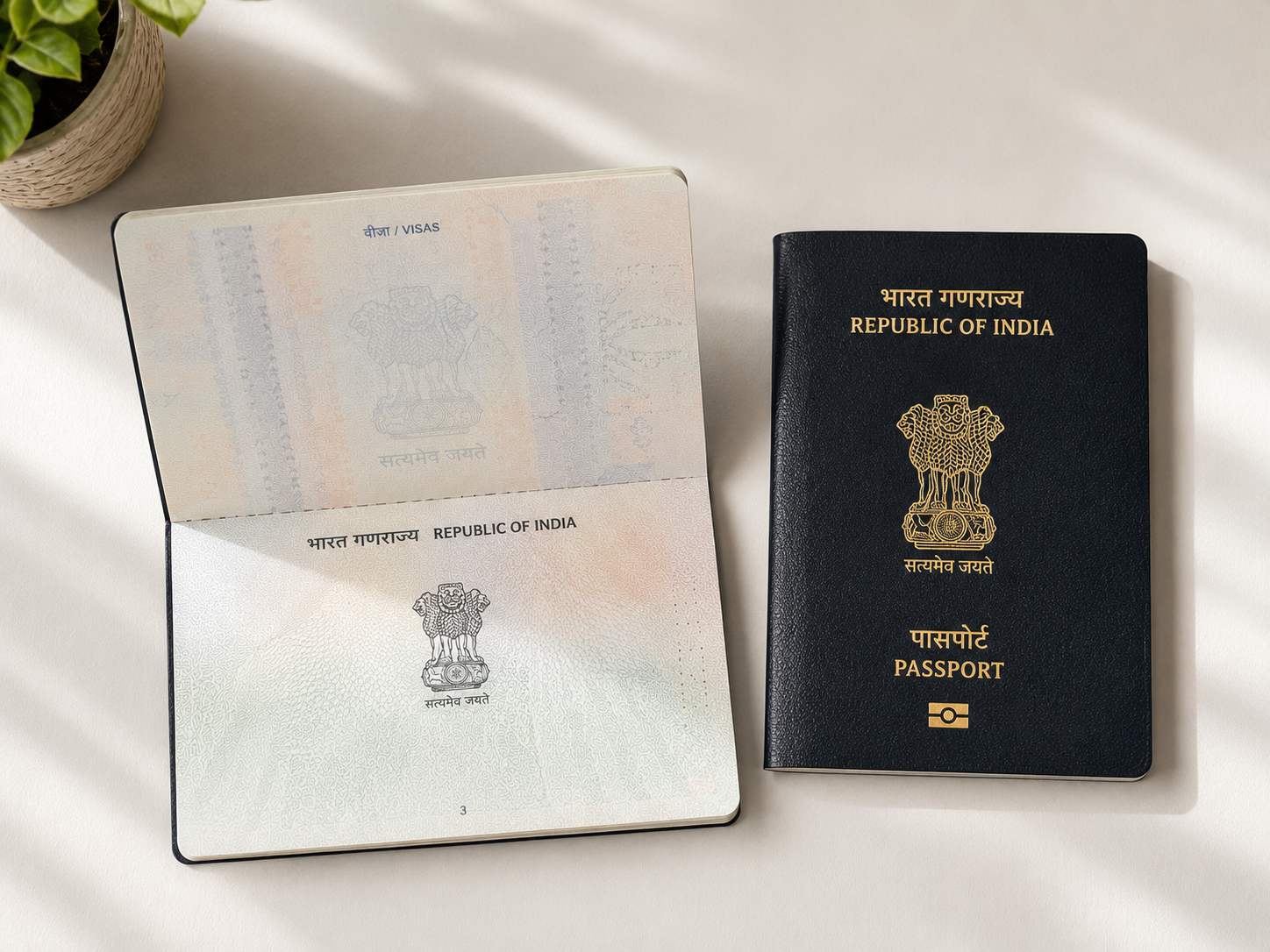
1.39 crore Indian passports in the last financial year alone. On the day it celebrated that milestone, the Ministry of External Affairs told the country that not one of those documents proves the holder is an Indian citizen.
The statement, made by an MEA official at the 14th Passport Seva Divas on 24 June 2026, was legally accurate and politically explosive. “A passport is a travel document that attests nationality when an Indian is abroad,” the official said, “and should not be construed as proof of citizenship.” Within hours, the clarification had ignited a debate across social media and opposition benches about what, precisely, proves that an Indian is Indian.
For the diaspora in Australia, the UK, the UAE, the US, Canada and New Zealand, the question is not abstract. It has direct consequences for OCI applications, consular services, and the paperwork trail that every naturalised Indian must maintain.
Why the MEA said it now
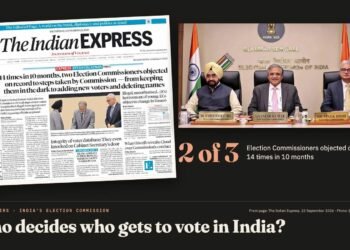
The passport clarification did not arrive in a vacuum. It came months into a national argument about citizenship documentation triggered by the Election Commission’s Special Intensive Revision (SIR) of electoral rolls, first conducted in Bihar and now underway in Punjab, with a final roll publication date of 1 October 2026.
The SIR’s logic is straightforward: voter rolls should contain only Indian citizens, and the Commission is entitled to verify that. What the exercise exposed is that most Indians do not possess a document that conclusively establishes their citizenship. Aadhaar proves identity and residence. A voter ID proves prior registration. The Supreme Court ruled last year that neither is proof of citizenship.
The passport, many assumed, was different. The MEA has now confirmed it is not, at least not in the strict legal sense. A passport is issued only after verification of citizenship, but it records the outcome of that verification. It does not constitute the underlying legal status.
The Supreme Court, in its judgment of 27 May 2026, upholding the SIR’s constitutional validity, added a critical qualification: the Election Commission’s role is confined to determining eligibility for electoral rolls. It cannot adjudicate citizenship. That can only be determined by a legally competent authority under the Citizenship Act.
What is actually proof of Indian citizenship
What is the Citizenship Act, 1955? India’s foundational law governing who is a citizen. It recognises five routes to citizenship: by birth, descent, registration, naturalisation, or territorial merger. It does not prescribe a single universal document as conclusive proof for ordinary citizens born in India. Most Indians who are citizens by birth have never been issued a formal citizenship certificate.
There is no citizenship card in India. The country has never created one.
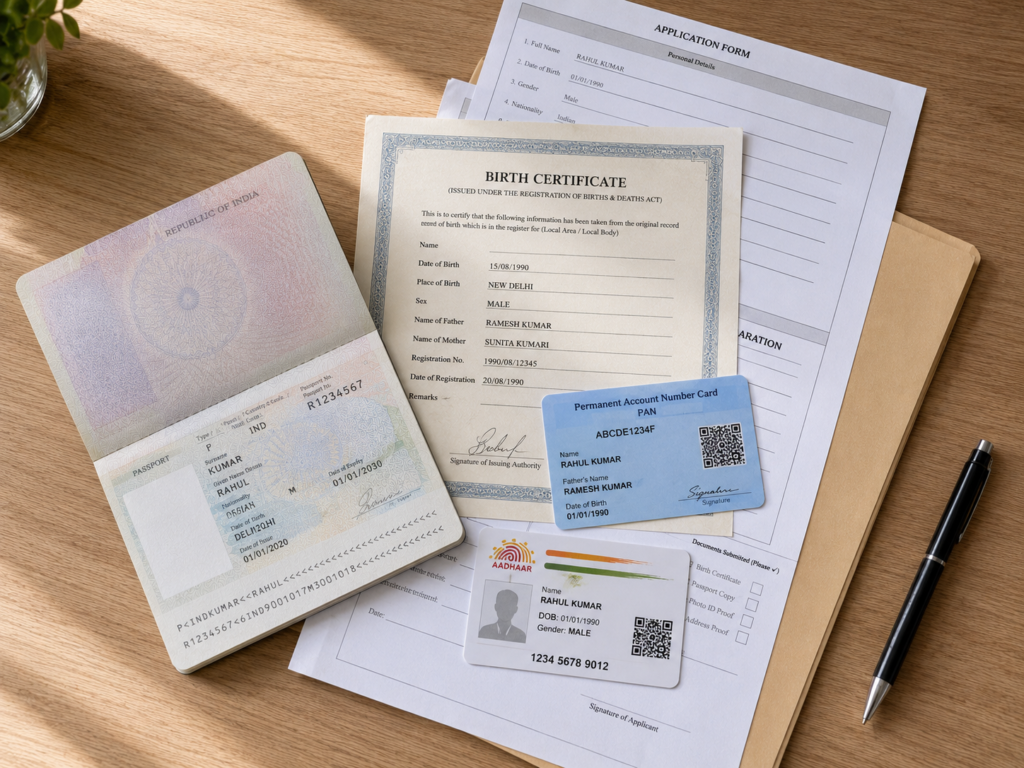
According to legal experts and the Ministry of Home Affairs, the most definitive documents are a Certificate of Naturalisation or a Certificate of Registration, issued under Sections 5 and 6 of the Citizenship Act, 1955, by the MHA. These exist for people who acquired citizenship through a formal legal process. For the vast majority of Indians who are citizens by birth, the foundational document is a birth certificate, but with caveats tied to the year of birth.
Those born before 1 July 1987 are citizens by birth. Those born between 1 July 1987 and 2 December 2004 must show at least one parent was an Indian citizen at the time of birth. Those born on or after 3 December 2004 must show one parent is a citizen and the other is not an illegal migrant. In each case, the birth certificate requires supporting parental documents to carry full legal weight.
The political reaction was swift. Aaditya Thackeray of Shiv Sena (UBT) posted on X: “If the MEA believes a passport is not a document of citizenship, what do the police verify before granting a passport? Does our country give passports as travel documents to non-Indians as well?” Lyricist Javed Akhtar called the position “absurd.” Others pointed out that Aadhaar, Voter ID, PAN card, and passport are all excluded from conclusive proof of citizenship and asked publicly which document remains.
The MEA’s implicit counter-argument is that a passport is issued only after rigorous due diligence drawing on documents from multiple government agencies. The verification is thorough. The passport records that verification took place. But it is the product of the process, not the process itself.
What it means for NRIs who have naturalised
This is where the statement moves from political noise to practical consequence, particularly for Indians in Australia, the UK, the US, Canada and New Zealand who have acquired foreign citizenship.
Under Article 9 of the Indian Constitution and Section 9 of the Citizenship Act, 1955, Indian citizenship ends automatically on the day a person voluntarily acquires a foreign nationality. No form needs to be filed. The loss is a matter of law from the moment of naturalisation.
What the Passports Act, 1967, adds is a separate, enforceable obligation: the Indian passport must be physically surrendered and cancelled. The document issued on surrender is the Surrender Certificate, sometimes called the Renunciation Certificate. They are the same thing.
This certificate is not optional paperwork. Without it, an Indian mission will not process an OCI application, issue a fresh Indian visa, or clear most consular services. It is the single most common reason OCI applications are returned unprocessed.
| Naturalisation date | Surrender process |
|---|---|
| Before 1 June 2010, passport expired before 1 Jan 2005 | Simplified process, modest fee (typically US$20–25) |
| Before 1 June 2010, passport still valid at naturalisation | Standard process, confirm fee with your mission |
| On or after 1 June 2010 | Graduated penalty regime; delays attract fees that can reach several hundred US dollars |
The requirement applies in full to anyone who naturalised after 1 June 2010. Penalties for delayed surrender are calculated on the basis of how long the Indian passport was held or used after acquiring foreign citizenship. Confirm the current fee schedule with your jurisdictional High Commission or consulate before applying.
Once the Surrender Certificate is in hand, the path to an Overseas Citizen of India card opens. The OCI is not citizenship. It is a lifelong, multi-purpose visa for foreign nationals of Indian origin, granting broad rights in India, including parity with NRIs in financial and educational matters, but excluding voting rights and government employment. OCI cardholders must reissue their card once upon receiving their first foreign passport after age 20. The OCI must remain linked to the current foreign passport at all times.
For NRIs who are still Indian citizens living abroad on work or student visas and have not naturalised, none of this applies immediately. Their Indian passport continues to serve its function as a travel document and identity document for consular purposes. The MEA’s clarification changes nothing in their day-to-day dealings. What it does change is the longer-term understanding of what they hold: a strong, rigorously issued document that attests their right to travel, not a citizenship certificate.
The gap no one has solved
The MEA’s statement has brought into sharp focus a problem that administrators have known about for years. India has hundreds of millions of citizens by birth who do not hold, and have never been issued, a document that conclusively proves that status in law. Birth certificates help, but they require supporting parental evidence that many families from earlier decades did not retain.
As of June 2026, the Ministry of Home Affairs has not finalised any nationwide guidelines or a definitive list of documents that would constitute universal citizenship proof under a potential future NRC exercise. The government constituted a High-Level Committee on Demographic Changes in May 2026, but no framework has been notified.
The MEA’s clarification was not a new law. It was an accurate public statement of what the law has always said. The debate it triggered is real, but the practical position for most NRIs is unchanged. The passport remains the most important document they carry. It just does not do the one thing many assumed it did.
For NRIs who have naturalised and have not yet obtained a Surrender Certificate, that is the action item from this story. For those still holding Indian citizenship, the item is simpler: retain the birth certificate and the parents’ documents. Keep them somewhere they can be found.
A few questions to clear
Does the MEA statement mean my Indian passport is less valid for travel? No. An Indian passport remains a fully valid international travel document. The MEA’s clarification addresses its legal status as proof of citizenship under Indian law, not its recognition by other countries or its function at a border.
I naturalised in Australia three years ago and still have my Indian passport. What should I do? You must surrender the Indian passport to the Indian High Commission or through the designated VFS centre and obtain a Surrender Certificate. This is a legal obligation under Section 12 of the Passports Act, 1967. You cannot apply for an OCI card without it. Delays attract penalties; confirm the current fee schedule with your jurisdictional mission before applying.
Is an OCI card a form of Indian citizenship? No. An OCI card is a lifelong, multi-purpose visa for foreign nationals of Indian origin. It grants extensive rights in India but is not citizenship. OCI cardholders cannot vote in Indian elections or hold government posts.
What document proves Indian origin for OCI if I no longer have my Indian passport? Indian missions generally accept a parent’s Indian passport or birth certificate as proof of Indian origin. The final decision rests with the consular officer. Check your jurisdictional mission’s current document checklist before applying.
Does this clarification affect NRI bank accounts or property ownership in India? Not directly. NRE, NRO and FCNR accounts, along with property registration, rely on passport and visa documents for KYC purposes. No change to those processes has been announced. The MEA’s statement is about citizenship law, not NRI banking or property regulation.