

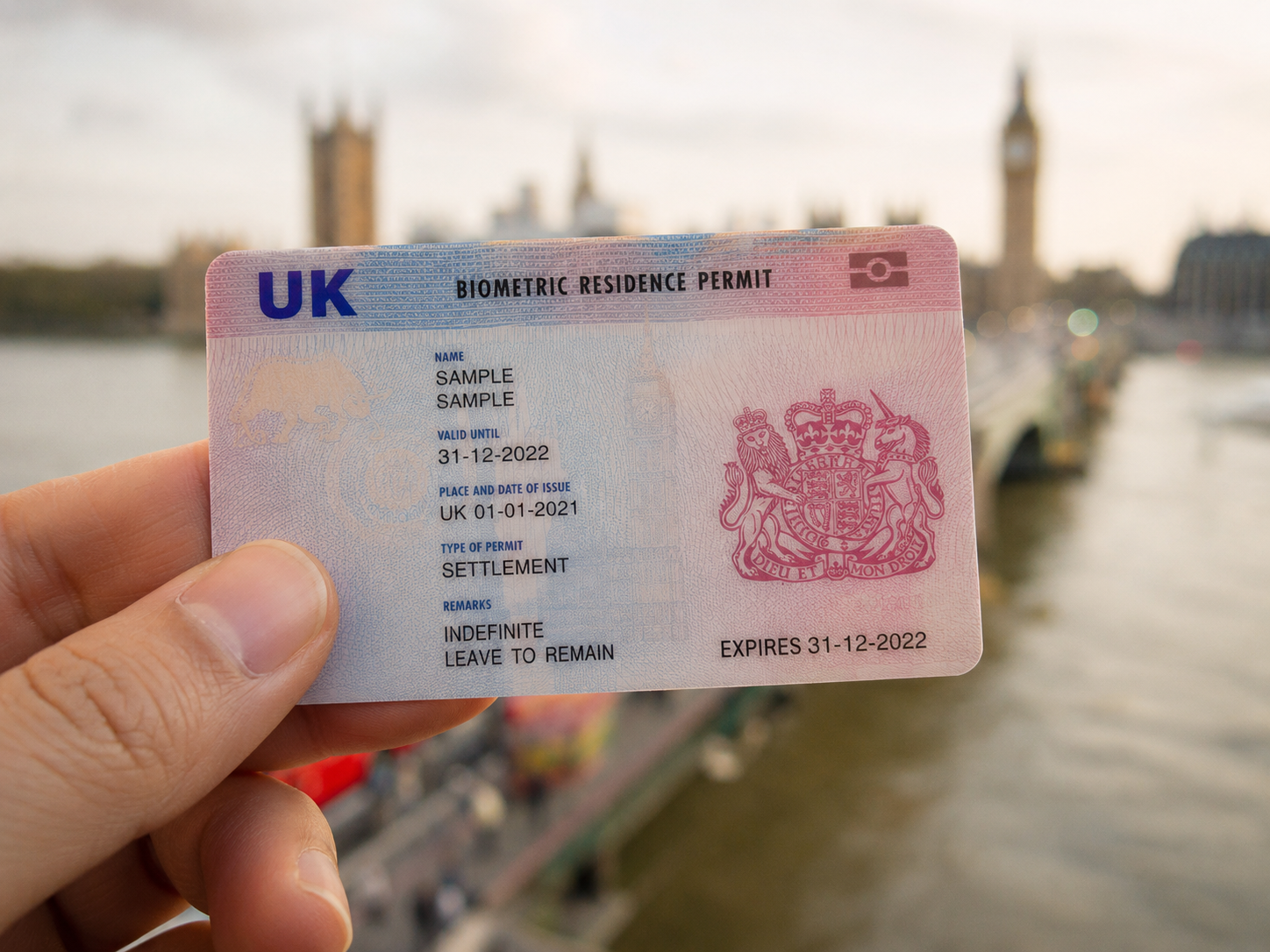
If you are an Indian national living in the UK and your Biometric Residence Permit is sitting in a drawer, you now have until 31 December 2026 to complete your switch to the digital eVisa system. After that date, there is no fallback.
Updated Home Office guidance published on 8 June 2026 extends the period during which expired BRPs can be used for certain on-shore purposes, such as right-to-work and right-to-rent checks, from 18 months to 24 months after the expiry date printed on the card. The revised guidance states: “All BRPs are now expired. You can use it for 24 months after the expiry date printed on your card or until 31 December 2026, whichever comes first.”
For the hundreds of thousands of Indians in the UK on Skilled Worker visas, family visas, or with Indefinite Leave to Remain, this is a third extension of a deadline that was originally set for 31 December 2024. It offers practical relief. But it comes with an important caveat that many people are still missing.
What the extension does and does not cover
Expired BRPs cannot be used for international travel. This has not changed. If you are flying to India, travelling elsewhere, or transiting through another country, your physical card will not be accepted. Airlines check immigration status digitally before boarding. To travel, you need a functioning UKVI account with your current passport correctly linked to it.
What the 8 June extension covers is on-shore paperwork: proving your right to work to an employer, demonstrating your right to rent to a landlord, and dealing with government agencies. For these purposes, an expired BRP remains usable within the 24-month window, subject to the December 2026 ceiling.
The extension also does not alter anyone’s underlying immigration status. Indefinite Leave to Remain does not expire because a BRP card has expired. The stumbling block for most people is not the status itself but proving it, and that is now a digital process.
Why does the deadline keep moving
The UK’s shift to a fully digital immigration system formally completed on 25 February 2026, when the Home Office stopped issuing physical visa stickers and BRPs for all new applicants. Every new grant of leave, whether for visitors, skilled workers, or settlement, is now recorded solely as an eVisa, accessed through a UKVI account.
All existing BRPs had technically expired on 31 December 2024, even for those whose underlying permission to remain ran well beyond that date. The Home Office sent transition emails to affected holders, but many were missed, filtered as spam, or sent to outdated addresses.
The Home Office has not provided a detailed explanation for the latest extension, but the pattern is clear: significant numbers of people, including many Indian nationals, are still completing the transition from physical documents to digital status records. The concession exists to reduce the practical disruption of that gap.

What you need to do now
The process to access your eVisa is free and takes place at the official government website. You will need your BRP card to set up the account, your current Indian passport, and access to an email address.
Once your UKVI account is active, you can view your immigration status, generate a Share Code for employers and landlords, and manage your linked documents. Updating your passport details in the account is a step many people overlook. The eVisa is tied to the specific passport number on record. Travelling on a renewed Indian passport without first updating your UKVI account can result in denied boarding, even if your underlying visa or ILR is valid.
Those who already have a UKVI account should log in and confirm that their current passport is linked and that their contact details are up to date.
December 2026 is the final date
This is the third time the deadline has been extended. The Home Office has not announced any further extension beyond 31 December 2026. Immigration lawyers advising UK-based migrants recommend treating the concession as additional time to complete the transition properly, not as a reason to delay further.







Comments 1