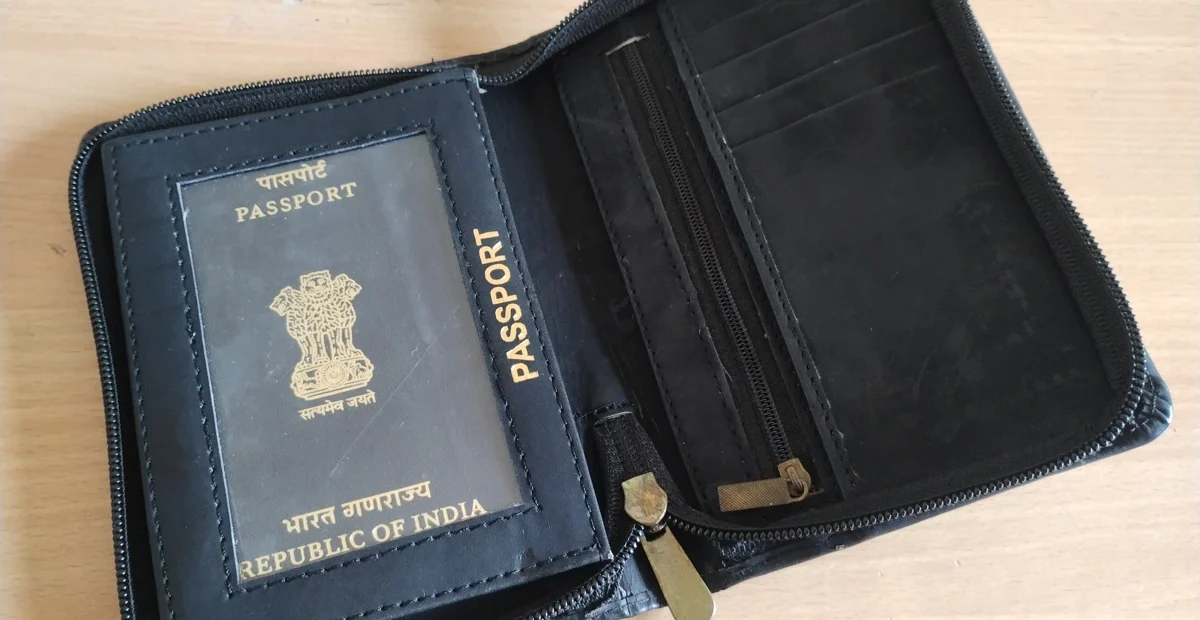
A marriage certificate does not, on its own, prove that a couple share a home. For a New Zealand partner visa, that distinction can matter as much as the wedding itself, particularly when an Indian couple live with parents and have no joint tenancy agreement.
Immigration New Zealand accepts several forms of evidence of a shared address. Its published guidance includes mail addressed individually to each partner, not only documents carrying both names. The task is to establish a genuine shared household over the relevant period, rather than manufacture the paperwork of a different living arrangement.
There is also an immediate application-system change. The official Partner of a New Zealander Work Visa page says applications can be submitted through enhanced Immigration Online from 23 November 2026. Couples preparing to apply should check the linked transition instructions before using a saved application link.
What does a New Zealand partner visa require you to prove?
The central relationship test is whether you are living together in a genuine and stable partnership. The exact visa category determines the remaining requirements, including your supporting partner’s eligibility, health and character checks, and the period of evidence needed.
Start with the supporting partner’s actual status. A New Zealand citizen or resident, a person on a work visa and a student do not all support the same application under identical conditions. Choosing a route because its name sounds familiar can produce the wrong evidence checklist.
The official partnership guidance describes the relationship evidence. Read it alongside the specific visa page. A convincing relationship history does not remove a separate restriction on who can support that visa.
What does living together mean?
It means sharing a home as a couple. Immigration New Zealand distinguishes that from visiting one another while keeping separate homes, sharing holiday accommodation, or merely being flatmates. The evidence should show the household arrangement that actually existed.
Can living with parents count as sharing a home?
The published test concerns a shared home, not whether the couple own or rent it independently. Living in a family property should therefore be documented as the real arrangement, without inventing a tenancy or utility account that never existed.
Consider an illustrative couple living in a parent’s house in Pune. The electricity account is in the parent’s name, while the partners receive their own bank correspondence at that address. The useful question is how those authentic records, together with an explanation of the household, establish that both people lived there as a couple.
A parent’s account of the arrangement can explain who owns the property and when the couple moved in. It should not be presented as automatically sufficient, or as a substitute for every independent record. Immigration New Zealand assesses the overall evidence.
Do not backdate a tenancy, alter an address on an old statement or arrange an artificial financial transaction to make the file look more conventional. Describe an unconventional document situation accurately. The application is about the relationship you have, not a model household assembled for an assessor.
Which documents can show the same address?
Documents addressed jointly or separately can help, provided they establish that both partners were at the same address during the relevant period. Immigration New Zealand expressly recognises individual mail sent to the shared address.
Build an address timeline. List when you moved in, any change of address, periods apart and the records available for each period. Then place dated documents against that timeline so an officer can follow it without guessing.
A document from the start of cohabitation and another from last week may leave a long unexplained middle. Use the official suggestion of evidence dated across the period, rather than supplying many nearly identical records from one month.
| Evidence question | Possible authentic material | What it does not establish alone |
|---|---|---|
| Where did each partner live? | Individual or joint correspondence at the shared address | That the relationship was genuine and stable throughout |
| How were finances shared? | Used joint accounts or documented financial arrangements | That a newly opened account represents a long history |
| Did others recognise the relationship? | Relevant photographs and letters of support | That the couple lived together for the required period |
| When were partners apart? | Travel records and a factual explanation | That holiday visits were continuous cohabitation |
| What is the legal relationship? | A marriage or civil-union certificate, where applicable | That a marriage certificate proves a shared home |
Is a joint bank account compulsory?
A joint bank account is one possible form of evidence, rather than a reason to replace the wider relationship test with a single document. The official guidance also recognises mutually agreed financial arrangements and other evidence of shared responsibilities.
If you divide household costs through individual accounts, explain that arrangement using genuine records. A couple might pay different expenses or contribute to a wider family household. Those circumstances should be described accurately, with relevant supporting material where available.
Opening a joint account shortly before applying does not establish that it was used throughout an earlier period. Avoid describing a recent financial arrangement as longstanding. Equally, do not transfer large sums merely to create a dramatic-looking statement.
The practical preparation question is narrower: what can an officer verify about the way this couple shared their life and responsibilities? Choose records that answer it, rather than collecting documents only because someone online said they submitted them successfully.
Do all partner visas require 12 months of living together?
No. The dedicated partnership-based residence route and temporary partnership visas have different requirements. Treating 12 months as a universal waiting period can mislead couples, while assuming that marriage immediately qualifies them can be just as misleading.
The Partner of a New Zealander Resident Visa requires at least 12 months of living together in a genuine and stable relationship. Applicants must also meet the other conditions of that route.
Temporary partnership visas do not have an explicit universal 12-month cohabitation requirement. They still require sufficient evidence that the couple live together in a genuine and stable relationship. Less time together does not mean no relationship evidence is needed.
Choose the route first, then work out the evidence period it requires. Do not use a visitor or work application checklist as if it establishes residence eligibility, or take the residence checklist as a complete description of every temporary route.
What changed in September 2026?
From 25 September 2026, both people must be at least 18 when applying under the dedicated partnership categories listed by Immigration New Zealand. Evidence used for those applications must relate to the period after both partners turned 18.
The official announcement explains the consequences for residence and temporary applications. Because dedicated partnership residence requires 12 months of living together counted after both people are 18, that route cannot be satisfied immediately on the younger partner’s eighteenth birthday.
The announcement also sets out exceptions for applications outside the dedicated categories and transitional treatment. Do not assume that every application mentioning a spouse falls under precisely the same change. Identify whether the partner is applying through a dedicated category or being included in another application.
For an adult couple with a long relationship history, the practical job is to separate historical background from the evidence period that can satisfy the current rule. Earlier photographs may explain a story, but should not be counted towards a period the rules exclude.
How should periods apart be explained?
Explain the dates, reasons and way the relationship continued. Immigration New Zealand asks couples who have not always lived together to provide that information so it can assess the circumstances.
Create a truthful chronology of travel and separate addresses. Distinguish a temporary separation from a period before cohabitation began. A wedding visit followed by several months in different countries should not be labelled continuous living together simply because the couple remained married.
Messages and calls can show ongoing contact, but do not turn physical separation into residence at the same address. Use them for the question they can answer. Avoid overwhelming the application with private conversations that add little to the relevant chronology.
If a separation materially affects the route you intend to use, take the dated facts to Immigration New Zealand or a licensed immigration adviser before submitting. The issue is the actual rule and evidence, not how confidently a forum contributor describes a superficially similar case.

How should couples prepare the application files?
Use the current upload and translation instructions, and ensure the same names, dates and addresses are consistent across the application. A readable evidence index is a preparation tool, not a replacement for the documents themselves.
Keep complete originals securely. Check the files you intend to upload page by page, including translations and any required identity material. Avoid public document-sharing links containing passports, account details or personal correspondence.
If using an adviser, establish who will submit the application and how you will receive the final submitted copy. Review the factual account yourself. An explanation supplied by someone else remains a statement about your relationship and should be accurate.
What should applicants check next?
Check the transition instructions linked from the Partner of a New Zealander Work Visa page before the 23 November 2026 system change. Do not assume that an old bookmark or unfinished form follows the new submission process automatically.
For the wider move, keep relationship evidence separate from other practical preparations. Our visa and mobility reporting covers different routes, while this Wellington language-class guide addresses a different family decision after arrival.
How should you use this guide?
Use it to identify evidence gaps and questions for Immigration New Zealand or a licensed immigration adviser. Requirements were checked on 22 November 2026 and should be rechecked before applying, particularly during the online-system transition.
The useful next step is a route-specific checklist supported by a dated, honest household history. A family home does not need to be disguised as a separate rented flat; it needs to be explained and evidenced accurately.