

Federico Donelli, University of Trieste; Chiara Boldrini, Università di Bologna, and Riccardo Gasco, Università di Bologna
India’s engagement in the Horn of Africa and Red Sea basin was, until recently, largely limited to UN peacekeeping operations and anti-piracy patrols.
Since the second half of the 1990s, India has participated in nearly all peacekeeping operations in Africa.
Anti-piracy efforts emerged between 2008 and 2014 as piracy off Somalia and the Gulf of Aden spread across a vast maritime space. This spanned east Africa and the wider Indian Ocean, bringing threats close to India’s shores.
Indian trade routes were exposed to new security risks, so a more sustained maritime posture was needed.
From the mid-2010s, therefore, India expanded its engagement in the Horn of Africa and the Red Sea basin to secure shipping lanes linking it to global markets. At the same time, it sought to counter China’s growing naval presence along the western Indian Ocean coast, protect its diaspora and investments, and position itself as a regional security provider.
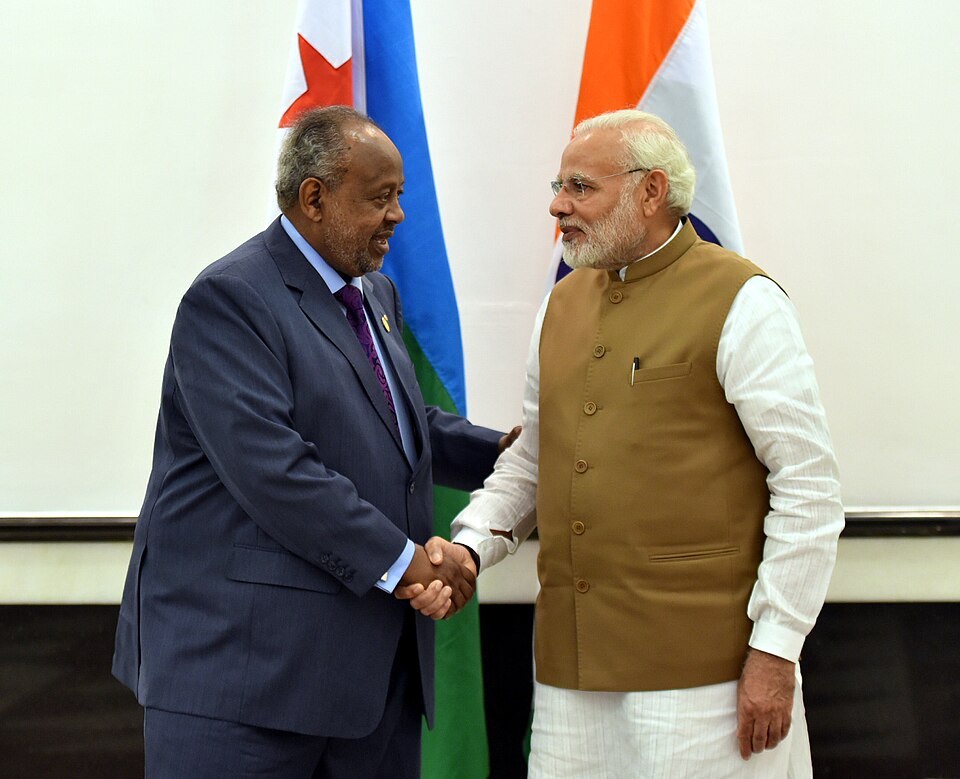
When Prime Minister Narendra Modi took office in 2014, this shift accelerated. India placed greater emphasis on proactive diplomacy, expanding high-level engagement, and trade and infrastructure links. It also pursued strategic coordination through bilateral agreements and naval exercises across west Asia and the adjoining African coastline.
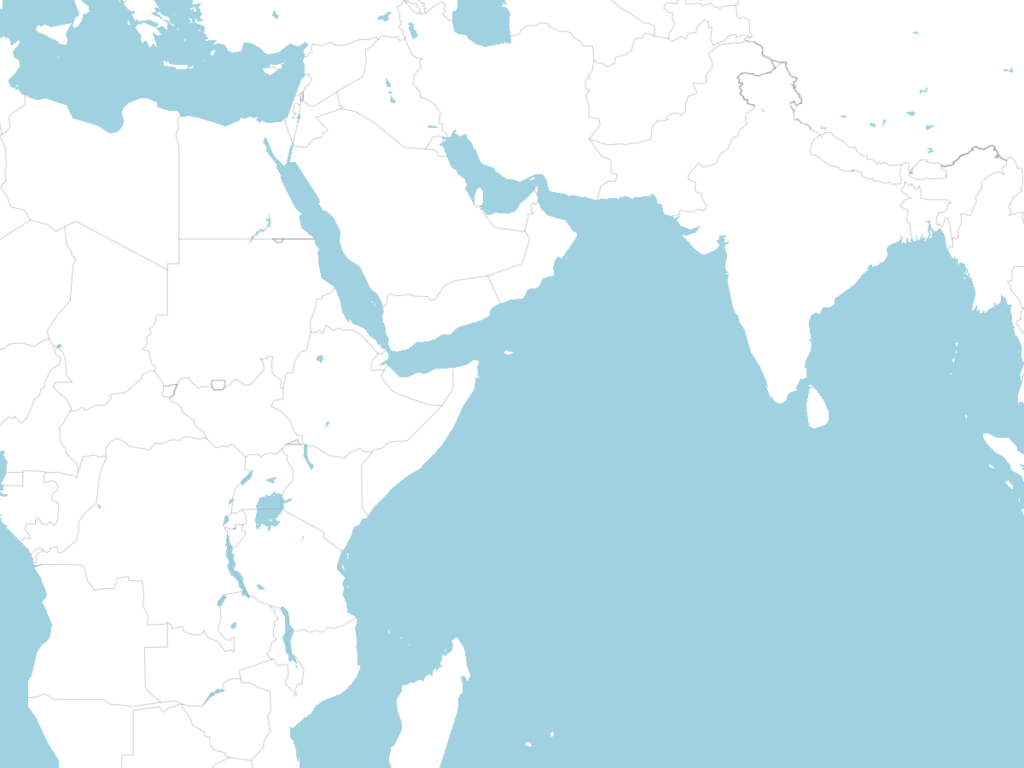
India, the Horn of Africa and the Red Sea basin https://datawrapper.dwcdn.net/SOhPA/1/
This evolution reflects India’s transition from a post-colonial, non-aligned actor to a more assertive power with ambitions outside the region. It is now Africa’s third-largest trading partner. Economic interdependence is growing alongside geostrategic interests.
Drawing on our work on international security in the western Indian Ocean and sub-Saharan Africa, we argue that over the past decade New Delhi has redefined the Indian Ocean as a protective buffer and a primary theatre of influence linking the Indo-Pacific to the Red Sea. The Horn of Africa lies at the heart of this connective space.
In 2023, India declared itself the Indian Ocean’s “net security provider”. It introduced a framework to strengthen regional security, deepen economic cooperation and address shared maritime challenges.
Today, with shipping routes being recalculated and governments reconsidering their strategic partnerships, India’s position is being put to an operational test.
The Horn is a space where legitimacy, delivery and endurance determine who remains relevant after the headlines fade. For the first time, India’s quiet advance is visible. Next, it will have to solidify its presence.
Why the Horn of Africa is important for India
An initiative called the 2025 Africa-India Key Maritime Engagement, co-hosted with Tanzania, positions India as a security partner for African nations, particularly those along the Indian Ocean rim.
India is also involved in development and investment projects in the region. These include agricultural efforts to improve food security, infrastructure projects, and technical assistance in education and health. It also provides humanitarian assistance in Somalia, Kenya and Djibouti.
What distinguishes the past decade is the effort to align these activities within a broader strategic narrative – one that presents India as a partner offering technology and development without debt concerns or political conditions.
This narrative is attractive to local governments in the Horn. But it also creates a test: India must show that it can deliver consistently.
Ethiopia has an important role for India. It hosts the African Union, functions as a diplomatic centre and offers an entry point into African multilateral politics.
Somalia also matters. It sits close to critical sea lanes and is central to the security of the Gulf of Aden. External actors there can convert security assistance into political access.
India’s interest in Somalia and Somaliland has taken on a geo-economic dimension. Indian firms are focusing on gold and mineral resources, particularly in eastern Somaliland.
Although still limited in scale, this shift signals that India’s footprint in the Horn is no longer confined to security and development assistance. It is intersecting with resource access and supply chain strategies.
The competition
The corridor of the Red Sea, Gulf of Aden and western Indian Ocean has become a crowded arena for external powers over the past two decades.
Great powers have seen countries in the region as a platform for counterterrorism and naval reach. Small and middle powers (like Turkey, Iran and Gulf states) have sought to secure influence through ports, training missions, arms transfers, commercial access and selective mediation.
The result is a dense environment. Almost every external actor offers a package of security, finance, technology and diplomacy. Fragile local governments hedge among them.
India’s challenge is to deliver consistently through:
- creating defence and security training pipelines
- project delivery
- stable financing instruments
- sustained bureaucratic attention.
If India’s Africa policy is maritime-led, then things like naval exercises, information-sharing, coast guard cooperation and institutional training must become regular and visible.
If the strategy is also developmental and technological, then India must deliver flagship projects in digital infrastructure, health and agriculture.
From quiet influence to lasting power
India faces three constraints in growing its influence in the Horn of Africa.
1. Limited military capacity
India’s naval capabilities do not match the scale of China’s fleet or America’s technological edge and operational depth. This gap is not fatal if India’s aim is durable influence through partnership. It does mean that India’s leverage will depend on institutional cooperation and coalition-building.
2. Competitive density
The Horn’s architecture is made of foreign bases, port diplomacy and overlapping rivalries. India’s advantage is that it’s not overwhelmingly intrusive. But it could become just one more actor among many.
3. Institutionalisation
If India’s engagement depends too heavily on leader-level attention, it will remain vulnerable to distraction. Durable influence requires bureaucratic routines and financing mechanisms. It must survive political cycles and shifting crises. Ethiopia is a test case. High-level roadmaps will have to turn into visible digital infrastructure, health systems and agricultural support.
The broader point is that the Horn is not an empty theatre waiting for India to arrive.
Federico Donelli, Associate Professor of International Relations, University of Trieste; Chiara Boldrini, PhD researcher, Università di Bologna, and Riccardo Gasco, PhD Candidate, Università di Bologna
This article is republished from The Conversation under a Creative Commons license. Read the original article.