
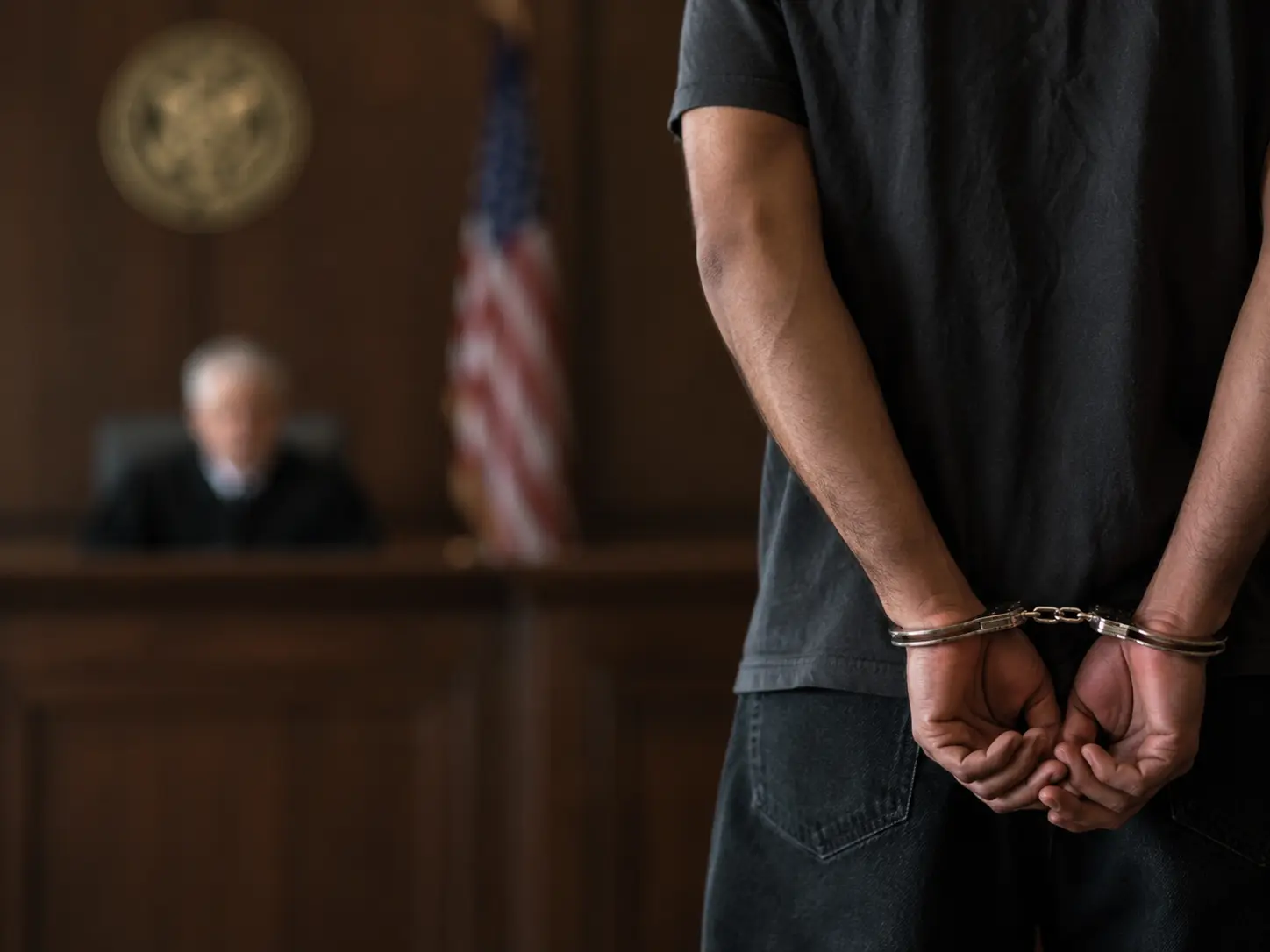
A federal court in Boston sentenced an Indian national to one day in prison and ordered his deportation on Wednesday, 29 July 2026, after he pleaded guilty to a visa fraud conspiracy built around staged armed robberies at convenience stores and fast-food restaurants.
Mitul Patel, 40, a resident of Worcester, Massachusetts, was sentenced by US District Court Judge Myong J. Joun to time served, one day in prison, alongside a fine of USD 1,000. Patel was among 11 people charged in March 2026 in connection with the scheme and pleaded guilty in June 2026.
According to a press release issued by the US Attorney’s Office for the District of Massachusetts, Patel paid the scheme’s organiser, Rambhai Patel, to pose as a “victim” during a staged armed robbery at a Worcester store in October 2023.
How the scheme worked
According to charging documents, the conspiracy began in March 2023 when Rambhai Patel and his associates set up and carried out staged armed robberies at a minimum of six convenience stores, liquor stores and fast-food restaurants across Massachusetts and other states.
The mechanics were consistent across each staged incident. A participant posing as an armed robber would enter a store, and the clerk or owner on duty, who was in on the arrangement, would wait five or more minutes before calling police to report the “robbery.” This delay allowed the staged robber to escape before law enforcement arrived. Participants who wanted to be recorded as crime victims paid Rambhai Patel to take part, with at least one purported victim paying USD 20,000 for a single staged robbery. Rambhai Patel, in turn, paid the store owners for use of their premises and paid those who played the robber and getaway driver roles.
At least two of the purported victim co-conspirators went on to submit U Visa applications based on their fabricated status as victims of violent crime.
What is a U Visa?
What is a U Visa?
The U nonimmigrant visa, commonly called a U Visa, is a form of immigration relief available in the United States to victims of certain qualifying crimes who have suffered substantial physical or mental abuse and who assist law enforcement in the investigation or prosecution of that crime. It was created under the Victims of Trafficking and Violence Protection Act of 2000 to encourage crime victims, regardless of immigration status, to cooperate with police without fear of deportation.U Visa holders can eventually apply for lawful permanent residency. Because the visa is granted on the basis of victimhood and law enforcement cooperation, it has been targeted in fraud schemes in which individuals stage or fabricate crimes specifically to manufacture the qualifying victim status the visa requires.
The scheme’s organiser and earlier convictions
Rambhai Patel, 38, identified in court documents as unlawfully residing in New York, was the organiser of the scheme and was sentenced separately in an earlier phase of the same case. According to a US Attorney’s Office press release, Patel was sentenced to 20 months and eight days in prison, followed by two years of supervised release, and ordered to forfeit USD 850,000, the amount prosecutors said he earned from the scheme. He is subject to deportation upon completion of his sentence.
Balwinder Singh, 41, who served as the getaway driver in the staged robberies, pleaded guilty in May 2025 to one count of conspiracy to commit visa fraud. Both Rambhai Patel and Singh were originally charged in December 2023, well before the ten additional defendants, including Mitul Patel, were charged by criminal complaint in March 2026.
Under federal law, conspiracy to commit visa fraud carries a maximum sentence of up to five years in prison, three years of supervised release and a fine of USD 250,000, in addition to deportation following completion of any prison term.
Who else was charged
Mitul Patel was one of ten additional defendants named in the US Citizenship and Immigration Services announcement of the broader indictment, alongside individuals identified as Rameshbhai Patel and Ronakkumar Patel, both of whom the USCIS release confirmed had been taken into immigration custody. USCIS stated all ten defendants were subject to deportation after completing any sentence imposed, and that they had arranged staged robberies with Rambhai Patel or paid for themselves or a family member to participate as a purported victim.
All ten were previously charged by criminal complaint and released on conditions ahead of their respective pleas and sentencing.
What Indian nationals in the US should know
Does staging a crime to support a U Visa application count as visa fraud even if the applicant was not the one physically committing the fabricated crime?
Yes. Under this prosecution, individuals who paid to participate as staged “victims,” rather than those who physically staged the robbery, were charged with conspiracy to commit visa fraud and, in at least one case, sentenced to time served, fined and ordered deported. Participating in any fabricated crime scenario to support an immigration application, in any role, carries serious federal criminal exposure regardless of how minor a participant’s role appears to have been.
What happens after a “time served” sentence like Mitul Patel’s?
A sentence of “time served” means the individual has already served the full custodial portion of their sentence through time spent in detention, in this case a single day. Following sentencing, Patel remains subject to the court’s deportation order and will be transferred to immigration authorities for removal proceedings, separate from the criminal case itself.
Is a genuine U Visa application affected by fraud cases like this one?
Genuine U Visa applicants who are actual victims of qualifying crimes and who cooperate with law enforcement are not implicated by this case. However, prosecutions of this kind can increase scrutiny and processing caution applied to all U Visa applications generally, as immigration authorities work to distinguish legitimate claims from fraudulent ones uncovered in schemes such as this.
Who prosecuted this case?
The case was prosecuted by the US Attorney’s Office for the District of Massachusetts, with United States Attorney Leah B. Foley announcing the case alongside the FBI’s Boston Division. Investigative assistance was provided by additional federal agencies according to the Department of Justice’s press releases on the case.