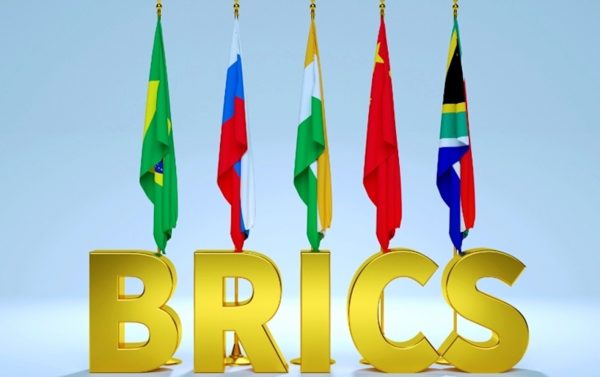
The upcoming BRICS summit in Russia this October is set to undergo a significant transformation as it expands its membership to include five new nations alongside the original founding five – Brazil, Russia, India, China, and South Africa. This expansion, featuring Egypt, Ethiopia, Iran, Saudi Arabia, and the United Arab Emirates, signifies a notable shift in the global landscape, characterized by increasing multipolarity and assertive middle powers challenging the established Western-led order.Notably, Argentina, under its new President Javier Milei, has decided to withdraw from its planned entry into the expanding BRICS club of nations. The last expansion of the BRICS took place in 2010 when South Africa joined, adding an “S” to the acronym a year after the bloc’s inception.
This move is seen as a strategic effort to reshape the global order into a multipolar world, with voices from the Global South taking a more prominent role on the international stage. The inclusion of Saudi Arabia and the UAE further emphasizes the changing dynamics of international relations, highlighting a trend towards a more multipolar world and the growing assertiveness of middle powers challenging the established Western-led order. However, it also underscores the inherent challenges of achieving unified goals within a diverse “global south.”
This expansion, featuring Egypt, Ethiopia, Iran, Saudi Arabia, and the United Arab Emirates, signifies a notable shift in the global landscape, characterized by increasing multipolarity and assertive middle powers challenging the established Western-led order.
The expansion of the BRICS bloc is expected to create new investment opportunities for the Arab world’s two largest economies – Saudi Arabia and the UAE. Despite facing global uncertainties such as high interest rates, inflation, and geopolitical tensions, Saudi Arabia and the UAE have sustained economic growth by focusing on diversifying their economies. In 2022, Saudi Arabia achieved an impressive annual growth rate of 8.7%, the highest among the world’s 20 largest economies. Looking ahead to 2023, the International Monetary Fund projects a further expansion of 0.8%, demonstrating the kingdom’s commitment to its Vision 2030 diversification agenda, with a particular emphasis on its non-oil economy.
Similarly, the UAE anticipates a robust economic performance in 2023, with an expected growth rate of 3.4%, with expectations of further increase to 3.7% in 2024. A recent report from the World Bank highlights positive trends across various sectors, including tourism, real estate, construction, transport, manufacturing, and capital expenditure. The UAE’s dedication to diversification and non-oil sectors positions it resiliently amidst global economic challenges.
As these dynamic economies join the BRICS bloc, the geopolitical landscape is poised for further transformation, creating new opportunities for collaboration and economic development on a global scale.