

Priyal Chitale, SOAS, University of London
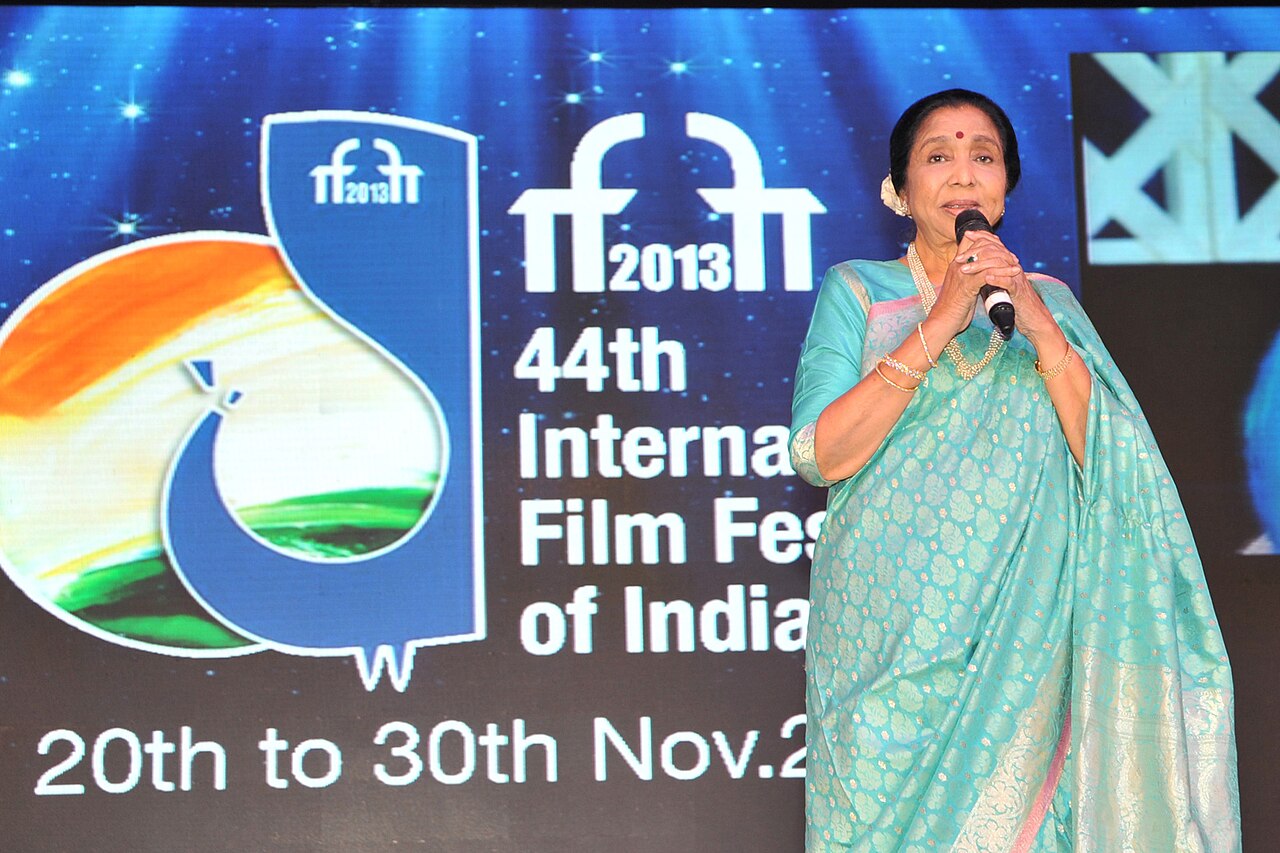
Asha Bhosle, the last surviving singing legend of the golden era of Hindi cinema, has died at 92. She debuted in the industry shortly after Indian independence in the late 1940s and is now widely considered the best-known singer in India, with more than 12,000 songs to her name. Over the course of a long and prolific career, she demonstrated extraordinary enthusiasm for reinvention, and a range and versatility that still remain unmatched.
Fans of Bhosle found joy in her singing and intrigue in her tumultuous love life. She was often associated with the trope of the fallen woman in the public imagination and pitted against her singing elder sister, Lata Mangeshkar, who famously did her best to steer clear of “vulgar” songs and was seen to embody piety, modesty, and self-sacrifice.
The painting of Mangeshkar’s good sister to Bhosle’s bad reflected the distinct categorisation of female characters as either submissive women of virtue or self-serving women of vice, which prevailed in Hindi cinema well into the 1980s. This was mapped onto the singing voices of the sisters by music directors. For instance, Anil Biswas, the pioneer of playback singing, quipped that “Asha has body while Lata has soul”.
However, it was precisely this penchant for breaking the rigid bonds and boundaries of acceptable femininity that always drew me, as it did many other queer south Asian misfits, to Bhosle’s songs.
Possibility and Plenitude
Bhosle belonged to the first generation of star playback singers. These were singers who record songs for actors to lip synch over in films – a common practice in south Asian cinema. Although she was behind the scenes, the quality of her singing made her, in many cases, more famous than the actors who mimed along to her voice.
The hundreds of songs Bhosle sang in the voice of “the other woman” moved sapphic (women and non-binary people who are attracted to women) listeners like me not because they were literally addressed to women, but because they gave voice to women whom Hindi cinema often treated as excessive, dangerous or disposable.
The actors who lip-synched her pre-recorded vocals on screen were frequently women who stood just outside the moral centre of the film: cabaret dancers, courtesans, mistresses, club performers and women whose desire was too intense to be easily domesticated. In their films, such women were often punished, abandoned or contained. In Bhosle’s voice, however, they became vivid, thinking, feeling subjects.
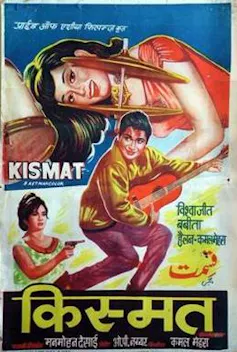
This is why Aao Huzoor Tumko from romantic thriller Kismat (1968) is so revealing. Sung by Bhosle, composed by O.P. Nayyar and written by Noor Devasi, the song is an invitation into intoxicated romance during a seduction scene in the film. Its refrain may be translated as: “Come, my lord, let me take you among the stars; let me take you into such springtime that your heart begins to sway.”
The actor Babita Kapoor performs the song on screen for her beloved, who is played by the debonair Biswajit Chatterjee. But what I hear in Bhosle’s performance is not simply a woman offering herself to a man. I hear a woman luxuriating in the textures of her own desire.
Bhosle laughs, hiccups, sighs and croons languorously through the song. These are not merely ornamental flourishes, but also small acts of vocal acting: ways of turning a film song into a miniature performance of mood, body and selfhood.
When she lingers on the word “mein” (“in” or “into” ) in phrases such as “sitaron mein le chalun” (“let me take you among the stars”), “baharon mein le chalun” (“let me take you into springtime”) and “hazaaron mein le chalun” (“let me take you among thousands”), she makes each repetition feel slightly different. She carefully infuses each “mein” with a distinctive flavour of longing, turning an intoxicated declaration of desire into an intoxicating invitation into female interiority.
For me, the space of this song was never only straight. The song invited me into an elsewhere: into stars, springtime, crowds, intoxication, laughter and the strange privacy of a woman’s pleasure. It allowed me to imagine desire not as shame, sin, or plot device, but as atmosphere. This is what Bhosle so often made possible: the reimagining of a spectacle of seduction as a scene of emotional complexity.
Bhosle herself seemed to understand the power of such performances. In later years, when asked to name her favourite actor to sing for, she chose Helen, who appeared in countless films as a dancer. She remembered Helen as so beautiful that she would stop singing when she entered the room, and joked that, had she been a man, she would have eloped with her.
To me, this felt like a gift to queer women: not because the remark makes Bhosle queer in any simple biographical sense, but because it acknowledged the force of female beauty, female performance and female fascination without embarrassment.
Bhosle did not merely sing women who desired men. She made female desire itself sound artful and alive: playful, pensive, hungry, theatrical, contradictory. In her voice, levity became a mode of serious identity construction, melancholy a means of knowing, and seduction something more than a narrative device designed to punish the woman who performed it. Time and again, she made room for coyness, brazenness, restlessness, satisfaction, anger and hunger to coexist within the same sonic space.
If the pure and pious heroines of Hindi cinema were often permitted only dignity and devotion, Bhosle’s women were granted appetite, ambivalence and ambition. Her singing offered us possibility and plenitude: complex ways of feeling, sensing and relating to love and life that the moral world of Hindi cinema could neither name nor contain.
Her singing was often sinuous and sensuous, and deliberately so, but it was also playful, pensive and passionate in equal measure. She embraced and enlivened the full spectrum of femininity, and rendered women profoundly, excitingly and almost achingly human in ways that were often unthinkable in the narratives that her songs animated. For me, she will always be the greater sister.
Priyal Chitale, CHASE AHRC Doctoral Researcher and PhD student in the Department of Music, SOAS, University of London
This article is republished from The Conversation under a Creative Commons license. Read the original article.